




Why the Fat Replacement Debate Is Heating Up Again
As the global food industry intensifies its shift toward healthier, lower-calorie offerings, the spotlight has once again turned to a class of ingredients that once promised a revolution—and in some cases, delivered controversy instead. Fat substitutes, long viewed with skepticism after high-profile missteps, are now seeing renewed interest driven by science, consumer behavior, and pressure to meet public health targets.
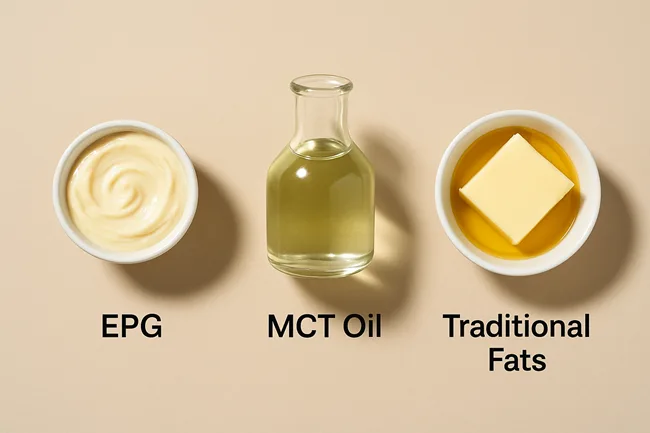
Among the most significant players in this new wave of fat alternatives are EPG (esterified propoxylated glycerol), Olestra, and MCT (medium-chain triglyceride) oil. Each comes with its own legacy, scientific mechanism, and strategic use case. But only one appears truly equipped to meet the modern requirements of mass-market reformulation: cutting calories without sacrificing flavor, texture, or digestive comfort.
The stakes are high. Global obesity and diabetes rates continue to rise, prompting both regulators and food companies to rethink the caloric density of processed foods. This article compares EPG, Olestra, and MCT oil across the most relevant vectors for 2025 and beyond—scientific validity, consumer experience, regulatory safety, and scalability in modern formulations.
What Is EPG and Why Is It Gaining Industry Momentum?
EPG is a structured fat alternative derived from plant-based glycerin, chemically modified to resist digestion. Developed by Epogee, it is engineered to behave like traditional fats in food—providing smoothness, richness, and moisture—while delivering only 0.7 kcal/gram, a dramatic reduction compared to the 9 kcal/gram found in conventional fats.
What separates EPG from its predecessors is its sensory performance and formulation stability. It integrates into recipes with minimal disruption, holds up in baking and freezing, and does not introduce off-flavors. Its FDA GRAS (Generally Recognized As Safe) status reinforces its safety credentials, and it has passed multiple toxicology and human tolerance studies without requiring label warnings.
EPG is now used in more than 60 commercial products, ranging from protein bars and desserts to sauces and baked snacks. Several high-growth startups and private-label brands have adopted it for quiet calorie reformulation, and analysts expect broader adoption as food regulation continues tightening worldwide.
Olestra: A Pioneer That Failed the Consumer Test
Olestra, also known under the trade name Olean, was one of the first zero-calorie fat alternatives to reach mass commercialization. Developed by Procter & Gamble, Olestra was approved by the FDA in 1996 and found early success in fat-free chips and snacks during the peak of the low-fat craze.
Unlike EPG, Olestra is built from a sucrose backbone bonded with fatty acids, making it too large to be digested or absorbed. On paper, this should have been a win: no calories, full-fat taste. But in practice, Olestra proved too disruptive to the gut. Many consumers experienced gastrointestinal distress, and studies suggested it could inhibit the absorption of vitamins A, D, E, and K.
Public backlash was swift. The FDA required warning labels, and Olestra soon became synonymous with unpleasant side effects. Even after label requirements were lifted in 2003, the damage was done. Consumer trust never recovered. Olestra is still technically approved for use, but it has all but disappeared from grocery aisles. It remains an instructive case study in what happens when formulation outpaces tolerance and transparency.
What Makes MCT Oil Popular Among Niche Health Enthusiasts?
MCT oil, by contrast, has emerged as a functional fat in the wellness space rather than a calorie-reduction tool. Extracted primarily from coconut or palm kernel oil, MCTs are medium-chain triglycerides that are metabolized rapidly by the liver into ketones, which some experts argue provide a cleaner, faster energy source for both body and brain.
Unlike EPG or Olestra, MCT oil is not designed to reduce caloric intake—it delivers approximately 8.3 kcal/gram, just below the standard fat range. But its rapid absorption profile makes it attractive for athletes, keto dieters, intermittent fasters, and cognitive performance seekers. MCT oil is typically found in supplements, bulletproof-style coffees, smoothies, and RTD (ready-to-drink) performance beverages.
MCT oil is generally well tolerated in small doses but can cause digestive upset in larger quantities. It is not an ideal candidate for baked goods or products that require solid fat functionality, as it remains liquid at room temperature and does not mimic the rich mouthfeel or structuring properties needed in most food formats.
Which Fat Alternative Performs Best on Taste and Texture?
The greatest challenge in fat replacement has always been mouthfeel. Fats are responsible for creaminess, aeration, spreadability, and flavor release. When fats are removed or replaced, texture and taste often suffer.
EPG was designed with these realities in mind. It is virtually indistinguishable from traditional fats in applications like frostings, sauces, coatings, and ice cream. Because it does not introduce off-notes and holds up under various processing conditions, food technologists consider it a “drop-in” fat substitute in many formulations.
Olestra, while successful at mimicking oil in fried snacks, did not fare as well in more diverse food applications. More importantly, the association with digestive distress overpowered any perceived benefit in taste replication.
MCT oil fares reasonably well in beverages and emulsified supplements but lacks the structural and sensory attributes needed in foods like cookies, pastries, or bars. It is often blended with other fats to create more functional hybrid formulations.
In terms of consumer sensory experience, EPG is widely considered the closest fat analog among the three—delivering on both taste and texture without the downsides of older technologies.
How Do These Ingredients Compare on Safety and Digestibility?
From a regulatory and safety standpoint, EPG currently holds the strongest profile. It is GRAS-certified, well tolerated in clinical trials, and does not interfere with the absorption of essential nutrients. EPG’s tolerability has been tested in multi-dose ingestion studies, including among children, with no requirement for warning labels.
Olestra, while legally permitted, remains a cautionary tale. It was never banned, but the market effectively rejected it. The requirement to include a disclaimer warning of “anal leakage” became culturally damaging and difficult to recover from—even after scientific reviews softened those concerns.
MCT oil is considered safe in moderate quantities and is also GRAS. However, it does not reduce caloric load, which makes it unsuitable for widespread use in food reformulation aimed at population-level obesity or caloric excess. It is typically used as a dietary supplement rather than an ingredient in mass-market food products.
When it comes to digestive safety and metabolic neutrality, EPG offers the best balance for large-scale deployment.
Which Ingredient Has the Most Commercial Viability Today?
The commercial narrative surrounding fat substitutes has shifted from bold front-of-label claims to stealth health strategies. Today’s consumers are wary of diet branding and prefer foods that deliver macros quietly, without sacrificing indulgence.
EPG fits this model perfectly. It is increasingly used by functional food brands, private-label grocery lines, and school meal providers looking to lower calories without compromising appeal. It is also gaining traction in international markets preparing for front-of-pack labeling regimes and HFSS product restrictions.
MCT oil remains limited to wellness circles, where its cognitive and performance claims drive premium pricing. It is unlikely to be adopted in value-tier food manufacturing or institutional settings due to its high cost and limited utility in solid formats.
Olestra, while remembered, has no visible commercial momentum and is unlikely to be revived given today’s consumer scrutiny.
For food manufacturers seeking to align with both consumer trends and regulatory expectations, EPG offers a low-risk, high-return path to calorie reduction.
Final Outlook: EPG’s Edge in the New Era of Functional Fats
As governments and food regulators across the U.S., U.K., Europe, and Asia implement tougher standards on added sugar, saturated fat, and caloric density, ingredient technologies like EPG are no longer niche—they are essential.
Whether in baked snacks, frozen desserts, savory sauces, or on-the-go protein products, EPG is proving itself to be a next-generation fat alternative capable of delivering meaningful nutritional improvements without alienating consumers. Unlike Olestra, it respects the gut. Unlike MCT oil, it helps reduce calories.
EPG is quietly becoming the gold standard in modern fat replacement, setting the tone for what functional ingredients must do in the next era: deliver taste, withstand scrutiny, and improve health outcomes at scale.
Discover more from Business-News-Today.com
Subscribe to get the latest posts sent to your email.
