


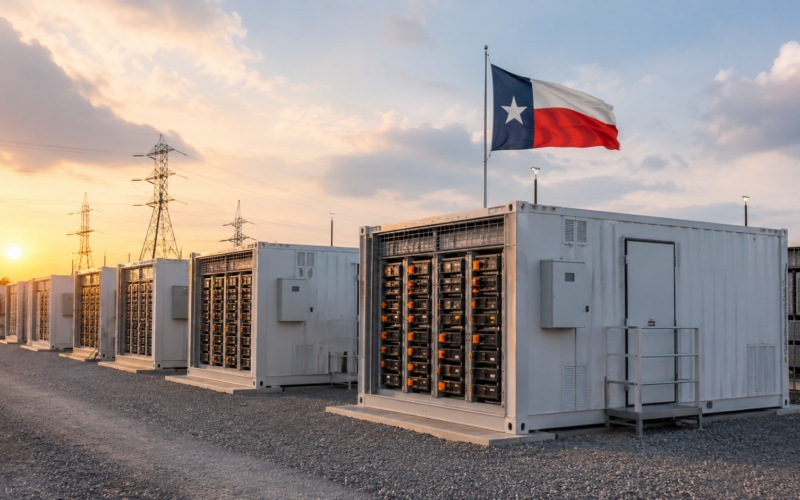
Eos Energy Enterprises, Inc. (NASDAQ: EOSE) has received the first purchase order under its 2 GWh capacity reservation agreement with Frontier Power USA for the 100 MW/400 MWh Redbird battery energy storage project serving the Electric Reliability Council of Texas market. Frontier Power USA and its affiliates have acquired the project and plan to provide all construction equity, while Bimergen Energy Corporation retains a minority economic interest and will support delivery. The four-hour system will use Eos Energy Enterprises’ Z3 zinc-based technology for energy shifting, ancillary services and grid reliability. The order converts 20% of the reserved capacity into a project-specific commitment and arrives days after Eos Energy Enterprises began commercial production on Battery Line 2 at its Thorn Hill facility in Pennsylvania. The strategic question is whether Redbird can prove that institutional capital, performance insurance and domestic manufacturing can turn Eos Energy Enterprises’ expanding pipeline into bankable projects and improving margins.
Why does the first Redbird purchase order matter more than the 2 GWh reservation headline?
Capacity reservation agreements can improve manufacturing visibility, but they do not always carry the same commercial weight as project-specific purchase orders. A reservation may secure future factory capacity while leaving project location, financing, interconnection and construction timing unresolved. Redbird narrows that gap by attaching 400 MWh of Eos Energy Enterprises equipment to an identified project within the ERCOT market.
The order represents one-fifth of Frontier Power USA’s 2 GWh reservation. It also brings Eos Energy Enterprises close to fulfilling half of the earlier 1 GWh master supply agreement associated with Bridgelink and the project portfolio that subsequently moved through Bimergen Energy Corporation and Frontier Power USA.
That conversion is strategically useful because investors have repeatedly questioned how much of Eos Energy Enterprises’ large opportunity pipeline can become funded equipment orders. The company reported a commercial pipeline valued at $24.3 billion at the end of the first quarter of 2026, but a pipeline includes opportunities at different stages of maturity and should not be confused with contracted revenue.
Redbird provides evidence that at least one project has moved beyond broad development discussions. Frontier Power USA has acquired the asset, committed construction equity and issued an equipment order, giving Eos Energy Enterprises a clearer route toward manufacturing and revenue recognition.
Several financial details remain undisclosed. Eos Energy Enterprises has not published the purchase-order value, manufacturing schedule, expected delivery dates or anticipated revenue-recognition period. Investors can therefore measure the capacity committed, but they cannot yet calculate Redbird’s probable revenue, gross margin or contribution to the company’s 2026 guidance.
The order is consequently best viewed as commercial validation rather than an immediate earnings event. Its longer-term importance will depend on whether Redbird reaches construction and whether additional projects convert against the remaining 1.6 GWh of reserved capacity.

How does Frontier Power USA attempt to solve the financing bottleneck for long-duration storage?
Frontier Power USA was created to address one of the largest obstacles facing emerging energy-storage technologies: project developers may have viable sites and grid opportunities, while manufacturers have available technology, but neither party necessarily has sufficient capital to carry projects through construction.
The platform brings together Eos Energy Enterprises’ technology and manufacturing, Cerberus Capital Management’s institutional capital and an insurance framework intended to protect lenders against technology-performance risk. Frontier Power USA plans to develop, own and operate storage assets as an independent power producer rather than acting only as an equipment purchaser.
Cerberus Capital Management has proposed a $100 million equity commitment to the platform, subject to closing conditions. Eos Energy Enterprises intends to contribute approximately $150 million, funded through a proposed rights offering to existing shareholders. Frontier Power USA is also evaluating project-level debt and institutional financing structures.
The model matters because construction equity alone may not be sufficient for large storage projects. Equity normally absorbs early development and construction risk, while debt can reduce the overall cost of capital when lenders are comfortable with equipment performance, revenue assumptions and contractual protections.
Frontier Power USA has arranged a technology-performance insurance framework through Ariel Green with potential policy capacity of approximately $1.5 billion. The proposed coverage could operate for 15 years and is intended to provide lenders with greater protection if the battery systems fail to meet defined performance obligations.
Insurance does not make a project risk-free. It may reduce exposure to technology underperformance, but lenders must still assess construction schedules, grid interconnection, operating revenue, dispatch strategy, counterparty strength and insurance exclusions.
Redbird is therefore an early test of whether the model can work outside a presentation. Frontier Power USA must convert committed equity and insurance support into a complete capital package, place equipment orders, complete construction and operate the asset successfully.
Why could a four-hour zinc battery compete differently from lithium-ion storage in ERCOT?
Redbird is designed to deliver 100 MW of power for four hours, giving it 400 MWh of total storage capacity. This configuration can charge during periods of lower electricity prices or surplus generation and discharge when demand and market prices increase.
ERCOT’s energy-only electricity market creates multiple potential revenue streams for storage. A battery can participate in energy arbitrage, provide ancillary services and respond quickly when the grid requires additional flexibility. The precise commercial strategy for Redbird has not been disclosed.
Lithium-ion batteries dominate current utility-scale deployment because they benefit from mature supply chains, high manufacturing volumes and extensive operating experience. Eos Energy Enterprises is competing through a different set of attributes rather than attempting to duplicate lithium-ion economics in every application.
The Z3 system uses a zinc-based chemistry and is designed for storage durations ranging from four hours to more than 16 hours. Eos Energy Enterprises positions the technology around safety, domestic sourcing, reduced dependence on constrained battery minerals and the ability to withstand repeated cycling over longer discharge periods.
Zinc systems may be particularly relevant where customers place greater value on duration, fire-risk management and supply-chain security than on the smallest possible physical footprint. The technology could also appeal to utilities and data-centre operators seeking alternatives to lithium-ion concentration.
However, technological differentiation must ultimately appear in project economics. Redbird’s owners will evaluate installed cost, usable capacity, round-trip efficiency, degradation, maintenance, availability and lifetime revenue. A battery that is theoretically safer or easier to source must still produce competitive returns.
The project will also provide an important operating reference. Successful performance in ERCOT’s volatile market could improve confidence among utilities, lenders and developers considering Eos Energy Enterprises systems in other United States power markets.
What must happen before Redbird becomes an operating asset and recognised revenue for Eos?
A purchase order represents progress, but it does not mean the project is already under construction or that Eos Energy Enterprises can immediately record the entire value as revenue. Project development still involves several commercial and technical stages.
Frontier Power USA must complete the acquisition and financing structure, satisfy development conditions and ensure that Redbird has a viable grid connection. The public announcement does not identify the precise site, construction start, commercial-operation target or debt package.
The project will require detailed engineering, civil works, foundations, electrical infrastructure, inverters, transformers, controls and connection equipment in addition to the battery systems manufactured by Eos Energy Enterprises. Delays in non-battery components could affect the overall schedule even if Eos Energy Enterprises delivers its equipment on time.
ERCOT projects also depend heavily on interconnection progress. Storage assets must complete technical studies and meet grid requirements before they can inject or withdraw electricity at full capacity. Congestion, network-upgrade costs or queue delays can alter project economics.
Revenue recognition for Eos Energy Enterprises will depend on contractual milestones. Manufacturing, shipment, installation and customer acceptance may occur in different reporting periods, creating uneven quarterly revenue even when the project remains on schedule.
The lack of a disclosed contract value is particularly relevant. Investors should not estimate Redbird revenue by applying a generic dollar-per-kilowatt-hour assumption because equipment scope, software, installation, warranty and service arrangements can differ significantly between projects.
The strongest confirmation would be an effective notice to proceed accompanied by a delivery schedule and expected commercial-operation date. Until those milestones are disclosed, Redbird remains a funded project pathway with a specific purchase order rather than an operating asset.
How does Battery Line 2 change Eos Energy’s ability to deliver the Redbird order?
Eos Energy Enterprises began commercial production at its second automated battery line on June 16, 2026, two days before announcing the Redbird purchase order. The new line is located at the Thorn Hill manufacturing facility in Pennsylvania and is expected to ramp throughout the remainder of 2026.
The company is targeting 4 GWh of annualised manufacturing capacity by the end of the year. If achieved, the 400 MWh Redbird order would represent approximately 10% of that annual production capacity, although the project’s delivery period has not been disclosed.
Battery Line 2 is strategically important because large storage reservations are useful only when the manufacturer can produce equipment at the required volume and quality. Eos Energy Enterprises must avoid a situation where commercial commitments expand faster than factory output.
The new manufacturing layout reduces the distance travelled by raw materials and shortens the overall line relative to Battery Line 1. These changes are designed to improve throughput, reduce material handling and support lower unit costs.
The company also reported that Battery Line 1 exceeded its entire 2025 production during the first 164 days of 2026. This indicates accelerating output, but production volume alone does not establish profitability.
Rapid manufacturing expansion can create quality-control risks. New equipment, employees and suppliers must reach consistent yields while customer delivery deadlines become more demanding. Defects discovered after installation would create warranty costs and weaken confidence in the technology.
Redbird can therefore become an important test of the connection between commercial growth and manufacturing readiness. A smooth delivery would support the argument that Eos Energy Enterprises has developed a repeatable production platform. Delays or field-performance issues would expose the risks of scaling before processes have fully matured.
Can Eos Energy scale revenue fast enough to narrow manufacturing losses and cash burn?
Eos Energy Enterprises generated first-quarter 2026 revenue of $57 million, representing growth of 445% from the corresponding period. The increase reflects higher production and deliveries, but the company remained materially unprofitable at the operating level.
The first-quarter gross loss was $44.4 million, while adjusted EBITDA loss reached $68 million. These figures show that every additional project must contribute not only revenue but also improved manufacturing economics.
The company held $472.4 million of cash, including restricted cash, at March 31, 2026. This provides liquidity for factory expansion and operations, but continued losses can consume capital rapidly if manufacturing margins do not improve.
Eos Energy Enterprises reported an order backlog of $644.6 million representing 2.6 GWh at the end of the quarter. The subsequent 2 GWh Frontier Power USA reservation expanded the commercial position, although reservations and project pipelines should not be valued like completed sales.
Management has maintained full-year 2026 revenue guidance of $300 million to $400 million. Achieving the low end would require substantial acceleration from the first-quarter run rate, while the upper end would demand particularly strong manufacturing and customer acceptance during the second half.
Redbird could support that growth, but only if its delivery schedule falls within the relevant period. The undisclosed order value and timeline make it impossible to determine whether the project is included meaningfully in 2026 expectations or will contribute primarily during later years.
The most important financial measure will be gross-margin progression. Revenue growth without improving unit economics could force Eos Energy Enterprises to raise additional capital even as its order book expands.
In my assessment, Redbird strengthens the demand case but does not yet resolve the profitability question. The investment thesis requires both project conversion and evidence that higher output reduces losses per battery system.
What does the proposed rights offering mean for EOSE shareholders and Frontier Power USA?
Eos Energy Enterprises intends to fund its planned Frontier Power USA equity contribution through a rights offering targeting approximately $150 million. Existing shareholders are expected to receive the opportunity to purchase additional securities, potentially at a discount and with associated warrants.
A rights structure gives participating shareholders a route to maintain their proportional economic interest. Investors who do not participate may experience dilution as new shares and warrants are issued.
The proposed contribution could create strategic value if Frontier Power USA successfully develops a portfolio of operating storage assets. Eos Energy Enterprises would gain equipment demand while also participating in project-level ownership and long-term cash flows.
However, the structure creates governance and capital-allocation questions. Cerberus Capital Management is expected to hold controlling equity in Frontier Power USA, while Eos Energy Enterprises would supply technology, invest shareholder capital and transact commercially with the platform.
The companies intend to use an independent investment committee and arm’s-length terms. Shareholders will nevertheless need transparency on equipment pricing, project selection, development fees, financing costs and the distribution of economic returns between Eos Energy Enterprises, Cerberus Capital Management and Frontier Power USA.
The transactions remain subject to final agreements, third-party approvals and other conditions. The United States Department of Energy is among the parties whose approval may be required because of existing financing arrangements.
Redbird’s purchase order offers evidence that the platform is already assembling projects, but it does not eliminate closing risk around the wider joint venture. Investors should separate progress at the project level from completion of the full corporate-financing structure.
How should investors interpret EOSE stock momentum after the Redbird purchase order?
Eos Energy Enterprises shares closed at $7.65 on June 18, 2026, the latest completed United States session before the June 19 market holiday. The stock gained 0.66% during the announcement session.
The shares had risen approximately 23.4% from their June 11 close and around 3% from their May 18 close. This suggests strong short-term momentum but a more restrained one-month recovery.
EOSE remained within a 52-week range of $4.18 to $19.86. The June 18 close was about 61% below the annual high while standing approximately 83% above the annual low, illustrating the stock’s exceptional volatility.
The company’s market capitalisation was approximately $2.6 billion. On a simple market-cap-to-revenue basis, that equals roughly 6.5 to 8.7 times Eos Energy Enterprises’ full-year 2026 revenue guidance before considering cash and debt.
That valuation indicates investors are pricing in substantial future growth rather than valuing the company on current profitability. The Redbird purchase order supports the expansion narrative, but the company must demonstrate that capacity reservations become revenue and that revenue eventually becomes positive gross profit.
Recent analyst positioning was mixed but constructive, with two Buy ratings and three Hold ratings among the tracked analysts. The average published price target was $9.20, although target prices can change quickly and should not be treated as operating forecasts.
The strongest interpretation of the recent rally is that investors see improving manufacturing readiness and credible capital support. The cautious interpretation is that the stock has moved ahead of evidence on project completion, margins and shareholder dilution.
What milestones will determine whether Redbird becomes a repeatable storage financing model?
The first milestone will be completion of the broader Frontier Power USA transaction. Final agreements, required approvals and committed capital must move from announced intentions into an operating financing platform.
The second will be disclosure of Redbird’s schedule. A construction start, delivery timetable and commercial-operation date would make the order easier to connect with Eos Energy Enterprises’ revenue outlook.
The third will be project-level debt financing. Construction equity and performance insurance improve the investment case, but scalable deployment will require debt markets to accept the proposed risk structure.
The fourth will be Battery Line 2’s ramp toward full production. Eos Energy Enterprises must increase output while improving manufacturing yield, quality and unit cost.
The fifth will be revenue and margin conversion. Redbird becomes financially meaningful only when project milestones contribute recognised revenue without deepening gross losses.
The sixth will be operating performance after commissioning. Availability, efficiency, degradation and safety will determine whether lenders and developers view Z3 as a repeatable alternative for additional long-duration projects.
The seventh will be conversion of the remaining Frontier Power USA reservation. Redbird accounts for 400 MWh of a 2 GWh commitment, leaving 1.6 GWh that could support additional project orders.
Redbird therefore represents a credible step forward rather than the finish line. It links a named project, committed equity, manufacturing capacity and a specific battery technology in one transaction.
The project could become a template for financing emerging storage systems if it reaches operation and performs as expected. Failure to close financing, maintain the schedule or deliver acceptable economics would instead demonstrate why the gap between promising storage pipelines and operating infrastructure remains difficult to bridge.
What are the key takeaways from Eos Energy’s 400 MWh Redbird battery order?
- Eos Energy Enterprises has received a project-specific order for the 100 MW/400 MWh Redbird storage development in the ERCOT market.
- Redbird converts 20% of Frontier Power USA’s 2 GWh manufacturing reservation into a defined project commitment.
- Frontier Power USA and its affiliates plan to provide all project-construction equity, while Bimergen Energy retains a minority economic interest.
- The four-hour project will use Eos Energy Enterprises’ zinc-based Z3 storage technology for energy shifting and grid services.
- The equipment-order value, delivery schedule, site location, construction start and commercial-operation target remain undisclosed.
- Battery Line 2 has entered commercial production as Eos Energy Enterprises targets 4 GWh of annual manufacturing capacity by the end of 2026.
- Eos Energy Enterprises reported $57 million of first-quarter revenue but remained deeply loss-making at the gross-profit and adjusted EBITDA levels.
- The planned $150 million rights offering could fund Eos Energy Enterprises’ Frontier Power USA investment but may dilute non-participating shareholders.
- EOSE shares gained approximately 23.4% over five trading sessions but remained about 61% below their 52-week high.
- Financing completion, factory ramp-up, margin improvement and successful commissioning will determine whether Redbird becomes a scalable model.
Discover more from Business-News-Today.com
Subscribe to get the latest posts sent to your email.

