Energy Fuels Inc. (NYSE: UUUU; TSX: EFR) has agreed to acquire Australian Strategic Materials Limited (ASX: ASM) in a US$299 million transaction aimed at forming the largest vertically integrated rare earth element (REE) mine-to-metal and alloy platform outside of China. The all-stock deal, structured under an Australian scheme of arrangement, gives ASM shareholders a mix of Energy Fuels shares and a special cash dividend, valuing ASM at approximately A$1.60 per share.
The move significantly expands Energy Fuels’ downstream footprint by incorporating ASM’s operating Korean Metals Plant, its under-development American Metals Plant, and the Dubbo rare earth project in New South Wales into a single rare earths supply chain designed to serve the magnet, defense, energy, and automotive sectors.

Why is Energy Fuels targeting Australian Strategic Materials, and what gaps in the rare earth value chain does this close?
Energy Fuels has long positioned itself as a North American leader in uranium and rare earth oxide processing, but its lack of downstream capabilities limited margin capture and customer access in finished products. The acquisition of Australian Strategic Materials solves that problem directly, folding in a rare metals and alloys business with existing production, proven intellectual property, and near-term expansion capacity.
Critically, ASM operates one of the few facilities outside China producing neodymium-praseodymium, dysprosium, and terbium metals along with neodymium-iron-boron and dysprosium-iron alloys. These products are essential inputs for permanent magnet production, which powers electric vehicles, drones, robotics, wind turbines, and precision-guided munitions. By integrating its White Mesa Mill in Utah — the only operating REE separation facility in the United States — with ASM’s alloy capabilities in South Korea, Energy Fuels positions itself as the first ex-China player with credible mine-to-magnet optionality.
The transaction also accelerates Energy Fuels’ expansion into manufacturing-grade REE products in the United States. The planned American Metals Plant (AMP), to be modeled on ASM’s Korean site, will enable domestic customers to source REE alloy without depending on Chinese imports or Korean re-export channels. This directly aligns with U.S. Department of Defense and Department of Energy priorities around critical mineral security.
How does the Dubbo Project and other mineral resource assets contribute to Energy Fuels’ long-term strategy?
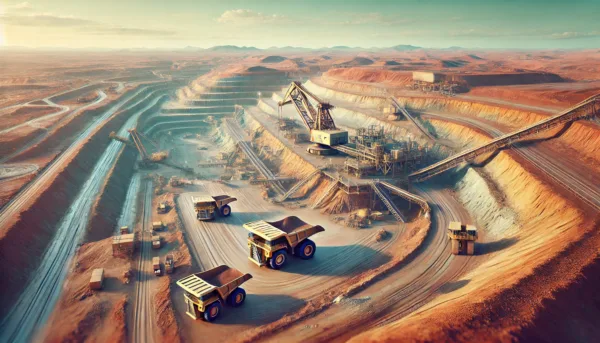
While the metallization and alloying integration delivers near-term industrial relevance, the addition of ASM’s upstream development portfolio reinforces Energy Fuels’ ambition to become a globally diversified REE supplier. The Dubbo Project in New South Wales is a large, advanced-stage polymetallic deposit rich in light and heavy rare earths, niobium, zirconium, and hafnium. It complements Energy Fuels’ current REE pipeline that includes the Donald Project in Victoria, Bahia in Brazil, and Vara Mada in Madagascar.
All four assets are intended to serve as long-term feedstock sources for the White Mesa Mill, which Energy Fuels plans to scale to 6,000 tonnes per annum (tpa) of neodymium-praseodymium, 240 tpa of dysprosium, and 66 tpa of terbium oxide capacity. This output would materially de-risk Western supply chains for high-performance magnets, particularly those needed in military and aerospace applications.
Moreover, Dubbo’s development fits neatly into Energy Fuels’ operating pattern. The company has already executed successful transactions in Australia, including the acquisition of Base Resources Limited in October 2024 and a joint venture with Astron Corporation in June 2024. By consolidating technical teams, regulatory know-how, and stakeholder engagement frameworks, Energy Fuels appears to be building a strategic bridge between Australian mineral abundance and U.S. processing demand.
What are the financial terms and expected capital structure impact post-deal?
Under the scheme, ASM shareholders will receive 0.053 Energy Fuels shares or CHESS Depository Interests per ASM share, implying an equity value of approximately A$447 million (US$299 million), plus a special dividend of up to A$0.13 per share funded by ASM. This brings the total consideration to A$1.60 per share, a premium to ASM’s recent trading levels.
Post-closing, ASM shareholders would collectively own approximately 5.8 percent of Energy Fuels’ issued shares. The deal is expected to be accretive on NAV per share, a key metric for institutional investors, with Energy Fuels expecting substantial margin enhancement through deeper vertical integration. The financial structure avoids excessive leverage or new debt, maintaining flexibility for future capital investment in the AMP build-out and White Mesa capacity expansion.
ASM’s board has unanimously recommended the transaction, and its largest shareholder, Ian Gandel, who owns approximately 13.6 percent of ASM, has indicated support, subject to customary fiduciary carve-outs.
What regulatory approvals are required, and how does the geopolitical backdrop influence timing?
The deal faces a multilayered approval process. It requires a favorable shareholder vote at ASM’s scheme meeting (expected late May or early June 2026), clearance from Australia’s Federal Court and Foreign Investment Review Board (FIRB), and listing approvals from the New York Stock Exchange, Toronto Stock Exchange, and Australian Securities Exchange for new Energy Fuels securities issued.
FIRB approval will likely scrutinize the strategic nature of rare earths, though precedent for U.S.-Australia critical minerals cooperation remains strong. Recent bilateral developments — including the U.S.-Australia Critical Minerals Taskforce and multiple U.S. Department of Energy grants to Australian miners — suggest regulatory pathways will remain open, particularly given the downstream capacity being brought onshore in the United States.
The market context is also favorable. With mounting pressure on Western supply chains to diversify away from China, and increasing appetite among automakers and defense contractors for domestically sourced materials, the transaction is strategically timed to meet customer urgency and government funding windows.
How does this reshape the competitive landscape across rare earths refining and alloy production?
Assuming the integration proceeds smoothly, Energy Fuels will leapfrog into a leading position among non-Chinese rare earth firms offering oxide-to-alloy capability. This puts pressure on peers such as Lynas Rare Earths, MP Materials, Iluka Resources, and REEtec, which have varying degrees of separation and metallization maturity but rarely both in-house.
For U.S.-based customers, especially those in defense and aerospace, Energy Fuels’ ability to offer domestically produced oxide and alloy products creates a competitive alternative to Chinese material and mixed-origin alloy sourced from South Korea or Japan.
The company is also likely to benefit from greater product pricing control and supply chain stickiness, as downstream customers increasingly prefer vertically aligned suppliers to hedge geopolitical risk and regulatory exposure.
However, integration risks remain. Scaling the AMP to match demand, ensuring metallurgy consistency across both plants, and aligning customer certification timelines are execution challenges that will determine how quickly Energy Fuels can convert strategic assets into financial outperformance.
What are the implications for government procurement, critical minerals policy, and U.S. industrial strategy?
The transaction plays directly into the U.S. government’s agenda to rebuild industrial capacity in critical minerals. Agencies like the Department of Energy, Department of Defense, and Export-Import Bank have emphasized the need for mine-to-magnet solutions, including downstream alloying and component manufacturing, which have long been concentrated in China.
Energy Fuels’ planned American Metals Plant could qualify for grants, tax credits, and offtake arrangements under initiatives such as the Defense Production Act Title III and the Inflation Reduction Act’s Advanced Manufacturing Credit. It also opens the door to collaborative projects with U.S. automotive and clean tech manufacturers that have committed to domestic sourcing in their supply chains.
For Australia, the deal reinforces its status as a strategic supplier of critical minerals to Western allies, and gives policymakers a model for how downstream partnerships can drive value capture beyond the mine gate.
Key takeaways on Energy Fuels’ acquisition of Australian Strategic Materials and its impact on rare earth supply chains
- Energy Fuels Inc. to acquire Australian Strategic Materials Limited for US$299 million via scheme of arrangement.
- Acquisition creates a vertically integrated mine-to-alloy rare earth platform spanning the U.S., Australia, and South Korea.
- ASM’s Korean Metals Plant and planned American Metals Plant provide critical downstream alloying capacity outside China.
- White Mesa Mill in Utah to supply separated REE oxides, closing the loop in Western supply chains.
- ASM’s Dubbo project and other assets add long-term feedstock diversification across multiple jurisdictions.
- Transaction strengthens Energy Fuels’ strategic alignment with U.S. and Australian critical minerals policies.
- Expected to be accretive on NAV per share with enhanced margin potential from vertical integration.
- Regulatory approvals required include FIRB, Federal Court of Australia, and multiple stock exchange listings.
- Competitive pressure likely to increase on peers without full oxide-to-alloy capabilities.
- Positions Energy Fuels as a preferred supplier for defense, energy, and automotive OEMs seeking China-free REE options.
Discover more from Business-News-Today.com
Subscribe to get the latest posts sent to your email.