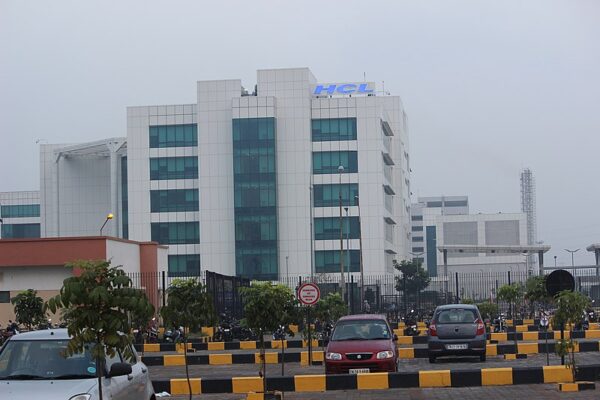


Elon Musk’s artificial intelligence startup xAI has acquired its third major facility near Memphis, Tennessee, cementing the region as the operational backbone of its fast-expanding Colossus compute cluster. The acquisition is part of a long-term plan to vertically integrate data center infrastructure, challenge hyperscalers like Microsoft and Amazon, and support Musk’s broader ambitions across generative AI, social media, and autonomous systems.
The new building, located in Southaven just south of Memphis, is expected to be converted into a high-density AI data center as part of the “Colossus” network—xAI’s bespoke infrastructure supporting its Grok large language models and other compute-intensive AI workloads. The site follows two earlier acquisitions nearby, allowing xAI to create a tightly interconnected cluster of compute facilities with shared power, cooling, and connectivity.

Why is Elon Musk betting on Memphis for xAI’s supercomputer ecosystem?
The Memphis metropolitan area may not be the obvious choice for a global AI infrastructure buildout, but its selection appears to be a calculated move driven by power logistics, industrial real estate availability, and long-term energy control. xAI’s first two data centers in the area were both converted from large warehouse structures, with one already operational under the branding “Colossus.”
The third facility gives xAI flexibility to further scale horizontally without incurring the latency and logistical complexity of multi-region data centers. This proximity enables xAI to operate a private interconnection grid between sites—effectively building a high-bandwidth, low-latency AI village. The model echoes traditional colocation logic but with hyperscale ambitions.
Local infrastructure and power availability also appear to have played a role. The region has proximity to major power infrastructure and industrial zones while still allowing for cost-effective land use. Crucially, this allows Musk’s team to maintain control of both the real estate and the energy inputs—a key differentiator from competitors relying on cloud partners.
What does the ‘MACROHARDRR’ branding signal about xAI’s positioning strategy?
Observers online and on the rooftops of xAI’s buildings have noted the term “MACROHARDRR”—a tongue-in-cheek nod to Microsoft’s “Microsoft Corporation” branding and cloud dominance—spray-painted on the facilities. Whether branding, provocation, or foreshadowing, the name signals that Musk sees xAI not merely as a model developer but as a future rival to hyperscalers in AI compute itself.
In a recent interview, Musk stated that xAI would have “more AI compute than everyone else combined” within five years. The statement, while likely exaggerated, aligns with a broader narrative in which Musk views infrastructure—not just models—as the critical battleground. The branding could also reflect a broader attempt to market the Colossus cluster as its own standalone entity with brand equity in AI circles, independent of xAI’s current Grok integration with X (formerly Twitter).
How does this infrastructure expansion fit into the global AI compute race?
At a time when demand for Nvidia graphics processing units (GPUs) and AI compute is outstripping supply, xAI’s rapid acquisition and conversion of physical infrastructure marks a bet that control over hardware and data center real estate will become a decisive competitive advantage. Musk is effectively trying to bypass the constraints that have slowed OpenAI, Google DeepMind, and Anthropic by vertically integrating his infrastructure path.
That means not only building or owning the facilities but also creating redundancy and scale in how power is delivered. Reports indicate xAI plans to install private power lines between the Memphis-area data centers to manage loads more efficiently and prepare for GPU cluster interconnects running on Nvidia’s NVLink and Infiniband standards.
This self-sufficiency has implications not only for operational speed and uptime but for geopolitical resilience, especially as U.S. regulators place stricter export controls on advanced chips and global supply chains tighten. If Musk succeeds in building the AI equivalent of SpaceX’s vertically integrated model, he could emerge with a defensible moat across compute, chips, and application layer products.
How might competitors like Microsoft, Amazon, and Google respond?
Microsoft Corporation has bet heavily on OpenAI and integrated its Azure cloud into every layer of generative AI delivery, from model training to enterprise deployment. But unlike Microsoft, which relies on hyperscale infrastructure distributed globally, xAI is building out a localized, physically controlled network of GPU-intensive sites.
That model may not scale as quickly across geographies, but it allows for faster iterations in model development, training, and inference, especially when xAI is not dependent on another company’s cloud or energy provisioning terms. While Google and Amazon have developed their own AI chips (TPUs and Trainium/Inferentia), Musk remains loyal to Nvidia Corporation’s ecosystem for now, and the Colossus buildout is expected to be optimized around high-end Nvidia H100 and B100 GPUs.
Competitors could interpret this move as a signal that third-party AI infrastructure reliance is becoming a strategic risk. xAI’s independence could inspire others to revisit their real estate and power acquisition strategies, especially in emerging AI clusters outside Silicon Valley and Northern Virginia.
Are there any regulatory or environmental challenges ahead?
The scale and pace of xAI’s Memphis expansion could draw increased scrutiny from environmental groups and local regulators. Mega data centers require large-scale cooling systems, backup power generation (typically diesel-based), and huge electricity loads that could strain regional grids. In similar projects, opposition has emerged over water use, noise pollution, and land rezoning.
Musk’s team has reportedly planned for on-site energy backup and private distribution networks, but as more facilities come online, the pressure to conduct environmental impact assessments and public consultations will likely rise. Unlike Amazon Web Services or Google Cloud, which have spent years smoothing local political relationships, xAI may face a steeper learning curve in managing civic expectations.
From a federal policy standpoint, the concentration of strategic compute capacity in a single region may also raise questions about redundancy, risk, and national AI infrastructure planning. Policymakers focused on critical infrastructure resilience could take a closer look if Colossus becomes too central to Musk’s broader ecosystem.
What is the outlook for institutional capital, partnerships, and GPU supply?
xAI’s capital requirements to build out a three-site compute complex at this scale are substantial, and while Musk is known for funding ventures personally or through associated vehicles, the long-term sustainability of the model may depend on securing external capital or chip partnerships.
Musk has hinted at pursuing sovereign wealth fund investment or private capital from partners aligned with the xAI vision. Given the global bottleneck on Nvidia H100 and upcoming B100 chips, xAI’s ability to reserve supply at scale will also be a determining factor in how fast Colossus can grow.
Institutional investors evaluating the company’s trajectory will likely ask whether the vertically integrated model can be operationalized fast enough to matter in the race against OpenAI, Google DeepMind, and Amazon’s Bedrock platform. The answer will depend on how fast xAI can go from real estate acquisition to GPU throughput.
What this expansion signals about xAI’s future, competition with hyperscalers, and AI infrastructure strategy
- xAI’s third Memphis facility strengthens its vertically integrated AI infrastructure cluster under the Colossus project.
- Elon Musk’s use of “MACROHARDRR” branding is a direct symbolic challenge to Microsoft’s cloud-AI dominance.
- Localized interconnection and private power networks mark a differentiated approach from traditional hyperscale deployments.
- The expansion signals that xAI is betting that owning the physical layer of AI infrastructure is key to outpacing rivals.
- Regulatory and environmental challenges loom as data center sprawl intersects with civic infrastructure concerns.
- Competitors may reassess their reliance on third-party cloud infrastructure as vertically integrated AI strategies gain traction.
- Institutional capital will likely be required to fund continued buildout, especially with Nvidia GPU supply remaining tight.
- If successful, the Memphis hub could become one of the most strategically important compute zones in North America.
Discover more from Business-News-Today.com
Subscribe to get the latest posts sent to your email.