




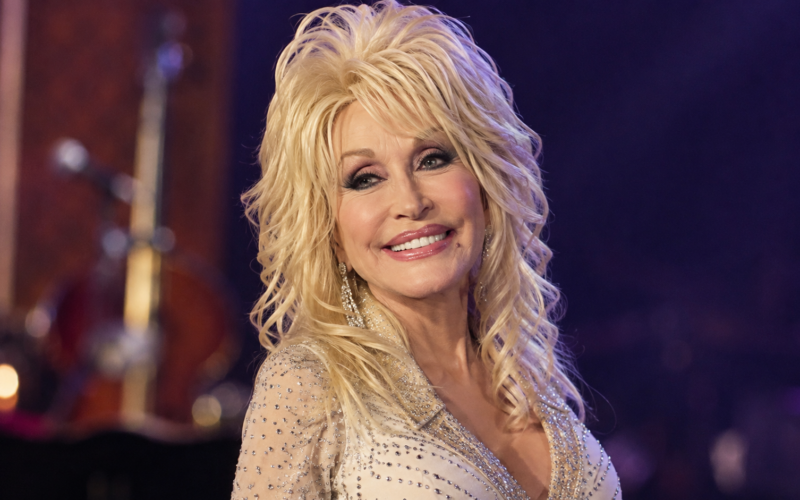
Dolly Parton, the singer, songwriter, actor, entrepreneur and philanthropist whose journey from rural Tennessee poverty to international fame became one of the most remarkable careers in American entertainment, has died at the age of 80. Her family announced her death on August 25, ending a career that stretched across nearly six decades and produced enduring songs including “Jolene,” “Coat of Many Colors,” “9 to 5” and “I Will Always Love You.” Parton sold more than 100 million records, wrote an estimated 3,000 songs and became one of the rare performers whose influence extended far beyond the genre that made her famous. Her family did not immediately disclose a cause of death, leaving the focus of the first tributes on a body of work that transformed country music while creating lasting institutions in entertainment, tourism and childhood literacy.
Parton remained culturally relevant well beyond the peak commercial years of most performers of her generation. Her music was repeatedly rediscovered by younger artists, her exaggerated rhinestone-and-blonde stage persona became instantly recognizable around the world, and her philanthropy gave her an unusual degree of affection across political and cultural divides. She was also an astute owner of her work and business interests, demonstrating decades before artist control became a central industry debate that songwriting rights and intellectual property could be as important to a performer’s long-term legacy as record sales.
Dolly Parton built a global music career from childhood poverty in Tennessee
Dolly Rebecca Parton was born on January 19, 1946, in Pittman Center, Tennessee, and grew up nearby in Locust Ridge as one of 12 children in a family she frequently described as extremely poor. Her father, Robert Lee Parton, worked as a tobacco farmer, while her mother, Avie Lee, filled the family home with traditional songs and storytelling that later became central influences on her own songwriting.
Parton began writing songs as a child and was performing publicly before reaching her teenage years. She appeared on local radio by age 11 and performed at the Grand Ole Opry at 13, giving her an unusually early introduction to the Nashville music world she would eventually dominate. After graduating from high school in 1964, she moved directly to Nashville with ambitions of becoming a professional songwriter and performer.
Her major breakthrough came through a partnership with Porter Wagoner, whose television program exposed Parton to a national country audience. The pair recorded a series of successful duets, but Parton increasingly wanted an independent career, and her decision to leave the partnership inspired one of the most commercially valuable songs she ever wrote, “I Will Always Love You.”
The song became a hit for Parton in the 1970s and reached an even larger global audience when Whitney Houston recorded it for the 1992 film “The Bodyguard.” Parton retained her publishing rights after famously declining an earlier proposal that would have required her to surrender part of the composition to Elvis Presley’s business operation, a decision that became an enduring example of her financial instincts and determination to control her songwriting catalog.
Jolene, 9 to 5 and I Will Always Love You turned Parton into a songwriter for generations
Parton’s enduring importance rests heavily on songwriting rather than celebrity alone. Reuters estimates that she wrote roughly 3,000 songs during her lifetime, although only a fraction were recorded by Parton herself, while 25 of her compositions reached No. 1 on Billboard’s country chart.
“Jolene,” released in 1973, became one of country music’s most recognizable compositions and was subsequently recorded by artists ranging from The White Stripes to Beyoncé and Parton’s goddaughter Miley Cyrus. “Coat of Many Colors” transformed memories of childhood poverty into a story about dignity and maternal love, while “9 to 5” blended workplace frustration with a catchy crossover sound that extended Parton’s reach well beyond traditional country audiences.
Parton’s willingness to move between musical styles helped her become a genuine crossover performer. “Here You Come Again” expanded her pop audience, “Islands in the Stream” with Kenny Rogers became another enduring commercial success, and her collaboration with Linda Ronstadt and Emmylou Harris on the “Trio” project demonstrated her continued credibility among musicians even as her fame expanded into film and television.
Her awards reflected that breadth. Parton accumulated dozens of Grammy nominations, received both competitive Grammy honors and a Lifetime Achievement Award, entered the Country Music Hall of Fame and Songwriters Hall of Fame, and was inducted into the Rock & Roll Hall of Fame in 2022 despite initially questioning whether she belonged there.
Dolly Parton turned her distinctive image into a carefully controlled entertainment brand
Parton’s visual identity was nearly as recognizable as her voice. Towering blonde hair, rhinestones, bright makeup and deliberately exaggerated glamour became part of a carefully managed persona that she frequently joked about while making clear that the image was a business tool rather than evidence that she lacked seriousness as an artist.
That ability to control the joke helped Parton navigate an industry that routinely underestimated female performers. She could publicly make fun of her appearance while privately maintaining ownership of songs, negotiating contracts and building businesses, allowing her to use stereotypes about herself without surrendering control to them. AP described her as a feminist role model for retaining authority over her career, music and finances in an entertainment industry historically dominated by men.
Her first major film role came in the 1980 comedy “9 to 5,” alongside Jane Fonda and Lily Tomlin. The movie established Parton as a credible actor as well as musician, while its title song earned her an Academy Award nomination and became an enduring anthem associated with working women and workplace inequality.
She later appeared in films including “The Best Little Whorehouse in Texas,” “Steel Magnolias,” “Rhinestone” and “Straight Talk.” Parton also maintained a major television presence and expanded her work into books and stage productions, ensuring that her career never became dependent on a single medium or generation of fans.
Dollywood transformed Parton’s fame into a major economic force in East Tennessee
Parton’s business legacy became most visible through Dollywood, the theme park developed in the Smoky Mountains near the region where she grew up. Rather than distancing herself from rural Tennessee after becoming famous, she repeatedly invested her name and commercial power back into the area, helping turn Dollywood into a major tourism destination and economic engine for Appalachia.
That strategy reinforced one of the defining features of Parton’s public identity: extraordinary fame without abandoning the geographic and cultural roots that shaped her music. Dollywood allowed her to transform nostalgia for the Smoky Mountains into a large entertainment business while supporting employment and tourism across East Tennessee.
Her business interests also extended across publishing, television, film production and merchandising. Parton understood the commercial value of intellectual property early in her career and retained substantial control over her songs, a decision that became increasingly valuable as recordings were covered, licensed and rediscovered across successive generations.
The result was an unusual combination of artistic credibility and commercial longevity. Parton was not simply the performer whose image appeared on products and attractions but a songwriter and entrepreneur whose decisions about ownership helped determine how her work could be used decades after it was created.
Imagination Library may become one of Dolly Parton’s most enduring legacies outside music
Parton’s philanthropy eventually became almost as central to her reputation as her entertainment career. She founded Dolly Parton’s Imagination Library in 1995 in Sevier County, Tennessee, after being inspired by her father’s inability to read and write, initially intending to provide free books to children in her home community.
The program expanded dramatically across the United States and later into Canada, the United Kingdom, Australia and Ireland. By 2026, the Imagination Library was sending more than three million books per month to children around the world, while Parton’s official organization said the initiative had distributed hundreds of millions of free books since its creation.
Its structure reflected Parton’s broader philanthropic approach because families did not have to demonstrate financial hardship to participate where the program was available. Children received age-appropriate books from birth until age five, making literacy support part of an ordinary childhood experience rather than a program explicitly associated with poverty.
Parton also became a prominent supporter of disaster recovery in Tennessee. Following devastating Smoky Mountains wildfires in 2016, her foundation provided direct financial assistance to affected families, while she later donated $1 million to Vanderbilt University Medical Center during the COVID-19 pandemic, helping support research connected with development of the Moderna vaccine.
Carl Dean remained the private constant behind one of America’s most public careers
Parton’s personal life contrasted sharply with her public persona. She met Carl Dean shortly after arriving in Nashville and married him in 1966, beginning a marriage that lasted nearly six decades despite Dean almost completely avoiding the celebrity world surrounding his wife.
Dean became an important private presence and occasional source of inspiration in Parton’s songwriting, including the story behind “Jolene.” His refusal to participate in show business also allowed Parton to preserve a part of her life that remained largely disconnected from touring, television appearances and the intensely public image she created.
Dean died in March 2025 at age 82. Parton subsequently spoke about the difficulty of adjusting to life without the partner who had been present for virtually her entire professional career, while continuing to work on music, stage productions and philanthropic projects.
Parton experienced health problems during her final period and reduced some public commitments, but her family has not publicly identified a cause of death. That distinction is important because recent health difficulties provide context for her reduced appearances but do not establish what caused her death on August 25.
Dolly Parton’s ability to cross political and cultural divides made her increasingly unusual
Parton’s broad appeal became particularly striking as American culture grew more politically polarized. She maintained strong connections with rural, Christian and conservative audiences while simultaneously becoming an admired figure among younger listeners, LGBTQ+ fans, feminists, musicians from other genres and people who had little connection with traditional country music.
She generally avoided partisan endorsements and repeatedly resisted attempts to turn her celebrity into explicit political advocacy. That restraint did not mean she lacked views, but it allowed audiences with sharply different political identities to interpret her emphasis on kindness, literacy, work, faith and personal dignity through their own perspectives.
Her songs also proved unusually durable because many were built around emotions rather than particular historical moments. Poverty, jealousy, ambition, heartbreak, workplace frustration, family and independence remained recognizable decades after the recordings first entered the charts, allowing subsequent performers to reinterpret her writing without stripping away its emotional core.
That durability may ultimately define her influence more than any award total. Parton repeatedly said she wanted to be remembered first as a songwriter, and the continued life of compositions such as “Jolene” and “I Will Always Love You” suggests that part of her legacy was already secure long before her death.
Key takeaways from Dolly Parton’s death and six-decade cultural legacy
- Dolly Parton died on August 25, 2026, at age 80, ending a career that made her one of country music’s most influential global figures.
- Her family confirmed the death, but no cause was immediately disclosed, making speculation about the role of her recent health problems premature.
- Parton sold more than 100 million records worldwide and wrote an estimated 3,000 songs during a career spanning nearly six decades.
- “Jolene,” “Coat of Many Colors,” “9 to 5” and “I Will Always Love You” became enduring compositions recorded and rediscovered by multiple generations.
- Parton maintained control over valuable publishing rights, demonstrating business instincts that helped turn her songwriting into a lasting commercial asset.
- Her film career included “9 to 5” and “Steel Magnolias,” expanding her influence well beyond Nashville and traditional country-music audiences.
- Dollywood became a major tourism and employment engine in East Tennessee, tying Parton’s business success directly to the region where she grew up.
- The Imagination Library grew from a Tennessee literacy project into an international program distributing millions of free children’s books every month.
- Parton also supported disaster relief and donated $1 million to Vanderbilt research connected with development of the Moderna COVID-19 vaccine.
- Her combination of songwriting, entrepreneurship, philanthropy and broad nonpartisan appeal leaves a cultural legacy extending well beyond her recordings.
Discover more from Business-News-Today.com
Subscribe to get the latest posts sent to your email.