


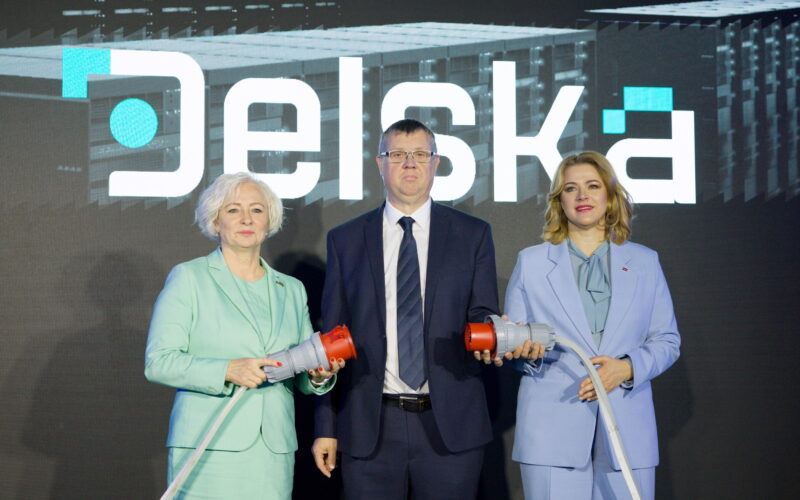
Delska has officially opened EU North Riga LV DC1, a new 10 MW data center in Riga designed for artificial intelligence and high-performance computing workloads, marking one of the more ambitious digital infrastructure bets seen recently in the Baltics. The facility gives Latvia a tangible new asset in a market where available power, rack density, and sustainability credentials are becoming as strategic as land once was for ports and factories. The immediate relevance is not merely local capacity expansion, but whether Riga can begin attracting compute demand that has become harder and more expensive to place in Europe’s traditional hub markets. In that sense, Delska’s launch is a regional infrastructure signal as much as a company milestone.
Why does Delska’s new Riga launch matter for Europe’s growing AI and HPC infrastructure map?
The timing matters because Europe is in the middle of a structural rethink around digital capacity. Artificial intelligence has turned data centers from background utility assets into front-line economic infrastructure. The European Commission’s AI Continent agenda explicitly ties Europe’s competitiveness and technological sovereignty to stronger compute capacity, while also pushing for sustainable data center growth. That broader policy backdrop gives a project like Delska’s more significance than a routine colocation expansion. It lands in a market where “where can I get reliable power and space?” has become a much sharper question than “which city has the most established brand?”
Delska is pitching EU North Riga LV DC1 as a facility tailored for AI-era demand rather than yesterday’s enterprise hosting model. The company says the site supports densities of up to 250 kW per rack for AI and HPC needs, while the broader 7,100 square metre modular design allows expansion to 30 MW over time. That matters because the economics of new compute increasingly favor sites that can handle denser, hotter, more power-hungry workloads without forcing customers into a chain of retrofits and compromises. In plain English, this is less “rent a rack” and more “prepare for GPU-heavy tenants who arrive with appetites that would make older data halls sweat nervously.”
The project is also trying to use geography as a commercial advantage. Delska and related coverage frame the facility as a response to capacity constraints in major European hubs, where power access, planning complexity, and sustainability pressures have become more binding. That does not automatically make Riga the next Frankfurt, and nobody sensible should pretend otherwise, but it does create an opening for secondary and emerging markets that can offer credible uptime, renewable power sourcing, and connectivity without the same degree of congestion. If Europe’s AI capacity map is due for a redraw, smaller northern markets want a thicker pen.

Can Riga realistically compete with larger Northern European data center markets for new demand?
Riga’s case is not built on scale alone. It is built on positioning. Latvia already aligns itself with the European Union’s digital connectivity and digital decade objectives, with an emphasis on broad high-quality connectivity and nationwide communications capability. A facility like EU North Riga LV DC1 gives that policy narrative hard infrastructure behind it. For customers weighing location decisions, that combination of connectivity ambition, political support, and comparatively available room to grow can be meaningful, especially for disaster recovery, sovereign workloads, regional cloud deployments, and selected AI inference or training deployments that do not need to sit in the most saturated metro.
The officials at the launch leaned heavily into that message. Latvian Prime Minister Evika Silina framed the project as evidence that Latvia can attract secure, high-value future-facing investments and tied digital infrastructure directly to economic resilience and national security. Speaker of the Parliament Daiga Mierina likewise cast the facility as a milestone in Latvia’s digital development. Political speeches are not investment memos, obviously, but they do matter when the subject is infrastructure that depends on regulatory confidence, energy credibility, and the sense that the host country wants more of this, not less.
Still, Riga’s challenge is execution rather than narrative. Europe’s core hub cities have ecosystem depth, interconnection gravity, and years of customer familiarity on their side. Delska therefore has to prove that its value proposition is not merely “cheaper than the famous places” but “good enough, sustainable enough, and strategically located enough to deserve serious workloads.” That is a higher bar. Winning overflow demand is one thing. Becoming part of long-term architecture planning for cloud, enterprise, AI, and public-sector customers is another.
How important are sustainability and energy sourcing in Delska’s Riga data center strategy?
They are central, not decorative. Delska is targeting a power usage effectiveness below 1.3, sourcing renewable energy from Northern European wind, solar, and hydro, and using Neste MY renewable diesel for backup generation. The company also presents the site as LEED-certified and optimized for energy efficiency. In a market where sustainability language is often sprayed around like room freshener, those details matter because customers, regulators, and investors increasingly care about how compute capacity is built, not just how much of it exists.
This matters especially in Europe, where expansion in data center capacity is politically easier to defend when operators can show credible efficiency and renewable sourcing. The European Commission’s policy direction explicitly prioritizes sustainable data centers as capacity grows. That means Delska’s green framing is not simply a branding choice. It is a way of aligning with where public policy, enterprise procurement, and long-term infrastructure financing are already moving. If the company can maintain those credentials in practice while ramping utilization, it improves its chances of winning customers that need both performance and compliance-friendly sustainability narratives.
Of course, sustainability does not cancel the brutal math of operations. High-density AI workloads can stress cooling, backup systems, and overall power design in ways that make brochure claims look brave. The test for Delska will be whether its efficiency targets and renewable story remain intact as more real customer loads move in. Everybody looks elegantly green before the racks are full and the processors start behaving like industrial heaters with ambition.
What does the facility’s Tier III positioning and rack density say about its target customers?
The site is built to Tier III standard, which is associated with concurrently maintainable infrastructure and a design level aimed at high availability. Uptime Institute describes the Tier system as the global benchmark for data center performance, and Tier III is widely associated with 99.982% availability, or roughly 1.6 hours of downtime annually under standard definitions. For target customers, that places Delska squarely in the category of serious operational infrastructure rather than bargain-basement hosting.
Combined with support for up to 250 kW per rack, the messaging suggests Delska is chasing a broader mix than traditional colocation. The likely targets include enterprises with AI ambitions, cloud and managed service providers seeking regional footholds, public-sector and sovereign customers with data residency concerns, and HPC users who need more power density than many older facilities can comfortably provide. That is a smart strategic lane because it moves the company closer to higher-value workload categories where differentiation is possible.
The risk is that infrastructure specs alone do not create sticky customer relationships. Buyers in these segments also care about connectivity, service consistency, ecosystem access, and the confidence that an operator can scale with them. Delska’s existing footprint across Riga and Vilnius, plus points of presence in Frankfurt and Amsterdam, helps that story by suggesting the company is not starting from zero. But the Riga launch will still have to prove itself commercially, one signed workload at a time.
Could Delska’s expansion help reposition the Baltics as a credible Northern European digital infrastructure hub?
That is clearly the larger ambition. Delska already operates six data centers across Riga and Vilnius with total capacity of 19 MW, and the new Riga site not only adds 10 MW but is designed for eventual expansion to 30 MW. Put differently, this is not a vanity ribbon-cutting. It is a platform asset meant to alter the scale conversation around the company and, by extension, the region.
The Baltics have long had ingredients that can support a stronger digital infrastructure narrative, including strategic geography, connectivity relevance between markets, and increasing policy focus on resilience and modernization. What has been less certain is whether the region could assemble infrastructure of sufficient quality and ambition to attract workloads that might previously have defaulted to better-known European locations. Delska is effectively arguing that the answer is now yes, at least for a meaningful subset of customers.
That argument becomes more credible because the project is being framed around sovereign computing, data portability, and national-infrastructure relevance, not just generic cloud demand. Those themes resonate more strongly in 2026 than they did a few years ago, particularly across Europe, where control over data, compute, and strategic digital assets has become more politically charged. In that environment, a modern facility in Riga can pitch itself not only as efficient infrastructure, but as infrastructure with geopolitical usefulness.
None of that guarantees victory. The Baltics still need more ecosystem depth, more visible customer wins, and continued investment in connectivity and energy resilience if they want to be treated as enduring digital infrastructure markets rather than interesting side bets. But Delska’s launch does move the conversation. It suggests the Baltics are no longer content to be downstream consumers of Europe’s infrastructure buildout. They want a seat at the compute table, and preferably one with renewable power, high rack density, and a few GPUs humming in the background.
What are the most important executive takeaways from Delska’s Riga data center launch for Latvia and the wider industry?
- Delska’s new Riga facility is best understood as a regional infrastructure play tied to Europe’s AI capacity buildout, not just a local real estate announcement.
- The 10 MW launch gives Latvia a more credible asset in the competition for overflow and emerging demand that may be priced out of or delayed in larger European hubs.
- Support for up to 250 kW per rack positions the site toward higher-value AI and HPC workloads rather than legacy enterprise colocation alone.
- The modular design and path to 30 MW suggest Delska is building a scale platform, not merely filling an immediate capacity gap.
- Sustainability is a strategic selling point here because European policy and procurement increasingly reward renewable sourcing and efficient design.
- Political backing from Latvia’s top leadership improves the project’s signaling value for investors and customers assessing long-term regulatory confidence.
- Tier III positioning gives the facility operational credibility, but commercial success will depend on customer wins, connectivity depth, and execution under real load.
- For the Baltics, the launch strengthens the argument that the region can become a selective but meaningful node in Northern Europe’s digital infrastructure network.
- For competitors in more established hubs, projects like this show how capacity shortages and AI demand are creating openings for secondary markets with credible power and sustainability profiles.
- For enterprises and sovereign customers, Riga may become more attractive as a location that combines resilience, greener power narratives, and strategic geographic diversification.
Discover more from Business-News-Today.com
Subscribe to get the latest posts sent to your email.



