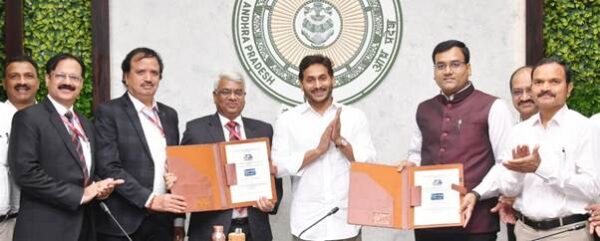


SJVN Limited (NSE: SJVN, BSE: 533206) has once again captured the spotlight of India’s renewable energy sector after Prime Minister Narendra Modi laid the foundation stone for the company’s 200 megawatt solar power project at Khavda in Gujarat. The ceremony, held virtually and joined by top state and central leaders, signals a milestone moment in the state-owned utility’s expansion beyond its traditional hydroelectric roots into large-scale solar capacity. For both markets and policymakers, the Khavda project offers a glimpse into how Central Public Sector Enterprises are positioning themselves to meet India’s ambitious clean energy targets.
The Khavda installation is part of Gujarat Urja Vikas Nigam Limited’s Phase XVII allocation at the vast Khavda Solar Park. SJVN has secured a long-term tariff of ₹2.88 per unit for 25 years, ensuring predictable cash flows from a project expected to cost about ₹866.8 crore. In its first year, the 200 MW facility is projected to generate 504.92 million units of electricity and deliver a cumulative 11,620 million units over its contracted lifetime. Beyond energy output, the company projects that the plant will help avoid nearly 569,250 tonnes of carbon emissions over 25 years, furthering India’s path to its 2070 Net Zero target.
Why does the Khavda solar park matter for SJVN and India’s clean energy trajectory?
The Khavda Solar Park in Kachchh district is no ordinary site. Designed as one of Asia’s largest renewable energy hubs, it has become a centerpiece in Gujarat’s and India’s broader plan to scale gigawatt-level clean power projects. The choice of Khavda is strategic: vast tracts of arid, underutilized land can be repurposed for solar deployment, while transmission corridors connecting Gujarat to the national grid enable evacuation of power to energy-deficient regions.
For SJVN, which built its reputation on hydro projects in Himachal Pradesh and neighboring regions, the 200 MW solar expansion represents both diversification and risk hedging. Hydro projects often face long gestation periods, environmental clearances, and climate-related hydrology variability. By comparison, solar offers faster commissioning timelines, reduced ecological footprint, and predictable tariff structures once bid successfully. The Khavda investment therefore aligns SJVN with government policy while responding to investor demand for growth visibility in the renewable sector.
The government’s target of achieving 500 GW of renewable energy capacity by 2030 provides the macroeconomic tailwind. With India already passing 200 GW of installed renewable capacity, incremental growth will increasingly rely on mega projects like Khavda to deliver scale and cost competitiveness. SJVN’s entry into this landscape reflects a structural shift among PSUs from legacy generation toward integrated clean portfolios.
How does the project fit into SJVN’s existing capacity and growth pipeline?
SJVN today operates as a Navratna CPSE under the Ministry of Power with a diverse portfolio across India and Nepal. The company has commissioned fourteen projects with an aggregate capacity of 2,968 MW and has built 123 kilometers of transmission lines. While hydro continues to dominate its generation mix, accounting for most of the capacity, the incremental megawatts being added in recent years have been solar and wind, reflecting the government’s push for balance in generation assets.
The Khavda project is scheduled for commissioning by December 31, 2026. Once operational, the 200 MW capacity will feed directly into Gujarat Urja Vikas Nigam Limited’s distribution framework, helping meet industrial and residential demand in a state that consistently ranks among India’s top energy consumers. Analysts expect that timely execution could set the stage for SJVN to bid for larger slices of GUVNL’s upcoming renewable auctions, thereby embedding itself deeper into Gujarat’s energy ecosystem.
Importantly, the tariff of ₹2.88 per unit provides visibility into long-term revenue streams, though margins will depend on cost discipline during execution. The ability to commission on budget and on time will be closely watched by investors, especially given that execution slippages in PSU projects often lead to re-rating of stock multiples.
How has the stock market reacted to SJVN’s renewable expansion?
As of September 19, 2025, shares of SJVN closed at ₹94.50, representing a 0.61 percent gain over the previous session. The stock moved in a narrow band, touching a high of ₹94.65 and a low of ₹93.75, with a volume-weighted average price of ₹94.24. Market capitalization currently stands at ₹37,136.56 crore, while the free float market cap is about ₹6,740.69 crore. The company’s valuation multiples remain elevated, with an adjusted price-to-earnings ratio of 53.56, suggesting that investors are pricing in robust future growth.
The stock’s 52-week range captures both investor optimism and sector volatility: it touched a high of ₹135 in September 2024 but corrected sharply to a low of ₹80.54 in March 2025. Such swings reflect both broader PSU sector moves and shifting sentiment toward renewable project execution. Traded volume of 29.12 lakh shares on September 19 with a 45.52 percent delivery ratio indicates that nearly half of trades are being carried forward into longer-term holdings, underscoring interest from retail and domestic institutional investors.
Foreign institutional investors have remained cautious in recent quarters, reducing exposure due to valuation concerns and sectoral rebalancing. By contrast, domestic mutual funds have increased allocations via NIFTY CPSE index funds, where SJVN is a significant constituent. This divergence highlights the difference between global investors focusing on valuation metrics and local funds betting on policy continuity and PSU resilience.
What risks and opportunities are investors weighing in SJVN’s growth story?
Investor sentiment around SJVN is broadly positive but not without caveats. The opportunities are straightforward: rising renewable capacity, strong government backing, concessional financing, and inclusion in major CPSE indices. These factors offer a cushion against downside risk and ensure that SJVN remains in focus whenever renewable policy updates are announced.
However, the risks cannot be ignored. At a tariff of ₹2.88 per unit, the Khavda project is competitive, but falling module prices could compress future bids and leave existing contracts relatively less attractive. Any delays in project commissioning beyond December 2026 would weigh heavily on market sentiment, particularly given the premium valuations. In addition, the high P/E ratio compared to other PSU energy stocks suggests limited margin for error. Execution, cost overruns, or policy delays could trigger rapid corrections in the share price.
Investors are also conscious of the structural challenge facing PSUs: while policy support is strong, bureaucratic delays and slower decision-making can impede agile project delivery. Against this backdrop, SJVN’s ability to demonstrate timely delivery of Khavda will be critical in proving that it can match the performance of private renewable developers such as Adani Green Energy or ReNew Power.
How does SJVN’s renewable strategy compare with peers like NTPC and NHPC?
The renewable pivot is not unique to SJVN. NTPC, India’s largest power utility, has announced aggressive targets to build over 60 GW of renewable capacity by 2032. NHPC, traditionally a hydro-focused company, is also expanding into solar and wind. SJVN’s move into Gujarat therefore aligns with a broader PSU sectoral strategy to remain relevant in a decarbonizing economy. Where SJVN differentiates itself is in its smaller but more nimble size, allowing it to bid selectively and build execution credibility without the scale pressures that weigh on NTPC.
From a policy perspective, the government has positioned PSUs as anchor developers of India’s renewable future, often securing land, evacuation corridors, and long-term power purchase agreements that private players may find harder to negotiate. For investors, this makes PSU renewables an attractive long-term bet despite the higher valuation multiples, particularly when compared to private developers exposed to more competitive tariff risks.
What is the longer-term outlook for SJVN and its shareholders?
Looking forward, SJVN’s Khavda solar project represents both a test case and a stepping stone. If executed on time, it could validate the company’s diversification strategy and provide confidence for larger renewable bids. Successful commissioning will also reinforce the narrative that PSUs can compete with private sector players in cost and efficiency. Analysts expect that beyond Khavda, SJVN will pursue more solar and hybrid projects in states such as Rajasthan, Maharashtra, and Madhya Pradesh, leveraging central government tenders and state distribution company partnerships.
For shareholders, the story remains one of cautious optimism. Retail investors view dips below ₹90 as attractive entry points, while institutional investors are adopting a hold-to-accumulate strategy. The Khavda project strengthens SJVN’s ESG credentials, a factor increasingly important for global funds that may revisit the stock once valuation moderates. With India’s renewable energy trajectory only accelerating, SJVN’s place in the sector is secure, but the pace of execution will ultimately decide how the stock performs over the next 12 to 24 months.
Discover more from Business-News-Today.com
Subscribe to get the latest posts sent to your email.