




COVID-19 may no longer dominate global headlines, but the coronavirus continues to circulate, mutate, and impact millions worldwide. As the virus transitions into endemic status, new symptoms, evolving treatments, and layered prevention strategies remain vital to public health. From symptoms and treatment to how the virus spreads, this is your go-to resource for understanding and managing coronavirus in everyday life.
What are the most frequently reported coronavirus symptoms in humans?
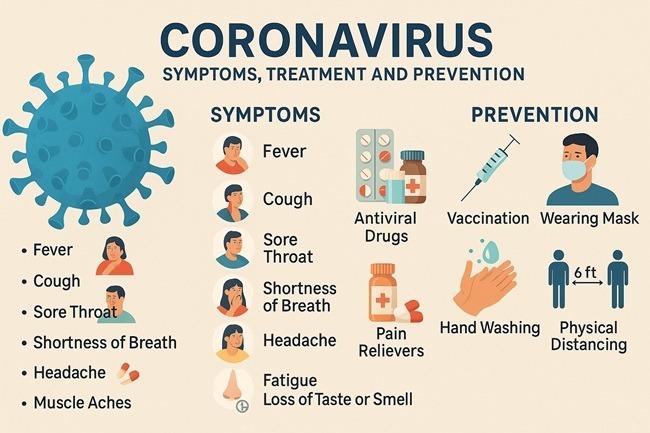
Coronavirus symptoms in humans can vary widely depending on age, immune status, prior exposure, and the circulating variant. Fever, sore throat, fatigue, and a persistent dry cough remain among the most reported early signs. Headache, muscle or joint pain, and nasal congestion are also common. Loss or distortion of smell and taste, which were hallmarks of earlier variants, still occur in some cases but appear less frequently with recent sublineages.
Shortness of breath, chest discomfort, and low oxygen saturation may signal more serious lung involvement. For children and immunocompromised individuals, gastrointestinal symptoms such as nausea, diarrhea, or abdominal cramping may appear earlier than respiratory signs. The average incubation period remains around two to six days, though it may extend to two weeks.
While many cases resolve within 10 to 14 days with mild symptoms, high-risk groups such as elderly individuals and those with diabetes, cardiovascular disease, kidney disease, or chronic respiratory illnesses are more susceptible to complications like pneumonia, organ inflammation, or blood clots.
One of the more challenging outcomes has been the emergence of long COVID, where symptoms such as fatigue, cognitive dysfunction, brain fog, and breathing difficulties persist for weeks or months. Long COVID can occur even after mild illness and continues to affect millions of people worldwide.
Can people with no symptoms still spread coronavirus to others?
Yes. Asymptomatic transmission remains one of the most persistent threats in controlling the spread of coronavirus. Individuals infected with SARS-CoV-2 can carry and transmit the virus even when they show no outward signs of illness. This silent spread makes it difficult to rely solely on symptom-based screening to stop community transmission.
Coronavirus spreads primarily through respiratory droplets and airborne particles released when people talk, breathe, sneeze, or cough. In indoor environments with poor air circulation, these particles can linger in the air for extended periods. Crowded or poorly ventilated places such as offices, restaurants, schools, or public transport carry the highest risk of exposure.
Breakthrough infections in vaccinated individuals, while typically less severe, can still result in temporary viral shedding. This means even vaccinated people may contribute to spread, particularly in the first few days after infection. The reality of asymptomatic transmission has reinforced the global push for layered prevention measures beyond vaccination alone.
What treatment options are available for coronavirus infections?
Treatment for COVID-19 is now more structured than in the early days of the pandemic. For individuals with mild symptoms, at-home management with rest, hydration, and over-the-counter medications such as acetaminophen or ibuprofen is typically sufficient. These treatments are designed to alleviate fever, headaches, and muscle pain while supporting recovery.
For patients who are at increased risk of developing severe disease, such as older adults or those with chronic illnesses, oral antiviral medications have become an important tool. Drugs like Paxlovid, which combines nirmatrelvir and ritonavir, are most effective when taken within the first five days of symptom onset. Molnupiravir is another oral antiviral approved in many regions for eligible patients.
Hospitalized patients who require oxygen or critical care receive a combination of therapies. These may include intravenous antivirals like remdesivir, corticosteroids such as dexamethasone to control inflammation, and anticoagulants to reduce the risk of blood clots. For patients experiencing an overactive immune response or cytokine storm, immunomodulators may be used to manage systemic inflammation.
In some cases, monoclonal antibodies are still used as either preventive or therapeutic tools, although their effectiveness varies depending on the dominant viral strain. New antibody formulations are currently in development to address gaps caused by evolving mutations.
What are the most effective ways to prevent coronavirus infection?
Vaccination remains the single most effective preventive tool against severe COVID-19 outcomes. In many countries, updated vaccines targeting recent variants are offered annually, similar to the seasonal flu shot. These booster shots help to maintain immunity and limit the risk of hospitalization, even in populations with prior infections or vaccinations.
In addition to vaccination, personal protective behaviors continue to be important. Wearing well-fitted masks in indoor public spaces or during travel reduces exposure to airborne viral particles. Good hand hygiene, including regular handwashing with soap and the use of alcohol-based sanitizers, remains a simple but effective way to cut transmission.
Ventilation plays a critical role in prevention. Increasing airflow in indoor settings through open windows, air purifiers, or upgraded HVAC systems significantly lowers the concentration of viral aerosols. In schools, offices, and long-term care facilities, improved ventilation can make the difference between a single exposure and a potential outbreak.
People with underlying health conditions or weakened immune systems may benefit from additional precautions, such as avoiding crowded indoor environments during high-transmission periods or using preventive medications when available. Staying informed about local case levels and health advisories allows individuals to adjust their behavior as needed.
Why COVID-19 still matters in a post-pandemic world
Although the emergency phase of the pandemic is over, SARS-CoV-2 has not disappeared. The virus continues to evolve, and new subvariants occasionally trigger waves of reinfection. While global immunity has improved, either through vaccination or previous infection, it is not absolute. Immunity wanes over time, and new variants may partially evade prior protections.
COVID-19 still disrupts daily life through absenteeism, long-term health effects, and healthcare system strain. Long COVID remains a significant public health concern, with ongoing costs for both individuals and health services. The continued circulation of the virus also poses risks to people with suppressed immune systems or those unable to be vaccinated.
Globally, many regions continue to experience vaccine gaps, weak surveillance systems, and limited access to therapeutics. These challenges create hotspots for viral evolution and new variant emergence, which can have ripple effects on international health even years after the pandemic began.
The coronavirus has also served as a wake-up call for pandemic preparedness, prompting investments in vaccine technology, data-sharing infrastructure, and global cooperation. Many of these reforms are now influencing how future health threats will be managed.
What COVID-19 teaches us about personal and public health resilience?
Coronavirus is no longer an unfamiliar or sudden health emergency, but that does not mean the threat has disappeared. In its endemic form, COVID-19 continues to pose a public health challenge—especially for older adults, individuals with pre-existing medical conditions, and communities with low vaccination coverage. While the waves may be smaller and less disruptive than in the pandemic’s early years, the virus still causes hospitalizations, long-term complications, and preventable deaths every single day.
Understanding how COVID-19 spreads—through airborne particles, close contact, and asymptomatic carriers—is essential for navigating daily life in a post-pandemic world. Equally important is recognizing that symptoms can shift depending on the variant. This includes familiar respiratory signs such as cough, sore throat, and fever, but also extended fatigue, shortness of breath, or gastrointestinal discomfort. Early detection improves treatment outcomes and helps contain further spread.
Vaccination remains the cornerstone of protection against COVID-19. Annual booster shots tailored to circulating variants help reinforce immunity and reduce the severity of infection. Even for those previously infected, vaccine-induced immunity continues to offer a critical layer of defense—especially against emerging sublineages that may partially escape past exposure.
Prevention, however, does not end at vaccination. Personal health habits such as frequent handwashing, avoiding face-touching, and masking in crowded or poorly ventilated areas continue to serve as frontline defense tools. Good airflow—through open windows, fans, or air filtration—reduces viral load indoors and is especially crucial in schools, healthcare settings, and shared public spaces.
Critically, complacency is the enemy of long-term safety. Even if COVID-19 no longer feels urgent, the virus remains in circulation and continues to evolve. Letting go of basic preventive measures or skipping annual vaccinations opens the door for resurgence and increased vulnerability, particularly among high-risk groups. Maintaining COVID-19 awareness is not about panic, but about preparedness. Just as individuals adapt to seasonal flu and other infectious diseases, staying vigilant about coronavirus is now a part of responsible long-term health behavior.
By combining symptom awareness, timely testing, early treatment with antivirals like Paxlovid, and routine prevention practices, individuals can manage their personal risk while contributing to broader public health resilience. COVID-19 is now part of our daily reality—but with the right tools and mindset, it does not have to dominate it.
Discover more from Business-News-Today.com
Subscribe to get the latest posts sent to your email.