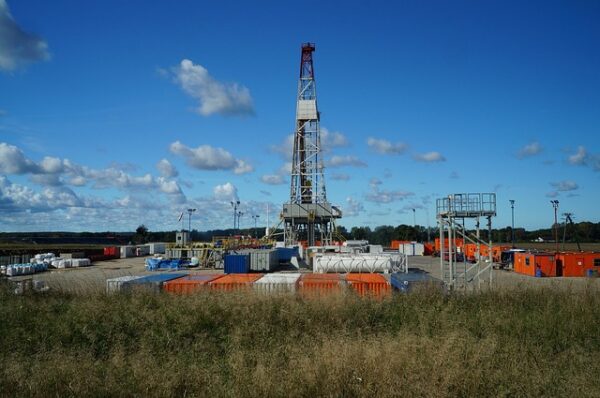



ConocoPhillips (NYSE: COP) agreed on 17 July 2026 to acquire a 42% interest in BP Energy Company of Kirkuk Limited from BP p.l.c. (LSE: BP, NYSE: BP), expanding the US producer’s international portfolio into northern Iraq. The BP-controlled company holds the development and production contract covering the Baba and Avanah domes of the Kirkuk oil field and the adjacent Bai Hassan, Jambur and Khabbaz fields. The contract includes an initial gross recoverable resource exceeding 3 billion barrels of oil equivalent, alongside additional exploration potential. Financial terms were not disclosed, and completion is expected by the end of 2026 following regulatory approvals and other customary conditions. The agreement gives ConocoPhillips access to a large producing resource base while limiting its initial capital exposure and leaving BP as the majority shareholder.
What exactly is ConocoPhillips acquiring from BP in the Kirkuk redevelopment agreement?
ConocoPhillips is not directly purchasing 42% of the physical Kirkuk fields or taking control of their day-to-day operations. It has agreed to acquire 42% of BP Energy Company of Kirkuk Limited, the corporate vehicle holding the development and production contract for the redevelopment programme.
The contract covers the Baba and Avanah domes of the historic Kirkuk field together with Bai Hassan, Jambur and Khabbaz. These are producing brownfield assets requiring rehabilitation, reservoir management, infrastructure upgrades and production optimisation rather than greenfield discoveries awaiting first development.
BP will remain the majority shareholder in BP Energy Company of Kirkuk and will continue to lead the contractor group. Iraq’s state-owned North Oil Company and North Gas Company retain central operating roles, with the project designed around collaboration between the international contractors and Iraqi personnel.
The transaction carries an effective date of 1 July 2026, although ConocoPhillips will not recognise its interest until the deal closes. Once completed, the investment will be accounted for as an equity affiliate rather than a fully consolidated operating subsidiary.
This means ConocoPhillips will recognise its share of the affiliate’s earnings instead of consolidating all project revenue, expenditure, assets and liabilities into its financial statements. The accounting structure reflects its minority economic participation and limited direct operational control.

Why does the Kirkuk resource base fit ConocoPhillips’ disciplined investment framework?
The attraction lies in the combination of scale, existing production and comparatively limited initial capital requirements. ConocoPhillips is gaining exposure to mature fields with established reservoirs, wells and infrastructure rather than financing an entirely new development.
Management said the opportunity comfortably meets the company’s cost-of-supply threshold. That indicates ConocoPhillips expects the project to compete for capital within its global portfolio under conservative commodity-price assumptions, although it has not disclosed its specific break-even estimate.
The contract includes more than 3 billion barrels of oil equivalent in initial gross recoverable resources. A simple application of ConocoPhillips’ 42% interest would imply exposure corresponding to approximately 1.26 billion barrels of oil equivalent.
That figure should not be interpreted as proved reserves attributable to ConocoPhillips. The company’s economic entitlement will depend on contract terms, incremental production, recognised costs, field performance and applicable reserve-booking rules. Gross resources also differ materially from proved reserves that can be reported in regulatory filings.
The brownfield nature of the project could provide a more efficient development profile than a frontier exploration programme. Existing production offers immediate reservoir data, while rehabilitation and optimisation can sometimes deliver returns faster than building new facilities from the ground up.
Kirkuk also provides long-duration conventional oil exposure outside the company’s dominant North American shale portfolio. Conventional fields typically decline more slowly than shale wells once stabilised, potentially supporting production and cash flow over a longer period.
How will ConocoPhillips earn returns without taking direct operatorship of the Iraqi fields?
The contract’s remuneration is linked to ConocoPhillips’ proportionate share of incremental production and eligible costs. The economic model therefore differs from a conventional concession in which an international producer owns a direct working interest in subsurface resources.
Iraq retains ownership of its hydrocarbons, while the contractor group earns returns by rehabilitating the fields, increasing output and managing costs. The precise profitability will depend on the contractual remuneration formula and the amount of incremental production achieved relative to the agreed baseline.
This performance-linked structure aligns the contractors with Iraq’s objective of reversing decline and raising recoverable volumes. It can also reduce ConocoPhillips’ exposure to large upfront payments for undeveloped acreage.
The company said the joint venture is not expected to require significant capital contributions. That statement suggests ConocoPhillips expects the redevelopment to be supported substantially through existing operations, project cash flows or the contractual funding structure.
However, limited initial contributions do not mean the investment is free of future capital requirements. Mature fields can require extensive spending on well workovers, water management, pipelines, gas processing, power systems, corrosion control and ageing surface infrastructure.
The structure also makes execution dependent on parties outside ConocoPhillips’ direct control. BP will lead the contractor group, while North Oil Company and North Gas Company will remain critical to field operations. ConocoPhillips must therefore create value through technical collaboration, governance and oversight rather than unilateral operating decisions.
What does BP gain by selling 42% while retaining control of its Kirkuk company?
BP gains a technically experienced partner while retaining majority ownership and leadership of the contractor group. ConocoPhillips brings experience managing mature conventional fields, large-scale reservoir optimisation and complex international partnerships.
The transaction also spreads financial and execution risk. Kirkuk is a substantial long-term redevelopment programme, and sharing the project allows BP to participate in its upside without carrying the entire contractor exposure.
BP originally helped discover oil in Kirkuk during the 1920s and has maintained a long historical relationship with Iraq. It returned to the redevelopment under a contract approved in 2025 after earlier technical work assessing the field.
Bringing in ConocoPhillips is consistent with BP’s emphasis on disciplined capital allocation. The British group can recycle part of its investment while preserving control of an asset it considers strategically important.
Financial terms were not disclosed. RBC Capital Markets estimated that ConocoPhillips could pay between $300 million and $500 million for the stake, but that range remains an external analyst estimate rather than company guidance.
Even at the upper end of that estimate, the transaction would be manageable relative to ConocoPhillips’ balance sheet and annual investment programme. The more important financial question is the pace at which redevelopment spending and production-linked remuneration generate returns after closing.
Why is Iraq attracting US oil companies back into its upstream and infrastructure sector?
Iraq holds some of the world’s largest and lowest-cost conventional oil resources but has struggled to maximise output because of conflict, ageing infrastructure, political disputes and inconsistent investment.
The government is seeking greater participation from US and other Western companies after Chinese operators became increasingly prominent across the country’s upstream sector. Bringing ConocoPhillips into Kirkuk diversifies the international contractor base and adds a major US producer to a strategically important northern asset.
The agreement was arranged alongside Iraqi Prime Minister Ali al-Zaidi’s official visit to Washington. The visit included wider discussions on oil, gas, electricity and export infrastructure as Iraq sought deeper commercial ties with US companies.
Iraq’s interest extends beyond raising production. The country needs investment in pipelines, processing, power generation, gas capture and alternative export routes. Regional conflict has reinforced the risks of relying heavily on infrastructure exposed to the Strait of Hormuz or politically sensitive transit corridors.
Kirkuk is central to that strategy because of its location in northern Iraq. The field historically supplied export systems running towards Turkey and has also featured in discussions around potential western routes through Syria to the Mediterranean.
The ConocoPhillips transaction does not itself include a new export pipeline. Its value would nevertheless increase if Iraq develops more reliable and diversified transportation infrastructure for northern crude.
What operational and geopolitical risks accompany ConocoPhillips’ return to northern Iraq?
Kirkuk offers scale, but the investment brings greater geopolitical exposure than ConocoPhillips’ core US operations. Northern Iraq has experienced conflict, changes in territorial control and disputes between the federal government and the Kurdistan Regional Government.
Pipeline security and export access remain important risks. Damage, sabotage, political disagreements or sanctions affecting neighbouring transit countries could restrict the ability to move incremental production to international markets.
Payment risk must also be considered. International oil companies operating under service-style contracts depend on government counterparties and agreed reimbursement mechanisms. Delayed payments, changes in budget priorities or disputes over recoverable costs could weaken returns even if field performance improves.
The fields themselves present technical challenges associated with their age. Kirkuk has produced for nearly a century, meaning reservoir pressure, water production, well integrity and infrastructure condition must be carefully managed.
Redeveloping mature fields requires accurate subsurface models and disciplined production practices. Raising output too aggressively can damage reservoirs and reduce long-term recovery, particularly where historical data are incomplete or operating conditions have varied.
ConocoPhillips can limit some exposure through its minority structure and capital discipline, but it cannot eliminate sovereign, security or infrastructure risk. The acquisition must therefore offer sufficiently attractive contractual economics to compensate for uncertainties beyond normal field operations.
How material could the Kirkuk stake become within ConocoPhillips’ global production portfolio?
ConocoPhillips produced approximately 2.309 million barrels of oil equivalent per day during the first quarter of 2026. The Kirkuk investment is therefore unlikely to transform the company’s near-term production profile immediately after closing.
The project becomes more meaningful if rehabilitation produces sustained incremental output over several years. The broader Kirkuk field system currently produces roughly 300,000 barrels per day, well below the much higher levels achieved during its historical peak.
No company guidance has been provided for the amount of incremental production attributable to ConocoPhillips, the redevelopment timetable or the expected contribution to earnings and cash flow. Those omissions prevent investors from calculating a reliable project valuation.
The strategic value lies in optionality. ConocoPhillips gains exposure to a multi-billion-barrel resource base, existing production and further exploration prospects while keeping upfront capital requirements limited.
The investment also diversifies the portfolio after the Marathon Oil acquisition substantially increased the company’s US unconventional exposure. ConocoPhillips already operates internationally across Alaska, Canada, Norway, Qatar, Australia, Malaysia, China and other regions, but Kirkuk adds a new conventional resource position in Iraq.
ConocoPhillips entered the transaction from a position of considerable financial scale. First-quarter earnings were $2.2 billion, while adjusted earnings reached $2.3 billion. Cash from operations excluding working-capital changes was approximately $5.4 billion.
The company funded $2.9 billion of capital expenditure and investments during the quarter while returning $2 billion to shareholders through repurchases and dividends. It ended March with $6.7 billion of cash and short-term investments plus $1.2 billion of long-term investments.
Full-year capital spending is expected to range from $12 billion to $12.5 billion. Against that financial base, Kirkuk appears manageable, provided the undisclosed acquisition price and future project commitments remain consistent with management’s capital-efficiency claims.
How did COP shares respond and what should investors watch before the transaction closes?
ConocoPhillips shares rose 1.66% on 17 July to close at $114.71, after reaching an intraday high of $116.26. The advance came while the S&P 500 declined approximately 1%, indicating relative strength.
Energy shares generally performed well during the session, with ExxonMobil and Chevron also gaining. The COP move should therefore not be attributed entirely to the Kirkuk announcement, although the positive reaction suggests investors did not view the additional Iraqi exposure as undermining capital discipline.
Trading volume was approximately 4.7 million shares, below the company’s recent daily average. The moderate volume indicates a supportive response rather than a wholesale reassessment of ConocoPhillips’ valuation.
COP gained approximately 5.2% over the five trading sessions to 17 July and about 3.1% over the preceding month. The stock was up roughly 25% over 12 months and remained within a 52-week range of $85.57 to $135.87.
Before closing, investors need clarity on the purchase consideration, regulatory approvals and any conditions attached to the final agreement. Future disclosures should also provide information about production baselines, redevelopment spending and the formula used to calculate remuneration.
ConocoPhillips is scheduled to report second-quarter results on 6 August. Management commentary could clarify whether the transaction changes 2026 capital guidance or the company’s shareholder-return priorities.
What are the key takeaways from ConocoPhillips’ proposed Kirkuk investment?
- ConocoPhillips has agreed to acquire 42% of BP Energy Company of Kirkuk Limited rather than purchasing a direct operated interest in the Iraqi fields.
- The project company holds the contract covering the Baba and Avanah domes of Kirkuk and the adjacent Bai Hassan, Jambur and Khabbaz producing fields.
- The contract contains more than 3 billion barrels of oil equivalent in initial gross recoverable resources, although this figure should not be treated as proved reserves attributable to ConocoPhillips.
- BP will remain the majority shareholder and lead the contractor group, while Iraq’s North Oil Company and North Gas Company retain important operating roles.
- ConocoPhillips expects limited capital contributions, with remuneration linked to its proportionate share of incremental production and eligible project costs.
- The agreement diversifies ConocoPhillips beyond North American shale and provides exposure to long-life conventional resources, but it introduces additional sovereign, security and export-infrastructure risks.
- Financial terms were not disclosed, and the transaction remains subject to regulatory approvals and customary conditions before its expected completion by the end of 2026.
- COP shares rose 1.66% to $114.71 following the announcement, extending their five-session gain to approximately 5.2% despite broader equity-market weakness.
Discover more from Business-News-Today.com
Subscribe to get the latest posts sent to your email.