



What is caraway seed and where does the caraway plant grow naturally across different regions?
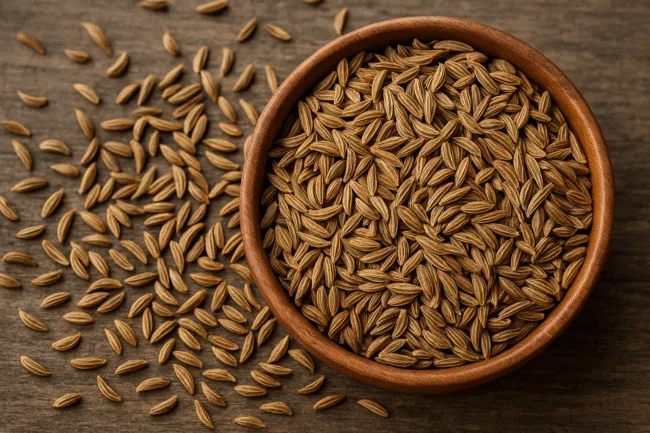
Caraway, known scientifically as Carm carvi, is a medicinally significant aromatic plant widely used across various cultures for both healing and culinary purposes. It belongs to the Umbelliferae family, also called the Apiaceae family, which includes other botanically important plants such as fennel, parsley, coriander, and dill. The dried ripe fruits of the caraway plant, often incorrectly referred to as seeds, are its most prized component. These fruits are small, crescent-shaped, and yellowish-brown in color, with a uniquely spicy, nutty aroma and pungent taste.
Caraway grows naturally in the temperate zones of Central Europe and Holland, regions where it was originally found in the wild. However, its cultivation has now extended significantly due to its economic and medicinal importance. Today, the plant is farmed in multiple regions of Central Asia and throughout India, particularly in the North Himalayan zones. These include high-altitude districts such as Kashmir, Garhwal, Chamba, and Kumaon, where the elevation ranges between 3,000 and 4,000 meters. The climate of these zones—characterized by cool temperatures and ample moisture—makes them ideal for producing high-quality caraway with strong aromatic intensity and rich oil content.
What chemical compounds make caraway an effective natural remedy for digestion and gut health?
The medicinal properties of caraway are primarily attributed to its essential oils and unique chemical constituents. Caraway contains a volatile oil that is responsible for its distinct fragrance and therapeutic actions, along with smaller quantities of fixed oil, protein, and resins that contribute to its overall biological value. The volatile oil is the star of its phytochemical profile, comprising key compounds like carvone, limonene, dihydrocarvone, and trace amounts of carvacrol.
Carvone is the dominant compound in caraway essential oil and provides the characteristic warm, spicy aroma that is both pleasant and pharmacologically active. It is largely responsible for the carminative action of caraway, which means it helps relieve gas formation, abdominal bloating, and intestinal discomfort. Limonene, another significant component, has a citrusy scent and is known to exhibit antimicrobial, antifungal, and mild anti-inflammatory effects. Dihydrocarvone enhances the overall flavor profile and may contribute to the plant’s antioxidant effects, although it is not as pharmacologically prominent. Trace levels of carvacrol, a compound more common in oregano, are also present and lend mild antiseptic properties to caraway.
Together, these compounds help to support digestion, reduce intestinal gas, ease cramps, and modulate mild inflammation in the gastrointestinal tract. This chemical synergy makes caraway a go-to remedy in herbal traditions that address gut and digestive disorders naturally.
How is caraway used in traditional herbal medicine and what are its modern wellness benefits?
Caraway has long held a prominent position in traditional medical systems, including European folk medicine, Ayurveda, and Unani medicine. Historically, it has been described as a warming, stimulating, and balancing herb that is especially beneficial for digestive health. Caraway was used in decoctions, tinctures, and powdered formulas to treat a wide array of gastrointestinal symptoms such as colic, bloating, gas, and poor appetite. It was also believed to support the lungs, calm coughs, and act as a mild expectorant when used in warm teas and infusions.
In modern wellness practices, caraway’s benefits remain rooted in its traditional uses but are now supported by chemical analysis and evolving clinical interest. Many herbalists and health practitioners recommend caraway as part of holistic protocols for digestive distress. It is often included in over-the-counter carminative drops for infants with colic and gas, as well as herbal teas designed to soothe post-meal bloating and discomfort. The herb’s stimulating qualities make it suitable for people with sluggish digestion, while its aromatic profile contributes to a sense of satiety, making it popular in appetite-regulating formulas.
Caraway is also recognized for its potential in integrative health as part of the functional food movement, where ingredients serve dual purposes as both nutrition and therapy. Its ability to modulate gut function without causing drowsiness or chemical dependence makes it a safe and natural option for everyday health maintenance.
What are the culinary applications of caraway and how does it enhance food preparation and flavor?
Caraway seeds are a staple in many kitchens due to their powerful flavor and health-supportive qualities. Their taste is described as a complex mix of sharp, earthy, slightly sweet, and warm notes with a strong anise-like aroma. These sensory characteristics make caraway a versatile ingredient in a range of savory and sweet dishes across multiple culinary traditions.
In Europe, caraway is best known for its use in rye bread, where it provides the signature aroma and taste. It is also used to flavor traditional dishes such as sauerkraut, roasted meats, sausages, and potato-based preparations. In the Middle East and parts of South Asia, caraway appears in spice blends, herbal teas, and desserts, often lending a subtle digestive aid to rich or heavy meals. It also features in spice-flavored cheeses, certain pastries, and alcohol infusions like aquavit.
Because of its volatile oils, dry-roasting caraway before use can enhance its nutty undertones and reduce bitterness. This culinary processing helps to unlock the full spectrum of flavors and maximize its aromatic intensity. In addition to its flavor, caraway’s digestive benefits offer functional advantages when added to foods that are typically hard to digest, making it a spice that serves both taste and health.
What natural ingredients are used as substitutes for caraway when the spice is not available or affordable?
Due to the high cost and limited supply of authentic caraway seeds in certain markets, natural substitutes are often used to mimic its flavor and function. The most commonly employed alternatives are Indian dill (Anethum sowa) and cumin (Cuminum cyminum), which share similar botanical lineage and aromatic characteristics.
Indian dill, a member of the same Umbelliferae family, offers a somewhat comparable aroma and taste, although its chemical profile differs slightly. It serves as a more affordable option in various herbal preparations where the exact pharmacological match is not essential.
Cumin, popularly known as jeera in Indian households, is another commonly substituted spice for caraway. It resembles caraway in appearance and also has a strong aromatic flavor. However, cumin’s key chemical constituent is cuminic aldehyde, not carvone, which marks a clear distinction in terms of flavor complexity and therapeutic value. While cumin supports digestion, it does not replicate the same effects or fragrance as carvone-dominant caraway.
These substitutes are typically chosen based on cost, availability, and culinary compatibility rather than exact therapeutic equivalence. As a result, they are more often used in food rather than medicinal formulations.
What are the best practices for storing caraway seeds to preserve their aroma and medicinal value?
Preserving the potency of caraway seeds depends largely on proper storage conditions, especially because their medicinal value is tied to delicate volatile oils that degrade easily with exposure to environmental stressors. The most important considerations for maintaining freshness are temperature, light, air exposure, and humidity.
Caraway seeds should be stored in airtight containers that are kept in cool, dark places away from direct sunlight. Heat and light accelerate the oxidation of essential oils like carvone and limonene, leading to loss of aroma and therapeutic activity. It is best to avoid transparent glass jars unless stored inside a dark cupboard or pantry. Moisture is another enemy of spice preservation, so keeping the container tightly sealed in a low-humidity area will extend shelf life.
When stored correctly, caraway seeds can retain their potency and fragrance for up to a year, making them a long-lasting addition to both spice cabinets and herbal medicine collections.
What are the regional names for caraway seeds across Indian languages and European traditions?
Caraway is recognized under a multitude of regional names, reflecting its widespread use across cultures and languages. In India, it goes by several names depending on the local dialect. In Hindi, it is called Shia jira, while in Bengali it is referred to simply as Jira. Gujarati communities use the name Shshjiru, and in Tamil it is known as Shimai-shembu. Other linguistic variations include Shahjira in Marathi and Malayalam, Jiriggae in Kannada, and Shimaisapu in Telugu. In Sanskrit, the classical language of Indian medicine, the spice is called Seeshavi.
In European contexts, the names also vary. German-speaking regions refer to caraway as Echter kummel, while Italians know it as Comino tedesco. Understanding these synonyms is especially useful for sourcing ingredients in multilingual markets or cross-referencing in traditional texts and formulations.
These diverse names underscore the global cultural value of caraway as both a spice and a medicine. They also highlight the importance of linguistic clarity in herbal practice, where misidentification could affect the efficacy of a preparation.
Why is caraway still a relevant medicinal plant in modern wellness and integrative healthcare?
Despite the growth of synthetic pharmaceuticals, caraway remains a trusted botanical ingredient in both traditional and contemporary health systems. Its enduring relevance lies in its ability to provide real physiological benefits—especially in digestive health—without adverse side effects or dependency issues. With modern interest in plant-based therapies, functional foods, and holistic health, caraway is re-emerging as a valuable option for preventive care.
Scientific validation of its active compounds, particularly carvone and limonene, has helped bridge traditional knowledge with modern pharmacology. Caraway is now used in integrative approaches to managing functional dyspepsia, irritable bowel symptoms, and infant colic. It is also being explored for its antioxidant potential and synergy with other herbal ingredients in gut-supporting formulas.
As personalized wellness and botanical science continue to converge, caraway’s multifunctional profile makes it more than just a spice. It serves as a model for how ancient remedies can inform the future of sustainable, natural healthcare.
Caraway seeds (Carm carvi) represent a powerful fusion of flavor and function. Grown in diverse regions from Europe to the Himalayas, this aromatic plant supports digestion, relieves gut discomfort, and enhances culinary experiences through its carvone-rich essential oils. Its role in traditional medicine remains highly relevant today, with growing scientific interest in its ability to offer gentle, plant-based digestive support. As both a therapeutic herb and a beloved kitchen spice, caraway continues to prove its value in modern health and wellness practices.
Discover more from Business-News-Today.com
Subscribe to get the latest posts sent to your email.