

Why is Wipro doubling down on FullStride Cloud to challenge Infosys Cobalt and TCS CloudPlus in 2025?
Wipro Limited (NSE: WIPRO, BSE: 507685, NYSE: WIT) is ramping up efforts to consolidate its position in the global cloud services market through continued investment and evolution of its FullStride Cloud Services business. With a sharpened focus on regulated industries and ESG observability, the digital transformation company is repositioning itself to compete more directly with market leaders Infosys and Tata Consultancy Services in a high-stakes global race for enterprise cloud transformation.
FullStride Cloud is no longer just a unified service line—it is now Wipro’s end-to-end platform play, integrating hyperscaler-agnostic architectures, domain-specific blueprints, and embedded AI/ESG tooling. At a time when cloud clients are demanding sovereignty, transparency, and industry relevance, Wipro’s bet on outcome-driven, ESG-centric cloud models offers a differentiated path to growth.
How has Wipro FullStride Cloud Services evolved in capabilities, clients, and global deployment?
Initially launched in 2021 as a bundling strategy to unify Wipro’s cloud engineering, AI ops, and infrastructure services, FullStride Cloud has since matured into a platform-backed solution stack. The platform integrates Cloud Studio—a low-code engineering hub—with a suite of ESG dashboards and AI frameworks tailored for sustainability and compliance. It is currently deployed across financial services, retail, energy, and public sector accounts, with particularly strong traction in European and North American markets.
The service line’s integration with Wipro’s AI360 platform—focused on generative AI use cases for DevOps, observability, and risk compliance—is now seen as central to its modernization narrative. In many cases, FullStride is being selected for its ability to decouple enterprises from vendor lock-in, enable data residency compliance, and create unified operations across fragmented environments.
What capabilities make FullStride Cloud different from Infosys Cobalt and TCS CloudPlus?
Wipro’s platform strategy stands out for its compliance-first, ESG-aligned architecture. FullStride is engineered with multi-cloud flexibility in mind, supporting deployments across Amazon Web Services, Microsoft Azure, and Google Cloud Platform. Its ESG dashboards track Scope 1, 2, and 3 emissions linked to IT workloads—an increasingly mandated requirement across Europe.
In comparison, Infosys Cobalt has gone deeper into platform modularity and automation, powered by Infosys Topaz and a composable enterprise architecture. With over 35,000 digital assets and a strong manufacturing and telecom client base, Infosys Cobalt is designed for scale and cross-industry reuse.
Tata Consultancy Services CloudPlus, meanwhile, is part of a broader integrated strategy with its Machine First Delivery Model. It emphasizes process autonomy, digital twin integration, and rapid deployment for large enterprise clients. While TCS leads on scale, Wipro has carved out space through domain-driven precision—particularly in financial services via its Capco subsidiary.
How are clients responding to Wipro’s cloud strategy in regulated and ESG-sensitive sectors?
Client response to FullStride Cloud has been positive, especially in sectors where compliance, sustainability, and financial integrity are paramount. European banks, insurers, and energy providers have shown particular interest in FullStride’s ESG observability modules, which allow IT operations teams to quantify environmental impact and create digital audit trails.
Wipro’s strategic use of Capco as a delivery engine for regulated workloads further strengthens its position. This is in contrast to Infosys, which leverages its Cobalt–Topaz combo for engineering-led innovation, or Tata Consultancy Services, whose CloudPlus platform is often paired with mega-scale transformation contracts.
Recent wins in the U.K., France, and the Netherlands—including partnerships in banking, insurance, and logistics—underscore Wipro’s shift toward deeper client co-creation in cloud operations.
What is the investor and analyst sentiment around Wipro’s cloud positioning relative to peers?
Wipro’s stock (NSE: WIPRO) has drawn renewed attention from analysts following a steady improvement in operating margins, which reached 17.5% in Q4 FY25. While topline growth was subdued—IT services revenue declined 2.7% to USD 10.51 billion—the company posted strong deal wins totaling USD 5.4 billion for the year, reflecting a 17.5% annual increase.
This deal momentum, much of it cloud-led, has fueled cautious optimism among institutional investors. Certain brokerages have noted that Wipro’s disciplined cost management and platform focus could drive mid-single-digit revenue growth through FY26 if macro tailwinds support recovery in discretionary IT spending.
While Wipro trades at a lower price-to-earnings multiple compared to Infosys or Tata Consultancy Services, its margin improvement and strategic clarity through FullStride are increasingly being seen as levers for re-rating.
How does Wipro’s financial performance compare with Infosys and Tata Consultancy Services in cloud transformation?
Wipro’s scale is smaller than its larger peers, but the delta is narrowing in select areas. Infosys closed FY25 with USD 18.9 billion in revenue and Tata Consultancy Services surpassed USD 29 billion. However, Wipro’s cloud-focused large deal wins are now competing head-to-head. Its USD 5.4 billion in bookings rivals Infosys’ FY25 large-deal count of USD 4.5 billion.
Importantly, the mix of platform-led deals is rising at Wipro. More than one-third of new contracts now feature FullStride Cloud as a core delivery engine. This indicates a growing client preference for integrated, outcome-aligned architectures—a shift from traditional IT services toward platform co-ownership.
Wipro’s stable dividend yield and consistent free cash flow generation have also supported its appeal to long-term institutional holders.
What are the potential risks to Wipro’s FullStride Cloud growth strategy going into FY26?
Despite these positives, Wipro faces several execution risks. Chief among them is hyperscaler margin pressure, especially as clients aggressively negotiate long-term contracts in a tight macro environment. Additionally, the departure of former CEO Thierry Delaporte and the appointment of Srinivas Pallia in 2024 introduces an element of uncertainty regarding long-term strategy alignment.
Wipro must also overcome perceptions of slower agility relative to Infosys or Tata Consultancy Services in highly dynamic segments like manufacturing, retail, and media. Furthermore, AI integration at scale remains a challenge, with ROI validation and cybersecurity exposure becoming increasingly relevant in generative AI-enabled cloud environments.
If Wipro fails to scale ESG-specific differentiators to new geographies or sectors, its growth could become concentrated in a few regions—limiting its ability to counteract peer dominance.
What developments can be expected from Wipro’s FullStride Cloud platform in the next 12–18 months?
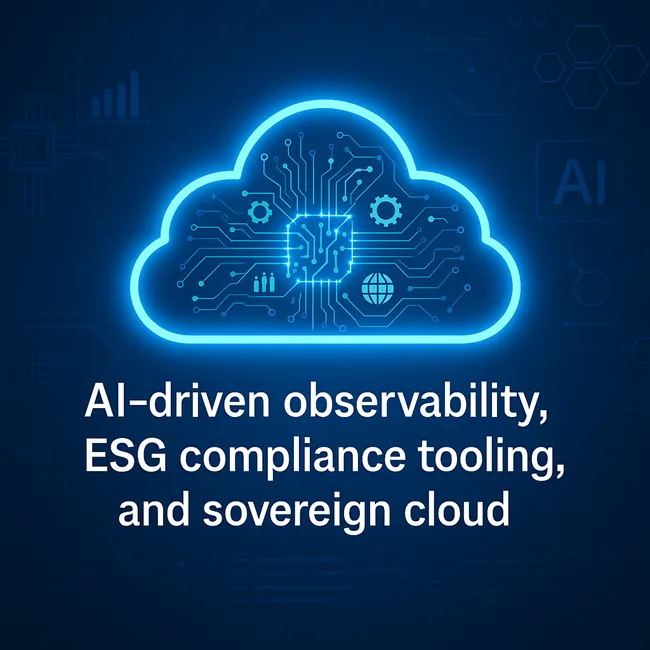
Looking ahead, Wipro is expected to evolve FullStride Cloud into a more sophisticated orchestration layer that brings together AI-powered observability, sustainability-compliant operations, and jurisdiction-specific cloud sovereignty. Analysts tracking India’s IT sector believe this convergence will not only differentiate Wipro in regulated markets, but also enable it to compete more effectively in emerging economies where ESG and compliance mandates are becoming central to vendor selection.
One of the core areas of focus is expected to be AI-driven observability, which will go beyond traditional monitoring to incorporate anomaly detection, automated remediation, and predictive governance across multi-cloud environments. FullStride Cloud is increasingly being positioned as an intelligent control plane that offers real-time visibility into infrastructure cost efficiency, carbon footprint, latency spikes, and compliance drifts—all of which are critical for clients managing complex supply chains or financial operations in tightly regulated environments.
In parallel, ESG compliance tooling is likely to expand with the integration of newer metrics aligned with European CSRD (Corporate Sustainability Reporting Directive) and other emerging global frameworks. These tools would allow clients to model the sustainability impact of their IT choices, create audit-grade reports for regulatory filings, and simulate policy outcomes—effectively making cloud architecture an active lever in enterprise ESG strategy.
Wipro is also expected to strengthen sovereign cloud capabilities across jurisdictions like the European Union, Australia, and Southeast Asia. FullStride Cloud’s roadmap includes sovereign-by-design templates with pre-certified data locality, encryption, access control, and legal compliance—making it attractive to public sector agencies, energy utilities, and financial regulators seeking trusted cloud options amid geopolitical uncertainty.
Partnerships with hyperscalers such as Amazon Web Services, Microsoft Azure, and Google Cloud Platform are forecasted to deepen through FY26, with a focus on co-developed industry blueprints. These solutions would target highly specialized workloads such as cross-border payment settlements, electronic health record storage under GDPR, or real-time energy market balancing—all delivered as modular cloud-native services built on FullStride’s core stack.
To further enhance these capabilities, Wipro is expected to launch localized compliance-as-a-service offerings beginning with financial services institutions in Asia-Pacific. These services would provide regulatory interpretation, policy automation, and cloud configuration benchmarking aligned with local standards—such as the Monetary Authority of Singapore’s technology risk guidelines or the Reserve Bank of India’s cloud outsourcing norms.
Additionally, inorganic expansion remains a probable strategy. Analysts anticipate acquisitions in cloud security, carbon analytics, or AI-based compliance automation, as Wipro looks to both fill technical gaps and accelerate time-to-market in high-growth domains. Such moves would echo its earlier Capco acquisition and potentially reinforce its presence in ESG-first regions like the Nordics or DACH (Germany, Austria, Switzerland).
Ultimately, the transformation of FullStride Cloud from a bundling framework into a strategic growth engine hinges on Wipro’s ability to scale these verticalized, regulatory-sensitive, and sustainability-aligned services at enterprise-grade reliability. If execution aligns with roadmap vision, FullStride could enable Wipro to narrow the strategic and financial gap between itself and larger rivals Infosys and Tata Consultancy Services—not just in terms of size, but in terms of platform maturity, value realization, and long-term client stickiness.
Discover more from Business-News-Today.com
Subscribe to get the latest posts sent to your email.