





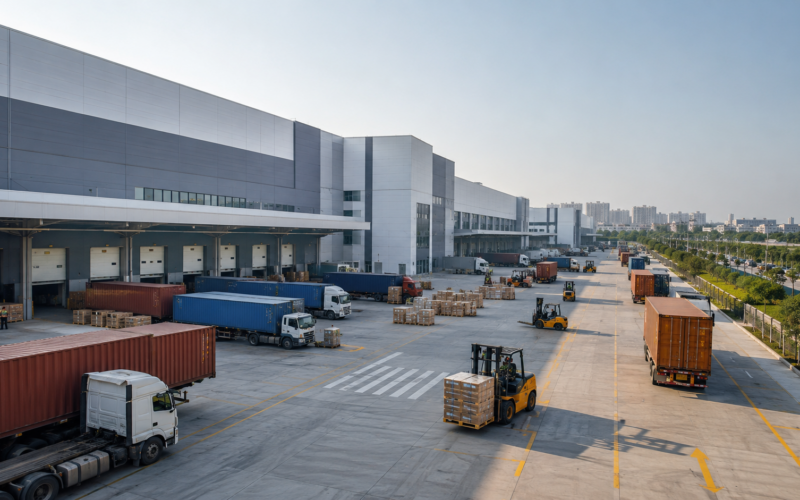
Welspun One is aiming to lease more than 10 million square feet of warehousing and industrial space over the next three years, signalling a major expansion push by the Welspun World group’s logistics real estate platform. The plan could nearly double Welspun One’s current operational footprint and deepen its exposure to India’s fast-growing Grade A warehousing market. The expansion is strategically important because ecommerce, third-party logistics, manufacturing, retail distribution and port-linked supply chains are all driving demand for modern industrial real estate. For India’s logistics sector, the move reflects a wider shift from fragmented storage sheds to institutionally developed warehousing parks with stronger compliance, automation readiness, transport access and tenant-grade infrastructure.
Why does Welspun One’s 10 million square feet leasing target matter for India’s logistics real estate market?
Welspun One’s plan matters because India’s warehousing market is moving from availability-led demand to efficiency-led demand. Companies no longer want only storage capacity near consumption centres. They increasingly want Grade A facilities that can support faster throughput, better inventory visibility, occupational safety, automation readiness, and predictable access to highways, ports, airports and industrial clusters. That changes the role of warehousing from a back-end support function into a competitive supply chain asset.
The 10 million square feet target also signals confidence in sustained occupier demand. Warehousing demand in India has been supported by ecommerce growth, formal retail, quick commerce, manufacturing relocation, automotive supply chains, pharmaceuticals, electronics and third-party logistics providers. Each of these occupier segments has different requirements, but they share one common pain point: poor logistics infrastructure increases cost and slows delivery. Grade A warehousing helps companies reduce that friction, although it does not eliminate India’s wonderful ability to make last-mile delivery a contact sport.
For Welspun One, the expansion target is a scale statement. Logistics real estate is increasingly becoming an institutional capital category, where developers need land sourcing capability, regulatory execution, construction discipline, tenant relationships and long-term asset management. A larger leased portfolio can improve platform credibility with occupiers and investors, but it also raises the execution bar. Leasing 10 million square feet is not only about building boxes. It is about matching the right boxes with the right markets, tenants and transport corridors.
How could Welspun One’s expansion reshape demand for Grade A warehousing across India?
Welspun One’s expansion could support the broader institutionalisation of India’s warehousing sector. For years, a large part of the market was dominated by small, fragmented, lower-specification facilities. That model is increasingly inadequate for companies that need compliance-ready, scalable, technology-enabled logistics infrastructure. Modern occupiers want dock levellers, higher clear heights, fire systems, floor load capacity, truck circulation, security, energy efficiency and digital readiness. Those are not decorative features. They are the difference between a warehouse and a supply chain engine.
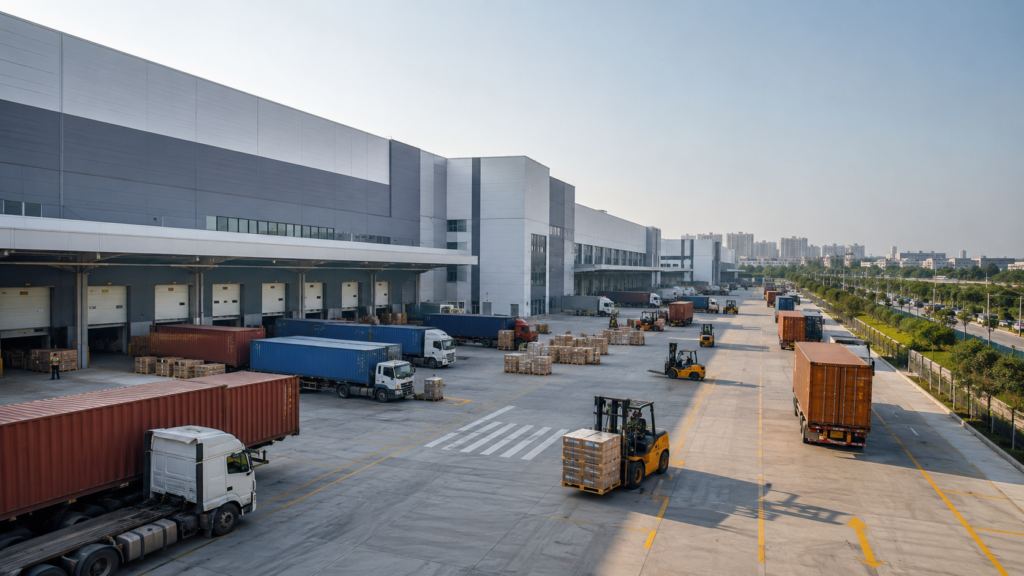
The company’s push also reflects the growth of multi-market warehousing strategies. Large occupiers do not usually want one large warehouse in one location. They want a network of facilities that can serve ports, manufacturing hubs, consumption markets and distribution corridors. That makes platform scale important. Developers with a presence across multiple high-demand markets can support national leasing relationships and repeat tenant demand more effectively than standalone asset owners.
The risk is that Grade A supply can overshoot in some micro-markets if developers chase the same tenant pools. Warehousing demand is strong, but it is not evenly distributed. Locations with weak road access, delayed approvals, poor labour availability or limited tenant ecosystems can struggle even when the national market looks healthy. For Welspun One, the leasing target will be judged by where the space is added, how fast it is absorbed, and whether rental growth supports the capital deployed.
Why are ecommerce, third-party logistics and manufacturing driving industrial real estate demand?
Ecommerce remains one of the strongest structural drivers of warehousing demand because online retail requires distributed fulfilment, faster sorting, inventory depth and reverse logistics capacity. Quick commerce has added another layer by increasing demand for urban and near-urban logistics formats, although that segment can be more operationally intense and margin-sensitive. Large ecommerce platforms and their logistics partners therefore need a mix of mega fulfilment centres, regional distribution hubs and smaller last-mile facilities.
Third-party logistics providers are another major demand engine. As companies outsource more supply chain operations, 3PL firms need modern warehousing capacity that can serve multiple clients across sectors. This creates demand for flexible, scalable, well-located facilities. In many cases, 3PL companies also act as aggregators of warehousing demand, allowing developers to secure large leases while enabling end-customers to avoid direct property commitments.
Manufacturing is the third pillar. India’s push into electronics, automobiles, auto components, pharmaceuticals, consumer goods and industrial manufacturing is increasing demand for warehousing close to production sites and transport corridors. As supply chains become more formal and compliance-heavy, manufacturers need storage and distribution facilities that can support inventory planning, vendor consolidation and faster outbound movement. This is where industrial real estate begins to intersect with Make in India, production-linked incentives and state-level manufacturing policies.
How does Welspun One’s capital platform fit into India’s institutional logistics property cycle?
Welspun One’s expansion strategy fits into a larger trend where logistics real estate is becoming an investable infrastructure-like asset class. Institutional investors are attracted to warehousing because it can offer long-term leases, diversified tenant pools and exposure to consumption and manufacturing growth. However, the asset class is not passive. It requires land aggregation, local approvals, construction execution, leasing capability, tenant servicing and asset-level discipline.
Welspun One has already signalled wider capital ambition through plans to expand its portfolio and raise institutional capital for logistics assets. The company’s broader project pipeline, including logistics parks in key industrial and port-linked corridors, shows that it is trying to build scale across strategic locations rather than depend on one market. That matters because logistics real estate platforms are often valued for network strength, tenant relationships and repeatable development capability.
The platform approach also creates risks. Rapid expansion can increase exposure to land costs, construction inflation, delayed tenant commitments, financing costs and project phasing mismatches. If capital deployment runs ahead of confirmed demand, returns can weaken. If the company signs strong pre-leases or leases assets quickly after completion, scale can improve operating leverage and investor confidence. The warehouse may look like a box from outside, but financially it behaves more like a spreadsheet with doors.
What role could port-linked logistics parks play in Welspun One’s expansion strategy?
Port-linked logistics parks could be especially important for Welspun One because India’s trade and manufacturing ambitions require better integration between ports, warehouses, customs infrastructure, transport corridors and industrial clusters. Facilities near major ports can serve exporters, importers, third-party logistics providers, ecommerce companies, automotive suppliers and consumer goods companies. The value proposition is simple: reduce movement friction before cargo disappears into India’s inland logistics maze.
Welspun One’s JNPA-linked logistics platform is strategically relevant because Jawaharlal Nehru Port Authority remains one of India’s key container gateways. A logistics park near such a node can support bonded warehousing, cargo consolidation, regional distribution and supply chain resilience. Port-proximate warehousing can also help companies reduce dwell time, manage import inventories and improve inland distribution from a major maritime hub.
However, port-linked assets also carry execution complexity. They require coordination with port authorities, customs processes, road and rail connectivity, tenant compliance needs and sometimes special economic zone regulations. If these systems work well, the asset can become a high-value logistics node. If they do not, even a well-built facility can face operational bottlenecks. For Welspun One, the ability to convert location advantage into tenant productivity will be critical.
What execution risks could affect Welspun One’s 10 million square feet leasing plan?
The first risk is absorption. Leasing more than 10 million square feet over three years requires sustained tenant demand across multiple markets. Demand from ecommerce, 3PL, manufacturing and retail is strong, but occupiers are becoming more selective. They evaluate rental costs, transportation savings, labour availability, power quality, road access, compliance and expansion flexibility. Developers that misread micro-market demand can end up with attractive assets in locations that tenants admire politely and avoid practically.
The second risk is capital timing. Warehousing development requires upfront capital for land, approvals, infrastructure and construction before rental income begins. If financing costs rise or leasing takes longer than expected, project returns can tighten. For a platform scaling aggressively, the sequencing of land acquisition, construction, pre-leasing and debt drawdown becomes important. Growth has to be paced with capital discipline, not just ambition.
The third risk is competition. India’s warehousing market has attracted large domestic developers, global logistics real estate investors, private equity-backed platforms and industrial park specialists. That competition can raise land prices and pressure rental yields in attractive corridors. Welspun One’s advantage will depend on execution quality, tenant relationships, location selection and the ability to offer reliable infrastructure at competitive economics.
What are the key takeaways from Welspun One’s warehousing expansion plan for India’s logistics sector?
- Welspun One’s target to lease more than 10 million square feet over three years signals confidence in India’s expanding Grade A warehousing and industrial real estate market.
- The planned expansion could nearly double Welspun One’s operational footprint, giving the platform greater scale in tenant acquisition and logistics park development.
- Ecommerce, third-party logistics, manufacturing, retail distribution and port-linked cargo movement remain the key structural demand drivers for modern warehousing space.
- The shift toward Grade A warehousing reflects occupier demand for compliance, automation readiness, safety standards, better truck movement and stronger transport connectivity.
- Welspun One’s strategy is aligned with India’s broader supply chain formalisation, where warehousing is becoming a productivity tool rather than a low-cost storage function.
- Port-linked logistics parks, including assets near Jawaharlal Nehru Port Authority, could strengthen Welspun One’s relevance to importers, exporters and national distribution networks.
- The biggest execution risks are leasing absorption, capital timing, construction discipline, land costs, financing conditions and competition in high-demand logistics corridors.
- India’s warehousing boom is not uniform across locations, so Welspun One’s micro-market selection will matter as much as its headline leasing target.
- Institutional capital interest in logistics real estate is likely to remain strong if developers can demonstrate tenant stickiness, rental visibility and disciplined asset management.
- A neutral reading suggests Welspun One’s expansion plan is strategically well-timed, but durable value will depend on whether leased space converts into high-quality, resilient cash flows.
Share this:
Discover more from Business-News-Today.com
Subscribe to get the latest posts sent to your email.