



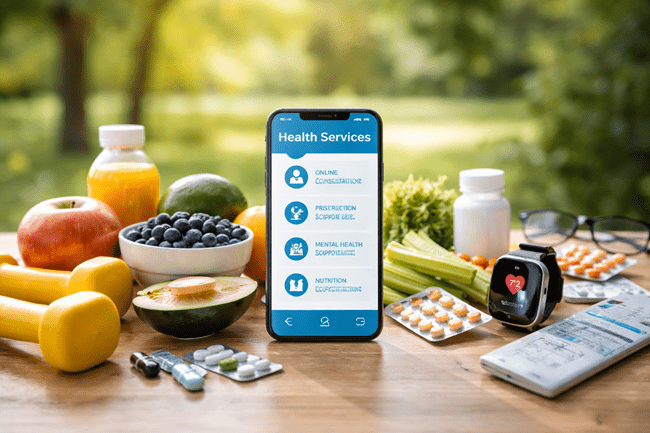
Walmart Inc. (NYSE: WMT) has unveiled a new digital health platform called Better Care Services, aimed at integrating urgent care, behavioral health, telemedicine, prescription delivery, and nutrition guidance under a single consumer-facing umbrella. The rollout coincides with the company’s January 2026 price rollback on over 1,000 health and wellness items, marking an assertive push into preventative care, pharmacy logistics, and retail health personalization.
Coming at a time when retail competitors like Amazon.com Inc. and CVS Health Corporation are reshaping access to care through their own hybrid platforms, Walmart’s strategy reflects a deeper convergence of low-cost retail infrastructure with AI-driven health engagement.
How does Better Care Services reflect Walmart’s evolving strategy in digital and preventative healthcare?
The introduction of Better Care Services is not Walmart Inc.’s first foray into healthcare, but it is arguably its most coordinated. The platform functions as a digital health gateway connecting customers to a curated list of third-party telehealth providers including LillyDirect and includes same-day consultations, prescription delivery, and access to over-the-counter products through Walmart’s existing omnichannel fulfillment infrastructure. Walmart+ members are offered free delivery as a value-added layer, reinforcing the retail giant’s ongoing strategy to increase subscription stickiness and loyalty.
The inclusion of behavioral health access and a fifteen-dollar telehealth discount signals an emphasis on affordability at the point of access, which is something that traditional healthcare systems continue to struggle with. The company’s explicit framing around “removing barriers” suggests that Walmart views fragmentation and pricing opacity in U.S. healthcare as its key competitive wedge.
Moreover, Walmart Inc. is blending clinical access with AI-powered nutrition through its Nutrition Hub, which uses Everyday Health Signals to provide personalized food recommendations and recipes. While the technology remains opt-in, it positions Walmart closer to the preventive care space by making dietary health actionable within the retail basket.
What role do price rollbacks and private-label reformulation play in Walmart’s healthcare playbook?
Walmart’s timing of price rollbacks on more than 1,000 wellness items including vitamins, supplements, over-the-counter medications, and fitness essentials is not coincidental. Nearly 60 percent of Walmart shoppers have ranked “saving money” as their top priority for 2026, and the company appears to be weaponizing that price sensitivity to build goodwill and drive basket expansion across health-related categories.
Importantly, the company’s bettergoods private-label brand, positioned as chef-inspired and ingredient-conscious, further reinforces this strategy. Seventy percent of items under the bettergoods label are priced below five dollars, and the retailer has pledged to remove synthetic dyes, certain preservatives, and fat substitutes from all Walmart food private brands by January 2027. In effect, Walmart is treating reformulation not just as compliance, but as competitive differentiation.
This move puts pressure on competitors like Target, Costco Wholesale Corporation, and Kroger Company to either match formulation standards or risk erosion in health-conscious demographics. Walmart is signaling that affordability and “clean” formulations can coexist and that it is willing to bear the margin pressure to prove it.
How might this reshape the competitive dynamics with Amazon Clinic, CVS, and Walgreens?
Walmart’s Better Care Services now enters a retail health ecosystem already being shaped by Amazon.com Inc.’s Amazon Clinic, CVS Health Corporation’s MinuteClinic and HealthHUB, and Walgreens Boots Alliance’s VillageMD partnership. However, each player is navigating the same friction points including fragmentation, low reimbursement in virtual care, and regulatory bottlenecks in behavioral health integration.
Where Walmart could stand apart is not necessarily in care delivery innovation but in execution and scale. With nearly 4,600 in-store pharmacies and a fulfillment network optimized for next-day delivery, the company can route prescriptions and over-the-counter products more efficiently than its telehealth-native rivals. And by bundling healthcare engagement with loyalty programs such as Walmart+ delivery, it deepens consumer lock-in without needing to own or operate its own clinics.
That said, Walmart’s third-party strategy also means it depends on external providers for clinical quality and regulatory compliance. Any failure on the provider side could affect brand perception, which is a risk that CVS Health mitigates through vertical integration.
Moreover, Amazon Clinic continues to scale its own digital health access via Alexa and Ring integrations, which could challenge Walmart’s discovery funnel unless it invests further in voice commerce, home device partnerships, or predictive outreach tied to past purchases.
What does this mean for Walmart’s capital allocation and margin structure in 2026?
Walmart Inc. has not disclosed the internal cost of developing or maintaining the Better Care Services platform, nor has it broken out the expected revenue contribution from telehealth or AI nutrition services. However, the financial relevance lies more in the indirect impact, including increased purchase frequency, higher basket value, and improved data capture on health-related consumer behavior.
From a capital allocation standpoint, Walmart appears to be leaning into digital service overlays rather than capital-intensive infrastructure. That aligns with its broader pivot away from high-cost health clinic expansion, recalling its previous closure of Walmart Health locations in underperforming markets, and toward scalable, platform-driven consumer engagement.
Gross margin pressure is likely in the near term due to wellness product rollbacks and the low average revenue per telehealth consultation. But Walmart seems to be positioning wellness not as a standalone profit center but as a flywheel to reinforce stickiness across grocery, pharmacy, and general merchandise.
If that strategy succeeds, Better Care Services could become an annuity layer on top of core retail operations, similar to how Amazon Web Services monetizes infrastructure for Amazon.com Inc.
How does this move signal broader shifts in U.S. healthcare consumerization and platform convergence?
Walmart’s January 2026 launch reflects a growing acceptance of platform convergence in healthcare delivery. Consumers are increasingly receptive to getting health advice, consultations, and product recommendations from the same place they buy groceries. What once might have seemed like a channel conflict, with retail chains delivering health services, is now a value proposition.
The blending of food, telehealth, behavioral support, and logistics is pushing U.S. retail health toward a full-stack wellness model, where companies differentiate not by owning clinics but by owning the customer journey.
This could have longer-term implications for payers and providers, particularly if Walmart and peers can demonstrate that consumer-led wellness drives down downstream healthcare costs. While value-based care has traditionally been the domain of insurance networks and hospital systems, retail-led models may force a rethinking of how preventive health ROI is calculated.
Regulatory frameworks, however, are still catching up. Telehealth laws vary by state, and AI-driven nutrition advice remains in a gray area when it comes to medical guidance and liability. Walmart’s use of third-party providers may help it skirt some of the compliance burdens, but it also introduces fragility in service consistency.
What comes next for Walmart’s health and wellness roadmap?
Walmart’s January 24 Wellness Event, spanning nearly 4,600 locations, offers a testbed for gauging consumer appetite for in-person wellness services, from immunizations to screenings. While these events are not new, having delivered over 5 million free screenings over the last decade, the 2026 edition will take place in a vastly different healthcare landscape shaped by inflation, AI, and digital care convergence.
Going forward, the company’s ability to integrate its AI nutrition engine, telehealth services, and price rollback incentives into a cohesive experience will determine whether Better Care Services can move from a seasonal promotion to a year-round engagement engine.
Partnership expansion also remains on the table. If Walmart signs additional alliances with pharmaceutical firms, behavioral health startups, or digital therapeutics companies, it could further differentiate the platform. Conversely, any high-profile missteps or data privacy breaches could undermine consumer trust.
Walmart is not yet a healthcare company, but it is becoming the platform where healthcare happens. And that distinction may prove more durable.
Key takeaways: What Walmart’s Better Care Services launch signals for retail healthcare strategy
- Walmart Inc. launched Better Care Services in January 2026 as a digital health platform integrating telehealth, behavioral health, AI-powered nutrition, and pharmacy fulfillment.
- The initiative reflects Walmart’s broader pivot toward low-cost, high-scale consumer wellness solutions rather than capital-intensive clinic infrastructure.
- Rollbacks on more than 1,000 health and fitness essentials support its affordability narrative and price leadership amid high consumer inflation concerns.
- The Nutrition Hub’s AI personalization, powered by Everyday Health Signals, signals Walmart’s intent to embed health engagement into everyday food purchases.
- Walmart’s execution edge lies in logistics, scale, and bundled incentives like Walmart+ delivery, rather than clinical innovation or vertical integration.
- Competitive implications extend to Amazon Clinic, CVS Health Corporation, and Walgreens Boots Alliance as the retail health race becomes increasingly platform-driven.
- Regulatory and clinical outsourcing risks persist, particularly around provider consistency and opt-in AI recommendations.
- The January 24 national Wellness Event will serve as a key litmus test for the platform’s ability to drive real-world customer engagement.
Discover more from Business-News-Today.com
Subscribe to get the latest posts sent to your email.


