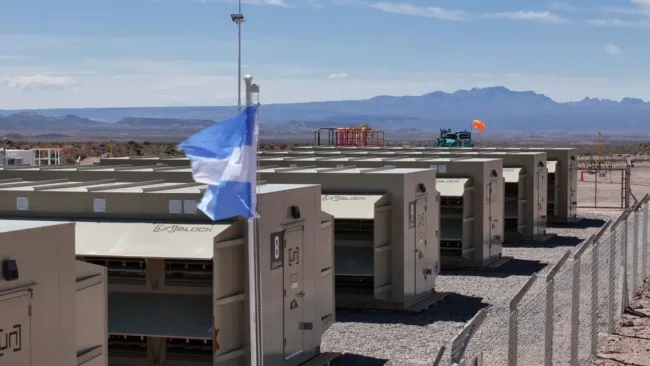
Unblock Computing, the Buenos Aires–based energy-tech startup, has raised $13.5 million in seed funding to scale its modular data center operations that convert stranded or wasted energy—such as flared gas and curtailed renewables—into usable computing power. The raise was led by Goldcrest Capital and Collaborative Fund, with participation from Latin American energy majors Pampa Energía and Grupo Sielecki, as well as international backers including FJ Labs, NYDIG, Luxor Technology, and Sunna Ventures.
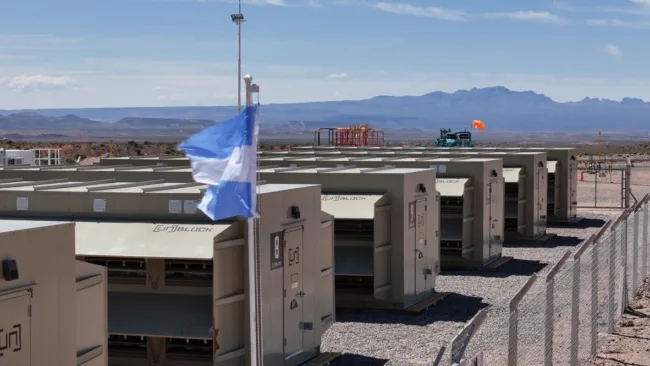
Unblock deploys portable data centers at the source of energy waste, particularly oil fields and remote renewable installations, and repurposes that energy to power computing workloads. Its current footprint in Argentina’s Vaca Muerta basin is already among the largest flare-to-compute operations globally. With two new deployments slated to double capacity by September, the startup aims to serve AI infrastructure demand while helping the region monetize previously unusable energy.
How does Unblock Computing blend energy and AI demands at flare sites across remote Latin American regions?
The business model sits at the intersection of two megatrends: exponential demand for energy to power artificial intelligence and persistent infrastructure bottlenecks that lead to large-scale flaring and renewable curtailment. Unblock Computing founder and CEO Tomás Ocampo described the platform as a response to this mismatch, envisioning a decentralized “elastic computing network” that absorbs energy volatility and turns midstream constraints into computing throughput.
By placing modular data centers at flare sites, Unblock enables oil producers to generate additional revenue from byproduct gases that would otherwise be burned off due to pipeline or grid unavailability. This approach is particularly relevant in Latin America, where legacy infrastructure and grid limitations hinder the monetization of upstream energy. Each deployment is designed to be rapid, localized, and scalable—making it an attractive model for resource-constrained regions.
According to company estimates, current operations already prevent the release of over 142,000 metric tons of CO₂ annually, positioning Unblock as a dual-play ESG and infrastructure innovator. Institutional investors noted this synergy as a key differentiator in an increasingly carbon-conscious tech landscape.
What historical energy flaring trends in Argentina contextualize Unblock’s growth and market expansion?
Argentina’s Vaca Muerta basin—one of the world’s largest shale oil and gas reserves—has long been challenged by inefficient midstream infrastructure, leading to excessive gas flaring. Even as oil output climbed, the lack of takeaway capacity and grid connectivity forced producers to burn billions of cubic meters of gas annually. This not only posed environmental risks but also represented lost commercial value.
Previous efforts to curb flaring have largely focused on regulatory enforcement or pipeline development—both capital-intensive and slow-moving solutions. Unblock’s portable data centers represent an alternative route, monetizing waste gas without waiting for pipeline construction or grid expansion. In this context, analysts view Unblock’s model as a “leapfrog infrastructure” opportunity that bypasses legacy barriers by embedding computation directly into energy production sites.
What financial details and investor sentiment underpin Unblock’s successful $13.5 million seed funding round?
The $13.5 million raise reflects growing investor interest in the convergence of energy transition, decentralized computing, and ESG-aligned infrastructure. Goldcrest Capital, one of the co-leads, emphasized Unblock’s rapid growth trajectory—from zero to 15 megawatts (MW) of deployed capacity in just over a year—as evidence of strong local execution and a de-risked technical model.
Collaborative Fund, another early backer, said the investment fit squarely within its thesis of backing mission-driven, commercially scalable startups. Their sentiment echoed broader institutional themes: the view that Unblock’s model represents both environmental impact and significant return potential.
Participation by Pampa Energía and Grupo Sielecki—two influential players in Argentina’s energy sector—was also noted as a vote of confidence in Unblock’s integration with the regional energy economy. The combination of global capital and local partnerships is seen as critical for future expansion.
How do analysts and institutional investors perceive Unblock’s scaling potential in Latin America and beyond?
Analysts tracking infrastructure innovation in emerging markets point to Unblock’s potential to become a category leader in “energy-converted compute” across Latin America. Given the ubiquity of flaring and curtailed renewable generation across Brazil, Mexico, and Colombia, Unblock’s plug-and-play model could see rapid replication beyond Argentina.
Institutional investors also highlighted the firm’s decision to vertically integrate its data center module production within Latin America. This not only improves control over the supply chain and cost structure but also aligns with local content regulations in several key markets. As AI workloads become more energy-intensive and latency-sensitive, there is rising demand for distributed compute closer to the data source—further validating Unblock’s regional-first approach.
While not publicly traded, sentiment surrounding Unblock’s prospects remains bullish, with expectations that the firm could raise a significantly larger Series A within the next 12 to 18 months, contingent on execution and additional offtake agreements.
What data center market trends highlight the relevance of Unblock’s modular approach in the AI era?
The rise of artificial intelligence has brought surging demand for energy-intensive training and inference workloads—demand that traditional hyperscale data centers often cannot meet without long lead times, expensive real estate, and high permitting costs. This has pushed innovation toward prefabricated modular data centers, a segment projected to surpass $11.7 billion globally by 2027, according to industry forecasts.
These modular units—often containerized, scalable, and rapidly deployable—are uniquely suited to tap into stranded energy assets and serve distributed AI needs. In regions like Latin America, where both energy waste and data center deficits are prevalent, Unblock’s model is increasingly seen as an early mover in a structurally underserved market.
Institutional sentiment also favors “green compute” solutions, especially as large AI model developers seek to offset their carbon footprints. If Unblock’s flared-gas-to-compute conversion continues scaling efficiently, it may emerge as a preferred partner for AI firms seeking sustainable infrastructure.
What are Unblock’s immediate goals and long-term outlook based on current funding and infrastructure plans?
The capital raise will be deployed toward team expansion, with hiring planned across engineering, operations, and business development functions. In parallel, Unblock will ramp up vertical production of its modular data center units within Latin America and pursue regional deployments in untapped flare zones. Two major deployments scheduled by September aim to double its 15 MW capacity, bringing it to approximately 30 MW of active computing power.
In the longer term, Unblock plans to extend its model beyond oil field sites to include curtailed renewable generation zones—particularly in countries like Chile and Uruguay with strong solar and wind bases but poor grid absorption. Institutional investors expect the startup to explore carbon credit monetization, AI workload partnerships, and potential licensing of its flare conversion IP to major oil and gas producers.
There is also speculation that a strategic alignment with global cloud or AI compute firms could be on the horizon, particularly as demand for regional AI infrastructure grows across the Southern Hemisphere.
Discover more from Business-News-Today.com
Subscribe to get the latest posts sent to your email.