



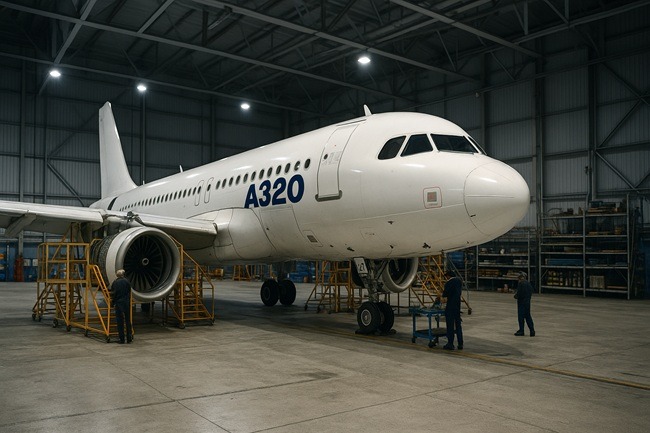
The global aviation sector entered 2025 with a fragile supply chain, long maintenance queues and unprecedented fleet complexity, and the recent Airbus A320 grounding has now exposed just how stretched the ecosystem has become. With more than 6,000 aircraft temporarily removed from service after investigators confirmed solar radiation interference in flight control systems, airlines, maintenance organisations and regulators are confronting a central question that is uncomfortable for an industry built on precision: can the sector withstand another mass recall if it happens this year. The speed at which the A320 directive cascaded across schedules, repair shops, tooling stations and regulatory channels revealed a supply chain that is recovering but not yet resilient, and industry stakeholders are acknowledging the growing risks beneath the surface.
The grounding of the A320 family was contained quickly because many aircraft required software updates rather than complex component replacement. Yet the disruption stretched engineering labour, parts availability and regulatory coordination in ways that industry insiders say represent warning signs. Global carriers mobilised hundreds of technicians overnight, while regulators issued emergency directives in rapid succession, compressing processes that normally unfold over weeks. The incident reinforced the idea that the aviation ecosystem is now operating with less margin for shocks, especially as fleets age, supply chains remain uneven and manufacturing backlogs remain high.
How the Airbus A320 grounding exposed deeper constraints that raise concerns about whether the aviation supply chain can withstand another global recall event in 2025
The recall arrived at a moment when the aviation maintenance environment was already stressed by heavy engine shop volumes, labour shortages and delayed part shipments. Airlines across North America, Europe and Asia had been reporting extended turnaround times for routine maintenance, while engine manufacturers navigated longer repair cycles caused by parts scarcity and prioritisation challenges. When Airbus issued its Alert Operators Transmission notifying carriers about the A320 data corruption vulnerability, the impact rippled quickly.
Indirect sentiment from airline maintenance leaders indicated that the grounding required a rapid redeployment of personnel who were already balancing high workloads. The industry has been coping with ongoing shop bottlenecks linked to engines such as the Pratt and Whitney GTF series and older CFM models that require extensive inspection cycles. Maintenance teams said privately that the new recall compressed schedules even further, as resources had to be reallocated immediately.
Regulators were forced into accelerated coordination as well. The European Union Aviation Safety Agency prepared an Emergency Airworthiness Directive within hours of Airbus releasing its findings, while agencies in other markets including the United States, India, Japan and South Korea issued related instructions. The swift, multi-country regulatory response minimised delays but placed unusual pressure on aviation authorities that were already handling certification workloads, oversight of production lines and safety investigations.
Why engine backlogs, ageing fleets and labour shortages are converging to create structural vulnerabilities that make the system increasingly sensitive to large scale disruptions
Aviation suppliers and maintenance, repair and overhaul organisations are contending with a long recovery from the disruptions of 2020 and 2021. Many skilled technicians retired early or left the industry, and although airlines have restarted recruitment, the depth of experience remains uneven. Aircraft manufacturers and engine makers have been warning that shortages of machinists, metallurgical specialists and avionics technicians may persist for years.
Industry analysts said the A320 grounding demonstrated how thin the workforce margins have become. Although the recall required mainly software-based interventions, the effort still demanded coordinated engineering oversight across hundreds of bases, many of which were already short staffed. In some countries, technicians were flown in from other hubs to complete resets within the required timeframe. The process raised questions about how the system would respond if a future grounding involved major structural inspections or physical component replacement requiring significant manpower.
Aging aircraft present another challenge. Global fleets include high utilisation narrow body jets that entered service more than 15 years ago. These aircraft often require deeper inspections during unexpected recall events, increasing the strain on maintenance lines. Aviation consultants said that while newer aircraft can be updated more quickly, older models would likely become bottlenecks in any recall requiring hardware changes, especially if parts availability remains uneven.
How OEM production delays, parts scarcity and certification backlogs are limiting the buffer needed to withstand another recall of similar scale
Manufacturers are delivering aircraft later than planned because supply chains remain inconsistent. Airbus and Boeing have both informed customers that delivery schedules may shift depending on the availability of key components. Engine manufacturers have faced similar constraints, with some parts requiring extended lead times. These conditions have forced airlines to keep older aircraft in service longer, stretching maintenance cycles and pushing more jets into heavy check intervals.
The A320 grounding occurred as original equipment manufacturers were already navigating these pressures. If the recall had required the replacement of specialised hardware, industry executives said turnaround times would have been substantially longer. Some maintenance heads indicated privately that hardware-intensive recalls could overwhelm the available network capacity if they occur during peak travel periods or coincide with existing engine service peaks.
Regulators face their own constraints. Certification pipelines for components, software updates and structural inspections are standing at full capacity. Authorities have increased oversight on production lines following several high profile incidents in previous years, and staff workloads have risen accordingly. The A320 grounding called for immediate attention, forcing agencies to reshuffle priorities temporarily. While the process was managed effectively, analysts said the long term risk remains if simultaneous recalls or incidents occur.
Why MRO networks are nearing saturation as they juggle high utilisation fleets, engine shop overflows and record seasonal travel volumes
Maintenance, repair and overhaul providers have seen strong demand as airlines return fleets to full utilisation. This demand has pushed MRO hangars toward saturation, particularly in Asia and the Middle East where low cost carriers operate large narrow body fleets. Engine shops have been especially strained because of extended turnaround times linked to high pressure turbine inspections and supply chain issues affecting specific alloys and components.
The A320 grounding added new tasks to these workloads. Although the recall required predominantly software updates, MROs still needed to handle physical aircraft positioning, power cycling, verification testing and documentation audits. Smaller maintenance bases faced challenges due to limited overnight slots and workforce shortages. Industry experts said the event highlighted how limited spare labour capacity remains across the global MRO network.
Seasonal travel peaks further complicate the picture. Airlines were operating at high load factors during the holiday period in the United States and preparing for winter travel in Europe. The recall disrupted rotation plans, forcing airlines to redistribute aircraft to maintain frequencies. While the sector absorbed the shock, maintenance directors said the outcome would have been significantly more difficult if the grounding had required additional inspections during a peak weekend or a summer holiday period.
How airlines, OEMs and regulators may shift strategy in 2025 to prevent cascading risks as systemic vulnerabilities grow harder to ignore
The A320 event is encouraging airlines to rethink their risk models. Indirect commentary from fleet planning teams indicates rising interest in diversifying aircraft types, increasing spares pools and investing in predictive maintenance systems that could help identify vulnerabilities earlier. While airlines are not reconsidering their reliance on the Airbus A320 family, the grounding reminded operators that fleet homogeneity, while efficient, can magnify disruption when a single model is affected.
Manufacturers may accelerate investments in modular avionics, faster update systems and enhanced diagnostic capabilities. The event also reignited discussions around real time software verification and whether additional layers of data validation should be standardised. Regulators meanwhile are evaluating internal processes to see how emergency directives can be coordinated without straining resources needed for ongoing oversight, accident investigation and certification activity.
Analysts said the long term solution may involve deeper digital-twin integration, expanded virtual testing environments and broader cross-industry collaboration with the semiconductor sector. As aircraft become more dependent on integrated avionics and software controlled systems, the need for robust data integrity protections will grow accordingly.
Why the A320 grounding may be a turning point in how the aviation sector prepares for future shocks that extend beyond mechanical failures
A significant conclusion emerging from the A320 recall is that aviation risks are evolving. Mechanical failures, engine defects and structural issues were historically the main triggers for mass groundings. Now, environmental variability, software anomalies and external factors such as solar radiation demonstrate that the risk landscape is expanding beyond traditional categories.
This shift requires new frameworks for resilience. Airlines are recognising that their existing buffers, including spare aircraft reserves, technician pools and MRO slot availability, may not be sufficient in a world where recalls can involve digital systems that affect large fleets simultaneously. Manufacturers are facing increased scrutiny over how quickly they can respond to software anomalies. Regulators are balancing rising workloads while ensuring timely safety action.
The question is no longer whether the aviation supply chain can handle a recall, but whether it can handle multiple disruptions in short succession. The A320 event was contained, but it revealed structural pressure points that industry leaders cannot ignore. If another recall occurs in 2025, the aviation ecosystem will be tested again, and the outcome will depend on how decisively stakeholders act on the lessons from this grounding.
Discover more from Business-News-Today.com
Subscribe to get the latest posts sent to your email.