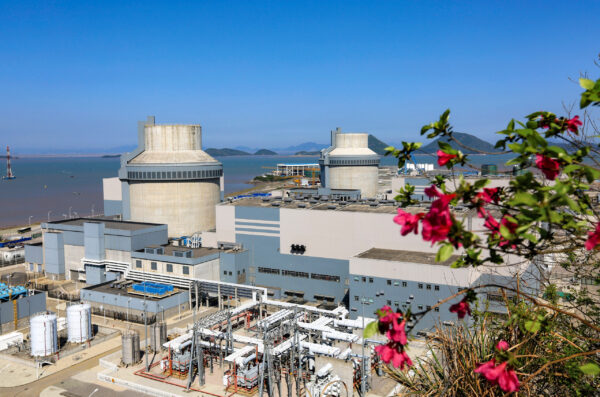
In a move that could reshape the future of China’s power infrastructure, Shanghai Electric Group Co., Ltd. and Siemens AG have formalized a framework agreement focused on intelligent medium- and low-voltage power systems. Signed during the 8th China International Import Expo (CIIE), the initiative aims to fast-track the deployment of digital and low-carbon grid technologies aligned with China’s dual-carbon goals of peaking emissions by 2030 and reaching carbon neutrality by 2060.
The initiative focuses on the development and deployment of advanced medium- and low-voltage grid equipment, which plays a critical role in industrial decarbonization, renewable energy integration, and energy efficiency upgrades. By combining Siemens AG’s technological leadership in automation and grid solutions with Shanghai Electric Group’s manufacturing and local implementation strengths, the partnership aims to deliver tangible infrastructure outcomes that can act as reference points for future grid transformation projects.
While financial terms were not disclosed, the scale and positioning of the agreement as a “benchmark collaboration” signal strong institutional support from both Chinese and German stakeholders. According to executives, the project will yield smart energy solutions designed to meet the evolving requirements of power transmission and distribution networks across multiple sectors.

How the partnership aligns with China’s dual-carbon mission and industrial strategy
The new framework builds on shared objectives between Shanghai Electric Group and Siemens AG to accelerate the energy transition through intelligent infrastructure. The equipment to be developed under this agreement is expected to play a crucial role in grid edge innovation, where real-time data, decentralization, and digital controls are reshaping electricity distribution.
Zhu Zhaokai, President of Shanghai Electric Group, described the collaboration as a new milestone in the companies’ decades-long alliance, emphasizing its importance in establishing low-carbon and intelligent energy systems. Zhu noted that by deepening cooperation, both parties aim to create demonstration projects that set the standard for next-generation grid transformation.
Executives from Siemens AG echoed the view, describing China as a central player in the global energy transition and reaffirming their intent to support localized innovation through this and future cooperative initiatives. Siemens AG emphasized its focus on delivering “lighthouse projects” that blend energy efficiency, software-defined control, and advanced hardware for smart grid applications.
From a policy alignment perspective, the project supports China’s energy security strategy and green development goals under the 14th Five-Year Plan, which prioritizes digital and clean infrastructure investments. It also reflects broader industry shifts where traditional power OEMs are expanding into end-to-end solution providers that integrate renewables, storage, and digital operations.
How have earlier 2025 cooperation deals between Shanghai Electric and Siemens strengthened the foundation for this new grid transformation agreement?
The new agreement follows a string of strategic alignments between the two companies earlier in 2025. In April, Shanghai Electric Group and Siemens AG signed a strategic cooperation deal that focused on advancing grid infrastructure, system digitalization, and low-carbon technology deployment. This was followed in July by a visit from Siemens Energy Executive Board Member Karim Amin to Shanghai Electric Group, during which both sides explored opportunities in energy system integration, joint market development, and global technology alignment.
For over 30 years, the two industrial heavyweights have co-developed grid and power generation technologies tailored for the Chinese market. Their collaborations have contributed to the localization of advanced switchgear, automation platforms, and high-efficiency grid control equipment. Many of these have become mainstays of China’s power infrastructure across utilities, industrial zones, and renewable energy clusters.
Analysts tracking industrial technology partnerships note that the continuity and depth of the Shanghai Electric–Siemens relationship provide a robust foundation for deploying new technologies at scale in a regulatory environment that increasingly favors local-global alliances.
How is the new Shanghai Electric–Siemens grid partnership shaping expectations for institutional investors and analysts evaluating China’s next phase of power infrastructure growth?
Shanghai Electric Group’s stock has remained stable across 2025, reflecting cautious but sustained confidence from institutional investors. Analysts covering the industrials and energy transition sectors view this new agreement as a long-horizon play that could yield order book growth, particularly if tied to state-backed grid upgrades, smart city initiatives, or export-linked infrastructure packages under China’s Belt and Road Initiative.
While short-term revenue impact is uncertain, investor sentiment is likely to turn more constructive once project execution details or tender wins are announced. The inclusion of the term “procurement project” in the agreement title has also fueled speculation that initial orders for next-generation grid equipment may materialize in 2026, which could drive earnings visibility for Shanghai Electric Group and support Siemens AG’s global order intake in the industrial systems segment.
Additionally, institutional analysts see this as a signal of broader momentum in Sino-European industrial technology partnerships, especially in sectors where decarbonization, resilience, and automation converge. The transition from conventional equipment supply to full-stack grid solutions is also viewed as a re-rating factor for companies like Shanghai Electric Group, which are repositioning as solution providers in the national decarbonization agenda.
How will this partnership shape future energy infrastructure and digital deployment in China and beyond?
Looking forward, both Shanghai Electric Group and Siemens AG have committed to exploring wider industrial applications for their co-developed technologies. These include smart substations, AI-powered grid diagnostics, intelligent circuit breakers, and power control systems optimized for distributed energy resources such as rooftop solar and electric vehicle charging networks.
The companies also stated their intention to launch “benchmark projects” that serve as replicable templates for urban energy transformation and rural electrification. Such projects are expected to showcase how intelligent medium- and low-voltage systems can improve efficiency, reduce downtime, and cut emissions across diverse operating environments.
Shanghai Electric Group plans to brand these offerings under “Shanghai Electric Solutions,” emphasizing system integration, energy management, and turnkey deployment. Siemens AG, for its part, is likely to integrate these offerings into its global industrial and digital grid portfolio, supporting exports and joint bids in emerging markets.
Analysts expect the partnership to evolve into a model for how international companies can collaborate with Chinese industrial leaders under a co-development model, balancing domestic policy priorities with global competitiveness in decarbonization technologies.
What are the key takeaways from the Shanghai Electric–Siemens grid transformation partnership?
- Shanghai Electric Group Co., Ltd. and Siemens AG signed a framework agreement during the 8th China International Import Expo to jointly develop medium- and low-voltage intelligent grid systems focused on digitalization and decarbonization.
- The agreement supports China’s dual-carbon goals of carbon peaking by 2030 and neutrality by 2060, positioning both companies as long-term enablers of sustainable power infrastructure.
- The collaboration aims to deliver benchmark smart grid projects, integrating Siemens AG’s automation technologies with Shanghai Electric Group’s local manufacturing and grid deployment capabilities.
- Prior engagements in April and July 2025, including a strategic cooperation pact and high-level executive meetings, set the groundwork for this deeper industrial alliance.
- Industry analysts expect the partnership to generate new use cases in smart substations, grid-edge intelligence, and industrial electrification, with potential export implications across Belt and Road markets.
- While short-term financial impact remains undisclosed, the agreement signals institutional confidence in China’s power grid transformation and could unlock future government-linked project flows.
- Investors are watching closely for updates on project execution and equipment orders that may boost Shanghai Electric Group’s order book and deepen Siemens AG’s Asia footprint.
- The move adds momentum to co-development models between Chinese infrastructure firms and global industrial tech providers seeking alignment with regional energy strategies.
Discover more from Business-News-Today.com
Subscribe to get the latest posts sent to your email.