




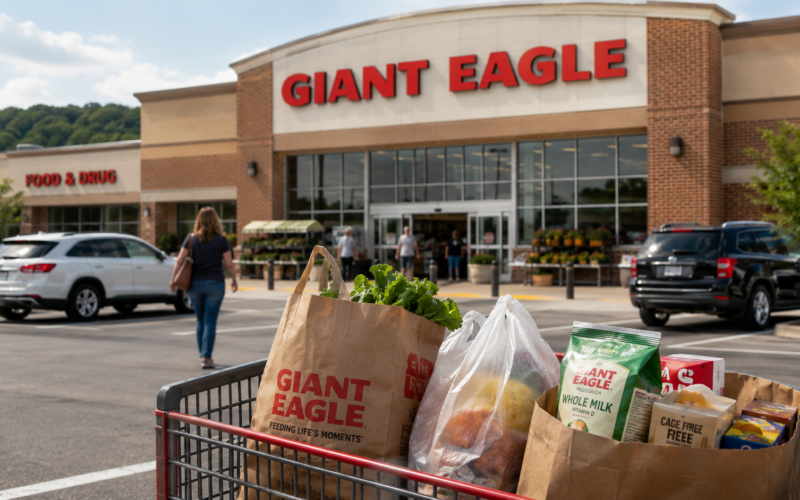
The Kroger Co. (NYSE: KR) has agreed to acquire family-owned Giant Eagle Inc. for $1.65 billion, comprising $1.25 billion in cash and the assumption of approximately $400 million in outstanding liabilities. Giant Eagle brings approximately $9 billion in annual sales, 197 supermarkets and 11 standalone pharmacies across Pennsylvania, Ohio, West Virginia, Maryland and Indiana. The transaction represents Kroger’s first major acquisition under Chief Executive Officer Greg Foran and its most important attempt to restart consolidation after the proposed Albertsons combination was blocked. Kroger plans to preserve Giant Eagle’s customer-facing banners while applying its purchasing scale, private-label portfolio, e-commerce tools and customer-data capabilities. The strategic test is whether a more targeted regional acquisition can create the value that Kroger argued was possible through a national merger, without recreating the same regulatory and execution problems.
Why is Kroger pursuing Giant Eagle after the failed Albertsons transaction?
The Giant Eagle transaction signals a change in the scale and shape of Kroger’s acquisition strategy. The proposed Albertsons merger was intended to combine two of the largest conventional supermarket groups in the United States, creating extensive store overlap and prompting concerns about competition, labour bargaining power and consumer prices.
Giant Eagle is a materially smaller target with a more concentrated regional footprint. Kroger gains meaningful exposure to western Pennsylvania and adjacent markets without attempting to combine two national grocery systems at once.
This makes the regulatory case more manageable, although not automatic. The companies expect limited Giant Eagle store divestitures, indicating that certain local markets still contain enough overlap to require remedies.
The transaction also returns Kroger to a model that has worked more successfully in the past. Acquisitions such as Harris Teeter and Roundy’s expanded Kroger through established regional brands with strong customer identities rather than immediate nationwide rebranding.
Giant Eagle fits that approach. The company has operated since 1931 and has developed a defensible position through supermarkets, pharmacies, fuel rewards, private-label products and strong regional customer loyalty.
For Kroger, the attraction lies in acquiring a functioning local platform rather than building one store by store. Entering a market organically would require real estate, construction, recruitment, supply-chain investment and years of customer acquisition.
The acquisition also allows Greg Foran to demonstrate a different form of capital allocation from the strategy pursued before his appointment. Instead of seeking maximum scale through a transformative national merger, Kroger is targeting adjacent markets where operating capabilities may be transferred with less disruption.
The danger is that the transaction becomes a smaller version of the same integration thesis. Kroger still needs to show that combining systems and purchasing power produces better customer value rather than merely a larger corporate footprint.
What does Kroger gain from Giant Eagle’s 197 supermarkets and 11 pharmacies?
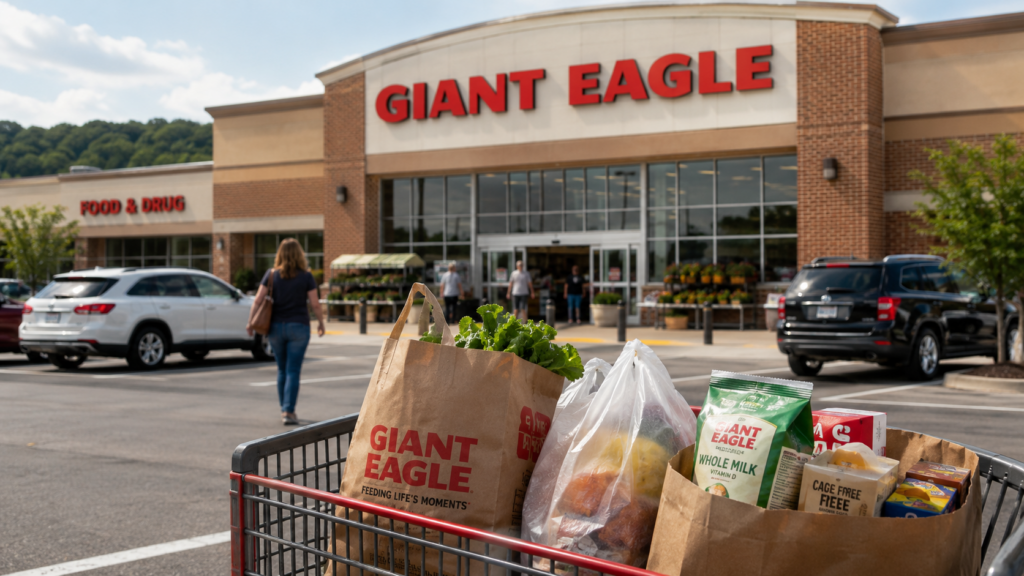
The physical store network is the most visible part of the transaction, but the value extends beyond the property count. Giant Eagle operates in markets where grocery shopping remains highly local and where brand familiarity can matter as much as national scale.
Giant Eagle’s supermarkets provide Kroger with immediate access to western Pennsylvania, where Kroger has lacked a meaningful presence for decades. The acquisition also strengthens Kroger’s coverage in Ohio, West Virginia, Maryland and Indiana.
These locations are adjacent to existing Kroger territories, which may create distribution and procurement efficiencies without forcing the company to stretch into completely unfamiliar regions. Geographic adjacency can lower transport costs, improve supplier negotiations and support more coordinated promotional planning.
The pharmacy business adds another layer of customer engagement. Grocery pharmacies increase visit frequency, create prescription relationships and can strengthen loyalty programmes by connecting healthcare purchases with food and household spending.
Pharmacies also generate regulatory and operating complexity. Staffing shortages, reimbursement pressure and competition from specialist pharmacy chains can limit profitability.
Kroger has already built significant pharmacy expertise, meaning Giant Eagle’s locations can potentially benefit from larger purchasing, technology and compliance systems. The same logic applies to private-label products, where Kroger can use its scale to introduce additional ranges or improve sourcing economics.
Giant Eagle’s fuel and loyalty ecosystem may also hold strategic value. Grocery customers who use fuel rewards or personalised promotions are more likely to consolidate spending with one retailer, producing richer data and stronger retention.
The challenge is preserving the local elements that made Giant Eagle successful. A supermarket chain can achieve procurement savings centrally while still losing customers if assortment, service or pricing becomes less relevant to individual communities.
Kroger must therefore distinguish between back-office activities that benefit from standardisation and customer-facing choices that should remain regional.
Is the $1.65 billion purchase price attractive relative to Giant Eagle’s sales?
The acquisition price represents approximately 0.18 times Giant Eagle’s stated annual sales of about $9 billion. That is a low revenue multiple compared with many consumer transactions, although grocery retail typically carries narrow profit margins and significant working-capital, property and lease obligations.
The purchase price includes $1.25 billion in cash and $400 million of assumed liabilities. The assumed liabilities are economically important because they become part of the total capital Kroger is committing to the business.
A low sales multiple does not automatically mean the deal is inexpensive. Giant Eagle’s profitability, capital expenditure requirements, pension obligations, lease commitments and store-level performance have not been disclosed in enough detail for public investors to calculate a precise earnings multiple.
The transaction may be attractive if Giant Eagle’s stores generate consistent cash flow and require only moderate investment. It may be less compelling if a significant proportion of the estate requires refurbishment, price reductions or operational restructuring.
Kroger expects the deal to become accretive to adjusted diluted earnings per share during the second full year after closing. That timetable suggests the company anticipates integration expenses and operating investment before the acquired earnings become clearly beneficial on a per-share basis.
The acquisition also includes strategic value that does not appear directly in a sales multiple. Kroger gains local market share, customer data, distribution volume, pharmacies and a platform for further regional growth.
The price appears manageable relative to Kroger’s size and cash generation. It is also far smaller than the capital commitment required for Albertsons.
However, the appropriate benchmark is not whether Kroger can afford the acquisition. The relevant question is whether the return exceeds what Kroger could have generated through store investment, price reductions, debt repayment or share repurchases.
How can Kroger use purchasing scale and technology without damaging Giant Eagle’s identity?
Kroger’s operating thesis depends on transferring selected capabilities into Giant Eagle while preserving the regional brand and customer relationship. That balance is often where retail integrations succeed or fail.
Purchasing scale could lower the cost of national brands, packaging, logistics and store supplies. Kroger may also use its supplier relationships to improve availability and negotiate better commercial terms.
Private-label integration offers another opportunity. Kroger has developed a broad portfolio of owned brands across value, mainstream and premium categories. Introducing selected products into Giant Eagle stores could improve margins while giving customers additional choices.
E-commerce and personalisation may create a more visible customer benefit. Kroger has invested in digital ordering, loyalty data, targeted promotions and retail media.
Giant Eagle’s customer base can potentially be connected to those capabilities, allowing more personalised offers and improved online shopping. Kroger can also use purchasing data to adjust assortments and promotions at store level.
The risk is over-standardisation. Giant Eagle shoppers may have strong preferences for local products, familiar store layouts and regional brands.
Replacing those elements with a uniform Kroger model could weaken loyalty even if the combined company reduces procurement costs. Grocery shoppers are remarkably capable of noticing when their preferred item disappears, usually before management notices the customer.
Kroger should therefore treat Giant Eagle as a regional operating platform rather than a collection of stores waiting to be converted. The strongest synergies will come from invisible infrastructure such as procurement, data and logistics, while customer-facing changes should be gradual and evidence-led.
Could the acquisition help Kroger reduce prices while maintaining grocery margins?
Price will be central to both the regulatory case and the commercial outcome. Kroger competes against Walmart, Aldi, Costco Wholesale Corporation, Amazon, regional supermarket groups and speciality retailers.
Consumers remain highly sensitive to food inflation and household costs. This creates pressure to reduce prices even as labour, transport, insurance and property costs remain elevated.
Kroger can potentially use procurement savings and operating efficiencies to fund price investment at Giant Eagle. Greater purchasing volume may lower unit costs, while better inventory management could reduce waste and out-of-stock rates.
Private-label penetration can also support affordability because owned brands generally provide lower prices for customers while delivering better retailer margins than equivalent national products.
However, price reductions must be large and visible enough to change customer behaviour. Small savings spread across thousands of products may look attractive in a financial model but fail to alter shopper perceptions.
Kroger must also avoid using cost savings solely to protect margins. Regulators and customers will expect clear evidence that scale benefits are shared through better pricing, assortment or service.
The company has not disclosed a formal synergy target in the announcement. This reduces immediate transparency but may also reflect caution after the Albertsons process, where projected savings became part of the public antitrust debate.
Integration costs could offset early benefits. Technology conversion, store refurbishment, employee training and supply-chain changes require investment before savings appear.
The transaction will create value only if Kroger can improve Giant Eagle’s competitive position while preserving reasonable profitability. Cutting prices without operational improvement would weaken returns, while keeping all savings would limit customer growth.
Why will regulators still examine local grocery competition despite the smaller deal?
The transaction is substantially smaller than the proposed Albertsons merger, but grocery competition is assessed market by market rather than solely according to national revenue.
Kroger and Giant Eagle operate in overlapping parts of Ohio, West Virginia, Maryland and Indiana. In individual communities, the combined company could control a larger share of supermarket sales than national statistics suggest.
The companies have already indicated that limited store divestitures are expected. This shows that Kroger has identified local areas where remedies may be needed to secure approval.
The quality of the buyer for any divested stores will matter. Regulators may examine whether a purchaser has sufficient capital, supply arrangements and operating experience to remain a meaningful competitor.
The failed Albertsons transaction will influence the review even though the deal structure is different. Kroger’s previous arguments about scale, prices and competition will be compared with the new proposal.
Regulators may also scrutinise labour-market effects, particularly where Kroger and Giant Eagle employ large numbers of unionised or specialised workers. Grocery mergers can affect not only consumer choice but also local employment alternatives.
Pharmacy overlap adds another dimension because retail pharmacies operate under different reimbursement and licensing structures from grocery stores.
The regulatory case is nevertheless more credible than it was for Albertsons. Giant Eagle’s geographic concentration and Kroger’s limited presence in western Pennsylvania reduce the level of direct overlap across much of the target’s estate.
The likely outcome is not approval without conditions, but a narrower and more manageable remedy process. Kroger must avoid underestimating that process merely because the headline value is smaller.
How will Kroger fund the cash acquisition while continuing dividends and buybacks?
Kroger plans to finance the transaction with cash. The company held approximately $2.9 billion in cash and temporary investments at the end of its first fiscal quarter, providing sufficient headline liquidity to cover the $1.25 billion cash consideration.
The company also maintained a $2.75 billion revolving credit facility with the ability to increase capacity under certain conditions. There were no outstanding commercial paper borrowings or revolving facility borrowings at the quarter end.
This gives Kroger financial flexibility, although the acquisition will not be funded from an unused account without consequences. Cash used for Giant Eagle cannot simultaneously support share repurchases, capital investment or debt reduction.
Kroger has said it expects to maintain net total debt to adjusted EBITDA within its target range of 2.3 to 2.5 times after the deal closes. It also plans to maintain the dividend and continue its existing $2 billion share-repurchase programme.
Those commitments signal confidence in cash generation, but they create a demanding capital-allocation agenda. Kroger must fund store investment, technology, employee costs, dividends, repurchases and acquisition integration while controlling leverage.
The company had approximately $1.8 billion remaining under its repurchase authorisation at May 23. Continuing buybacks while funding an acquisition can be sensible when the shares are undervalued, but it reduces the cushion available if integration costs rise.
Management may adjust the timing of repurchases without abandoning the programme. Investors should focus on actual cash deployment rather than the existence of an authorisation.
The financing risk appears manageable because the transaction is modest relative to Kroger’s balance sheet. The more important question is opportunity cost.
Kroger shares traded close to their 52-week low after the first-quarter results. Purchasing the company’s own shares at depressed levels might generate attractive returns. Management is effectively arguing that Giant Eagle offers an even better combination of strategic and financial value.
What integration risks could delay earnings accretion beyond the second full year?
Kroger expects the acquisition to add to adjusted earnings per diluted share in the second full year after closing, excluding one-time transaction and integration costs. That forecast provides a clear objective but leaves considerable room for execution risk.
Technology integration will be one of the largest challenges. Point-of-sale systems, loyalty platforms, inventory tools, pharmacy systems and financial reporting must communicate reliably.
A poorly managed conversion can create checkout disruptions, inaccurate prices, supply problems or lost customer data. Retail technology tends to become most visible at the exact moment it stops working.
Supply-chain integration also requires careful sequencing. Kroger may change suppliers, distribution routes or product assortments to capture savings. Moving too quickly could reduce availability or disrupt relationships with regional vendors.
Employee retention is another risk. Giant Eagle employs more than 30,000 people and has developed its own culture, management structure and local relationships.
Uncertainty around roles, benefits and store changes can increase turnover. Experienced store managers, pharmacists and category buyers are particularly important because they hold knowledge that does not appear in transaction documents.
Store investment may also exceed initial expectations. Kroger will need to assess property condition, layouts, refrigeration, digital infrastructure and customer experience across nearly 200 supermarkets.
Regulatory divestitures could reduce the acquired earnings base. The financial impact will depend on which stores must be sold and whether they are among Giant Eagle’s stronger locations.
The integration timetable should therefore remain flexible. Kroger’s objective should be sustainable operational improvement rather than achieving accounting accretion through aggressive cost reductions.
What does Kroger’s recent stock performance reveal about investor sentiment?
Kroger shares closed at $58.22 on July 2, rising 3.5% during the session after the acquisition announcement. United States markets were closed on July 3, making July 2 the latest available close.
The stock was approximately 0.8% higher than its June 25 close but about 5.4% below the June 2 level. It remained within a 52-week range of $54.15 to $76.58.
The shares had fallen sharply after Kroger’s first-quarter results, even though adjusted earnings increased and e-commerce sales grew. Investors were concerned about slower identical-sales growth, competitive pricing and the quality of the earnings outlook.
The post-announcement rebound suggests the market found the Giant Eagle transaction affordable and strategically credible. The acquisition provides growth without requiring a large equity issuance or a major increase in leverage.
However, the stock remains roughly 24% below its 52-week high. Investors have not treated the deal as a complete answer to Kroger’s broader challenges.
The company must still improve core-store performance, manage price investment and compete against retailers with stronger scale or differentiated formats.
Giant Eagle could support earnings growth, but the target represents approximately $9 billion of sales compared with Kroger’s much larger existing revenue base. The acquisition is meaningful without being transformative.
Market sentiment therefore appears cautiously constructive. Investors are rewarding a disciplined regional transaction while waiting for evidence that the core business and acquisition strategy can reinforce each other.
Could the Giant Eagle agreement reshape consolidation across regional US grocery chains?
The deal may establish a more practical template for grocery consolidation after regulators rejected the Albertsons merger. Large national combinations face intense scrutiny because they can reduce competition across numerous markets simultaneously.
Regional acquisitions can produce scale while limiting direct overlap. National grocers may increasingly target family-owned chains with strong local brands rather than attempt mergers between the largest public operators.
The United States grocery market remains fragmented below the national leaders. Numerous regional companies operate attractive store networks but face growing investment requirements in technology, e-commerce, private labels and supply chains.
Family-owned retailers may decide that joining a larger group provides better access to capital and purchasing scale. Succession planning can also influence decisions where ownership has been held across several generations.
Potential buyers will include national grocers, private equity firms, wholesalers and international retailers seeking local entry.
The Giant Eagle deal may also increase pressure on regional competitors to strengthen their own positioning. Companies can respond through acquisitions, partnerships, store investment or differentiated formats.
Regulatory authorities will continue to examine local concentration. Smaller transactions are not invisible, especially where a regional chain holds substantial market share.
The likely result is selective consolidation rather than a rapid national roll-up. Buyers will target areas where geographic expansion and operational synergies can be achieved without eliminating too many alternatives.
Kroger’s success or failure will influence that trend. If Giant Eagle delivers customer growth and accretive earnings, other grocers may follow the regional platform model. If integration damages the brand, independence may regain some appeal.
What must Kroger deliver before and after the Giant Eagle acquisition closes?
The first requirement is regulatory approval with limited and financially manageable divestitures. Kroger must demonstrate that the acquisition will not materially reduce local consumer choice.
The second requirement is a credible integration plan that protects Giant Eagle’s regional identity while introducing Kroger’s scale and technology.
The third requirement is transparent investment in pricing, stores and employees. Customers and regulators will judge whether the promised benefits appear in real shopping experiences.
The fourth requirement is balance-sheet discipline. Kroger must fund the cash consideration without abandoning core investment or moving leverage outside its stated range.
The fifth requirement is earnings accretion in the second full year after closing. Investors will expect acquired profit and synergies to exceed integration expenses and opportunity costs.
The sixth requirement is employee retention, particularly among store management, pharmacy staff and regional commercial teams.
The seventh requirement is digital growth. Kroger should demonstrate that its e-commerce and personalisation capabilities can increase Giant Eagle sales rather than merely reduce duplicated corporate costs.
The acquisition has a stronger strategic fit and a clearer regulatory path than the Albertsons proposal. It also places a new burden of proof on Kroger.
The company argued that scale could lower prices and improve competition during the previous merger process. Giant Eagle gives Kroger a smaller and more controlled opportunity to prove that argument.
Key takeaways on what Kroger’s Giant Eagle acquisition means for US grocery consolidation
- Kroger has agreed to acquire family-owned Giant Eagle for $1.65 billion, including $1.25 billion in cash and $400 million of assumed liabilities.
- Giant Eagle contributes approximately $9 billion in annual sales, 197 supermarkets and 11 standalone pharmacies.
- The acquisition expands Kroger into western Pennsylvania and strengthens its position across adjacent Midwest and Mid-Atlantic markets.
- The purchase price equals roughly 0.18 times Giant Eagle’s annual sales, although target profitability has not been disclosed.
- Kroger plans to finance the transaction with cash while maintaining its 2.3 to 2.5 times leverage target.
- The company expects to preserve its dividend, continue its $2 billion repurchase programme and achieve adjusted earnings accretion in the second full year.
- Limited store divestitures are expected as part of the regulatory approval process.
- Kroger’s most important integration opportunity lies in procurement, private labels, customer data, e-commerce and pharmacy operations.
- The principal risks include regulatory remedies, employee disruption, technology integration and insufficient customer price investment.
- The transaction could encourage more targeted acquisitions of regional supermarket chains after the failed Albertsons combination.
Discover more from Business-News-Today.com
Subscribe to get the latest posts sent to your email.
