As enterprise artificial intelligence spending accelerates, the competitive landscape in IT services is undergoing a decisive shift. Traditional measures of success such as bench strength or headcount are being replaced by a new priority: alignment with hyperscaler ecosystems. The recent announcement by Cognizant Technology Solutions to acquire 3Cloud has become a high-profile signal of this trend, positioning hyperscaler-aligned delivery models as the new standard for competitive advantage.
In this environment, companies that build strategic depth within platforms like Microsoft Azure, Amazon Web Services, and Google Cloud are emerging as the preferred partners for enterprise artificial intelligence transformation. These cloud providers are no longer just infrastructure vendors. They are becoming co-innovation hubs with their own partner economies, certification incentives, and performance-linked rewards. As this shift accelerates, the question facing system integrators is clear. Can hyperscaler alignment become the defining characteristic of next-generation enterprise artificial intelligence services?

Why Microsoft Azure partners are gaining ground in enterprise artificial intelligence transformation programs
Microsoft Azure is rapidly becoming the platform of choice for enterprise artificial intelligence workloads. From large language model orchestration to embedded copilots in Microsoft 365 and Dynamics, the platform offers a native environment for building and scaling generative and predictive applications. Microsoft’s focus on regulated industries such as healthcare, financial services, and government also makes it an attractive option for clients with strict compliance requirements.
3Cloud has capitalized on this trend by building its entire business around Microsoft Azure. The company’s deep certification base, delivery maturity, and telemetry integration made it one of the most credentialed partners in the Microsoft ecosystem. The decision by Cognizant Technology Solutions to acquire 3Cloud was driven by the strategic need to embed these capabilities into its global delivery infrastructure.
Following the acquisition, Cognizant Technology Solutions will add more than 1,000 Azure specialists and over 1,500 Microsoft certifications to its workforce. This will raise its total Azure-certified headcount to more than 20,000. More importantly, the acquisition positions Cognizant Technology Solutions to influence Microsoft Azure Consumption Revenue, a critical performance metric that determines partner status and co-sell privileges. Judson Althoff, Chief Executive Officer of Microsoft’s Commercial Business, endorsed the deal, framing it as a value accelerator for Microsoft clients seeking to scale innovation on Azure.
This transaction is not just about expanding services. It reflects a deeper shift in how hyperscaler ecosystems are shaping the next tier of strategic system integrators.
How hyperscaler specialization is changing buyer criteria for IT services vendors
Procurement teams within large enterprises are revising their vendor evaluation criteria. Where general delivery scale once dominated, clients are now placing higher weight on ecosystem alignment, delivery specialization, and access to partner-tier incentives. In this context, hyperscaler relationships are becoming more important than traditional systems integration maturity.
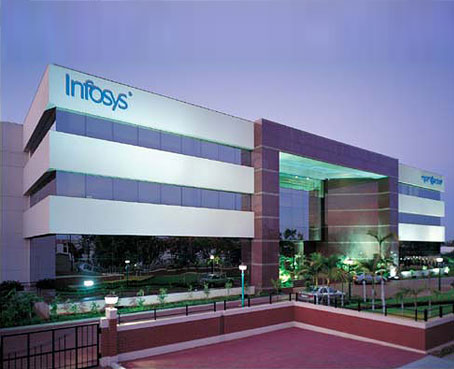
Accenture has led this transition by building specialized business groups for Microsoft Azure, Amazon Web Services, and Google Cloud. Infosys has embedded Microsoft Azure and artificial intelligence services into its Topaz platform. Tata Consultancy Services has aligned its Digitate and business process services with platform-native tooling. Capgemini and Wipro are focusing on cloud-native accelerators that integrate directly into Azure or Google Cloud pipelines.
The advantage for aligned partners is multifaceted. They receive early access to new product features, participate in co-innovation funds, and gain higher visibility within hyperscaler partner directories. For clients, working with aligned partners reduces integration risk and accelerates return on investment. The growing complexity of enterprise artificial intelligence architectures has made this alignment a practical necessity rather than a strategic choice.
Cognizant Technology Solutions, through its acquisition of 3Cloud, is now attempting to move into this category of preferred strategic partners.
What Amazon Web Services and Google Cloud expect from their next-generation artificial intelligence partners
Amazon Web Services and Google Cloud are also raising the bar for what constitutes a next-generation artificial intelligence partner. Amazon Web Services is focused on services enablement for products like Bedrock, SageMaker, and Trainium-powered infrastructure. Partners are being asked to invest in artificial intelligence safety, governance, and prompt-tuning expertise that aligns with enterprise application demands.
Google Cloud, meanwhile, is investing heavily in Vertex AI and the Gemini model family. It is targeting partners that can orchestrate artificial intelligence pipelines across Google Workspace, BigQuery, and third-party applications. Google Cloud’s emphasis is on full-stack integration, from model development to deployment, with a particular focus on operational telemetry and security.
Both cloud providers are pushing for telemetry sharing, managed services integration, and vertical-specific accelerators. Their internal partner metrics are no longer just about revenue influenced. They include solution blueprints built, customer adoption velocity, and integrated observability. Partners that do not offer full-stack observability or industry cloud alignment are being deprioritized in strategic tiers.
This makes it clear that hyperscaler alignment is about more than partnership declarations. It is about embedding a company’s entire delivery model and value proposition within the hyperscaler’s long-term roadmap.
Why managed services and industry accelerators are becoming hyperscaler currency
Managed services are now at the heart of enterprise artificial intelligence delivery. 3Cloud was not only a consulting firm. It also operated as a Microsoft Azure Expert Managed Services Provider. This distinction matters. Clients deploying enterprise artificial intelligence are looking for partners that can operate, observe, and optimize workloads continuously, not just build them once.
Managed services create recurring revenue, deeper integration with cloud telemetry, and visibility into workload performance. This positions managed services firms as critical extension points of the hyperscaler ecosystem. Microsoft, for example, uses managed services telemetry to refine its own performance analytics and forecast Azure utilization patterns.
Accelerators are also taking center stage. Infosys Topaz, Tata Consultancy Services Digitate, and Wipro Holmes are examples of internal platforms being reshaped as ecosystem-aligned accelerators. These tools are becoming essential for partners to qualify for co-sell incentives and AI workload pipelines.
The pressure is now on all service providers to develop proprietary intellectual property that runs on top of hyperscaler platforms. This not only differentiates their offerings but also secures their standing in a hyperscaler-dominated value chain.
Can Cognizant’s 3Cloud acquisition reset its competitive standing in enterprise artificial intelligence services?
Cognizant Technology Solutions is aiming to close the capability gap with top-tier Microsoft Azure partners through the acquisition of 3Cloud. The strategic goal is not only to absorb talent but also to elevate its Microsoft partnership level. By integrating 3Cloud’s managed services, accelerators, and deep Azure focus, Cognizant Technology Solutions intends to reestablish itself as a verticalized, platform-aligned digital transformation partner.
Analysts tracking the company’s roadmap believe this acquisition could change the trajectory of its artificial intelligence services business. However, the challenges are significant. Integration friction, retention risk, and delivery alignment are likely in the early quarters. The cultural shift from traditional systems integration to Azure-native, accelerator-led services will require operational restructuring.
The timing of this move gives Cognizant Technology Solutions an opportunity. Microsoft Azure reported 40 percent year-on-year growth as of the first quarter of fiscal year 2026. The artificial intelligence pipeline remains strong across regulated sectors. If Cognizant Technology Solutions can deploy 3Cloud’s capabilities quickly and preserve its vertical assets, it could become one of Microsoft’s most influential partners in the artificial intelligence services segment.
For late movers, however, the window is closing. Hyperscaler co-sell tiers are becoming more rigid. Once partners are locked in for go-to-market, the opportunity to influence roadmap decisions or qualify for incentive pools diminishes. This is no longer a land grab. It is a platform-integrated partner race.
Discover more from Business-News-Today.com
Subscribe to get the latest posts sent to your email.