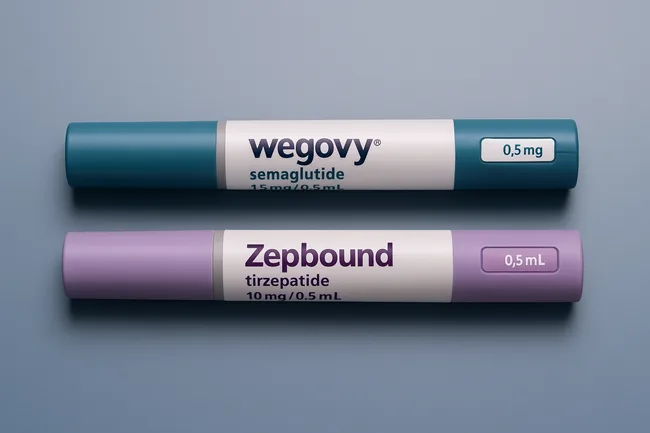
How much more weight loss do higher-dose GLP-1 drugs like Wegovy 7.2mg and Zepbound 15mg really deliver?
Escalating the dosage of GLP-1 receptor agonist drugs has quickly become the latest trend in obesity therapeutics. Novo Nordisk and Eli Lilly have both pursued higher-dose formulations—Wegovy at 7.2mg and Zepbound at 15mg—as part of their strategy to maintain clinical superiority and patient retention. Trial data suggests that these formulations do provide additional benefit, but the margins may be narrowing.
In a head-to-head clinical trial known as SURMOUNT-5, Eli Lilly’s Zepbound demonstrated an average weight loss of approximately 20.2 percent over 72 weeks in obese patients without diabetes. In contrast, semaglutide (Wegovy) at the standard 2.4mg dose produced weight loss of around 13.7 percent over a similar period. The difference was statistically and clinically significant, and nearly one-third of patients on Zepbound reached 25 percent or more weight loss compared to just 16 percent in the Wegovy group.
Novo Nordisk’s internal STEP UP trial explored semaglutide at 7.2mg and found an average weight loss of around 21 percent over 68 weeks, exceeding what is typically achieved at the standard 2.4mg dose. Importantly, the safety and tolerability profile at this higher dose remained in line with previous observations, but gastrointestinal side effects were more common. That trade-off is becoming central to how physicians and payers evaluate the next phase of GLP-1 escalation.

What are the tolerability and adherence concerns with high-dose GLP-1 drugs in real-world use?
While clinical trials demonstrate that higher-dose regimens are effective, translating those results into real-world practice is not straightforward. Patient adherence tends to suffer as dose increases. Common side effects such as nausea, vomiting, and diarrhea become more frequent and more intense at higher doses, leading to a phenomenon that clinicians describe as “dose fatigue.”
Across observational studies, real-world discontinuation rates for GLP-1 therapies can range from 20 to 50 percent within the first year. This discrepancy arises from several factors including intolerable side effects, inconsistent insurance coverage, cost constraints, and patient frustration over slower-than-expected results. In some clinical settings, physicians report that patients request a reduction in dose just to better tolerate the weekly injections.
Slow titration is commonly used to manage tolerability, but that often delays therapeutic benefit. Many providers avoid moving patients quickly to the maximum dose out of concern for side effects, even when trials suggest the maximum dose delivers optimal efficacy. The net result is that fewer patients may ever reach or sustain the high-dose threshold that produced the best results in controlled trials.
What strategies are companies using to break through the efficacy and tolerability ceiling?
Pharmaceutical companies are increasingly turning toward next-generation molecules and receptor designs to escape the diminishing returns of GLP-1 dose escalation. Eli Lilly is betting big on retatrutide, a triple agonist targeting GLP-1, GIP, and glucagon receptors. In early-phase trials, retatrutide has shown weight loss of up to 24.2 percent over 48 weeks—surpassing even the most aggressive results seen with Zepbound.
Novo Nordisk, meanwhile, is developing its own suite of combination therapies that aim to achieve greater weight loss at lower doses by leveraging multiple hormonal pathways. These include dual-agonist and oral GLP-1 pipeline candidates intended to reduce the side effect burden while improving efficacy.
Another promising approach is the use of oral small-molecule GLP-1 agonists such as orforglipron. Eli Lilly’s data on orforglipron suggests modestly lower efficacy compared to injectables, but with far greater patient preference and potentially better long-term adherence. However, even orforglipron has demonstrated weight loss plateaus around the 12 percent range, suggesting that oral delivery alone does not resolve the biological limitations of the class.
Are we approaching a physiological limit for GLP-1-based weight loss treatments?
From a clinical standpoint, most obesity specialists believe we are nearing a biological ceiling with monotherapy GLP-1 receptor agonists. Mechanisms such as appetite suppression, delayed gastric emptying, and increased insulin sensitivity have all been maximized to varying degrees in existing treatments. At a certain point, further increasing the dose does not yield proportionally greater benefit.
This limitation is evident in both clinical trial curves and real-world data. Weight loss progress tends to slow or plateau after 9 to 12 months on GLP-1 drugs, even when doses are escalated. Moreover, higher doses carry increased risk for side effects that can lead to treatment discontinuation. For this reason, many endocrinologists now argue that GLP-1s should be viewed as foundational agents in a broader multimodal strategy, rather than standalone weight-loss solutions.
What are obesity experts saying about the future of high-dose GLP-1 therapy?
Clinicians who specialize in obesity care remain cautiously optimistic. Most agree that higher-dose options are valuable tools for non-responders or patients with severe obesity, particularly those at high risk for comorbid conditions like cardiovascular disease. However, they also stress that patient expectations must be managed and that tolerability is a significant barrier to long-term adherence.
Several experts are now advocating for combination-based approaches that pair GLP-1s with other drug classes or interventions such as behavior therapy, nutritional counseling, or emerging devices. There is also growing interest in the development of new endpoints beyond percentage weight loss. For example, measuring long-term impact on metabolic syndrome, cardiovascular health, or quality of life may prove more relevant than simply chasing higher weight loss numbers.
What impact will high-dose GLP-1s have on payers, pricing, and access?
The financial implications of escalating GLP-1 dosing are already becoming visible. Payers and insurance companies are growing more skeptical of the cost-effectiveness of these treatments, particularly as monthly prices for drugs like Wegovy and Zepbound climb above $1,300. High-dose regimens amplify these costs and may face additional reimbursement scrutiny.
In response, pharmaceutical manufacturers are under pressure to present compelling value-based pricing arguments. Some have introduced outcomes-based contracts that tie reimbursement to actual patient results. Others are working to bundle support services, such as patient coaching and adherence tools, to improve treatment continuity.
Insurers are also considering step-therapy protocols, where patients must demonstrate inadequate response at lower doses before gaining approval for high-dose formulations. This could delay access and limit physician autonomy, even as the clinical evidence supports dose escalation for specific patient segments.
What does the future hold for obesity therapeutics beyond high-dose GLP-1s?
The next phase of obesity treatment will likely involve personalization, not just escalation. Pharma pipelines are shifting from “more dose” to “more pathways,” with multi-receptor agonists, oral small molecules, and targeted biologics under development across major firms.
Retatrutide and cagrilintide are frontrunners in the next-generation pipeline, along with several fixed-dose combinations designed to hit different hormonal targets in the appetite regulation and energy expenditure pathways. These innovations promise better efficacy with fewer side effects, but will need to prove durability and safety over multi-year treatment durations.
Healthcare systems, meanwhile, will need to adapt to this therapeutic expansion. Clinical guidelines may begin incorporating dose-titration algorithms or patient stratification models based on genetic, behavioral, or metabolic biomarkers. As more agents hit the market, the focus will shift toward sustained remission of obesity-related diseases and away from raw percentage weight loss as the sole measure of success.
Do higher doses of GLP-1 drugs like Wegovy and Zepbound still offer meaningful gains for patients and payers in 2025?
High-dose GLP-1 therapies have proven they can move the needle—just not as far or as cleanly as early results once suggested. For some patients, particularly those unresponsive to standard doses, these therapies offer an essential next step. But for the broader population, the marginal gains may come at the cost of greater side effects, higher expenses, and lower adherence.
As new classes emerge and combination regimens gain traction, dose escalation may give way to smarter, more holistic approaches that balance efficacy, tolerability, and access. In that context, 7.2mg Wegovy and 15mg Zepbound may represent not a breakthrough, but a transition phase in the evolution of obesity pharmacotherapy.
Discover more from Business-News-Today.com
Subscribe to get the latest posts sent to your email.