
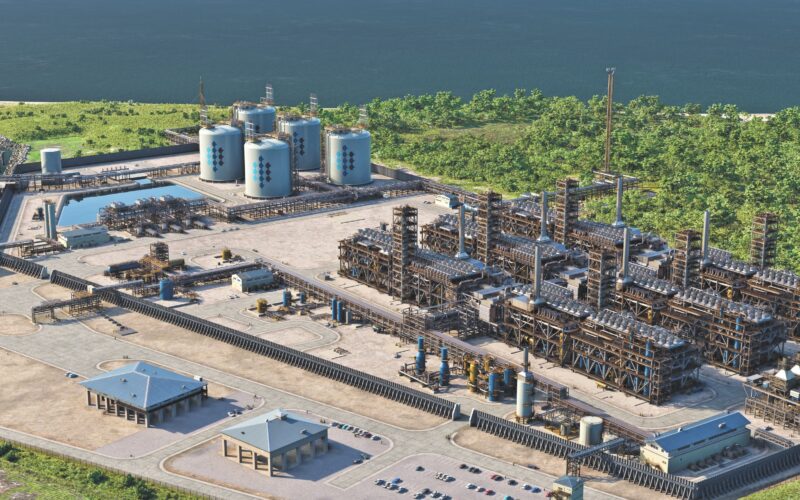
Caturus LLC has taken a positive final investment decision on the $13 billion Commonwealth LNG export facility in Cameron Parish, Louisiana, clearing the way for full construction of a 9.5 million tonnes per annum liquefied natural gas project on the U.S. Gulf Coast. The Houston-based private natural gas and LNG platform also closed $9.75 billion in project financing, backed by investors including Kimmeridge, Mubadala Energy and Canada Pension Plan Investment Board. The decision turns Commonwealth LNG from a long-running development story into a funded infrastructure project with long-term offtake agreements and a targeted 2030 start-up. For the global gas market, the move reinforces how U.S. Gulf Coast LNG capacity is becoming a strategic hedge against geopolitical disruption, energy-security anxiety and rising demand for flexible fuel supply.
Why does Caturus’ Commonwealth LNG FID matter for the next phase of U.S. gas exports?
The Commonwealth LNG final investment decision matters because it arrives at a moment when LNG buyers are no longer looking only for cheap gas. They are looking for security of supply, portfolio flexibility, credible execution schedules and projects that can survive financing scrutiny. Caturus has positioned Commonwealth LNG around a wellhead-to-water strategy, combining upstream natural gas production with liquefaction and export capacity. That integrated model is designed to give the company more direct control over supply, commercial margins and operational accountability than a standalone liquefaction developer would usually have.
The project also adds another major piece to the U.S. Gulf Coast LNG buildout. Cameron Parish already sits inside one of the most strategically important LNG corridors in North America, where access to pipeline networks, marine infrastructure and export expertise can reduce some execution risk. That does not make Commonwealth LNG easy to build. It simply means the project is being developed in a region where LNG has moved from emerging industry to industrial ecosystem.
The timing is equally important. Global LNG buyers are navigating energy-security concerns, uneven renewable power integration, industrial demand growth and geopolitical uncertainty across key shipping routes and producer regions. In that context, a 9.5 million tonnes per annum U.S. project with long-term offtake support is not just another export terminal. It is a bet that LNG will remain a core balancing fuel for power systems and industrial users even as governments push harder on decarbonisation.
How does Caturus’ wellhead-to-water model change the economics of Commonwealth LNG?
Caturus’ strongest strategic argument is that Commonwealth LNG is not being developed in isolation from upstream supply. The company has expanded its upstream natural gas platform and says it now produces more than 1 billion cubic feet equivalent per day on a net basis. That creates a different investment proposition from a project that must rely entirely on third-party gas procurement and tolling-style economics.
A wellhead-to-water model gives Caturus the possibility of capturing value across more of the gas chain. If the company can manage upstream costs, pipeline access, liquefaction efficiency and LNG marketing in a coordinated way, it could improve margin visibility and reduce exposure to bottlenecks between production and export. That is the theory. The practical test will be whether the integrated model can actually deliver cost discipline across a complex capital project.
The model also raises the stakes. Integration can improve control, but it can also concentrate risk. A problem in upstream supply planning, construction sequencing, regulatory compliance, feedgas logistics or commercial execution can affect the broader platform rather than one isolated segment. For investors, that makes Commonwealth LNG a high-conviction infrastructure bet rather than a simple project-finance transaction.
What does the $9.75 billion financing package reveal about investor appetite for LNG infrastructure?
The successful closing of $9.75 billion in project financing shows that large-scale LNG infrastructure can still attract deep pools of capital when commercial contracts, project economics and strategic positioning line up. The involvement of Kimmeridge, Mubadala Energy and Canada Pension Plan Investment Board gives the project a mix of energy-specialist capital, sovereign-linked exposure and long-duration institutional backing. Additional participation from financial partners including BlackRock-managed funds and an Ares Infrastructure Opportunities fund further underlines the continuing appeal of gas infrastructure to investors seeking long-lived contracted assets.
Canada Pension Plan Investment Board’s increased commitment is particularly notable because pension capital typically looks for durable, cash-generating assets rather than speculative commodity exposure. Its larger stake in Caturus suggests that the platform is being viewed as more than a single LNG project. The attraction appears to be the combination of upstream gas, export infrastructure and long-term market demand.
Mubadala Energy’s participation also adds geopolitical and portfolio context. For Abu Dhabi-linked capital, U.S. LNG offers exposure to a gas value chain outside the Middle East while still aligning with a long-term view that gas will remain relevant in power generation, industrial consumption and energy transition balancing. That does not remove climate or policy risk, but it explains why global capital is still willing to fund LNG when many other fossil fuel projects face tougher scrutiny.
Why are EQT, Glencore, Mercuria, PETRONAS and Aramco Trading important to the project’s credibility?
The long-term offtake agreements attached to Commonwealth LNG are central to the project’s bankability. Buyers and counterparties including EQT, Glencore, Mercuria, PETRONAS and Aramco Trading give the facility a diversified commercial base across producers, traders and global energy companies. That matters because lenders and equity investors need confidence that the project will not be built first and commercialised later.
The roster also signals how LNG demand is becoming more portfolio-driven. Large trading houses and energy companies want optionality across geographies, pricing structures and delivery windows. U.S. LNG is attractive because it can serve Europe, Asia and other markets depending on price spreads and shipping economics. For companies managing exposure to volatile gas markets, flexible U.S. export supply can be strategically valuable even when spot prices are uneven.
There is a competitive implication as well. Projects that secure credible long-term offtake early are better placed to reach final investment decision, lock in financing and reserve construction capacity. Projects that remain under-commercialised may struggle as engineering costs, labour constraints and financing conditions tighten. Commonwealth LNG’s FID therefore increases pressure on rival pre-FID LNG projects to prove that they can offer both attractive economics and dependable timelines.
Can Commonwealth LNG manage construction risk in a crowded Gulf Coast project pipeline?
The biggest question now shifts from financing to execution. LNG projects are capital-intensive, technically demanding and vulnerable to schedule drift. Commonwealth LNG has already authorised Technip Energies to order major long-lead equipment, and the project will use a modular construction approach intended to improve efficiency and reduce some site-level complexity. The facility is expected to include Baker Hughes mixed-refrigerant compressors, Honeywell main cryogenic heat exchangers and Solar Turbines gas turbine-generators.
That equipment strategy gives the project a clearer industrial pathway, but it does not eliminate risk. Gulf Coast LNG construction faces competition for skilled labour, fabrication capacity, marine logistics, specialised equipment and experienced project managers. Cost inflation can quickly become a problem if timelines stretch. The modular approach may help, but modularity is not magic. It still requires tight interface management, precise scheduling and disciplined contractor coordination.
The 2030 operations target is achievable only if permitting, procurement, construction and commissioning remain tightly managed. LNG projects often look most attractive at FID, when financing is closed and commercial momentum is high. The hard part starts after that, when weather, labour, supply chains, community concerns and technical commissioning all get a vote.
How does the Caturus project affect Louisiana’s position in the global LNG market?
Commonwealth LNG strengthens Louisiana’s role as a global LNG export hub and deepens the state’s exposure to long-cycle energy infrastructure. For Cameron Parish, the project brings construction activity, potential local tax revenue, marine traffic and industrial employment. For Louisiana, it reinforces the state’s position as one of the most important gateways between U.S. shale gas and global energy buyers.
The economic upside is significant, but so are the local and environmental sensitivities. LNG export projects can generate jobs and revenue, yet they also increase industrial density along coastal communities already exposed to storm risk, wetland pressure and emissions concerns. The project’s supporters will frame Commonwealth LNG as a source of lower-emission fuel compared with coal and a driver of U.S. energy leadership. Critics are likely to focus on methane emissions, lifecycle carbon impact, coastal resilience and long-term fossil fuel lock-in.
For policymakers, this is the central trade-off. LNG remains commercially and geopolitically attractive, but its social licence will depend increasingly on methane management, transparent emissions reporting, credible local engagement and resilience planning. Caturus will need to show that Commonwealth LNG can be competitive not only on cost and timing, but also on operating standards.
What does this decision signal for competitors in the U.S. and global LNG sector?
Caturus’ FID adds another competitive marker in the global LNG race. U.S. LNG developers are competing not only with each other, but also with Qatar, Australia, Canada, Africa and future supply from emerging export regions. Buyers are comparing price, reliability, contract flexibility, shipping distance, political risk and emissions intensity. Commonwealth LNG’s integrated model gives Caturus a distinctive pitch, but it will still be judged against global alternatives.
For established U.S. LNG players, the project is another sign that private capital remains willing to back export growth when the project structure is compelling. For pre-FID rivals, it raises the bar on commercial readiness. For global buyers, it adds another source of potential supply toward the end of the decade, when demand forecasts remain heavily dependent on Asian power growth, European energy security needs and industrial fuel-switching economics.
The broader signal is that LNG is not fading from infrastructure strategy despite the energy transition. Instead, the market is becoming more selective. Projects with weak financing, vague offtake, high construction risk or unclear regulatory paths will struggle. Projects with credible capital, defined customers, supply integration and disciplined execution plans still have a path to FID.
What are the main risks investors and energy buyers should watch before 2030?
The first risk is construction execution. A $13 billion LNG project requires years of coordinated delivery, and even modest delays can affect returns, customer confidence and debt assumptions. Engineering quality, contractor performance and procurement discipline will matter as much as the headline financing package.
The second risk is market timing. Commonwealth LNG is expected to begin operations around 2030, when global supply and demand dynamics may look different from today. If too much LNG capacity arrives at once, pricing could soften. If demand growth outpaces supply or geopolitical disruptions persist, the project could enter a favourable market. The uncertainty is not whether LNG will be used. The uncertainty is how profitable the next supply wave will be.
The third risk is policy and emissions scrutiny. U.S. LNG remains strategically important, but regulatory expectations can shift with administrations, court decisions, climate policy and international buyer standards. Projects that can document methane controls and operational efficiency will be better positioned than those relying only on broad claims about gas being cleaner than coal.
Key takeaways on what Caturus’ Commonwealth LNG FID means for U.S. gas exports and global energy markets
- Caturus has moved Commonwealth LNG from development ambition to funded construction, making the project one of the more consequential U.S. LNG infrastructure decisions of 2026.
- The $9.75 billion financing package shows that institutional and strategic capital remain willing to fund large gas export projects when offtake, supply and execution plans are credible.
- The 9.5 million tonnes per annum capacity target gives Commonwealth LNG enough scale to matter in global portfolio planning without placing it in the mega-project category.
- The wellhead-to-water model could give Caturus stronger control over margins and supply reliability, although it also concentrates execution risk across the platform.
- Long-term agreements with EQT, Glencore, Mercuria, PETRONAS and Aramco Trading improve bankability and signal broad commercial appetite for U.S. LNG.
- Louisiana’s role as a global LNG export corridor will deepen, but local environmental, coastal resilience and emissions questions will remain part of the project’s operating context.
- The 2030 start-up target gives Caturus time to build into a potentially supportive market, but also exposes the project to construction inflation, policy shifts and LNG supply-cycle risk.
- For rival U.S. LNG developers, Commonwealth LNG raises the competitive bar on financing certainty, customer commitments and project execution credibility.
- For global gas buyers, the project adds another future U.S. supply option at a time when energy security and portfolio diversification remain board-level priorities.
- The project’s long-term success will depend less on the FID announcement itself and more on whether Caturus can convert financing, equipment orders and offtake contracts into on-time, cost-controlled LNG production.
Discover more from Business-News-Today.com
Subscribe to get the latest posts sent to your email.