



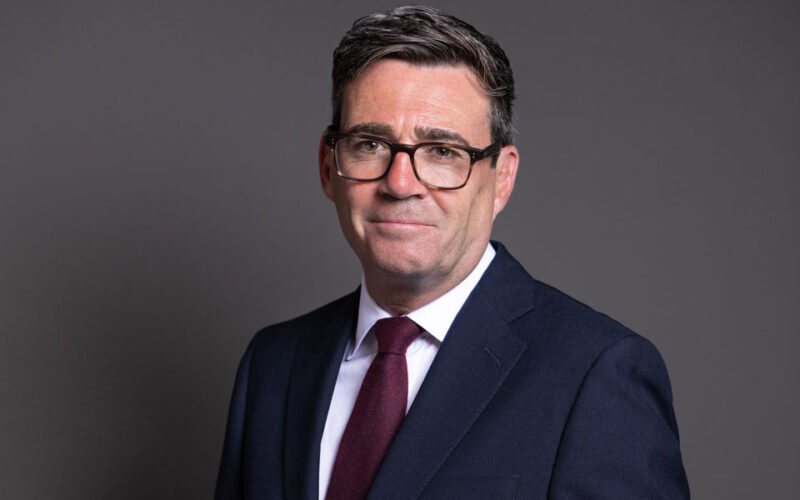
Andy Burnham became Prime Minister of the United Kingdom on July 20, 2026, promising to ease the cost of living, restore political stability, and shift economic power away from Westminster.
King Charles III formally invited the Labour Party leader to form a government at Buckingham Palace on July 20, completing the transfer of power after Keir Starmer tendered his resignation. The constitutional handover made the former Mayor of Greater Manchester Britain’s seventh prime minister since 2016.
In his first speech outside 10 Downing Street, the new leader promised a ten-year national plan, stronger public control over essential services, greater investment in British industry and a substantial transfer of authority to local communities. He also said immediate cost-of-living measures would be announced from July 21, together with an explanation of how the government intends to finance them.
The first cabinet appointments signalled a significant break with the previous administration. John Healey became Chancellor of the Exchequer, Ed Miliband was appointed Foreign Secretary and Wes Streeting moved to the Ministry of Defence. Shabana Mahmood remained Home Secretary, while Yvette Cooper took charge of health policy.
The transition produced an immediate market warning. United Kingdom government borrowing costs rose after the prime minister indicated that he would use available flexibility within Labour’s fiscal rules, although the pound recovered part of its decline following the appointment of John Healey.
What did Andy Burnham promise in his first speech as prime minister of the United Kingdom?
The Downing Street address placed political instability at the centre of the new administration’s argument for change.
Andy Burnham acknowledged that six people had entered Downing Street as prime minister during the previous decade and said Britain needed to demonstrate that stable government was still possible.
He presented his appointment as a break with the economic and political model established during the 1980s. The speech criticised the centralisation of political authority, the privatisation of economic power and the decline of industrial communities that had not recovered from factory closures and long-term underinvestment.
The proposed alternative combines devolution, public control and industrial policy.
The government intends to transfer more authority from Westminster to cities, regions and local institutions. Public procurement would be used to support British manufacturers, while housing construction, education reform and mental health support would form part of a preventative approach to welfare and public services.
The prime minister also promised to place essential services under stronger public control so that households would face more affordable costs.
That commitment does not yet amount to a detailed programme of nationalisation. The government has not specified which utilities, companies or regulatory structures would be affected.
Its significance lies in the direction of policy. The administration is preparing to reconsider the balance between public authority, private ownership and local control across services that may include water, transport, housing and energy.
The first speech therefore offered an ideological framework rather than a complete legislative plan. The immediate test begins with the cost-of-living measures promised during the new government’s first full day.

Why has the cost-of-living crisis become the first practical test for the new government?
The prime minister entered office after Labour lawmakers concluded that the previous administration had failed to persuade voters that economic conditions were improving.
Households continue to face pressure from food, housing, energy and borrowing costs. Inflation remains above the Bank of England’s target, while the Iran war has added uncertainty to global oil prices and shipping routes.
The new government cannot rely entirely on long-term reforms when voters are demanding immediate relief.
Andy Burnham said the administration would provide breathing space and begin announcing measures on July 21. He also promised to explain how those commitments would be funded, an important qualification after financial markets reacted nervously to his initial comments.
Several options have been discussed around the new leadership, including increasing the income level at which workers begin paying tax. Such a change could raise take-home pay but would reduce government revenue unless accompanied by spending reductions, alternative taxes or stronger economic growth.
The administration must also decide whether relief should be universal or targeted towards lower-income households.
Universal measures are easier to communicate and avoid complicated eligibility rules. Targeted support costs less but can exclude people facing genuine pressure just above the qualifying threshold.
Energy policy will form another part of the calculation. Higher wholesale prices linked to the Middle East conflict may eventually affect domestic bills, business expenses and inflation.
The government’s first package will therefore reveal how it balances social relief with fiscal caution. A poorly funded announcement would intensify concerns in the bond market, while a limited package could fail to create the political reset Labour expects.
What does John Healey’s appointment as Chancellor of the Exchequer signal about fiscal policy?
The selection of John Healey was one of the most closely watched decisions of the first day.
He previously served as Defence Secretary and had resigned from the earlier government during a dispute over military spending. His appointment to the Treasury was not widely anticipated by financial markets.
The choice places a politician associated with public spending pressures in charge of a department responsible for taxation, borrowing and fiscal discipline.
That background does not automatically imply a looser approach. John Healey has also held previous Treasury positions and has experience with public expenditure and government finance.
His immediate responsibility is to convince investors that the administration’s social and industrial ambitions can be delivered without destabilising the public finances.
The prime minister reaffirmed the existing fiscal rules but said the government would use any flexibility available within them. That wording contributed to a rise in borrowing costs because investors remain highly sensitive to suggestions that the rules may be interpreted more generously.
The benchmark ten-year gilt yield rose eight basis points to 5.04% on July 20. The thirty-year yield increased nine basis points to 5.75%, its highest level in two months.
Sterling weakened against the United States dollar before recovering part of the decline after the chancellor’s appointment. The pound was later trading around $1.3429.
The reaction was not a financial crisis, but it provided an immediate warning.
Britain already has the highest government borrowing costs among the Group of Seven advanced economies. Public debt, persistent inflation and memories of the 2022 mini-budget have made investors unusually alert to unfunded promises.
The Treasury’s first major statement must therefore establish a clear relationship between spending, taxation, growth and borrowing.
How does the new cabinet change Labour’s direction after Keir Starmer’s resignation?
The cabinet combines figures retained from the previous administration with senior politicians returning in different roles.
John Healey replaced Rachel Reeves at the Treasury. Ed Miliband moved from the energy portfolio to become Foreign Secretary, giving him responsibility for relations with the United States, Europe, Ukraine and governments involved in the expanding Middle East crisis.
Wes Streeting became Defence Secretary at a time when the United Kingdom is expected to increase military expenditure and maintain support for Ukraine.
Shabana Mahmood remained Home Secretary, indicating continuity in the government’s approach to immigration, policing and domestic security.
Yvette Cooper became Health Secretary, placing an experienced former home and foreign secretary in charge of the National Health Service. The appointment reflects the political importance of waiting lists, staffing pressures and social care.
Miatta Fahnbulleh took charge of energy policy, while Jonathan Reynolds remained responsible for business and trade. Angela Rayner returned to the housing portfolio, where council construction and homelessness are central to the prime minister’s agenda.
The choices suggest that the new administration is not attempting to erase every element of the previous government.
Continuity in the Home Office and business department reduces disruption, while changes at the Treasury, Foreign Office, health department and defence ministry create a visible reset.
The most notable departure is the removal of Rachel Reeves from the economic centre of government. Her fiscal framework had defined much of Labour’s approach after the 2024 election.
John Healey must now decide whether to preserve that framework closely or reinterpret it to support the prime minister’s regional and social agenda.
Can Andy Burnham transfer the Greater Manchester model to the entire United Kingdom?
The new leader’s political identity is closely connected to his record as Mayor of Greater Manchester.
His administration there expanded local control over buses through the Bee Network and pursued a style of government based on cooperation among councils, businesses, public agencies and community organisations.
The national programme seeks to apply similar principles across Britain.
The prime minister wants local institutions to control more decisions involving transport, housing, skills, utilities and economic development. The stated objective is to replace a centralised model in which communities depend on short-term grants and departmental approval from London.
Greater local authority could allow policies to reflect regional conditions more accurately.
A former industrial city may need transport links, brownfield redevelopment and technical training. A rural area may prioritise healthcare access, digital connectivity and agricultural infrastructure. Coastal communities face different housing and employment pressures.
The difficulty is that local capacity varies widely.
Greater Manchester has an established mayoral authority, a large economy and years of institutional experience. Smaller councils may lack the staff, borrowing capacity or administrative structures needed to manage expanded responsibilities.
Transferring authority without transferring sufficient funding could reproduce the same problems at a lower level of government.
The administration must therefore establish clear financial settlements, accountability standards and different models for different regions.
Its success will depend on whether devolution improves services and investment rather than simply allowing Westminster to transfer responsibility for difficult decisions.
Why did ending rough sleeping become the prime minister’s first instruction?
Andy Burnham said his first instruction after entering Downing Street would be to end rough sleeping across the country.
The pledge connects housing policy with his wider argument that government should intervene earlier rather than paying for the consequences of social failure.
Rough sleeping is caused by a combination of housing shortages, high rents, poverty, domestic violence, mental ill health, addiction and gaps in public services.
An instruction to end the problem cannot succeed through emergency accommodation alone.
The government would need to expand council and social housing, provide long-term support for vulnerable residents and improve coordination among health services, councils, charities and the justice system.
The promise also creates a demanding measure of performance. Previous governments have announced targets to reduce or eliminate rough sleeping without achieving a permanent solution.
Housing supply will be central. The prime minister pledged to build more council homes and presented construction as a way to reduce welfare costs over time.
More affordable housing could lower the amount spent on temporary accommodation and housing benefits paid into expensive private rental markets.
The policy nevertheless requires land, planning approvals, construction workers and public capital. Projects announced now may take several years to complete.
The new administration must therefore combine immediate emergency measures with a longer housing programme.
The political risk is that an absolute promise creates expectations that cannot be met quickly. The policy opportunity is that a clear national objective can force departments and local authorities to coordinate around a measurable outcome.
How will the new prime minister manage Donald Trump, Ukraine and the Iran war?
Foreign policy became an immediate responsibility within hours of the appointment.
Andy Burnham spoke with United States President Donald Trump on July 20 and reaffirmed the United Kingdom’s commitment to defence and the security of its allies.
The two leaders also discussed the conflict in the Middle East. The prime minister emphasised the importance of maintaining shipping through the Strait of Hormuz to protect global supply chains and reduce costs for households and businesses.
The conversation showed how closely foreign policy and the domestic economic programme are connected.
Disruption in the Gulf affects oil prices, inflation, transport costs and government borrowing. A leader elected on a cost-of-living message cannot treat the Iran war as a distant security issue.
The prime minister also spoke with Ukrainian President Volodymyr Zelenskyy, maintaining Britain’s support for Ukraine during a change of leadership.
Ed Miliband’s appointment as Foreign Secretary places an experienced political figure in charge of these relationships, although his most recent cabinet work focused on energy and climate policy.
Wes Streeting must manage defence commitments while the Treasury faces pressure to fund domestic priorities.
The new administration has promised to honour existing security commitments. The central question is whether higher military spending can coexist with council housing, social care reform, industrial investment and household support.
The government’s international credibility will depend on continuity. Allies will expect a leadership change inside the Labour Party to preserve Britain’s commitments to the North Atlantic Treaty Organization, Ukraine and maritime security.
Does Andy Burnham need an early general election to secure a personal mandate?
The prime minister is not constitutionally required to call an immediate election.
Labour retains a large majority in the House of Commons following its 2024 general election victory. The monarch appointed the person capable of commanding that majority after the governing party changed leader.
The next general election does not need to take place until 2029, although the prime minister may request an earlier dissolution.
Opposition parties are likely to argue that the government’s proposed economic changes go beyond the programme presented to voters under Keir Starmer.
A ten-year national plan, stronger public control, extensive devolution and a revised approach to public investment could create demands for a new mandate.
Calling an early election would allow the prime minister to seek direct approval from voters. It would also expose Labour to substantial risk before the new administration has demonstrated results.
Reform UK remains a major threat in communities that previously formed part of Labour’s electoral base. The Conservative Party will also seek to recover support by attacking higher spending and political instability.
Waiting gives the government time to introduce cost-of-living measures, establish the cabinet and show progress on housing and public services.
Delay carries a different risk. If economic conditions deteriorate or internal Labour divisions re-emerge, the opportunity for a favourable election may disappear.
The decision will depend on polling, market confidence and whether the first months produce visible evidence of a successful reset.
What will determine whether Britain’s latest leadership change restores political stability?
The first test is fiscal credibility.
The government must show that immediate household support and longer-term investment can be financed without producing another sharp increase in borrowing costs.
The second test is delivery.
Ending rough sleeping, building council housing and transferring power require legislation, funding and cooperation across several levels of government.
The third test is cabinet unity.
The administration contains senior figures with different political backgrounds and policy priorities. Agreement during a leadership transition may become harder once departments compete for limited resources.
The fourth test is the relationship with Labour lawmakers.
Andy Burnham entered office with overwhelming parliamentary support, but many members backed him because they feared losing seats rather than because they agreed with every part of his programme.
The fifth test is public patience.
A ten-year plan offers strategic direction, but voters facing high bills and stretched public services will expect earlier results.
The final test is external stability. The Iran war, energy prices, Ukraine and relations with the United States can disrupt the domestic programme even when the government controls its own decisions effectively.
The appointment has produced a clear change in political language and cabinet leadership. Whether it creates stable government will depend on the detail behind the promises and the speed with which those promises become measurable policy.
What are the key takeaways from Andy Burnham becoming the new United Kingdom prime minister?
- Andy Burnham formally became prime minister on July 20, 2026, after King Charles III invited the Labour Party leader to form a government following Keir Starmer’s resignation.
- The former Mayor of Greater Manchester is Britain’s seventh prime minister since 2016 and has presented his appointment as an opportunity to end repeated leadership changes and restore confidence in government.
- His first Downing Street speech promised immediate cost-of-living measures, a ten-year national plan, greater local authority, stronger public control over essential services and renewed support for British industry.
- John Healey became Chancellor of the Exchequer, while Ed Miliband was appointed Foreign Secretary, Wes Streeting took defence and Shabana Mahmood remained responsible for the Home Office.
- United Kingdom borrowing costs rose after the prime minister discussed using flexibility within the fiscal rules, pushing the ten-year gilt yield to 5.04% and the thirty-year yield to 5.75%.
- Ending rough sleeping was identified as the government’s first instruction, linking emergency homelessness policy with a longer-term commitment to build more council housing and reduce dependence on expensive temporary accommodation.
- The prime minister reaffirmed defence and security commitments during calls with Donald Trump and Volodymyr Zelenskyy, while identifying safe shipping through the Strait of Hormuz as an economic and security priority.
- Labour’s House of Commons majority means no immediate election is legally required, but the scale of the proposed economic and political reset may intensify opposition demands for a new public mandate.
Discover more from Business-News-Today.com
Subscribe to get the latest posts sent to your email.