Brookfield Asset Management has agreed to invest up to $600 million in ACME Cleantech Ventures, the green molecules business of India’s ACME Group, giving the global alternative asset manager its first major exposure to green ammonia and green methanol projects in the region as low-carbon fuels move from development plans toward large-scale industrial investment.
The investment, announced on September 17, 2026, will be made through Brookfield’s Global Transition Fund strategy and will support an advanced pipeline of projects in India and Oman. Unlike a conventional full-company acquisition, the transaction is a structured equity investment in ACME Cleantech Ventures, a privately held United Kingdom-based entity that houses ACME Group’s green molecules activities.
The exact equity stake and valuation have not yet been disclosed. ACME Group Chairman Manoj Upadhyay told Mint that the equity valuation associated with the structured investment is expected to be finalised by the end of 2026, meaning the headline $600 million commitment currently provides a clearer measure of Brookfield’s capital exposure than of the eventual ownership percentage.
Why is Brookfield investing up to $600 million in ACME Cleantech Ventures?
The central investment thesis is that green ammonia, green methanol and related low-carbon molecules could become increasingly important in industries where direct electrification is difficult. Fertiliser production, shipping, chemicals and other heavy industrial sectors currently depend heavily on fossil fuels and conventional hydrogen, creating potential demand for alternatives produced using renewable electricity.
ACME Group has spent years developing renewable energy and green hydrogen-related projects, giving Brookfield access to an operating platform rather than requiring the investment firm to build green fuels expertise from the ground up. The investment also extends Brookfield’s existing renewable energy exposure in India, where the firm has approximately 50 gigawatts of operating and pipeline wind and solar assets.
For Brookfield, the transaction represents a move further down the clean-energy value chain. Renewable electricity is increasingly becoming an input for industrial products such as green hydrogen, ammonia and methanol, meaning investors can potentially capture value not only from generating clean power but also from converting that power into fuels and feedstocks that can be transported and consumed by industrial customers.
Which ACME green ammonia and methanol projects could receive Brookfield capital?
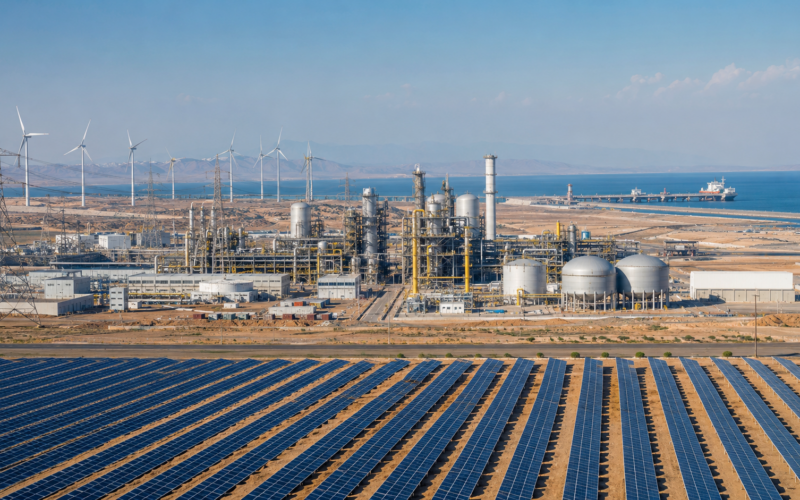
ACME Cleantech Ventures has built a pipeline spanning India and Oman. The company already operates a green ammonia facility in Bikaner, Rajasthan, while its larger ambitions include projects intended to supply both domestic users and international buyers seeking lower-carbon alternatives to conventional ammonia and methanol.
One of the most strategically important developments is ACME’s green ammonia project at Duqm in Oman. The location offers access to strong renewable energy resources and international shipping infrastructure, potentially allowing ammonia produced in Oman to serve customers across Europe and Asia rather than relying solely on local demand.
ACME is also developing additional capacity in India, including facilities in Odisha following a Green Ammonia Purchase Agreement involving Solar Energy Corporation of India. Brookfield’s capital is expected to help move these projects from development and contracting stages toward construction, where capital requirements increase sharply as renewable generation, electrolysers, storage and ammonia-production infrastructure are built.
Why do ACME’s offtake agreements matter to the $600 million investment?
One of the biggest challenges facing the green hydrogen industry has been converting ambitious project announcements into bankable projects. Production costs remain relatively high, while developers often need long-term purchase commitments before lenders and equity investors are willing to finance multibillion-dollar facilities.
ACME has attempted to reduce that risk by securing agreements with major industrial customers. Its counterparties include Norway’s Yara International, Japan’s IHI Corporation and Mitsubishi Gas Chemical, along with Indian buyers including Indian Farmers Fertiliser Cooperative Limited, Paradeep Phosphates Limited, Coromandel International Limited and Indorama India Private Limited.
Those arrangements provide greater visibility into future demand and could improve project financing prospects because they demonstrate that identifiable customers are prepared to purchase output. For Brookfield, contracted or partially contracted projects can offer a different risk profile from speculative green hydrogen developments dependent entirely on future spot-market demand.
What does the ACME deal reveal about Brookfield’s India strategy?
Brookfield has already become one of the largest international investors in Indian infrastructure and renewable energy. The firm’s investments span renewable generation, transmission, real estate, data centres, infrastructure and industrial businesses, giving it significant exposure to India’s growing electricity demand and capital-intensive development pipeline.
The ACME transaction expands that strategy into green molecules, where India is attempting to build both domestic demand and an export industry under its National Green Hydrogen Mission. The country sees low renewable electricity costs, available land and a growing manufacturing base as potential advantages in producing green hydrogen derivatives competitively.
Brookfield’s investment also comes as governments and industrial companies increasingly focus on energy security alongside decarbonisation. Green ammonia can be used directly as a fertiliser feedstock, transported internationally as an energy carrier or potentially used as a fuel, while green methanol is attracting particular attention from shipping companies looking for alternatives to conventional marine fuels.
Why could Oman become important to the Brookfield and ACME partnership?
Oman has emerged as a significant potential production centre for green hydrogen and its derivatives because of its strong solar and wind resources, large areas available for renewable projects and proximity to major shipping routes. The country is actively attempting to attract developers capable of building export-oriented hydrogen projects at industrial scale.
ACME’s presence in Duqm gives the company exposure to that opportunity. Green ammonia produced there could potentially be exported to European and Asian customers, particularly if carbon regulations and decarbonisation commitments increase demand for lower-emission industrial feedstocks.
Brookfield’s capital and infrastructure experience could become particularly valuable during the construction phase. Large green ammonia projects require coordinated development of renewable generation, electrolysis, water treatment, storage, synthesis plants and export infrastructure, making project execution considerably more complex than constructing a standalone solar or wind farm.
What are the biggest risks facing Brookfield’s green molecules investment?
The commercial opportunity is substantial, but green hydrogen economics remain challenging. Electricity costs, electrolyser prices, financing expenses and utilisation rates can significantly influence the final cost of green ammonia and methanol, while conventional fossil-fuel alternatives remain cheaper in many markets unless carbon prices, subsidies or customer commitments narrow the difference.
Project timelines are another risk. Many proposed green hydrogen developments globally have faced delays as developers work through permitting, financing, equipment procurement and offtake negotiations. A large announced pipeline therefore does not automatically translate into operating production capacity.
Brookfield’s structured approach may help limit some of that exposure because capital can be deployed as projects meet development milestones rather than necessarily funding an entire pipeline at once. The presence of established industrial customers and government-linked procurement mechanisms also gives ACME stronger commercial foundations than projects built without identified buyers.
How significant is the transaction for Brookfield Asset Management investors?
The investment is meaningful strategically but relatively modest compared with Brookfield Asset Management’s overall scale. The firm manages more than $1 trillion across infrastructure, renewable energy, real estate, private equity and credit strategies, meaning a maximum $600 million commitment will not materially transform the group’s financial profile on its own.
Brookfield Asset Management shares closed at $45.19 in New York on September 16, down about 1.5% for the session and roughly 14% over the preceding month. That broader weakness predates the ACME announcement and reflects wider market and company-specific valuation pressures rather than a direct reaction to the green molecules investment, which was disclosed the following day.
The strategic importance lies in whether ACME becomes a scalable platform rather than a single-project investment. If green ammonia and methanol markets develop as expected, Brookfield could use the partnership to deploy significantly more capital across Asia and the Middle East while leveraging renewable generation assets already within its wider investment ecosystem.
Could Brookfield’s investment accelerate green hydrogen consolidation?
The transaction highlights a wider shift in clean-energy investment from early-stage project developers toward partnerships involving large institutional capital providers. Building industrial-scale green hydrogen infrastructure requires billions of dollars, meaning developers increasingly need investors capable of supporting multiple projects rather than financing isolated demonstration plants.
That could favour platforms with proven development teams, secured land, renewable resources and long-term customer agreements. Smaller developers lacking those advantages may increasingly seek joint ventures, strategic equity investors or outright buyers as projects move from concept development into construction.
For ACME Cleantech Ventures, Brookfield provides both capital and credibility as the company attempts to convert its India and Oman pipeline into operating assets. For Brookfield, the investment creates an entry point into a developing low-carbon fuel market without requiring the firm to acquire an entire listed company or build a green molecules platform internally.
The $600 million commitment therefore represents more than another renewable energy financing. It is a strategic bet that green ammonia and green methanol can become investable infrastructure products backed by long-term industrial demand. The decisive measure will be how quickly ACME can convert its contracted pipeline into commercially operating projects capable of producing predictable cash flows at competitive costs.
Discover more from Business-News-Today.com
Subscribe to get the latest posts sent to your email.