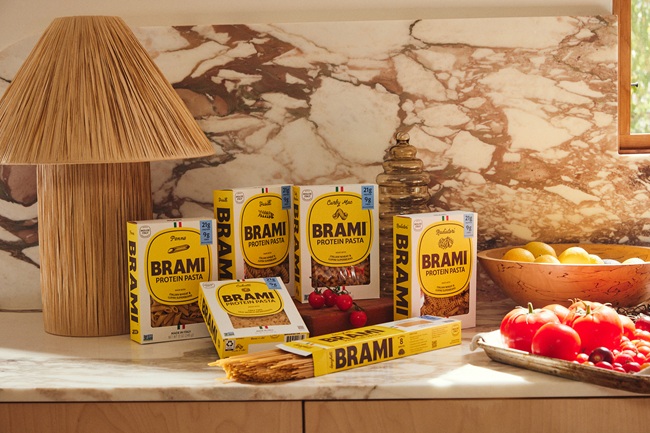
BRAMI has raised $33 million in Series B funding led by VMG Partners, giving the Italian food brand fresh capital to expand manufacturing capacity, strengthen its supply chain and accelerate national distribution in the United States. The New York-based company is positioning its protein pasta as a cleaner, less processed alternative in a food market still hungry for high-protein products but increasingly skeptical of over-engineered wellness claims. Existing investors La Molisana, Pentland Ventures, Lerer Hippeau and Gather Ventures also participated in the round, reinforcing investor confidence in BRAMI’s retail momentum. The strategic relevance is clear: protein pasta is no longer just a niche health-food experiment, and BRAMI is trying to turn a Mediterranean pantry staple into a scalable American consumer brand.
The capital raise comes at a useful moment for BRAMI because the American grocery aisle is undergoing a quiet reset. Consumers have not abandoned protein-led eating, but the language around better-for-you food is changing. Shoppers who once gravitated toward extreme diet claims are now showing stronger interest in simple ingredients, satiety, fibre, protein and familiar formats that do not feel like punishment in a box. Pasta is a particularly attractive battleground because it carries cultural comfort, high household penetration and repeat-purchase frequency. If a brand can improve the nutritional profile without damaging taste or texture, the reward is not just trial. It is pantry rotation.
BRAMI’s proposition is built around durum wheat semolina and lupini bean flour, a combination that allows the company to market a higher-protein, higher-fibre pasta while staying close to the traditional Italian eating experience. That distinction matters because the better-for-you food sector has often struggled with a familiar trap: products may win on macros but lose on repeat purchase because taste, texture or cooking performance disappoints. BRAMI is trying to avoid that problem by leaning into Italian provenance, ingredient simplicity and manufacturing discipline rather than presenting itself as a lab-born pasta replacement. In a category where consumers can spot compromise faster than a nonna spots overcooked spaghetti, that positioning is commercially important.
Why does BRAMI’s $33 million Series B matter for the future of protein pasta in America?
BRAMI’s latest funding round matters because it suggests investors are no longer treating protein pasta as a small wellness niche. The company said it has been the fastest-growing national pasta brand in America for three consecutive years and is now available in more than 4,000 stores across retailers including Walmart, Target, Whole Foods, Safeway, Albertsons, Costco and Sam’s Club. That footprint gives BRAMI a different strategic profile from early-stage challenger brands that remain dependent on specialty channels or direct-to-consumer enthusiasm. National retail access, if supported by velocity, creates the possibility of scale.
The more important signal is that BRAMI’s reported velocity is rising faster than distribution. The company said velocity is up 58 per cent year over year, outpacing distribution growth by 30 percentage points. That is a strong retail metric because it implies consumers are not merely trying the product after new shelf placements, but buying at a rate that supports deeper retailer commitment. For grocery buyers, velocity is the difference between a brand that looks good in a trend deck and a brand that earns its shelf space. The pasta aisle is not a charity ward for cute packaging.
This matters now because centre-store grocery categories are being reworked by health, convenience and value pressures at the same time. Consumers want functional benefits, but inflation has made indulgent experimentation harder to justify. BRAMI’s challenge is to occupy a useful middle ground: premium enough to support brand equity and margin, but accessible enough to become a repeat staple. The participation of VMG Partners, a consumer-focused growth equity firm, indicates the next phase is less about proving the idea and more about scaling without breaking the operating model.
How could BRAMI use VMG Partners’ backing to scale supply chain and manufacturing capacity?
The clearest use of capital is operational scale. BRAMI said the funding will support supply chain development, manufacturing capacity and continued U.S. growth. That sounds straightforward, but for food brands, scale is where the romance of the origin story meets the cold steel of operations. A product built around ingredient quality and artisanal manufacturing integrity must maintain consistency while moving through larger retailers, larger purchase orders and more complex inventory planning.
BRAMI’s relationship with La Molisana appears central to that operating model. The Italian pasta maker gives BRAMI a manufacturing and credibility anchor, especially because the brand’s identity depends on traditional pasta-making rather than a generic high-protein formulation. That partnership could become a meaningful advantage if BRAMI can maintain quality while expanding supply. It also creates a potential vulnerability because dependence on specific production methods and ingredient standards may limit how quickly the company can add capacity compared with brands using more flexible outsourced manufacturing.
VMG Partners’ role is therefore likely to be as much about process discipline as growth acceleration. Scaling a consumer packaged goods brand requires sharper forecasting, stronger retailer service levels, procurement control, promotional discipline and working capital management. If BRAMI expands too quickly without protecting product quality, it risks diluting the very differentiation that helped it stand out. If it expands too slowly, rival brands could occupy the high-protein pasta shelf before BRAMI turns growth into category leadership.
Can lupini bean pasta become a bigger clean-label alternative to processed protein foods?
BRAMI’s use of lupini bean flour gives the brand a more distinctive nutritional and storytelling platform than generic protein enrichment. Lupini beans have Mediterranean roots and can support a higher-protein, higher-fibre profile without forcing BRAMI into the language of synthetic food technology. That is strategically valuable because consumers are increasingly drawing a distinction between “high protein” and “highly processed.” The former remains attractive. The latter is becoming a problem for parts of the wellness food sector.
This is where BRAMI’s timing looks smart. The U.S. market has been flooded with bars, shakes, powders, snacks and meal replacements built around protein claims. Many of those products have worked commercially, but consumer fatigue is growing around long ingredient lists and products that feel more like nutritional engineering than food. BRAMI’s argument is that pasta can be improved through old-world ingredients rather than reinvented into something unrecognizable. That gives the brand a cleaner emotional proposition: eat better without turning dinner into a chemistry seminar.
However, lupini flour also requires consumer education. Not every shopper knows what lupini beans are, and food allergy sensitivities around legumes may require careful communication. BRAMI must make the ingredient feel familiar enough to reduce hesitation while preserving enough novelty to stand out. The better-for-you food brands that win usually do both: they offer a clear functional benefit and make the shopper feel clever rather than confused.
Why are national retailers important to BRAMI’s next phase of consumer packaged goods growth?
BRAMI’s presence across Walmart, Target, Whole Foods, Safeway, Albertsons, Costco and Sam’s Club gives the company access to different consumer segments at once. Whole Foods can support credibility with health-conscious and premium shoppers. Walmart and Target can test mass-market acceptance. Costco and Sam’s Club can drive volume, household trial and repeat pantry purchasing. That channel spread gives BRAMI room to build scale without being trapped in a narrow premium grocery identity.
The retailer mix also creates strategic complexity. Club channels reward volume and value. Natural and specialty channels reward brand story and ingredient credentials. Mass retailers demand reliable pricing, availability and promotional execution. BRAMI must therefore manage a delicate brand architecture: premium enough to feel differentiated, but practical enough to work for everyday meals. Pasta is not a luxury category, and that reality will shape how far pricing can stretch.
Retailer confidence will likely depend on whether BRAMI can sustain velocity as distribution widens. Many challenger brands show early growth because they enter new doors, but the real test arrives when expansion slows and same-store performance matters more. BRAMI’s reported velocity gains are encouraging, but the next phase will test repeat purchase across broader demographics. In simple terms, the question is whether consumers see BRAMI as “healthy pasta I tried once” or “the pasta I now keep at home.”
What competitive pressure could BRAMI create across the pasta and better-for-you food sectors?
BRAMI’s growth puts pressure on both traditional pasta brands and better-for-you food challengers. Large pasta incumbents have distribution, scale and price advantages, but they may not move quickly enough to own the high-protein, clean-label narrative. Challenger brands may have nutritional positioning, but many lack the taste credibility or manufacturing depth needed to compete in mainstream pasta. BRAMI is attempting to sit between both groups, which is exactly where category disruption often starts.
For traditional pasta companies, the risk is not immediate displacement. Pasta is a large, resilient category with strong brand loyalty and private-label competition. The bigger risk is category segmentation. If shoppers begin to view higher-protein pasta as a normal upgrade rather than a diet product, incumbents may need to respond through product innovation, acquisitions or partnerships. BRAMI’s growth could therefore become a signal for broader portfolio moves in the pasta aisle.
For protein-focused food brands, BRAMI’s rise reinforces a shift away from aggressively engineered formats toward more familiar meals. That could influence how investors evaluate future food and wellness brands. The market may reward companies that combine functional nutrition with recognisable eating occasions rather than products that rely on novelty alone. In that sense, BRAMI is not just selling pasta. It is participating in a larger correction in how health-oriented packaged food talks to consumers.
What risks could slow BRAMI’s protein pasta expansion despite strong retail momentum?
BRAMI’s biggest risk is execution at scale. Ingredient quality, Italian production standards and product texture are central to the brand promise. As the company expands, any inconsistency in cooking performance, availability or pricing could weaken consumer trust. In grocery, operational errors are not abstract problems. They become empty shelves, weak reorder rates and retailer impatience.
The second risk is competitive imitation. If BRAMI’s model continues to work, larger food companies can respond with their own high-protein pasta variants. Some may use chickpea, lentil, pea protein or other legume-based formulations. Others may acquire emerging brands rather than build internally. BRAMI’s defence will depend on brand loyalty, retail performance, manufacturing partnerships and whether consumers associate lupini-based Italian protein pasta specifically with BRAMI rather than with a broader category.
The third risk is consumer positioning. Better-for-you food brands can overplay the health message and accidentally make the product sound less enjoyable. BRAMI’s strongest commercial lane is not “pasta for people who feel guilty.” It is “pasta that keeps the pleasure and improves the nutrition.” If BRAMI keeps that balance, it can appeal to families, fitness-minded consumers and mainstream shoppers without sounding like a lecture from the pantry police.
How should executives read BRAMI’s funding round as a signal for food industry strategy?
BRAMI’s $33 million Series B should be read as another sign that consumer packaged goods investors are looking for brands that can make health benefits feel normal, not extreme. The next wave of better-for-you food growth is likely to favour products that fit into existing eating habits rather than asking consumers to rebuild their diets from scratch. Pasta is a powerful platform for that shift because it already has emotional, cultural and practical relevance.
The funding also shows that growth equity remains available for brands with measurable retail traction, credible repeat purchase and a clear operational use for capital. BRAMI is not raising around a vague future concept. It is raising to expand capacity, deepen supply chain capabilities and support national distribution. That distinction matters in a capital market that has become more selective toward consumer brands after years of overfunded direct-to-consumer experiments.
For the wider food sector, BRAMI’s rise may sharpen the debate around what “healthy” means in packaged food. The company is betting that the answer is not deprivation, nor hyper-processing, but familiar food made with better ingredients and stronger nutrition. That sounds simple, which is exactly why it may be commercially dangerous for slower-moving incumbents. Sometimes the most disruptive idea in grocery is not a futuristic formulation. Sometimes it is just pasta that lets people feel slightly more virtuous without ruining dinner.
Key takeaways on what BRAMI’s $33 million Series B means for food brands, retailers and investors
- BRAMI’s $33 million Series B gives the company capital to expand manufacturing capacity, strengthen supply chain execution and support wider U.S. retail growth.
- The funding round signals that protein pasta is moving from niche wellness positioning into a more mainstream grocery growth category.
- BRAMI’s use of durum wheat semolina and lupini bean flour gives it a clean-label narrative at a time when consumers are questioning over-processed protein foods.
- The company’s retail presence across Walmart, Target, Whole Foods, Safeway, Albertsons, Costco and Sam’s Club gives it access to both premium and mass-market consumers.
- Reported velocity growth of 58 per cent year over year suggests BRAMI’s momentum is not only distribution-led, which is important for retailer confidence.
- The partnership with La Molisana strengthens BRAMI’s Italian authenticity and manufacturing credibility, but it also increases the importance of supply chain discipline.
- Traditional pasta companies may face pressure to respond if higher-protein pasta becomes a regular household upgrade rather than a diet-specific product.
- Better-for-you food challengers may take a lesson from BRAMI’s positioning: familiar meals with improved nutrition may outperform novelty-led functional foods.
- The main risks are execution at scale, competitive imitation, pricing discipline and the challenge of educating consumers about lupini beans without making the product feel complicated.
- BRAMI’s funding round reinforces a broader consumer packaged goods trend toward health benefits that feel practical, familiar and repeatable.
Discover more from Business-News-Today.com
Subscribe to get the latest posts sent to your email.