



In a dramatic turn of geopolitical and economic engagement, President Donald Trump announced that the United States has reached a significant trade and investment understanding with Uzbekistan, valued at approximately 35 billion US dollars over a three-year horizon. Speaking during a high-profile dinner with Central Asian leaders in Washington, Trump stated that the total investment volume could potentially exceed 100 billion US dollars over the next decade, placing Uzbekistan in an unlikely spotlight as a strategic partner in U.S. foreign economic policy.
While the fine print of the deal remains unavailable, the magnitude of the projected capital flows represents one of the most ambitious bilateral economic initiatives undertaken with a Central Asian republic in recent history. The announcement, made during an expanded summit involving the C5+1 platform, reflects Washington’s intensifying efforts to reshape trade corridors and resource alliances at a time of rising tension with both China and Russia.
Why is the United States turning to Uzbekistan for trade and investment deals in 2025?
The United States’ growing interest in Uzbekistan is part of a broader strategic calculus. The push toward securing diversified sources of critical minerals, rare earths, and energy inputs has accelerated in recent years, especially amid supply chain vulnerabilities exposed by global crises. Uzbekistan’s untapped reserves of uranium, copper, and rare earth elements make it an appealing alternative to traditional suppliers, including those in politically contentious regions.
The decision to elevate ties with Tashkent also comes at a time when Uzbekistan is actively liberalizing its economy under the leadership of President Shavkat Mirziyoyev. Since assuming office in 2016, the Uzbek administration has initiated wide-ranging reforms aimed at reducing state control, encouraging foreign direct investment, and improving infrastructure. These reforms have been particularly attractive to Western stakeholders eager to forge new economic relationships that align with resource security, geopolitical diversification, and commercial growth.
By engaging Uzbekistan directly, the United States aims to counterbalance China’s Belt and Road Initiative projects in the region and diminish Moscow’s longstanding economic sway. In that sense, the Trump administration’s trade narrative is as much a geopolitical maneuver as it is an economic one.
Which sectors are expected to benefit from the $35 billion Uzbekistan trade agreement?
Although no formal documentation has been released by either the United States Department of Commerce or Uzbekistan’s Ministry of Investment, key sectors have been consistently cited by officials and close observers. These include aviation, critical minerals, infrastructure and logistics, agriculture, automotive components, and potentially information technology.
Aviation appears to be one of the more mature areas of engagement. Earlier this year, Uzbekistan Airways announced its intention to purchase up to 22 Boeing 787 Dreamliner aircraft. The deal was pegged at over 8 billion US dollars and, if fulfilled, would represent one of the largest aviation procurements by a Central Asian carrier. Boeing Company (NYSE: BA) stands to benefit significantly if this transaction proceeds, both in terms of order backlog and global visibility in emerging markets.
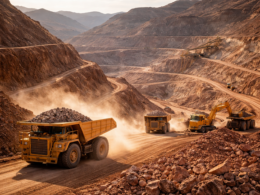
Critical minerals and energy-related materials constitute a strategic cornerstone of the emerging partnership. Uzbekistan possesses reserves of uranium and other rare earth elements critical for clean energy technologies, defense systems, and advanced electronics. Given that the United States is actively reducing reliance on suppliers like China and Russia, engagement with Uzbekistan’s mining sector presents a long-term opportunity for American companies involved in exploration, extraction, and processing.
Infrastructure and industrial investments are also on the table. Uzbekistan’s location as a land-linked nation makes it central to potential logistics hubs that can connect South Asia, Europe, and East Asia. Co-developing transport corridors, industrial parks, and energy infrastructure with American partners could open the door for U.S. engineering, procurement, and construction firms to enter the region in a meaningful way.
Agriculture is another domain of collaboration. With plans to modernize irrigation, crop yield management, and agro-logistics, Uzbekistan is targeting food security and value-added export potential. American agritech companies, machinery manufacturers like Deere & Company (NYSE: DE), and digital farming startups could find Uzbekistan a receptive market if the investment climate continues to liberalize.
How credible is the $35 billion commitment and what are the execution risks?
Despite the celebratory tone of the announcement, many observers have flagged the absence of binding documentation or detailed sectoral breakdowns. As of November 8, 2025, there are no confirmed memoranda of understanding, legal contracts, or investment protection frameworks made publicly available by either side. This has led to speculation that the deal may be more aspirational in nature rather than immediately actionable.
Uzbekistan’s capacity to absorb such a large influx of foreign capital also remains uncertain. The country has made strides in improving transparency, strengthening regulatory norms, and adopting investor-friendly reforms, but major obstacles persist. These include bureaucratic inertia, lack of judicial independence, and lingering capital controls that could deter institutional investors.
From the American side, companies will likely seek guarantees around tax treatment, repatriation of profits, local partner requirements, and environmental or labor compliance. Given the volatile nature of foreign investment law in developing markets, the execution of any significant cross-border capital deployment would require a risk-adjusted approach, potentially involving multilateral risk guarantees or U.S. Development Finance Corporation participation.
In short, while the headline figure of 35 billion US dollars is symbolically powerful, the actual flow of capital will hinge on concrete legal structures, regulatory alignment, and commercially viable opportunities.
What does the announcement signal for Central Asia’s evolving geopolitical landscape?
The optics surrounding the announcement are just as important as the economic figures themselves. Hosting all five Central Asian leaders in Washington, D.C., reflects a rare show of diplomatic muscle in a region historically considered peripheral to American strategic priorities.
The move can be interpreted as part of the United States’ growing regional rebalancing strategy, wherein economic engagement complements defense alignment and supply chain resilience. In this sense, the deal is less about individual transactions and more about laying the groundwork for a U.S.-aligned economic corridor that stretches across Eurasia.
For Uzbekistan, this is a geopolitical coup. By diversifying its international partnerships, Tashkent gains negotiating leverage with both Beijing and Moscow, while signaling to global capital markets that it is serious about attracting foreign investment on Western terms.
This development could also catalyze increased interest in Central Asia from multinational corporations that have traditionally focused on more familiar emerging markets like Vietnam, Indonesia, or Mexico. If Uzbekistan can successfully convert this announcement into signed contracts, it may serve as a bellwether for greater private-sector confidence in the region.
What are markets and analysts saying about the U.S. and Uzbekistan agreement?
So far, investor reaction has been largely neutral due to the lack of clarity on actionable deals. Shares of Boeing Company, a potential direct beneficiary, showed no immediate price movement following the announcement. There has also been no marked change in sector-wide flows into Central Asia–focused funds or ETFs.
However, trade analysts and geopolitical risk experts have generally welcomed the development, with cautious optimism. Some see it as a shrewd move by the Trump administration to gain ground in the mineral and aerospace sectors without engaging in costly military commitments. Others remain skeptical, arguing that Uzbekistan’s political and legal environment still presents significant hurdles to large-scale U.S. capital deployment.
Institutional investors will likely remain on the sidelines until more concrete signals emerge, such as public tender announcements, regulatory harmonization laws, or joint venture declarations from large American corporations.
What should investors and companies watch for next?
The next six months will be critical in determining whether the 35 billion US dollar figure translates into actual projects. Key developments to watch include the publication of sector-specific investment frameworks, announcements of co-financed ventures, and follow-up visits by trade delegations.
Any updates from the United States Department of Commerce, the U.S. Development Finance Corporation, or Uzbekistan’s Ministry of Investment could offer clues as to which companies and industries stand to benefit. In particular, investors should monitor the movement of pilot projects in aviation and critical minerals, which appear to be the most mature verticals within the broader deal narrative.
What are the key investment signals from Trump’s $35 billion U.S. and Uzbekistan trade announcement?
- Uzbekistan has committed to a projected 35 billion US dollar trade and investment initiative with the United States, potentially rising to 100 billion US dollars over a decade.
- Sectors poised to benefit include aerospace, critical minerals, infrastructure, and agriculture, although few binding agreements have been disclosed.
- Boeing Company (NYSE: BA) could be a key beneficiary if the Uzbekistan Airways deal for 22 Dreamliners proceeds as previously signaled.
- Execution risks remain high due to Uzbekistan’s evolving investment environment, the absence of formal contracts, and institutional hurdles on both sides.
- The deal forms part of a broader U.S. strategy to reposition Central Asia as a trade and supply chain partner, reducing dependency on China and Russia for strategic resources.
- Investors should monitor upcoming regulatory announcements, capital movement frameworks, and follow-up trade missions for signs of concrete action.
Discover more from Business-News-Today.com
Subscribe to get the latest posts sent to your email.