
Blue Star Helium Limited (ASX: BNL) has sold and dispatched the first production tube trailer from the Pinon Canyon Plant at its Galactica Project in Colorado, marking its transition from plant commissioning into active helium sales. The company said the delivery concluded the early production commissioning and optimisation phase after recent improvements in plant uptime, steady-state operation and trailer fill rates. A second trailer, representing the first delivery under a three-month fixed-price offtake agreement announced in June, is already at the plant and being filled. The milestone gives Blue Star Helium a commercial presence in the tight US helium market, but the investment case now depends on whether one completed shipment can become a dependable cycle of production, delivery and cash generation.
Why does Blue Star Helium’s first Pinon Canyon sale matter more than achieving first gas?
First gas demonstrated that the Pinon Canyon processing equipment could recover helium from the Galactica well stream. The departure of a filled and sold tube trailer proves something commercially different: the processed product has moved through the entire chain from the reservoir and gathering system to purification, compression, loading and customer delivery.
That distinction is central to Blue Star Helium’s transition from an exploration and development company into a producer. Many early-stage resource projects successfully commission individual components but struggle to maintain integrated production, achieve product specifications consistently or establish an efficient logistics cycle.
The first sale does not prove that Galactica has reached steady commercial production. It does, however, establish that the production chain can function from end to end.
Blue Star Helium said the plant has recently operated for longer periods at steady state and is demonstrating more routine runtime, shutdown and restart cycles. Production fill rates have also increased, allowing the first trailer to leave while another is filled. These operational improvements suggest the commissioning team has resolved at least some of the constraints that delayed the initial commercial delivery after refined helium began entering trailers earlier in 2026.
The next proof point is repetition. Investors need to see trailers filled and dispatched at predictable intervals, without lengthy interruptions or recurring plant modifications. In industrial-gas production, an isolated delivery has symbolic value. A repeatable delivery schedule creates the foundation for revenue forecasting and customer commitments.
What must Pinon Canyon’s improved uptime demonstrate before recurring revenue becomes visible?
Plant uptime is one of the most important operating indicators for the Galactica Project because helium sales depend on stable throughput across several interconnected systems.
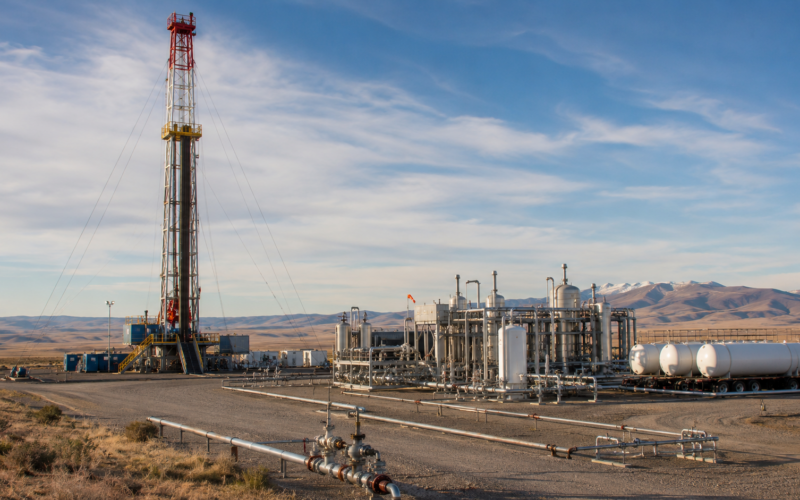
Raw gas must flow from the tied-in wells through the gathering network before entering the plant’s amine system, which separates carbon dioxide and produces a helium-enriched stream. That stream then passes through the Helium Recovery Unit and is compressed into tube trailers for transportation.
A constraint at any point can reduce output. Lower-than-expected well flow, gathering-system pressure losses, compressor downtime, purification inefficiency or trailer availability can all interrupt deliveries even when the wider facility remains technically operational.
During the March quarter, six wells were tied into the Pinon Canyon gathering system: Jackson 2, Jackson 4, Jackson 29, Jackson 31, State 9 and State 16. Blue Star Helium was also completing automation, safety and remote-monitoring work intended to support continuous operations. Several wells had temporarily been taken offline during staged maintenance of rental compressors, illustrating why the company’s recent emphasis on longer steady-state operating periods matters.
The company has not disclosed the volume contained in the first trailer, the total helium produced during the optimisation period, realised pricing or the time required to complete the fill. Those figures will become increasingly relevant as Blue Star Helium moves beyond milestone-based reporting.
A credible commercial update would ideally provide monthly production, saleable helium volume, average plant uptime, trailer dispatch frequency and revenue received. Without those measures, investors can confirm that sales have started but cannot yet determine the operating margin or annualised production potential.
The central operational test is therefore not whether the plant can run. It is whether Pinon Canyon can run frequently enough, and at sufficiently high utilisation, to spread fixed operating costs across a larger volume of saleable helium.
How could three additional wells and deeper completions increase Galactica helium output?
Blue Star Helium plans to expand raw gas throughput through a combination of plant debottlenecking, gathering-system optimisation and additional reservoir exposure.
The company is assessing whether existing wells can be deepened to expose more of the productive formation and increase flow. It also plans to drill three development wells during the second half of 2026, subject to permitting, before connecting them to the Pinon Canyon Plant. Management expects these additions to increase raw gas supply and helium product output.
This staged approach is commercially sensible because it allows the joint venture to learn from current operations before committing to a larger drilling programme. Existing well and plant data should improve estimates of reservoir performance, pressure behaviour, optimal well spacing and processing constraints.
The March quarterly report identified a further 20 to 30 potential drilling locations across the broader Galactica-Pegasus area. The joint venture is evaluating targets in the Upper and Lower Lyons formations, with future drilling expected to be sequenced according to production efficiency and resource recovery.
The opportunity is meaningful, but the relationship between additional wells and saleable helium is not automatically linear. Three new wells could raise inlet volumes, but their commercial contribution will depend on flow rates, helium concentrations, completion quality, gathering capacity and plant recovery performance.
Expansion drilling also introduces a capital-allocation decision. Blue Star Helium must decide whether the best near-term return comes from drilling new wells, deepening existing completions or removing bottlenecks within the plant and gathering network.
The strongest outcome would be a coordinated programme in which production data identify the highest-value reservoir interventions and the plant can process the resulting additional flow without requiring disproportionate capital expenditure.
Why is the three-month helium offtake agreement a bridge rather than full revenue visibility?
The second tube trailer is being filled under an initial three-month agreement with a major US industrial-gases purchaser. The arrangement covers all helium produced by the Pinon Canyon Plant during the contract period and uses firm pricing that Blue Star Helium said reflects prevailing US spot-market conditions.
The agreement reduces immediate marketing risk because Blue Star Helium has a customer for the output generated during the ramp-up phase. It also provides the purchaser with an opportunity to assess product consistency, delivery reliability and the plant’s ability to support repeat supply.
However, a three-month contract does not establish long-term revenue certainty. Blue Star Helium has not disclosed the customer’s identity, contracted volumes, unit price, minimum delivery requirements or revenue expected under the arrangement.
The contract should therefore be viewed as an operational bridge. It connects early spot sales with the company’s objective of negotiating longer-term supply agreements that could support investment in additional wells and broader Galactica-Pegasus development.
The timing is favourable. Global helium supply has tightened following major disruption to production and shipping associated with Qatar, historically one of the largest suppliers to the international market. The supply shock has increased demand for alternative helium produced inside the United States, particularly among semiconductor, aerospace, medical and advanced manufacturing customers.
This environment may provide Blue Star Helium with pricing leverage during early negotiations, but it also creates a strategic choice. Short-term spot pricing may offer stronger immediate returns during a shortage, while longer-term contracts could provide more dependable cash flow and support financing decisions.
A balanced commercial structure could include a base volume under contract and additional production exposed to spot-market pricing. The optimal mix will depend on how quickly Pinon Canyon ramps up and whether customers are prepared to commit to commercially attractive long-term terms.
Can carbon dioxide create a meaningful second revenue stream at the Galactica Project?
The Galactica well stream contains substantial carbon dioxide, which must be removed before the helium-enriched gas enters the final recovery process. Blue Star Helium intends to capture, liquefy and sell that carbon dioxide instead of treating it only as a separation by-product.
The company previously targeted carbon dioxide liquefaction and trailer loading during the June 2026 quarter, subject to securing appropriate sales arrangements. Jackson 27, which has a reported carbon dioxide concentration of approximately 98.3%, was expected to be connected when carbon dioxide sales commenced.
The first-helium-sale announcement confirms that commercial discussions for the carbon dioxide stream are continuing, but it does not indicate that liquefaction or sales have begun. The absence of a completed carbon dioxide arrangement means this element of the project remains an opportunity rather than an operating revenue source.
Carbon dioxide monetisation could improve project economics by generating income from a stream already processed through the amine system. It may also improve capital efficiency by increasing the revenue generated from each unit of raw gas entering Pinon Canyon.
The challenge is that carbon dioxide markets are regional. Product value depends heavily on purification requirements, local demand, transport distance, storage infrastructure and competition from existing suppliers. Unlike helium, which can support high-value long-distance distribution, bulk carbon dioxide economics are more sensitive to logistics.
Blue Star Helium will need to demonstrate that nearby customers can absorb meaningful volumes at pricing that covers liquefaction, handling and transportation costs. A signed contract, initial trailer delivery and disclosed sales contribution would turn the carbon dioxide strategy into a measurable economic component.
Does Blue Star Helium have enough funding to convert first sales into sustained production?
Blue Star Helium entered the March quarter-end with A$880,000 in cash after using approximately A$1.10 million in operating activities and A$1.44 million in investing activities during the period. The company subsequently received A$6 million before costs from the first tranche of a larger institutional placement.
The full placement raised A$10 million through the issue of approximately 1.67 billion new shares at A$0.006 each. Blue Star Helium also raised approximately A$1.06 million through an entitlement offer priced at A$0.005 per share and received additional funds from option exercises.
This funding gives the company considerably more flexibility than its March quarter-end cash balance alone suggests. It can support well work, permitting, development drilling, plant optimisation and working-capital requirements during the production ramp-up.
The capital structure has also expanded significantly. More than 6.15 billion ordinary shares were reported on issue by late June, meaning even relatively modest additional equity issuance can involve a substantial number of new securities.
That dilution does not make the capital raise inherently unattractive. The relevant question is whether the money produces operating improvements and cash flows that exceed the dilution experienced by existing shareholders.
Blue Star Helium owns a 50% working interest in Galactica alongside Helium One Global Limited. The joint-venture structure shares development costs and risk, but it also means Blue Star Helium receives only its proportional interest in project economics.
The next quarterly report should provide an important update on cash expenditure after the placement, production receipts, development commitments and the budget for the three planned wells. This will help investors judge whether the capital raise provides a sufficient runway to reach stable production or whether further funding could be required before Galactica generates meaningful internal cash flow.
What is the BNL share price signalling after the first commercial helium delivery?
Blue Star Helium shares were quoted at A$0.006 at the time of writing, giving the company a market capitalisation of approximately A$36.9 million. The stock was unchanged following the first-sale announcement, suggesting the milestone had been anticipated or was not yet sufficient to alter the market’s assessment of execution risk.
BNL had risen from A$0.005 on July 9 to A$0.006 by July 13, representing a 20% increase over that short period. The one-month comparison is broadly flat, with the shares also closing at A$0.006 on June 15.
The wider 52-week range of A$0.004 to A$0.012 places the current price halfway between the annual low and high. BNL is approximately 50% above the 52-week low but remains 50% below the high.
The subdued response to the first sale reflects an important shift in investor expectations. Once a company reaches production, the market increasingly values evidence such as volumes, uptime, revenue, operating cost and contract duration rather than construction milestones.
BNL’s current valuation appears to recognise that Galactica has become an operating asset while retaining a discount for limited production disclosure, an unfinished ramp-up and the absence of long-term offtake visibility.
A rerating would probably require several consecutive deliveries, disclosed sales revenue and confidence that additional wells can increase output without creating another large funding requirement. Conversely, recurring downtime, slower well permitting or continued delays to carbon dioxide sales could weaken the commercial narrative.
Which milestones will show whether Blue Star Helium is becoming a scalable producer?
The most immediate measure will be the completion and sale of the second tube trailer under the fixed-price agreement. Further deliveries during the three-month contract will indicate whether the plant has entered a repeatable production rhythm.
Blue Star Helium must then disclose enough operating information for investors to evaluate momentum. Trailer counts alone may become less useful as production increases. Quarterly helium volumes, average uptime, realised prices and cash receipts would provide stronger evidence.
The company also needs to finalise the design and permitting of the three new development wells planned for the second half of 2026. Their drilling results, flow performance and connection schedule will determine how quickly Pinon Canyon can move beyond its current well base.
Long-term helium offtake is another major catalyst. A multi-year agreement with defined volumes would validate customer confidence and improve future revenue visibility, although the value will depend on pricing flexibility and delivery obligations.
Carbon dioxide monetisation remains the other unresolved part of the processing model. Securing a buyer and dispatching the first carbon dioxide trailer could provide additional revenue and demonstrate fuller utilisation of the Galactica gas stream.
Blue Star Helium has improved its strategic position by completing a sale, raising development capital and operating in a helium market where reliable domestic supply carries increased importance. What remains unproven is the frequency, scale and profitability of future deliveries.
The next meaningful test is not another declaration that production is progressing. It is a measurable sequence of trailer sales, stable operating data and revenue that demonstrates Pinon Canyon can support an expanding commercial business.
Key takeaways from Blue Star Helium’s first Pinon Canyon helium sale
- Blue Star Helium has sold and dispatched the first production tube trailer from the Pinon Canyon Plant in Colorado.
- The company said the sale concluded the early production commissioning and optimisation phase.
- A second trailer is being filled under an initial three-month fixed-price helium offtake agreement.
- Recent improvements in plant uptime and steady-state operation have increased production fill rates.
- Six development wells are currently connected to the Pinon Canyon gathering system and available for production.
- Blue Star Helium plans to drill three additional development wells during the second half of 2026, subject to permitting.
- The company is considering deepening existing wells and debottlenecking the plant and gathering system to increase output.
- Carbon dioxide sales remain a potential second revenue stream, but a completed commercial arrangement has not yet been announced.
- BNL shares were trading at A$0.006, with a market capitalisation of approximately A$36.9 million and no immediate rerating after the sale.
- Recurring trailer deliveries, production data, long-term contracts and additional well performance are the next tests of commercial scale.
Discover more from Business-News-Today.com
Subscribe to get the latest posts sent to your email.