




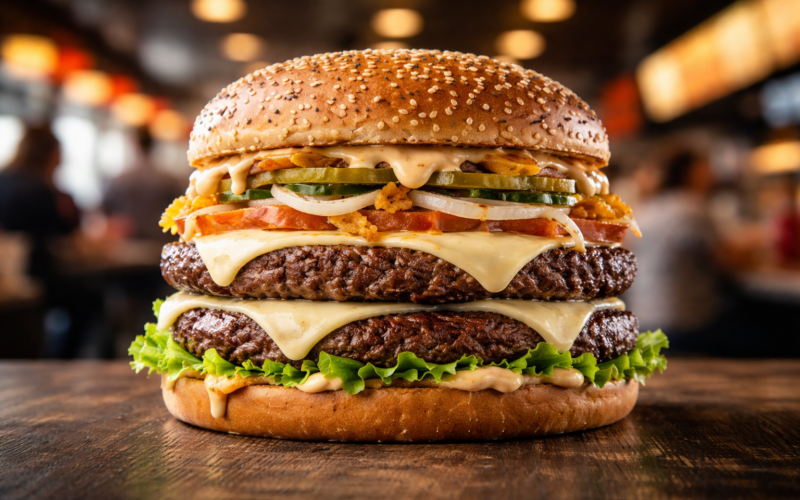
McDonald’s Corporation has unveiled the Big Arch Burger, the largest hamburger the company has ever introduced in the United States, marking a deliberate strategic escalation in the highly competitive premium fast food segment. Scheduled for a nationwide rollout from March 3, 2026, the launch is not simply a novelty play around size or indulgence. It reflects a calculated effort by McDonald’s Corporation to defend traffic, protect average check value, and reassert relevance in a market where consumer expectations around value, portion size, and perceived quality are shifting rapidly. With two quarter pound beef patties, three slices of white cheddar cheese, layered vegetables, and a proprietary Big Arch sauce, the product represents a material departure from McDonald’s traditional reliance on iconic but smaller burgers like the Big Mac as its primary brand anchors.
Why is McDonald’s launching its largest ever U.S. burger at a time when value meals and affordability dominate headlines
At first glance, the Big Arch Burger appears to clash with the dominant narrative shaping quick service restaurants in 2025 and 2026, which has focused heavily on affordability, inflation fatigue, and value menus. However, McDonald’s Corporation is not abandoning value. Instead, it is segmenting its menu more aggressively to serve distinct customer missions. The Big Arch Burger targets a consumer cohort that is less price sensitive, more indulgence driven, and increasingly willing to treat fast food as an occasional replacement for casual dining rather than as a daily low cost habit.
This cohort has grown in importance as inflation reshaped spending behavior. Many consumers now eat out less frequently but spend more per visit. McDonald’s Corporation is responding by ensuring it captures a greater share of wallet when those visits occur. A higher priced, heavier burger improves average ticket size while still leveraging the company’s scale, supply chain efficiency, and speed advantages over casual dining competitors.
The decision also reflects data McDonald’s Corporation has gathered from international markets. In the United Kingdom and Ireland, where the Big Arch has already transitioned from limited time offer to permanent menu item, the burger demonstrated sustained demand rather than novelty driven spikes. That performance gave executives confidence that the concept could travel to the United States, where appetite for oversized burgers remains culturally embedded despite broader wellness trends.
How does the Big Arch Burger fit into McDonald’s broader menu and brand architecture strategy
The Big Arch Burger should be viewed as part of a deliberate portfolio approach rather than a standalone product. McDonald’s Corporation has been quietly rebuilding its burger stack over several years through initiatives such as the Best Burger platform, which focused on bun softness, beef seasoning, and cooking consistency. The Big Arch sits at the top of that stack, acting as a flagship indulgence product that signals confidence in beef quality and preparation standards.
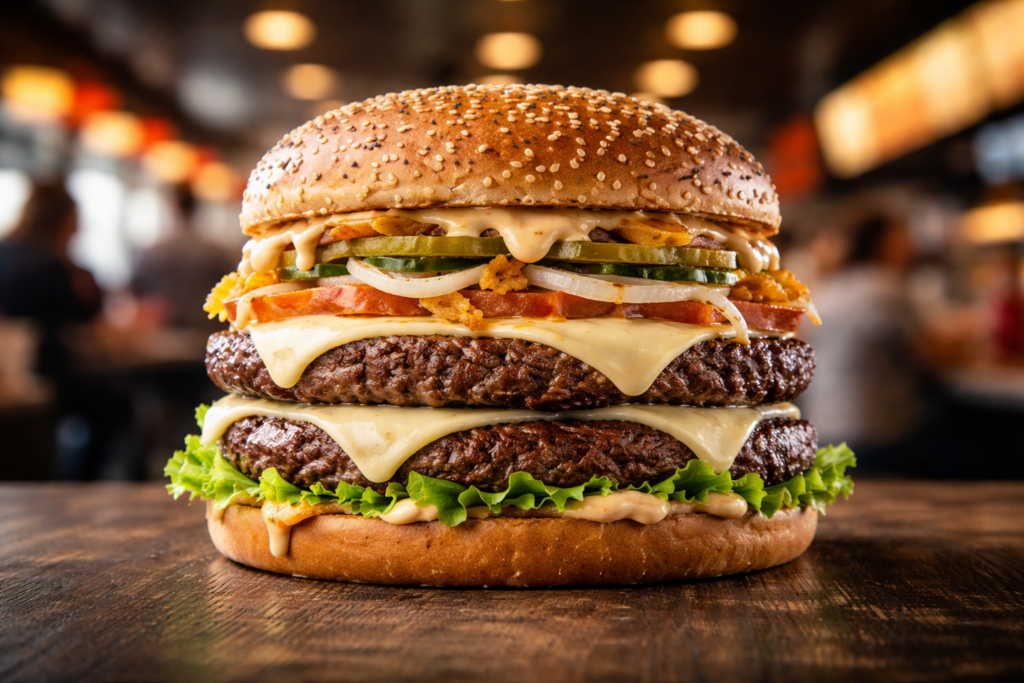
Unlike previous limited time burgers that leaned on novelty ingredients or regional flavors, the Big Arch Burger doubles down on classic McDonald’s cues. Beef, cheese, lettuce, onions, pickles, and sauce dominate the build. The innovation lies in scale and layering rather than unfamiliar components. This approach reduces operational risk while maximizing brand recognition and comfort, two factors that are critical when rolling out a complex product across thousands of restaurants.
From a brand standpoint, the Big Arch also helps McDonald’s Corporation reclaim narrative space from competitors that have been aggressively marketing large burgers as symbols of value and satisfaction. Rather than ceding that territory to rivals, McDonald’s is signaling that it can compete on size, indulgence, and taste while maintaining its core operational model.
What does the Big Arch Burger reveal about competition in the U.S. fast food burger market
The U.S. fast food burger market has entered a phase of intensified competition that goes beyond price discounting. Burger King, Wendy’s, and regional chains have all invested in premium burger messaging, often highlighting flame grilling, fresh beef, or oversized portions. McDonald’s Corporation has historically been cautious about chasing size wars, preferring consistency and speed over spectacle. The Big Arch Burger suggests that calculus has shifted.
By introducing its largest ever burger, McDonald’s Corporation is directly challenging competitors on their own turf while leveraging advantages they cannot easily replicate. Few rivals can match McDonald’s distribution scale, national marketing reach, or ability to negotiate beef pricing at volume. This gives the Big Arch Burger a structural advantage even if it carries a higher price tag.
The move also pressures competitors to respond. If the Big Arch Burger gains traction, rivals may feel compelled to escalate their own premium offerings, potentially driving menu complexity and margin strain across the sector. In that sense, McDonald’s Corporation is not only defending its position but shaping the competitive environment in ways that favor its operational strengths.
How pricing expectations around the Big Arch Burger could reshape perceptions of fast food value
Although McDonald’s Corporation has not formally confirmed U.S. pricing, early indicators suggest the Big Arch Burger will sit meaningfully above core menu items. Estimates placing the sandwich alone near double digit pricing, with combo meals approaching casual dining levels in some markets, have already sparked debate.
This debate itself is revealing. It highlights how consumer perceptions of fast food value are evolving. Value is no longer defined purely by low price. It increasingly incorporates portion size, satiation, and perceived indulgence. For some consumers, a large, filling burger that replaces a sit down meal represents value even at a higher price.
For McDonald’s Corporation, the risk lies in balance. If pricing drifts too close to casual dining without delivering a commensurate experience, the product could face resistance. However, if the Big Arch Burger successfully anchors the premium end of the menu, it may allow McDonald’s to defend pricing power elsewhere while continuing to promote entry level value offers for price sensitive customers.
What operational and execution challenges does the Big Arch Burger introduce for McDonald’s restaurants
Launching the largest burger in company history is not operationally trivial. Larger patties, additional cheese slices, and a taller build all increase preparation complexity. McDonald’s Corporation has spent decades optimizing kitchen flow to deliver speed and consistency. Any product that disrupts that flow carries execution risk.
The company has mitigated this risk by designing the Big Arch Burger around existing ingredients and processes wherever possible. Quarter pound patties are already standard in U.S. kitchens. Cheese slicing, bun handling, and assembly steps remain familiar. Even so, the added size may affect assembly time, packaging, and drive thru handling, particularly during peak periods.
Training and quality control will be critical. A premium burger that arrives messy, uneven, or poorly assembled undermines the very perception it is meant to build. McDonald’s Corporation’s willingness to proceed suggests confidence that recent kitchen upgrades and operational discipline can absorb the added complexity.
Why the Big Arch Burger launch matters for McDonald’s long term growth narrative
Beyond immediate sales impact, the Big Arch Burger speaks to McDonald’s Corporation’s long term growth philosophy. The company is increasingly positioning itself as a flexible food platform rather than a static fast food brand. It aims to serve breakfast seekers, value driven families, late night snackers, and indulgence focused diners within a single ecosystem.
The Big Arch Burger strengthens that ecosystem by expanding the top end of the menu without eroding the base. It also reinforces McDonald’s relevance among younger consumers who view large, indulgent food as an occasional social experience rather than a routine purchase. In an era where brand loyalty is fragile, relevance across occasions matters as much as price leadership.
If the Big Arch Burger performs well, it could pave the way for further premium experimentation, potentially including permanent menu elevation, limited regional variations, or bundled offerings tied to entertainment and cultural moments. If it underperforms, the financial downside is limited, but the strategic signal will still have been sent.
What are the keytakeaways from McDonald’s Big Arch Burger launch and what it signals for the fast food industry
- McDonald’s Corporation is using the Big Arch Burger to deliberately expand the premium end of its U.S. menu without abandoning value focused offerings.
- The launch reflects a shift toward maximizing spend per visit as consumers eat out less frequently but seek more indulgence when they do.
- International success of the Big Arch Burger reduced risk and influenced the decision to roll it out nationally in the United States.
- By competing directly on burger size, McDonald’s is challenging rivals while leveraging scale and supply chain advantages they cannot easily match.
- Pricing debate around the Big Arch Burger highlights evolving definitions of value in fast food that now include portion size and meal replacement potential.
- Operational execution will be critical, as premium positioning depends on consistent quality and presentation at scale.
- The product reinforces McDonald’s broader strategy of serving multiple consumer missions within a single brand ecosystem.
- If successful, the Big Arch Burger could open the door to further premium menu innovation across the quick service restaurant sector.
Discover more from Business-News-Today.com
Subscribe to get the latest posts sent to your email.