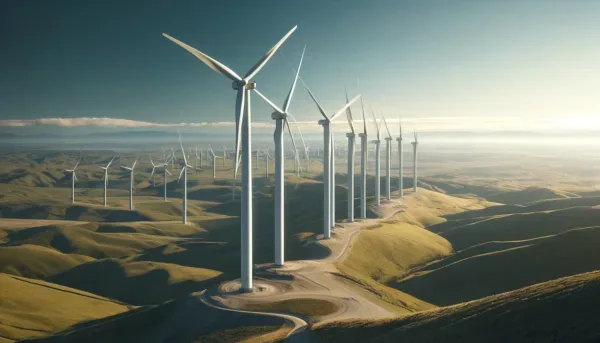


Argan (NYSE: AGX) is the unglamorous side of the artificial intelligence boom: while the market chases chipmakers and data-centre names, Argan is the company that actually builds the power plants that keep those data centres running. The Arlington-based engineering and construction firm designs and builds large power facilities, mostly natural gas plants, and it has just reported record quarterly revenue on the back of surging electricity demand. The reason the ticker is trending is a striking contradiction: the business is firing on every cylinder, profitable and debt-free, yet the share price near US$690 has climbed well above every published analyst target. For a retail investor arriving from a forum, the puzzle is not whether Argan is a good company, but whether a good company can still be a good investment at this price.
What does Argan actually do and why is it a picks-and-shovels bet on US power demand?
Argan is an engineering, procurement and construction contractor, the type of firm that takes a power project from blueprint to a working plant. Its dominant segment builds power generation facilities, particularly combined-cycle natural gas plants, and it also has industrial construction and telecommunications infrastructure arms that diversify the revenue base. Recent work includes a large combined-cycle gas plant in Texas and an engineering and construction contract for the Platin Power Station in Ireland.
The appeal of this model is that Argan sells the shovels rather than digging for gold. It does not own the power plants or bet on electricity prices; it gets paid to build the infrastructure regardless of who ultimately profits from the megawatts. That gives it exposure to the enormous wave of power demand without the commodity risk a generator or fuel producer carries, and a debt-free balance sheet with substantial cash lets it bid aggressively for large contracts without leverage hanging over it.
The implication is a steadier, more visible business than most stocks riding the same theme. Argan is genuinely profitable, reporting record revenue and rising net income, and it returns cash through a regular and rising dividend alongside buybacks. The trade-off, which becomes the heart of the risk discussion later, is that an EPC contractor’s revenue is lumpy and dependent on winning and executing big projects, so the smooth picture can wobble between major awards.
How does the AI data centre electricity boom translate into Argan’s record power backlog?
The structural driver behind Argan’s run is the same one lifting the whole power sector. Artificial intelligence data centres consume vast and growing amounts of electricity, and that demand is straining grids that were not built for it, forcing utilities and developers to commission new generation quickly. Reliable baseload power, the kind that runs day and night regardless of weather, is in particular demand to complement intermittent renewables, and natural gas plants are a primary way to deliver it fast.
That is where Argan plugs in. As an experienced builder of large gas-fired and other power facilities, it is positioned to capture orders flowing from the buildout, and its backlog tells the story: the order book has grown enormously year over year, reaching roughly US$2.8 billion to US$2.9 billion, including a notice to proceed on a large combined-cycle gas project of about 1.4 gigawatts in Ward County, Texas. Backlog is the key forward indicator for an EPC firm because it represents contracted future revenue.
The caveat is that a backlog is a promise, not yet money earned. Converting US$2.8 billion of contracted work into profitable revenue requires years of clean execution across multiple complex projects at once, and the figure can fall between big new awards even when the business is healthy. The theme is real and Argan is clearly winning work, but the gap between a record backlog and the cash it eventually produces is where the actual investment outcome is decided.
What did Argan’s record first-quarter fiscal 2027 results and US$2.8 billion backlog reveal?
The most immediate catalyst is fresh. On 4 June 2026, Argan reported first-quarter fiscal 2027 results for the period ended 30 April, headlined by record quarterly revenue of US$291.0 million and a backlog of US$2.8 billion. This followed a record full fiscal 2026 in which revenue rose to about US$944.6 million and net income jumped more than 60 percent to roughly US$137.8 million, confirming that the demand surge is translating into real earnings rather than just optimism.
The significance is that Argan is delivering on the narrative in hard numbers. Record revenue shows the company executing on its order book, the multi-billion-dollar backlog points to continued activity, and the strong cash generation is funding both growth bids and shareholder returns, including a quarterly dividend that has been increased. Few stocks attached to the AI power theme can point to this combination of actual profits, a clean balance sheet and cash returns.
The nuance worth noting is that the backlog ticked slightly lower from the prior quarter as record revenue burned through contracted work faster than new awards replaced it. That is not alarming on its own, but it illustrates the rhythm of the business: each quarter’s results depend on both finishing existing projects well and booking new ones, and the market watches that balance closely. The next major awards, rather than the results just posted, are what will drive the story from here.
Why is Argan’s share price trading so far above every published analyst price target?
This is the central tension, and it is unusual. Argan shares have been one of the market’s quiet multi-baggers, climbing from a 52-week low near US$194 to recent levels around US$690, close to a high of about US$748, supporting a market capitalisation near US$9.5 billion. The stock now trades on a price-to-earnings multiple in the high sixties to around seventy, rich for an engineering and construction contractor that historically commanded far lower valuations.
What makes it stand out is that the price has outrun the analysts. Most published twelve-month targets sit well below the current price, with several fair-value estimates in the US$425 to US$475 range and even an upgraded bullish target from a major Wall Street bank at US$550 still beneath where the shares trade. In other words, the market has pushed Argan above the level the people who model it for a living think it is worth, which is the opposite of the usual setup where targets sit above the price.
The implication is that the stock is priced for flawless execution, leaving little margin for error. A valuation this far ahead of analyst expectations can persist while momentum and the theme stay hot, but it also means a disappointing quarter, a backlog stall, or simply a rotation out of the data-centre trade could trigger a sharp reversal. Buyers at this level are paying for a future even rosier than the optimistic case the analysts have already built in, and that is the most important risk to understand before chasing the chart.
How risky is Argan’s heavy concentration in natural gas power projects for the long-term story?
Beneath the strong numbers sits a concentration question. Argan’s backlog is heavily weighted toward natural gas power plants, which is exactly what the current demand wave calls for, but it also ties the company’s fortunes to the gas-fired construction cycle. If the mix of new power projects shifts, whether toward renewables, storage, nuclear or a slower overall build, a gas-heavy order book could prove less of an advantage than it looks today.
The context is that gas is winning the near-term race precisely because it can be built quickly to meet urgent data-centre demand, so the concentration is a rational response to where the orders are. Argan’s diversification into industrial and telecommunications work provides some cushion, and its EPC expertise is transferable across power types, including hybrid systems. The company is building what customers want now, and that is a reasonable strategy.
The risk is one of timing and policy rather than imminent danger. Energy transitions, permitting regimes and the relative economics of gas versus other sources can all shift, and a contractor concentrated in one technology is more exposed to those swings than a fully diversified builder. For a long-term holder, the durability of gas-plant demand beyond the current AI-driven surge is a genuine open question woven through the otherwise strong story.
What execution and backlog-timing risks come with a fixed-price EPC business like Argan?
The nature of the EPC business introduces risks that quarterly records can mask. Large construction contracts are complex, often span years, and can carry fixed-price elements, which means cost overruns, supply-chain problems, weather delays or labour shortages can erode margins on a project the company has already booked. A single troubled job can produce charges that dent an otherwise strong quarter, a recurring feature of the construction sector.
There is also the lumpiness of revenue recognition. Because results depend on the pace of work on a handful of big projects, revenue and earnings can swing from quarter to quarter even when the underlying business is healthy, and the backlog itself rises and falls in steps as major contracts are won and worked through. A quarter that happens to fall between large awards can look soft and unsettle a market that has priced in continuous momentum.
The implication is that Argan’s smooth recent trajectory should not be assumed to continue in a straight line. Competition is another factor, since larger rivals could pressure margins if industry capacity loosens, and the high valuation amplifies the market’s reaction to any stumble. None of this undermines the quality of the company, but it explains why even a profitable, well-run contractor can be a volatile stock, particularly at a premium price.
Why are retail investors and short sellers both circling the AGX ticker right now?
Argan has attracted an unusual two-sided crowd. On one side, retail investors like it as a profitable, real-earnings way to play the AI power theme, a contrast to the many cash-burning story stocks in the space, and it trades in sympathy with a broader basket of power-infrastructure names that rise and fall together on data-centre demand headlines. The just-reported record results and the steady dividend reinforce that bull case.
On the other side, the elevated valuation has drawn short sellers, with short interest rising sharply over the past year to a meaningful share of the float. That tension between momentum buyers extrapolating the growth and bears betting on mean reversion toward analyst targets is part of what makes the stock move, and it can produce squeezes and sharp pullbacks alike around catalysts such as earnings.
The takeaway is that AGX sits at an interesting crossroads of quality and price. The company’s fundamentals are among the strongest of any name riding the power-demand wave, which is rare in a theme dominated by speculation, but the share price has run ahead of what the analysts modelling it believe it is worth. That combination makes it a stock to understand carefully rather than chase, where the business case and the valuation case point in genuinely different directions.
Key takeaways for retail investors weighing Argan, Inc. (NYSE: AGX)
- Argan is a profitable, debt-free engineering and construction firm that builds large power plants, making it a picks-and-shovels play on surging electricity demand rather than a speculative concept stock.
- The AI data-centre power boom is driving its order book, with backlog around US$2.8 billion to US$2.9 billion, including a roughly 1.4 gigawatt gas project in Ward County, Texas.
- On 4 June 2026 the company reported record first-quarter fiscal 2027 revenue of US$291.0 million, following a record fiscal 2026 with net income up more than 60 percent and a rising dividend.
- The central tension is valuation: at around US$690 the stock trades on a price-to-earnings multiple near seventy and above every published analyst target, with fair-value estimates largely in the US$425 to US$550 range.
- Backlog is heavily concentrated in natural gas projects, which suits current demand but ties the company to the gas-build cycle and to energy-policy shifts.
- EPC work carries execution risk from cost overruns and project delays, and lumpy revenue means results can swing between major awards even when the business is healthy.
- This is a high-quality company trading at a premium price, attracting both momentum buyers and a growing short interest, where the business case and the valuation case diverge.
Discover more from Business-News-Today.com
Subscribe to get the latest posts sent to your email.