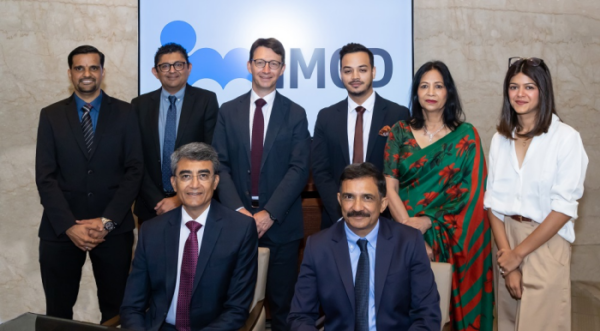
Arclin has completed its acquisition of The Willamette Valley Company (WVCO), adding eight manufacturing and R&D facilities and around 540 employees to its global operations. The transaction is designed to significantly scale Arclin’s materials science capabilities across engineered repair systems, performance adhesives, and infrastructure solutions.
With this move, Arclin is aiming to deepen its presence in performance-critical sectors such as wood products, concrete and rail infrastructure, and industrial robotics, while signaling an expanded ambition in global chemical applications that demand bespoke formulations.
Why does Arclin’s acquisition of Willamette Valley Company matter for materials science sector growth?
The acquisition marks a deliberate acceleration of Arclin’s strategy to become a vertically integrated materials science platform, focused on performance polymers and engineered chemistries. The Willamette Valley Company, or WVCO, brings with it a 70+ year legacy of custom chemistry and application system development, spanning high-demand verticals from railroad tie repair to concrete restoration and industrial fillers.
At a time when infrastructure hardening, industrial automation, and sustainability pressures are reshaping procurement cycles, Arclin’s bolt-on of WVCO provides a foundation for end-to-end solutions. The integration is positioned not just to expand Arclin’s addressable market, but to bridge two historically separate value chains: chemical formulation and field application systems.
According to Arclin Chief Executive Officer Bradley Bolduc, the acquisition was motivated by WVCO’s technical depth, customer orientation, and product compatibility with Arclin’s existing offerings. The company’s product catalog, especially in transportation infrastructure and concrete patching, directly complements Arclin’s push into performance-centric materials. Arclin President Mark Glaspey added that the combined entity would focus on next-generation chemistries, signaling a pivot toward innovation-led portfolio expansion.
On WVCO’s side, President and Chief Executive Officer John Murray framed the acquisition as a logical evolution that would give his team access to a global footprint, greater resource deployment, and commercialization capabilities under a more structured enterprise environment. His remarks suggest WVCO sought not only scale but also an execution platform with institutional manufacturing reach.
How will Arclin leverage WVCO’s platform to pursue cross-sector growth and R&D synergies?
Arclin is positioning this acquisition to serve three strategic goals: product expansion, market adjacency, and cross-sector solution deployment. WVCO’s domain expertise in chemical application systems gives Arclin a tactical advantage in surfacing real-world customer pain points—especially across rail, concrete, and wood product ecosystems.
The additional eight facilities will likely increase Arclin’s production flexibility and shorten R&D-to-deployment timelines. Notably, the combined footprint extends Arclin’s relevance in geographies where regulatory or industry standards demand highly engineered solutions. In practice, this could allow Arclin to simultaneously address industrial compliance, lifecycle performance, and customer customization needs with greater agility.
This integration also signals an architectural convergence between chemistry innovation and delivery mechanisms. WVCO’s legacy in robotic application systems and repair diagnostics tools gives Arclin a toehold in what may become the next competitive frontier: turnkey materials-plus-delivery ecosystems. That’s especially relevant in sectors like railroad maintenance and industrial infrastructure repair where manual processes are being phased out for automated, sensor-enabled, or remote-monitored solutions.
What are the integration risks and operational tradeoffs associated with this acquisition?
While the strategic rationale is sound, the executional burden is significant. WVCO’s workforce integration, which involves ~540 new employees across North America and possibly other geographies, introduces operational complexity for Arclin’s existing team of approximately 1,200. Coordinating procurement, technology stack compatibility, safety protocols, and customer handoffs across different product lines will require deliberate change management.
There’s also the risk of innovation dilution. WVCO’s historical success has been tied to its nimbleness, rapid prototyping, and customer-specific problem solving. These qualities can be eroded in a larger organizational setting unless protected through structural incentives or dedicated innovation units.
From a capital deployment lens, Arclin will need to balance the post-acquisition integration timeline with ongoing R&D investments. If integration drag slows down innovation or impacts customer service, it could delay the realization of intended synergy benefits.
What are the competitive and investor implications for specialty materials and performance polymers?
The acquisition sends a competitive signal to peers in the materials science and specialty chemical sectors, especially those still pursuing fragmented portfolios across adhesives, coatings, and engineered repair systems. It may push regional players in North America to pursue defensive consolidations or partnerships to avoid being squeezed out by an increasingly full-stack Arclin.
For private equity and institutional investors, the transaction illustrates growing platform dynamics in the chemicals and advanced materials industry. As investors look for predictable cash flows, margin expansion, and differentiated IP, companies that can offer modular innovation tied to infrastructure or industrial uptime will attract stronger multiples.
At the industry level, this deal aligns with a broader reorientation from commodity chemistry to application-specific performance systems. That reorientation has implications for supply chains, which will need to become more flexible and vertically integrated, and for customers, who may see more bundled offerings replacing piecemeal procurement.
What happens next for Arclin’s multi-sector expansion playbook after the WVCO deal?
Now that the deal is complete, Arclin is expected to begin integration planning while maintaining operational continuity for customers and suppliers. A critical short-term milestone will be the formal alignment of product development roadmaps and cross-training of engineering and field support teams.
In the medium term, analysts should expect Arclin to announce solution bundles that combine legacy Arclin polymers with WVCO’s application technologies. These could target adjacent verticals like aerospace composites, 3D printing for infrastructure molds, or fire-retardant solutions for utility grids.
If integration succeeds, Arclin could emerge as a model for what modern materials science firms must become—simultaneously chemistry innovators, application technologists, and field-execution enablers.
But the execution window will be narrow. Customers in infrastructure and industrial sectors operate on performance metrics, not brand goodwill. Arclin must translate this acquisition into measurable uptime, durability, and cost-per-use improvements if it wants to solidify its expanded relevance.
What are the key takeaways from Arclin’s acquisition of The Willamette Valley Company?
- Arclin has completed its acquisition of The Willamette Valley Company, expanding its global footprint by 8 facilities and over 500 employees.
- The deal enhances Arclin’s capabilities in performance-critical adhesives, repair systems, and infrastructure-centric chemistries.
- WVCO’s expertise in rail, concrete, and industrial robotics complements Arclin’s polymer science platform.
- The acquisition signals a strategic pivot toward vertically integrated solutions blending materials with application systems.
- Integration risk remains high given workforce scale-up and the potential erosion of WVCO’s innovation speed.
- The combined entity could unlock bundled solution offerings in infrastructure and transportation markets.
- For the materials sector, the deal raises the bar on technical depth and execution capability required for mid-cap players.
- Institutional investors may view Arclin as an emerging consolidator with credible platform momentum.
- If successful, the integration could push peers toward more aggressive M&A or joint development partnerships.
- The deal reflects broader industry movement from commodity chemicals toward sector-specific performance systems.
Discover more from Business-News-Today.com
Subscribe to get the latest posts sent to your email.