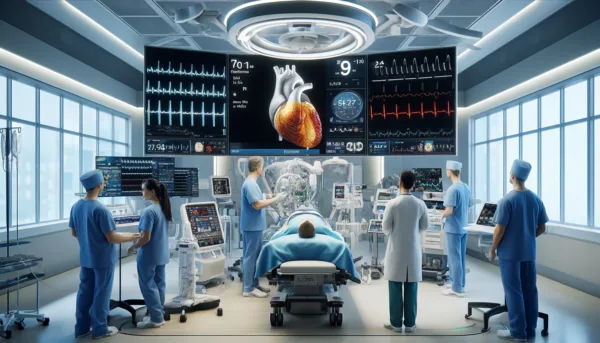

Anatomage Inc., a privately held medical visualization and education technology company based in Santa Clara, California, has unveiled its most comprehensive update to the Anatomage Table since its original launch more than 14 years ago. The platform, widely recognized as one of the most advanced tools for anatomy and clinical simulation, now includes a newly digitized geriatric cadaver, expanded simulation libraries, and real-time multi-cadaver comparison features. These advancements are positioned to reshape medical training by providing students and professionals with unparalleled access to detailed human anatomy, functional physiology, and clinical procedure simulations.
How does Anatomage’s new cadaver model expand the realism of digital anatomy for medical education?
At the center of this release is the introduction of a sixth full-body cadaver, a female donor who died of pancreatic cancer. Unlike previous models, this cadaver presents both healthy anatomical structures and visible metastases, allowing users to explore disease progression across multiple organs in three-dimensional clarity. Anatomage noted that this process required more than two years of preparation, beginning with the freezing and slicing of the body into high-resolution sections, followed by meticulous segmentation and 3D volumetric modeling.
By preserving pathological anatomy alongside healthy tissues, the company aims to give students exposure to cases they might otherwise only encounter in specialized clinical rotations. The inclusion of metastatic spread also mirrors one of the most pressing challenges in oncology education—helping clinicians in training recognize how cancers affect the body at a systems level rather than only as isolated lesions.
This latest cadaver expands the Anatomage Table’s growing repository of high-resolution donors, each of which is segmented at microscopic levels of precision. Students can rotate, isolate, and magnify structures to study anatomy from perspectives not possible in physical dissection labs. By integrating both standard and pathological anatomy, Anatomage positions itself as a hybrid resource that straddles the educational divide between textbook-based learning and clinical case exposure.
Why is the multi-cadaver comparison tool seen as a breakthrough for teaching anatomical diversity?
Another headline feature of the platform update is its multi-cadaver comparison capability. This tool allows users to place two or more bodies side by side, enabling real-time analysis of structural differences across age groups, genders, and disease states. For example, students can examine how the cardiovascular system differs in a younger male compared to an older female or contrast skeletal alignment between healthy individuals and those with degenerative conditions.
Such comparative learning was traditionally limited to classroom lectures, where instructors relied on static charts and slides to illustrate differences. Anatomage has moved beyond this limitation by creating an interactive, manipulable environment. Students can now focus on a single structure—such as the liver, lungs, or spinal column—and compare it instantly across multiple cadavers.
Medical educators have stressed for years that understanding anatomical variability is crucial for accurate diagnosis and surgical planning. A standardized model cannot fully prepare practitioners for the diversity encountered in clinical practice. By digitizing these differences, Anatomage strengthens the bridge between academic learning and real-world medicine.
How are new functional simulations changing the way students interact with physiology and procedures?
Beyond cadaver modeling, Anatomage has broadened its simulation library with dynamic physiological and procedural tools. One of the most discussed additions is the virtual suspended skeleton, which introduces motion and biomechanics into the learning process. Unlike the static skeletons found in classrooms, this digital model can simulate joint rotation, movement sequences, and even complex poses that can be recorded and replayed. For orthopedic and rehabilitation training, this functionality offers students insight into the mechanics of motion disorders and injury recovery.
Additional updates include simulations of ear physiology, enhancements to renal and homeostasis models, and clinical training modules covering procedures such as aesthetic injections, colonoscopy, endoscopy, radiology, and radiation oncology. These simulations allow students to rehearse techniques in a low-risk environment, complementing cadaver work and classroom theory.
The platform also integrates a standardized synthetic body derived from real cadaver data. This “healthy” digital human provides a reference baseline for comparisons against pathological cadavers. Together, these models offer a full spectrum of learning experiences—from normal physiology to advanced clinical intervention.
What role does Anatomage play in the global adoption of digital anatomy education technologies?
Anatomage has steadily built its reputation since its founding in 2004, and its Table product is now used in medical schools, dental programs, and research institutions worldwide. The company’s decision to include multiple languages in this update—French, German, Italian, and Spanish—signals a stronger push for international adoption. By integrating Terminologia Anatomica, the standard Latin-based reference for anatomical nomenclature, the platform also aligns with global teaching standards.
The adoption of digital anatomy platforms like Anatomage has accelerated in recent years, particularly after the COVID-19 pandemic disrupted access to traditional cadaver labs. Universities that once relied heavily on in-person dissections began seeking digital tools that could replicate and even enhance anatomy learning remotely. Anatomage’s Table gained traction during this period as a substitute for cadaver-based labs, and many institutions have since kept it as a core teaching tool even after campuses reopened.
With its latest enhancements, Anatomage is positioning itself not only as an alternative to cadaver dissection but as a superior complement. Digital cadavers eliminate issues such as preservation costs, limited donor availability, and biohazard restrictions, while simultaneously adding features impossible in physical labs, such as interactive segmentation and multi-cadaver comparison.
How is the broader medical education market responding to Anatomage’s innovations and what comes next?
Market analysts following the medical education technology sector note that platforms like Anatomage are increasingly competing with VR and AR-based anatomy tools. Companies such as Elsevier and 3D4Medical have expanded their offerings in digital visualization, but Anatomage differentiates itself with its reliance on real donor data and its emphasis on pathology as well as normal anatomy. This blend appeals to institutions aiming to balance academic rigor with technological innovation.
Feedback from medical educators suggests that Anatomage’s realism is its most compelling strength. While VR platforms can gamify anatomy learning, they often lack the level of anatomical precision that cadaver-based modeling provides. By continuously refining its cadaver datasets, Anatomage positions itself at the intersection of academic credibility and technological advancement.
Looking forward, the company is expected to expand its simulation library to include more clinical procedures and integrate artificial intelligence into its platform. AI-driven tools could assist students in identifying structures automatically, simulate disease progression, or even test clinical decision-making in lifelike scenarios. Analysts believe this direction would align with growing demand for competency-based education, where students are evaluated on their ability to apply knowledge rather than simply recall it.
Why Anatomage’s latest platform update sets a new benchmark for the future of digital medical studies
Anatomage’s newest update reflects both the company’s history of innovation and the broader shift in how medicine is taught. From its earliest versions, the Table has aimed to transform anatomy from a static subject into a living, interactive experience. With the inclusion of a metastatic cadaver, the expansion of comparative learning, and the integration of functional simulations, this update underscores a long-term trend: medical education is becoming more immersive, more data-driven, and more globally accessible.
As institutions adapt to the realities of constrained resources, changing curricula, and technological disruption, Anatomage is emerging as a model for how digital platforms can preserve the rigor of traditional training while pushing the boundaries of what students can experience. The ability to explore pathological anatomy in three dimensions, compare cadavers side by side, and rehearse complex procedures in a safe digital environment represents a meaningful evolution in the education of future clinicians.
Discover more from Business-News-Today.com
Subscribe to get the latest posts sent to your email.