


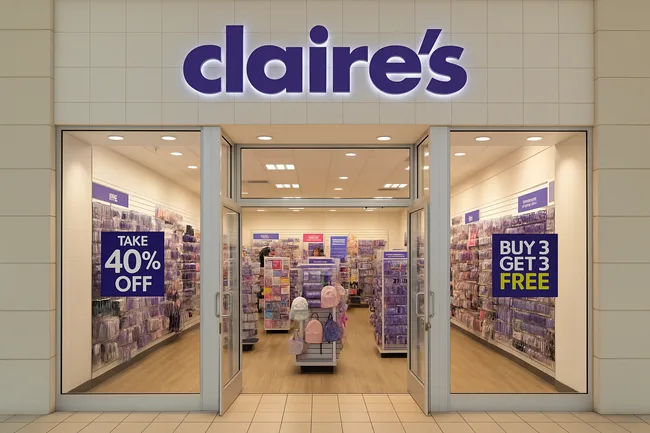
Claire’s Holdings LLC has announced an agreement to sell its intellectual property and a significant portion of its North American retail operations to Ames Watson, a Maryland-based holding company, as part of its ongoing U.S. Chapter 11 and Canadian CCAA restructuring proceedings. The deal, disclosed on August 20, 2025, comes after the fashion accessories retailer sought protection from creditors earlier this year to address mounting liabilities and safeguard its brand value.
The agreement, which remains subject to U.S. and Canadian court approvals and customary closing conditions, represents a turning point for Claire’s as it attempts to salvage its operations and reposition itself in the highly competitive fast-fashion and specialty retail market. A pause in liquidation has been applied to select stores included in the transaction, while closures will continue elsewhere in North America.
Why is Claire’s selling North America operations and IP to Ames Watson as part of its restructuring plan?
The decision to sell to Ames Watson follows months of restructuring activity in which Claire’s attempted to maximize enterprise value amid a difficult retail climate. Having filed for voluntary Chapter 11 protection in the U.S. and entered proceedings under the Companies’ Creditors Arrangement Act (CCAA) in Canada, the American fashion accessories retailer faced mounting challenges including declining foot traffic, high lease obligations, and debt service pressures.
By transferring a substantial portion of its retail footprint and intellectual property to Ames Watson, Claire’s aims to preserve its brand equity while reducing operational burdens. The transaction allows the company to unlock value for creditors and stakeholders while ensuring continuity of customer engagement in core markets. Executives framed the sale as a critical step toward stabilizing the business and maintaining Claire’s legacy of affordable fashion and self-expression.
How does Ames Watson plan to position Claire’s brand for growth after the acquisition?
Ames Watson, founded in 2018 and now generating over $2 billion in annual revenue, has developed a track record of acquiring and repositioning consumer-facing businesses. Its portfolio includes brands such as Lids, Mitchell & Ness, South Moon Under, and Hungry. Co-founder Lawrence Berger noted that the group intends to preserve Claire’s strong emotional connection with younger consumers while investing in a refreshed retail strategy across North America.
The holding company’s approach typically centers on stabilizing core operations, leveraging omnichannel strategies, and deploying capital into areas where brand recognition is already strong. Market observers suggested that Ames Watson’s prior successes with lifestyle and fashion-oriented brands position it well to manage Claire’s transition, particularly in an environment where experiential retail and digital convergence are reshaping consumer behavior.
What does this agreement mean for Claire’s employees, customers, and creditors?
CEO Chris Cramer emphasized that the transaction is designed to maximize stakeholder value and safeguard jobs where possible. He expressed gratitude to employees for maintaining service levels during the restructuring process, underscoring the retailer’s dependence on frontline staff to sustain customer loyalty. For customers, the pause in liquidation across certain stores offers a reprieve and signals that the Claire’s brand will maintain a significant physical presence even as it adjusts its footprint.
For creditors, the sale of assets represents a path toward recovery as restructuring advisors work to distribute proceeds under court supervision. The role of advisors, including Houlihan Lokey as investment banker and Alvarez & Marsal as restructuring consultant, reflects the complexity of balancing creditor interests with long-term brand preservation.
How does Claire’s financial restructuring compare with past efforts in the specialty retail sector?
Claire’s has faced restructuring before, most notably in 2018 when it filed for Chapter 11 to reduce debt by $1.9 billion. Like other mall-based specialty retailers—such as Payless, Forever 21, and Aeropostale—Claire’s has struggled with declining mall traffic, high leverage, and shifts toward e-commerce. Analysts noted that while brand awareness remains high, especially among Gen Z and younger demographics, the company’s legacy cost structure left it vulnerable to cyclical downturns and consumer preference shifts.
Institutional sentiment around the current sale is cautiously optimistic. Investors see Ames Watson’s involvement as a stabilizing force, but the long-term viability of Claire’s will depend on execution, supply chain agility, and the ability to differentiate in a crowded accessories and fashion landscape.
What is the market and institutional investor sentiment toward Claire’s restructuring and sale?
Although Claire’s Holdings is privately held, the restructuring and sale process is being closely watched by lenders, creditors, and private equity participants given the scale of its North American retail footprint. Market sentiment reflects a pragmatic acceptance that divestiture to a brand-savvy investor like Ames Watson is a necessary outcome rather than a discretionary choice.
Observers suggested that institutional investors will judge success by the recovery rate for creditors and the potential for Ames Watson to drive profitable growth without repeating the cycle of overleveraging that has plagued many specialty retailers. While not listed, Claire’s restructuring is indirectly relevant for retail sector debt markets, where recovery outcomes affect future financing for similarly positioned brands.
What are the future prospects for Claire’s and Ames Watson after the transaction is completed?
If approved, the sale could allow Claire’s to reestablish itself as a leaner, more strategically positioned brand under new stewardship. Ames Watson’s focus on youth-driven, lifestyle-oriented retail fits naturally with Claire’s positioning, and the holding company’s willingness to invest in omnichannel experiences suggests future innovation around digital-first engagement, loyalty programs, and in-store experiential retail.
Analysts believe that the transition will serve as a real test of whether Claire’s can maintain its cultural relevance among Gen Z and the emerging Gen Alpha demographic, both of which engage with fashion and self-expression in ways that differ sharply from previous generations. For decades, Claire’s has been synonymous with entry-level fashion moments, particularly childhood milestones such as first ear piercings and the discovery of affordable jewelry trends. While this brand identity has given it a nostalgic foothold, sustaining long-term loyalty in an era where TikTok-driven fashion cycles dominate purchasing behavior will require fresh strategies.
The challenge for Ames Watson lies not just in preserving Claire’s legacy appeal but also in reimagining its brand narrative for an audience that increasingly values sustainability, inclusivity, and digital-first shopping experiences. Fast-fashion giants like Shein, H&M, and Forever 21 are already capturing large shares of the youth accessories market by leveraging hyper-speed supply chains and influencer partnerships. For Claire’s to compete effectively, analysts suggested that it will need to invest in trend-responsive product lines, stronger social commerce initiatives, and omnichannel platforms that seamlessly link physical retail stores with mobile-first digital engagement.
Institutional sentiment reflects cautious optimism that Ames Watson’s track record with lifestyle and fashion brands can provide Claire’s with the operational discipline and capital investment needed to bridge this generational shift. However, the risk remains that if the retailer cannot evolve quickly enough, its cultural relevance could erode in favor of brands that are more agile in meeting fast-changing consumer expectations.
Discover more from Business-News-Today.com
Subscribe to get the latest posts sent to your email.