





What is Amazon’s eero trying to solve with its new Wi-Fi 7 PoE access points and LTE/5G outage backup?
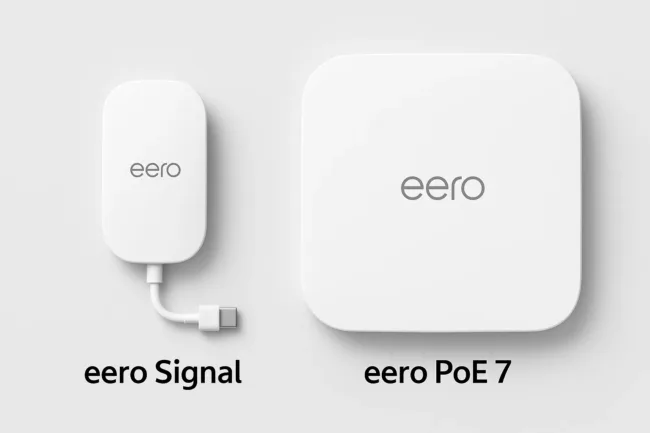
Amazon’s mesh networking brand eero is doubling down on enterprise-grade reliability and power user flexibility with the launch of two new devices: eero Signal, a cellular backup solution that automatically keeps internet online during outages, and eero PoE 7, a tri-band Wi-Fi 7 access point designed for high-performance wired installations.
Announced in early September, the move expands eero’s positioning beyond the consumer mesh Wi-Fi segment into professional, installer-grade deployments for small businesses, hospitality, retail point-of-sale systems, and high-density residential use cases. It also addresses a growing pain point for both consumers and businesses: the unpredictability of internet outages caused by cable line damage, ISP failures, or power issues.
Nick Weaver, co-founder and CEO of eero, stated that the company’s latest devices are intended to meet escalating user demands in an era of remote work, streaming, online gaming, and mission-critical business functions. He noted that customers have long relied on ad-hoc mobile hotspot fallback solutions, and the new eero Signal product represents the company’s first purpose-built cellular redundancy device.
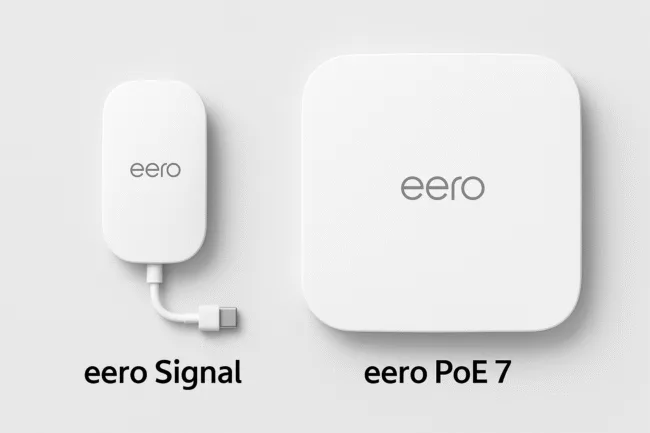
With eero PoE 7, the company completes its transition to Wi-Fi 7, following the release of other products like eero Max 7 and eero Outdoor 7. By integrating Power-over-Ethernet (PoE) and dual 10GbE ports into a ceiling- or wall-mounted design, eero is betting on demand from more technically demanding home and commercial networking environments.
How does eero Signal work, and who is it targeting among internet users and small businesses?
eero Signal is a compact device that connects to any USB-C powered eero router that supports Wi-Fi 6 or higher. It comes in two cellular versions—4G LTE and 5G RedCap—and is designed to kick in automatically when a primary wired internet connection goes offline.
Unlike full failover routers, eero Signal is not a standalone gateway but rather a backup accessory. It requires an existing broadband connection and will not function as a primary internet source. The product is especially useful for homes and small businesses that face intermittent outages and need to maintain basic online functionality for tasks like video conferencing, smart device management, or cloud-based POS systems.
The device integrates with the eero Plus subscription plan. Customers on the standard $99.99/year plan will receive 10 GB of annual backup data at no extra charge, while a higher-tier “eero Plus 100” plan priced at $199.99/year offers 100 GB of cellular backup data monthly. Amazon confirmed that this feature will also be extended to eero Business subscribers, allowing for scalable commercial deployment.
According to eero, the 4G LTE version of Signal will launch in early 2026 for $99.99 in the U.S., while the 5G RedCap model is expected later that year at $199.99. Both SKUs will be available through Amazon’s retail channels, eero.com, and select internet service providers.
What are the performance specs and installer advantages of eero PoE 7, and how does it fit into Amazon’s Wi-Fi 7 portfolio?
eero PoE 7 is a Wi-Fi 7 access point built for flush-mounting in ceilings or walls, and it offers support for wired Ethernet delivery via PoE switches or the company’s own eero PoE Gateway. It delivers tri-band wireless performance with speeds up to 3.9 Gbps and supports wired backhaul at speeds of up to 9.4 Gbps using its two 10 GbE ports.
Each PoE 7 unit covers up to 2,000 square feet and supports up to 200 devices, making it suitable for retail stores, small offices, and high-end smart homes. In addition to Wi-Fi, the unit doubles as a smart home hub with native support for Matter, Thread, and Zigbee protocols, allowing users to manage IoT devices like smart locks, thermostats, or lighting systems.
Installation flexibility is a core focus. By decoupling power and data transmission from the location of wall outlets (thanks to PoE), eero PoE 7 simplifies cabling and placement for professional installers and IT teams managing dense or unconventional layouts. The unit is interoperable with other eero mesh systems and is managed via the company’s intuitive mobile app.
eero PoE 7 will first roll out via internet service providers and installer partners in the U.S. and Canada starting November 2025, with broader availability on Amazon.com and eero.com later in the year. The access point is priced at $499.99 for a one-pack.
What business model shift is eero signaling by targeting installers and managed services providers?
In a notable shift, eero will soon allow professional installers to resell eero Plus and eero Business subscriptions directly to end users. When installers complete network setup and transfer ownership to customers via the eero app, they’ll now have the option to upsell backup internet plans, premium security features, and remote monitoring tools.
This move aligns eero more closely with a service-first networking model, where managed service providers (MSPs), security integrators, and IT consultants can bundle eero hardware with recurring revenue-generating software subscriptions.
Analysts view this as a strategic pivot to capture higher-margin, B2B-style relationships that go beyond one-time consumer device sales. Given the saturation in consumer mesh Wi-Fi, extending deeper into the SMB and professional installer ecosystem gives Amazon’s networking brand new ways to differentiate itself from rivals like TP-Link Omada, Aruba Instant On, and Ubiquiti UniFi.
How are analysts evaluating eero’s role in Amazon’s broader connectivity and smart home strategy?
eero has quietly become a strategic connectivity layer within Amazon’s broader ecosystem, underpinning Fire TV streaming, Alexa smart home integrations, and now edge infrastructure for third-party businesses. While Amazon does not break out eero’s financial performance separately, the brand has shipped tens of millions of units across 27+ countries since its 2014 founding and subsequent 2019 acquisition by Amazon.
Institutional sentiment around Amazon’s networking efforts has remained positive, especially as demand for Wi-Fi 7-capable devices, smart home hubs, and edge network resilience continues to climb. Analysts suggest that eero’s integrated approach—blending hardware, software, subscription services, and Alexa-compatible infrastructure—gives Amazon a long-term edge as homes and SMBs become more cloud-dependent.
eero’s latest hardware launches signal an aggressive push into higher-value territory—both in terms of price points (eero PoE 7 at $499) and mission-critical use cases like business continuity and installer-managed Wi-Fi. If cellular backup and PoE setups prove popular, this could pave the way for Amazon to pursue more advanced enterprise networking capabilities or even explore broader service bundles tied to AWS or Alexa for Business.
What comes next for eero’s Wi-Fi 7 roadmap and product availability timeline?
With the launch of eero PoE 7, Amazon now offers a complete Wi-Fi 7 product stack—from consumer mesh units like the eero Max 7 to outdoor variants and professional-grade PoE deployments. Combined with eero Signal, the company is positioning itself as a comprehensive solution provider for both uptime protection and next-gen performance.
Looking ahead, 2026 will mark the debut of eero Signal 5G, the RedCap-enabled version offering higher performance cellular backup in supported areas. eero has not yet disclosed its carrier partnerships or global market expansion plans for the Signal line, but continued integration with internet service providers is expected to play a central role.
In parallel, eero may explore additional verticals such as hospitality, property management, and retail IT infrastructure—especially as its installer network and cloud management tools expand.
Share this:
Discover more from Business-News-Today.com
Subscribe to get the latest posts sent to your email.