





Why did Amazon decide to launch a new private label to compete with Costco and Walmart in groceries?
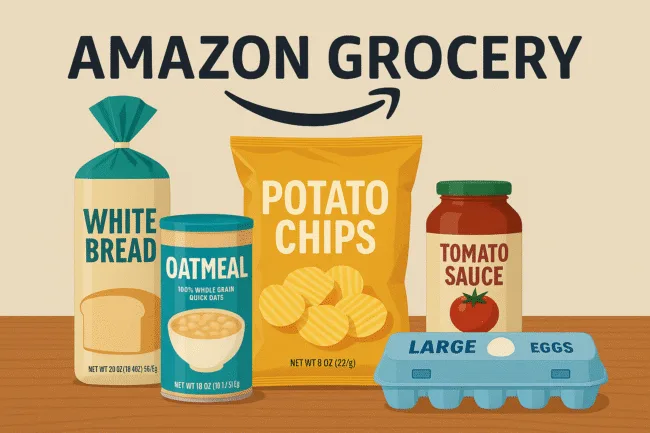
Amazon.com, Inc. (NASDAQ: AMZN) has launched a new grocery private label under the name Amazon Grocery, consolidating its earlier Amazon Fresh and Happy Belly lines into a single brand. This expansion represents the company’s most direct challenge yet to Costco Wholesale Corporation’s (NASDAQ: COST) Kirkland Signature and Walmart Inc.’s (NYSE: WMT) Great Value.
The rollout will include more than 1,000 everyday food products, many priced below $5, positioning Amazon Grocery as a budget-friendly option for cost-conscious households. By aligning its new grocery label with the broader Amazon Prime ecosystem, the company aims to deepen consumer loyalty and strengthen its foothold in the competitive food retail sector.
While Amazon has experimented with smaller-scale brands before, including the discount-focused Amazon Saver range, the creation of Amazon Grocery indicates a more ambitious and long-term strategy. It underscores how vital the private label battleground has become at a time when inflationary pressures continue to shape consumer spending habits.
How does Amazon Grocery compare with Costco’s Kirkland Signature and Walmart’s Great Value lines?
Costco’s Kirkland Signature has long been a case study in private label success. The brand generates nearly 25 percent of Costco’s annual sales and enjoys a reputation for quality products at wholesale prices. Kirkland’s ability to co-brand with trusted suppliers has strengthened customer trust, helping Costco consistently deliver value to its membership base.
Walmart’s Great Value has followed a different path, building its dominance on ubiquity and affordability. Covering thousands of stock-keeping units across multiple categories, Great Value is instantly recognizable to U.S. shoppers. It has become a backbone of Walmart’s price leadership strategy, appealing to households seeking both affordability and familiarity.
Amazon Grocery must carve out its space between these two entrenched rivals. Unlike Costco’s membership model or Walmart’s vast physical retail presence, Amazon is leveraging its e-commerce network, Prime membership incentives, and growing number of Amazon Fresh stores to capture market share. If Amazon succeeds in building consistency and trust around its brand, it could gradually attract the same loyal base that Costco and Walmart command.
What does market sentiment reveal about Amazon, Costco, and Walmart stocks?
Amazon’s stock has remained relatively steady through the initial announcement of Amazon Grocery. Investors recognize the potential of higher-margin private labels but remain cautious about the company’s historically thin margins in retail. Amazon’s operating margin in its retail segment has typically been around 2 to 3 percent, compared to the double-digit margins delivered by its Amazon Web Services cloud business. Analysts suggest that greater adoption of private label products could eventually improve profitability if Amazon can scale without significant quality issues.
Costco shares continue to trade near record highs, reflecting investor confidence in its steady business model and high membership renewal rates. Kirkland Signature remains central to that confidence, representing a proven driver of profitability and customer loyalty.
Walmart’s stock also enjoys a supportive outlook, bolstered by its recent announcement of removing synthetic dyes and preservatives from its private label brands. This reinforces Walmart’s consumer trust narrative and strengthens the long-term reputation of Great Value.
Institutional investors continue to favor Costco as a defensive retail play and Walmart as a stable market leader. Amazon remains a growth story, but sentiment indicates that grocery expansion is still viewed as an optional lever rather than a near-term catalyst. Analysts broadly maintain Buy ratings on Amazon and Costco, while Walmart is largely seen as a Buy/Hold, given its defensive strength.
Why are private labels gaining traction in the U.S. grocery market in 2025?
Private labels have been steadily gaining share over the past decade but have accelerated sharply in recent years. Inflationary pressure, supply chain volatility, and changing consumer perceptions have made store brands increasingly popular. Data indicates that private label products now account for nearly one-fifth of U.S. grocery sales, compared to closer to 17 percent before the pandemic.
A generational shift is also visible. Younger consumers, especially millennials and Gen Z households, are more willing to purchase private label products. These shoppers see store brands as equivalent in quality to national brands and are less swayed by legacy brand marketing. The pandemic years reinforced this, as product shortages forced consumers to try alternatives that later became staples in their carts.
Amazon’s decision to introduce Amazon Grocery must be seen against this backdrop. Without a competitive private label anchor, Amazon risked being excluded from one of the most important growth areas in grocery retail.
What challenges could Amazon face in making Amazon Grocery successful?
The biggest challenge for Amazon is winning trust in food quality. Unlike electronics or home goods, grocery decisions are highly sensitive to taste, freshness, and packaging consistency. A negative experience with a single product can reduce repeat purchase rates and damage overall brand perception.
Another obstacle is regulatory and competitive scrutiny. Amazon previously scaled back its presence in private label categories such as clothing and home goods amid antitrust investigations into marketplace favoritism. Expanding aggressively into groceries raises similar risks, as regulators may examine whether Amazon is giving its own products preferential treatment over third-party sellers.
The limited size of Amazon’s physical retail network also remains a constraint. Walmart operates thousands of stores nationwide, and Costco’s warehouse model continues to expand globally. Amazon Fresh stores are still few in number, which makes online grocery adoption even more critical for Amazon’s success. Until Amazon achieves greater physical scale, the company will rely heavily on e-commerce and delivery convenience.
How could Amazon Grocery reshape the competitive landscape and consumer behavior?
If Amazon Grocery succeeds in building trust, it could meaningfully shift consumer behavior toward integrating store brands into online shopping. Analysts believe that early adoption will be strongest among Prime members, especially in urban centers where delivery infrastructure is well established. Over time, reliable quality and competitive pricing could make Amazon Grocery a default choice for everyday essentials.
This competitive push also forces established rivals to respond. Costco may double down on the premium positioning of Kirkland, expanding into more categories and strengthening its co-branding strategy. Walmart is likely to accelerate innovation within Great Value, particularly in health-focused and clean-label products, to maintain its leadership.
For consumers, the battle among Amazon, Costco, and Walmart should translate into greater product choice and potentially lower prices. For the broader industry, Amazon’s entry signals that private labels are no longer confined to discount positioning. They are now a central part of mainstream retail strategy.
Should investors buy, hold, or sell Amazon stock in light of Amazon Grocery’s launch?
From an investment standpoint, Amazon Grocery is best understood as a long-term strategic initiative rather than a short-term profit driver. While it will not immediately shift Amazon’s earnings profile, it provides a path toward stronger retail margins in the future. For institutional investors, Amazon remains a Buy based on its dominant positions in cloud and advertising, with the grocery push offering optionality for incremental margin expansion.
Costco remains a solid Buy/Overweight, supported by the proven success of Kirkland and its strong cash flow profile. Walmart holds a Buy/Hold rating, serving as a defensive pick during economic uncertainty, with Great Value continuing to anchor its price leadership strategy.
For long-term investors, Amazon Grocery highlights Amazon’s willingness to fight for relevance in a category where it has historically lagged. Success will depend on execution and consumer trust, but the competitive intensity in the grocery sector is set to rise.
Amazon’s new private label initiative is not merely a product launch—it is a signal that the retail giant intends to compete at the core of consumer spending. For investors, it is a reminder that the private label wars are entering a new chapter, one where the world’s largest retailers fight not only for margin but for long-term consumer loyalty.
Discover more from Business-News-Today.com
Subscribe to get the latest posts sent to your email.


