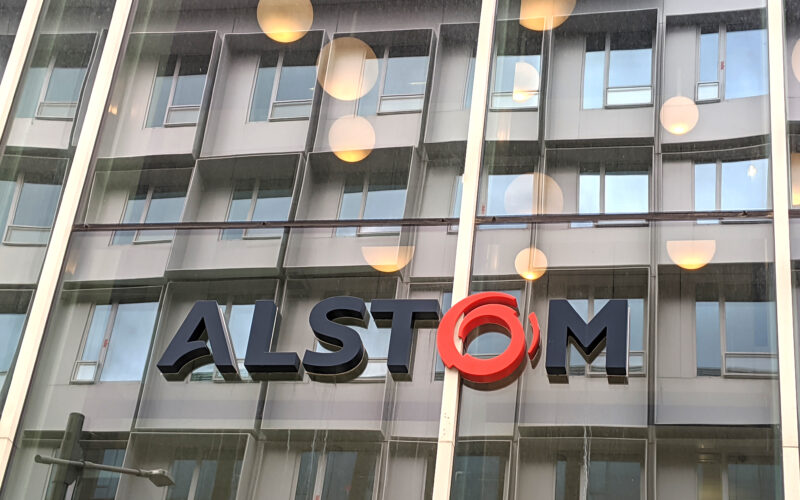
Alstom SA (Euronext Paris: ALO) has secured an approximately €800 million locomotive contract in Africa, the Middle East and Central Asia, giving the French rail equipment group a major order at the beginning of fiscal 2026/27. Alstom has confirmed that the order was booked during the first quarter, making it a recognised commercial award rather than a tender opportunity, preferred-bidder selection or unfunded framework agreement. The company has not disclosed the customer, country, locomotive platform, fleet size, manufacturing locations or delivery schedule and has said further details will be released later. The contract is equivalent to roughly 4% of Alstom’s fiscal 2025/26 sales and more than 60% of the total orders received from the region during the previous financial year. The immediate benefit is stronger regional order momentum, but the ultimate value will depend on project margins, payment terms, production execution and Alstom’s ability to avoid the rolling stock difficulties that recently weighed on profitability.
The new contract comes as Alstom attempts to translate record commercial demand into more reliable margins and cash generation. The company entered fiscal 2026/27 with €104.4 billion of backlog after recording €27.6 billion of orders during the previous financial year, giving it one of the largest order books in the global rail industry.
Backlog scale is not currently Alstom’s principal problem. The more difficult issue is converting that backlog into trains, revenue, operating profit and cash without allowing delays, engineering changes or production inefficiencies to erode contract economics.
How material is Alstom’s €800 million AMECA locomotive order relative to its existing business?
An €800 million contract is meaningful even for a company of Alstom’s size. The order represents approximately 4.2% of the group’s €19.17 billion fiscal 2025/26 sales and about 2.9% of the €27.63 billion of orders received during the same period.
The contract is less dramatic when compared with Alstom’s €104.4 billion backlog, where it represents below 1%. That does not make the order unimportant, but it does show why investors should avoid treating a single headline award as a transformation of the group’s overall revenue profile.
Its regional importance is considerably greater. Alstom generated approximately €1.3 billion of order intake from Africa, the Middle East and Central Asia during fiscal 2025/26, down from €1.6 billion in the previous year. The new locomotive order is equivalent to more than 60% of that earlier annual regional intake and could therefore provide a strong start to the current year for Alstom’s AMECA business.
The order also supports the company’s target of maintaining a group book-to-bill ratio above one. That ratio compares orders received with sales generated, and a level above one indicates that the order book is being replenished faster than revenue is being recognised.
However, an order should not be confused with earnings. Alstom will recognise the value over the manufacturing and delivery period, which could extend across several years depending on fleet size, product complexity and customer acceptance schedules.

What does the booked order reveal about Alstom’s momentum across Africa, the Middle East and Central Asia?
The contract reinforces the strategic importance of the AMECA region at a time when governments are investing in passenger rail, freight corridors, urban transport and cross-border logistics. Countries across the region are seeking to expand transport capacity while reducing road congestion, supporting industrial development and improving links between ports, cities and production centres.
Locomotive orders can address several different needs, including freight expansion, replacement of ageing fleets, passenger operations and new rail corridors. Alstom has not identified the intended operating model for this contract, meaning it would be premature to classify the order as a passenger, freight or mixed-use programme.
The lack of customer disclosure may reflect commercial confidentiality, financing conditions, government approval requirements or a customer-controlled announcement timetable. It does not weaken Alstom’s statement that the order has been booked, but it does restrict external assessment of funding quality, sovereign exposure and delivery risk.
Regional diversification is valuable for Alstom because major rail programmes arrive unevenly. European and North American procurement can be large but subject to lengthy political, regulatory and budget cycles. AMECA projects offer additional growth opportunities, although they may introduce greater currency, financing and geopolitical complexity.
The order may also strengthen Alstom’s competitive position against Siemens Mobility, CRRC Corporation Limited, Stadler Rail and other locomotive manufacturers. The eventual competitive significance will depend on whether the agreement introduces an Alstom platform to a new customer, expands an existing fleet or replaces equipment supplied by another manufacturer.
Why does Alstom’s execution record matter more than the headline value of the locomotive contract?
Alstom’s latest annual results demonstrate why commercial success alone is insufficient. The group recorded €27.6 billion of orders and grew sales organically by 7.2%, yet its adjusted EBIT margin declined from 6.4% to 6.1%.
Project execution reduced the annual margin by approximately 60 basis points. Alstom identified lower production and difficulties on certain rolling stock contracts as factors preventing the margin improvement that management had previously expected.
This background makes the commercial quality of the new €800 million order particularly important. A well-priced contract with mature engineering, disciplined change controls, adequate customer downpayments and realistic delivery assumptions could support future margin recovery.
A contract accepted with aggressive pricing, incomplete technical specifications or insufficient protection against inflation could produce the opposite result. Rail projects often combine long manufacturing periods, customised engineering, regulatory approval, extensive testing and customer-specific requirements, leaving multiple opportunities for cost estimates to change.
Alstom has said that the gross margin embedded in its total backlog stood at approximately 18% at the end of March 2026. That figure represents the project-level margin before research and development costs, selling expenses, administration and other group-level charges, rather than the adjusted EBIT margin shareholders ultimately receive.
The challenge is preserving the expected backlog margin during execution. Design changes, supplier disruption, production inefficiencies, warranty provisions and delayed acceptance can progressively reduce the economics of contracts that looked attractive when initially signed.
How could the undisclosed customer and contract scope affect investor interpretation of the order?
The absence of detailed contract information creates several unanswered questions. Investors do not yet know whether the €800 million value covers locomotives alone or also includes maintenance, spare parts, training, signalling interfaces, depot equipment or other services.
A contract containing long-term maintenance could provide recurring revenue and potentially more stable margins after the manufacturing phase. A rolling stock-only agreement would place greater emphasis on production efficiency and milestone payments.
Fleet size also matters. A relatively small number of highly specialised locomotives would carry different engineering and unit-cost risks than a larger fleet based on an established platform.
The manufacturing footprint will influence employment, factory utilisation and supply-chain exposure. Alstom could manufacture major components in Europe, use regional facilities, involve local industrial partners or divide production across several countries depending on local-content requirements.
Customer identity is equally relevant to payment security. A well-funded national railway, sovereign authority or investment-grade industrial operator may offer stronger revenue visibility than a project company dependent on external financing or uncertain traffic forecasts.
Until Alstom provides more information, the correct interpretation is limited but still positive. The group has booked a material order, but investors cannot yet determine the likely revenue schedule, cash profile, margin quality or strategic customer value.
What working-capital and cash-flow questions could emerge as Alstom begins delivering the new locomotives?
Large rolling stock contracts can consume substantial cash before delivery. Manufacturers may need to purchase components, reserve production capacity, fund engineering and build inventory before receiving milestone payments from the customer.
Customer downpayments can partly offset this pressure. Alstom has not disclosed whether the €800 million contract includes an advance payment, export-credit support, bank guarantees or progress-based billing.
The distinction is important because Alstom generated €336 million of free cash flow during fiscal 2025/26, down from €502 million in the prior year. Contract working capital created a €290 million cash-flow headwind as payments received from new orders were more than offset by cash requirements from rolling stock programmes already ramping up.
Alstom expects positive free cash flow for fiscal 2026/27 but has warned that seasonal working-capital movements could produce approximately €1.5 billion of cash consumption during the first half. A meaningful initial payment from the locomotive customer could support near-term liquidity, while limited advance funding would place more pressure on Alstom’s balance sheet during engineering and production.
The company reported €404 million of net debt and €2.3 billion of cash and cash equivalents at March 31, alongside undrawn revolving credit facilities. This provides financial capacity, but shareholders will expect the new order to contribute to cash generation rather than merely increasing the amount of capital tied up in contracts.
How might local-content rules, currency exposure and geopolitical risk shape project delivery?
Rail procurement across Africa, the Middle East and Central Asia frequently includes requirements involving local assembly, workforce training, maintenance capability or domestic supplier participation. These obligations can strengthen a customer’s industrial base but may increase complexity for the manufacturer.
Alstom may need to qualify new suppliers, transfer technical knowledge or establish regional maintenance arrangements. These investments can create long-term customer relationships but may also increase early-stage costs.
Currency exposure represents another potential issue. Alstom reports its financial results in euros, while the customer may fund the contract through another currency, sovereign borrowing or export-credit arrangements. Effective hedging can reduce volatility, although long project periods make currency management more complicated.
Geopolitical risk differs significantly across the broad AMECA region. Sanctions, trade restrictions, political transitions, border tensions or changes in public spending priorities could affect components, payments and project schedules depending on the unidentified customer’s location.
The company’s fiscal 2026/27 outlook assumes no additional disruption connected with geopolitical conditions, particularly in the Middle East. A major contract in the region increases the importance of that assumption, although Alstom’s non-disclosure prevents a precise assessment of exposure.
Regulatory and technical conditions will also matter. Locomotives must meet local track gauge, axle-load, signalling, environmental, temperature and operating requirements. Designing for heat, dust, long-distance operation or heavy freight can require additional engineering even when the underlying locomotive platform is already proven.
Could the order lead to maintenance contracts, fleet options or wider regional expansion?
Rolling stock awards can create commercial opportunities beyond the initial manufacturing scope. Customers typically require spare parts, fleet maintenance, modernisation, technical support and driver or technician training throughout the equipment’s operating life.
If these elements are not already included, Alstom could pursue them through separate contracts. Long-term services are strategically valuable because they generate revenue after manufacturing is complete and deepen the supplier’s connection with the railway operator.
The unidentified contract may also contain options for additional locomotives. Alstom has disclosed only an approximately €800 million booked order, so any possible options should not be treated as committed revenue without further confirmation.
Successful delivery could provide a reference for neighbouring countries or regional freight operators. Railways often examine equipment already operating under comparable climate, traffic and network conditions before selecting suppliers.
The greatest strategic benefit may therefore emerge after the first locomotives enter operation. Reliability, fuel or energy efficiency, maintenance availability and lifecycle cost will determine whether the programme produces repeat business.
Failure would have the reverse effect. Delays or performance issues could weaken Alstom’s credibility in future tenders and consume management resources at a time when the company is already focused on improving rolling stock execution.
Why did Alstom shares rise after the order while remaining close to their 52-week low?
Alstom shares closed at €16.01 on July 3, gaining approximately 4.1% over five trading days. The stock also rose across the two sessions following the contract announcement, suggesting that investors viewed the order as supportive of commercial momentum.
The response should not be interpreted as proof that the market has assigned a specific profit value to the agreement. The broader share price remains under pressure, falling approximately 6.6% over one month and trading much closer to its 52-week low of €14.72 than its high of €30.23.
Alstom’s market capitalisation was approximately €7.1 billion, making the €800 million contract equal to roughly 11% of the company’s equity value. That comparison highlights materiality but can also mislead because most of the contract value will fund manufacturing costs, suppliers, labour and project delivery rather than becoming profit.
The stock’s weakness reflects concerns extending beyond order intake. Investors are monitoring execution, adjusted EBIT recovery, free cash flow and the speed at which management can resolve underperforming rolling stock projects.
Alstom is targeting an adjusted EBIT margin of around 6.5% for fiscal 2026/27, compared with 6.1% in the previous year. The locomotive order helps support revenue visibility, but evidence of improved margin conversion would have greater significance for the share-price recovery.
What should investors watch when Alstom reports first-quarter orders and sales on July 22?
Alstom’s first-quarter update on July 22 will provide the next opportunity to assess how the €800 million order fits within wider commercial performance. Investors should examine total order intake, book-to-bill ratio, regional mix and rolling stock demand.
The company may also provide further information about the customer or contract scope, although confidentiality could continue beyond the quarterly results. Any disclosure concerning fleet size, platform, production site, delivery timeline or services would improve the market’s ability to evaluate contract quality.
Order intake alone will not answer the central execution questions. Investors should also monitor whether management maintains its 5% organic sales growth target, 6.5% adjusted EBIT margin objective and positive free cash flow outlook.
Production is another important metric. Alstom manufactured 4,284 rail cars during fiscal 2025/26, below the prior year, and is targeting between 4,400 and 4,500 during the current year. Although locomotives are not directly comparable with passenger rail cars, overall factory discipline and supply-chain performance influence the group’s ability to manage multiple programmes.
The €800 million award gives Alstom a strong commercial opening in AMECA. The next stage is less glamorous but more important: translating the order into disciplined engineering, funded milestones, on-time production and acceptable cash returns.
Key takeaways on what Alstom’s €800 million AMECA locomotive order means for the rail industry
- Alstom has booked an approximately €800 million order, confirming a recognised contract rather than an early-stage tender or preferred-bidder position.
- The order represents roughly 4.2% of fiscal 2025/26 group sales but less than 1% of Alstom’s €104.4 billion backlog.
- The contract is highly material to AMECA, equalling more than 60% of the region’s total order intake during the previous financial year.
- The customer, country, locomotive platform, fleet size and delivery schedule remain undisclosed, limiting analysis of revenue timing and execution risk.
- Alstom’s declining adjusted EBIT margin shows that order growth does not automatically translate into higher profitability.
- Contract working-capital pressure remains important because major rolling stock programmes can consume cash before milestone payments are received.
- Local-content requirements, currency exposure, financing structures and geopolitical conditions could materially affect project economics.
- Potential maintenance, spare-parts or follow-on fleet orders could increase lifetime value, but no additional revenue should be assumed until disclosed.
- The positive share-price reaction reflects improved order momentum, although Alstom stock remains close to the bottom of its 52-week range.
- The July 22 first-quarter update should provide the next evidence on order intake, guidance, production execution and possible contract details.
Discover more from Business-News-Today.com
Subscribe to get the latest posts sent to your email.