

TotalEnergies SE (EPA: TTE), alongside joint venture partners Eni S.p.A. (BIT: ENI) and QatarEnergy, has signed a new agreement with the Lebanese government to commence exploration in Block 8 offshore Lebanon. The consortium will initiate operations by acquiring a 1,200 square kilometre 3D seismic survey, marking a strategic shift after the unsuccessful Qana-1 well drilled in Block 9 in 2025.
Despite the lack of commercial volumes in the Qana prospect, the companies have reiterated their long-term commitment to Lebanon’s offshore energy sector. The move signals that the partners are not retreating from the country’s underexplored eastern Mediterranean acreage but are instead repositioning their exploration strategy to target different geological settings with more favorable potential.

Why did TotalEnergies and partners pivot to Block 8 after the Qana-1 drilling failure?
The consortium’s transition to Block 8 illustrates a pragmatic regrouping rather than a withdrawal. The Qana-1 well, drilled in Block 9 in 2025, was widely seen as Lebanon’s most commercially promising offshore exploration effort to date. Its failure dealt a political and economic blow to Lebanese hopes of unlocking significant natural gas reserves in the Levant Basin. However, data gathered from that well has likely contributed valuable insights for refining future exploration strategies.
By moving into Block 8, which lies northwest of Block 9 and closer to the maritime boundary with Cyprus, the companies are targeting a structurally different zone with potentially untapped geological formations. Initiating with a 3D seismic acquisition allows the consortium to reassess the hydrocarbon system with modern data before deciding whether to proceed with drilling. This approach enables a more disciplined deployment of exploration capital and avoids the reputational fallout that might have come from walking away from the Lebanese offshore sector entirely.
TotalEnergies, Eni, and QatarEnergy had secured rights to both Blocks 9 and 4 in earlier licensing rounds. The decision to now focus on Block 8 reinforces that the trio views Lebanon as part of a broader regional portfolio, where exploration optionality remains intact even after an individual prospect proves unsuccessful.
What does the Block 8 entry signal for Lebanon’s offshore ambitions in 2026?
Lebanon’s offshore sector has remained politically sensitive and technically challenging. The 2022 maritime boundary agreement with Israel, which allowed the Qana prospect to be drilled, was a milestone. However, the lack of commercial success at Qana and the absence of active domestic energy infrastructure left Lebanon exposed to renewed energy pessimism.
The Block 8 agreement provides continuity in Lebanon’s energy narrative. It signals to international observers, service providers, and investors that the country remains open to foreign upstream investment and is willing to work in close cooperation with major international oil companies. The government’s willingness to renegotiate acreage access and support seismic surveys without waiting for a full new licensing round may also help speed up exploration timelines.
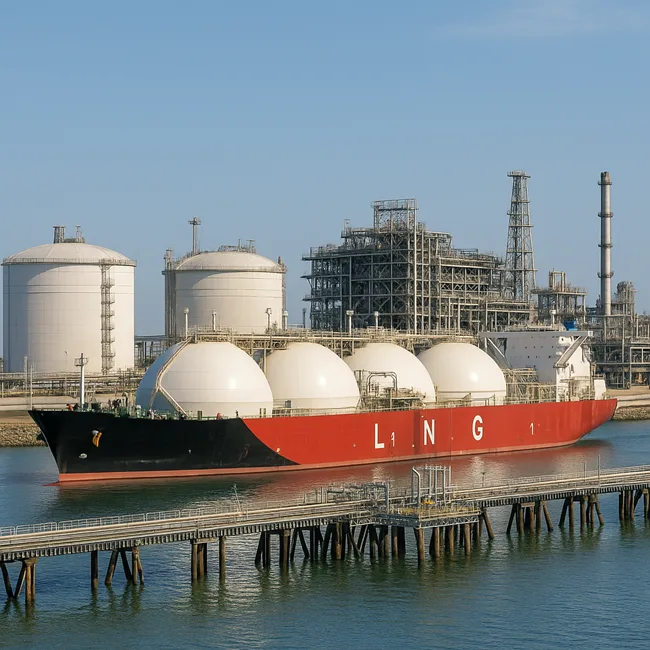
While exploration risk remains high, the strategic benefits of keeping TotalEnergies, Eni, and QatarEnergy engaged extend beyond geological considerations. Their continued presence lends Lebanon diplomatic weight, enhances regional energy diplomacy, and offers a potential pathway to long-term gas monetisation—whether through future pipeline links or LNG export via Egyptian terminals.
What are the geological and operational risks associated with Block 8?
Block 8 lies in a geologically distinct area compared to Block 9. While both are located in the Levant Basin, Block 8’s stratigraphy and potential trap systems differ significantly. The basin’s proven discoveries—such as Leviathan and Tamar in Israel and Zohr in Egypt—have not yet been mirrored on Lebanon’s side of the boundary, leading to persistent questions about reservoir continuity and source rock maturity.
Seismic imaging in this part of the basin has historically been limited by deep water depths, complex salt structures, and limited well control. A modern 3D seismic campaign should mitigate some of these uncertainties but cannot eliminate them entirely. The data acquisition itself could take several months, followed by further time for processing, interpretation, and target identification.
Operationally, Lebanon’s limited offshore infrastructure and untested permitting processes present logistical hurdles. While the agreement avoids the politically fraught southern maritime zones, even the more neutral waters of Block 8 are not immune to the broader regional risks of the eastern Mediterranean, including fishing disputes, geopolitical maneuvering, and fluctuating economic support for energy projects.
How does this play into TotalEnergies’ regional upstream portfolio and partner dynamics?
TotalEnergies has treated the eastern Mediterranean as an option-rich but non-core portfolio. Its exploration footprint spans Cyprus, Egypt, and Lebanon, with each geography offering different geological models and development constraints. In Cyprus, the company has discovered gas in Block 6 with Eni and has licenses in Block 10 as well. In Egypt, TotalEnergies holds interests in frontier areas like North El Hammad, adjacent to the Zohr gas field operated by Eni.
What binds these plays together is the regional partnership architecture. TotalEnergies, Eni, and QatarEnergy have formed a stable JV template that allows risk-sharing, diplomatic insulation, and operational coordination. This model was tested in Lebanon and has since been mirrored elsewhere. The consortium’s ability to pivot quickly from one block to another without exiting the country underscores its agility and diplomatic leverage.
Eni’s continued participation is particularly notable given the company’s evolving upstream strategy, which now includes greater capital rotation, divestment in mature assets, and a heavier focus on near-field gas. QatarEnergy, meanwhile, brings financial depth and LNG expertise that could prove critical if any Lebanese discovery moves toward export.
How are institutional investors likely to interpret this new commitment to Lebanon?
For institutional investors, the Block 8 entry is unlikely to materially change sentiment toward TotalEnergies or Eni in the short term. The dry Qana result had already dampened expectations for Lebanon’s offshore prospects, and most analysts had written off near-term reserve additions from the region.
However, the announcement is directionally positive in the context of disciplined frontier exploration. TotalEnergies has remained conservative in its upstream allocations, focusing on high-return, low-cost, and emissions-efficient assets. Spending on seismic in Lebanon represents a modest capital outlay with potential upside, rather than a major commitment that might affect dividend guidance or balance sheet strength.
Investors may view the move as a signal that the company sees strategic value in staying present in an underexplored basin, particularly as other exploration frontiers narrow and licensing rounds globally become more politicised. The announcement could also be interpreted as a hedge against future price volatility in gas markets, especially if eastern Mediterranean infrastructure bottlenecks are resolved.
What happens next and what will determine the future of Block 8?
The immediate next step for the consortium is the execution of the 3D seismic survey. Depending on weather conditions, permit approvals, and vessel availability, this could begin as early as Q2 2026. The data will then require several months of processing and interpretation before the partners decide whether to drill an exploratory well.
Whether Block 8 advances to drilling will depend on multiple factors. Geologically, it must present stronger indicators than Qana to justify further investment. Commercially, there must be a realistic pathway to market, either via new pipeline capacity, regional tie-ins, or floating production systems. Politically, the Lebanese government must maintain regulatory stability, ensure transparent engagement, and potentially provide fiscal incentives to keep the consortium committed.
If those conditions align, Block 8 could still become a late-blooming success story in Lebanon’s offshore journey. If not, it may represent the final chapter in a cautiously optimistic but ultimately elusive energy narrative for the country.
Key takeaways on TotalEnergies’ exploration shift from Block 9 to Block 8 offshore Lebanon
- TotalEnergies, Eni, and QatarEnergy have signed an agreement with the Lebanese government to enter Block 8 following the dry result at Block 9.
- The new permit will begin with a 1,200 km² 3D seismic survey, signaling a data-first approach to reassessing Lebanon’s offshore gas potential.
- Despite Qana-1’s failure, the consortium is staying engaged, maintaining regional credibility and diplomatic ties in Lebanon.
- Block 8 carries lower geopolitical risk than Block 9 but remains commercially uncertain given Lebanon’s untested resource base.
- TotalEnergies is applying a portfolio strategy in the eastern Mediterranean, treating each block as an optional future tie-in.
- Institutional investors are unlikely to overreact, viewing this as part of a disciplined frontier exploration program.
- The announcement helps Lebanon sustain offshore momentum amid political and economic challenges, even in the absence of a new licensing round.
- Long-term success will depend on accelerated data interpretation, partner coordination, and clarity on infrastructure pathways.
Share this:
Discover more from Business-News-Today.com
Subscribe to get the latest posts sent to your email.