

Iran on Saturday, June 14, declared that its nuclear negotiations with the United States are now “meaningless” following Israeli military strikes that targeted key Iranian nuclear and military facilities. Tehran has accused Washington of backing Israel’s Operation Rising Lion, arguing the air raids would not have been possible without explicit U.S. permission.
The comments mark a steep escalation in diplomatic rhetoric after Israeli airstrikes pummeled Iranian territory in what has been described as the largest direct military assault between the two states to date. Iranian Foreign Ministry spokesperson Esmaeil Baghaei, quoted by semi-official Tasnim news agency, claimed that Israel “succeeded in influencing” the diplomatic process and accused the United States of enabling the strike.
What was operation Rising Lion and how unprecedented was its scale?
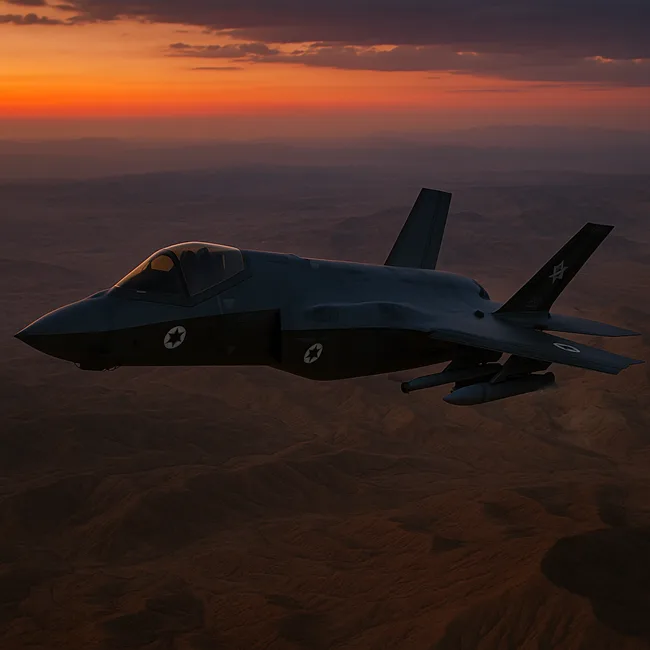
On the night of June 13, Israel launched a wide-ranging air offensive on Iranian territory under the codename Operation Rising Lion, striking more than 100 targets across several provinces. These included Iran’s Natanz nuclear facility, missile research centers near Isfahan, and high-ranking IRGC command installations. Tehran confirmed dozens of fatalities, including prominent nuclear scientist Fereydoun Abbasi-Davani and IRGC General Hossein Salami.
This represented Israel’s most comprehensive attack on Iranian soil in decades. It was coordinated through hundreds of sorties involving F-35 fighter jets, electronic jamming units, and cyber warfare elements. The sheer scope of the operation has stunned even veteran defense analysts, many of whom describe it as a paradigm shift in preemptive strike doctrine in the Middle East.
Iran responded by launching Operation True Promise III, a retaliatory wave of ballistic missiles and drone swarms that targeted southern Israel. The Israeli military reported partial damage to air defense systems and several civilian casualties.
Why has Iran blamed the United States and what evidence supports its claim?
Iranian officials have argued that Israel could not have executed such a high-scale, precision strike without coordination or at least tacit approval from the United States. “The other side [the U.S.] acted in a way that makes dialogue meaningless,” Baghaei said, referring to ongoing nuclear negotiations. “You cannot claim to negotiate and at the same time divide work by allowing the Zionist regime to target Iran’s territory.”
Although the White House has denied direct involvement, multiple diplomatic sources indicated that Washington alerted Qatar and other Gulf allies hours before the attack, prompting speculation of prior knowledge. Iranian state media has presented this as evidence of complicity.
While U.S. officials have urged Iran to continue diplomatic engagement, Tehran’s leadership views these dual-track policies—military alignment with Israel and simultaneous nuclear talks—as inherently contradictory and insincere.
What was President Trump’s response and how does it affect nuclear diplomacy?
Shortly after the airstrikes, U.S. President Donald Trump posted on Truth Social that Iran may still have a “second chance” to reach a nuclear deal. “Two months ago I gave Iran a 60-day ultimatum to ‘make a deal.’ They should have done it! Today is day 61. I told them what to do, but they just couldn’t get there. Now they have, perhaps, a second chance!” he wrote.
Trump later held a phone conversation with Israeli Prime Minister Benjamin Netanyahu to discuss the implications of Operation Rising Lion. He praised Israel’s decisive action and highlighted the military superiority of both nations, writing that the United States produces “the best and most lethal military equipment anywhere in the world, BY FAR,” and that “Israel has a lot of it, with much more to come.”
These comments have been interpreted by Iranian analysts and media as overt endorsement of Israel’s offensive, further undermining any residual trust Tehran may have held toward Washington’s diplomatic messaging.
How does this impact upcoming nuclear talks in Oman and the broader diplomatic process?
Iran had been preparing to resume negotiations in Muscat, Oman for what would have been the sixth round of nuclear talks under the current diplomatic channel. However, Iranian officials now say that these talks are effectively “cancelled” unless the United States distances itself from Israeli military activities.
The ongoing nuclear talks had aimed to place limits on uranium enrichment, increase IAEA inspections, and facilitate phased sanction relief. While technical progress had been made on verification mechanisms, political goodwill was already eroding before the strikes.
With the Iranian leadership now openly rejecting dialogue and Washington doubling down on deterrence rhetoric, the diplomatic pathway looks increasingly blocked. Analysts warn that any future engagement will require backchannel efforts and third-party mediation—potentially from neutral states like Switzerland, Oman, or even Russia.
What are the international responses and how are global markets reacting?
Reactions from the global community have been mixed. Russia condemned the airstrikes as “blatant aggression” and called for an emergency UN Security Council meeting. France and Germany expressed concern about the stability of the region but stopped short of criticizing Israel directly. China urged “maximum restraint from all parties.”
Global oil markets reacted sharply to the escalation. Brent crude surged over 6% following the attacks, with traders pricing in risk premiums related to Strait of Hormuz disruption. Energy analysts warned that further retaliatory cycles could push prices above $100 per barrel again, threatening global inflationary pressures.
Meanwhile, equity markets in Europe and Asia saw increased volatility, with defense stocks rising and Middle Eastern indices falling sharply.
Could this trigger a broader conflict across the Middle East?
Security experts say the risk of regional spillover is real. Iran’s growing willingness to launch retaliatory strikes directly at Israeli soil represents a shift from proxy-based warfare to state-to-state confrontation. In parallel, Israeli defense planners appear to be preparing for multi-front engagements, including contingency operations involving Hezbollah in Lebanon and IRGC-linked militias in Syria and Iraq.
U.S. military forces in the region have reportedly gone on high alert, with reinforcements dispatched to bases in Kuwait and Qatar. Cybersecurity agencies in both countries are also bracing for retaliatory cyberattacks following reports of malware activity against Iranian air defense systems before the Israeli strikes.
Should this conflict expand, there is concern that it could engulf Gulf states, Jordan, and possibly even Turkey, whose leaders have condemned the strikes but called for de-escalation from both sides.
Why the trust deficit may now be irreversible
From a geopolitical standpoint, the Israeli airstrikes—carried out with or without U.S. approval—represent a tipping point in the U.S.–Iran relationship. Trust, already fragile after decades of sanctions and covert operations, has now likely broken down entirely. Even if diplomacy resumes, it will likely be mediated through less direct channels and stripped of strategic depth.
While President Trump’s “second chance” framing may appeal to Western audiences, Tehran appears uninterested in engaging under pressure, especially after direct military strikes that resulted in high-profile Iranian deaths. As such, analysts expect Iran to harden its strategic posture, accelerate its missile program, and potentially withdraw further from the nuclear non-proliferation framework unless major concessions are made.
Discover more from Business-News-Today.com
Subscribe to get the latest posts sent to your email.