American Electric Power Company, Inc. (Nasdaq: AEP) has gained a much clearer view of one of its largest prospective transmission opportunities after OpenAI committed to a 20-year lease at SB Energy’s PORTS-Pike Technology Campus in southern Ohio. The campus is planned to deliver as much as 8 gigawatts of AI computing capacity, supported by at least 10 gigawatts of new power generation and at least $4.2 billion of regional grid infrastructure being developed with AEP Ohio. Crucially, SB Energy has committed to paying for the new transmission investment rather than shifting those costs to existing Ohio electricity customers. The arrangement therefore sits at the centre of a much bigger utility-sector question: can American Electric Power convert unprecedented AI electricity demand into regulated infrastructure growth while ensuring that households and ordinary businesses are not left financing speculative data-center capacity?
The August 17 OpenAI and NVIDIA announcements do not create AEP Ohio’s transmission project from scratch. American Electric Power, SB Energy and the U.S. Department of Energy first outlined the southern Ohio infrastructure framework in March 2026. What has changed is the commercial credibility behind the demand.
OpenAI is now expected to be the tenant for the planned campus under a 20-year arrangement, while NVIDIA Corporation is investing $1.5 billion in SB Energy and providing credit support connected with the initial 4.25 gigawatts of information-technology load. That moves the project further away from being simply another enormous data-center power request and closer to a contracted infrastructure development involving some of the best-capitalised participants in artificial intelligence.
For American Electric Power, that distinction matters.
Why does OpenAI’s 20-year Ohio lease make AEP’s $4.2 billion transmission opportunity more credible?
Electric utilities have spent the past several years confronting an unusual planning problem. Data-center developers have requested extraordinary amounts of electricity capacity, but utilities cannot safely build billions of dollars of transmission and generation infrastructure merely because prospective customers say they may eventually need it.
AEP Ohio has already seen exactly how large the gap between requested and financially committed load can become.
Before its dedicated data-center tariff took effect, prospective data-center customers had indicated that they could require more than 30,000 megawatts of electricity in AEP Ohio’s territory. After customers were required to submit formal studies, collateral and binding agreements, the figure contracted sharply.
By February 2026, AEP Ohio reported 5,642 megawatts of new data-center contracts executed under the tariff, in addition to 12,219 megawatts contracted before it took effect. That produced 17,861 megawatts of contracted data-center projects scheduled to come online progressively through 2035.
The comparison is striking because AEP Ohio has said peak electricity demand across all of its existing customers has historically ranged from approximately 8,000 to 10,500 megawatts.
Contracted data-center development is therefore already considerably larger than the utility’s existing peak load.
Against that backdrop, a multi-gigawatt project cannot be treated casually. The OpenAI lease, NVIDIA backing and SB Energy capital commitment materially strengthen the commercial counterparties behind PORTS-Pike.
They still do not eliminate construction, permitting, financing or demand risk. However, they answer one of the most important questions facing a utility considering infrastructure at this scale: whether a sufficiently credible customer is prepared to make a long-duration financial commitment.
How unusual is the scale of the PORTS-Pike Technology Campus compared with AEP’s existing Ohio electricity system?
The numbers are difficult to compare with conventional utility development.
SB Energy plans to build at least 10 gigawatts of new energy generation supporting approximately 8 gigawatts of information-technology capacity at the PORTS-Pike Technology Campus. OpenAI expects capacity to begin coming online in phases from 2028.
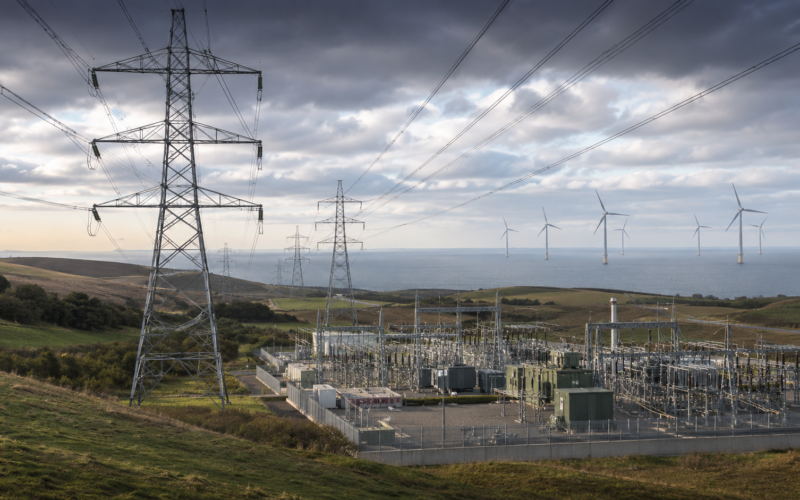
AEP Ohio’s original March framework said new transmission infrastructure would include 765-kilovolt lines and four substations, with power through the new transmission system expected to begin flowing to the site in 2029. The Ohio Power Siting Board will oversee permitting of new transmission routes.
The different timelines are not necessarily contradictory. The broader campus can begin deploying capacity in phases while major new regional transmission infrastructure follows its own construction and permitting timetable.
The scale is nevertheless extraordinary.
Eight gigawatts of eventual AI computing capacity is equivalent to roughly three-quarters of the upper end of AEP Ohio’s historical peak customer demand. The 10 gigawatts of planned generation is close to the entire peak load currently served by AEP Ohio at the highest-demand periods cited by the company.
That illustrates why the project cannot simply be plugged into the existing system.
It requires a new layer of power plants, substations and high-voltage transmission infrastructure built around the load itself.
For American Electric Power, which already operates approximately 40,000 line miles of transmission across its wider system, that requirement plays directly into one of the company’s strongest infrastructure capabilities.
Could customer-funded transmission become the model for America’s next wave of AI power demand?
The most important feature of the AEP Ohio arrangement may ultimately be who pays.
SB Energy has committed to paying for approximately $4.2 billion of new transmission investments associated with the southern Ohio development. The U.S. Department of Energy has described the structure as designed to prevent Ohio families and small businesses from bearing the cost of infrastructure required by the data-center project.
That principle has become increasingly important as utilities across the United States confront unprecedented load requests from artificial-intelligence developers.
Building transmission before a large customer actually consumes the expected electricity creates stranded-asset risk. If the project is cancelled, delayed or substantially downsized, utilities and regulators must determine who pays for infrastructure already constructed.
AEP Ohio has been trying to address this issue systematically.
Its broader data-center tariff requires substantial financial commitments, minimum demand charges, collateral for certain customers and potential exit payments. Data-center customers can therefore face significant financial obligations even if their eventual electricity consumption falls below the amount originally contracted.
The PORTS-Pike arrangements involve their own project-specific structure, so the standard AEP Ohio data-center tariff should not automatically be assumed to govern every commercial term. The underlying philosophy, however, is similar: growth should fund the infrastructure required to serve growth.
That could become a strategically important model for the utility industry.
If utilities can secure long-term customers, meaningful collateral and customer-funded network upgrades before constructing enormous grid assets, AI demand becomes a more manageable infrastructure opportunity. Without those protections, the same demand boom could expose existing customers to billions of dollars of underutilised assets.
What could the $4.2 billion Ohio project ultimately mean for American Electric Power’s capital-growth runway?
American Electric Power already plans to invest approximately $78 billion between 2026 and 2030 across generation, transmission and distribution infrastructure.
For scale, the $4.2 billion transmission programme associated with the PORTS-Pike development is equivalent to roughly 5.4% of that entire five-year capital plan.
That does not mean investors should simply add $4.2 billion to AEP’s current regulated rate base or assume a particular earnings contribution. The regulatory treatment, infrastructure ownership, timing of expenditures and cost-recovery mechanisms still matter.
In fact, American Electric Power’s latest financial update provides an important distinction.
When reporting second-quarter results in July, management said it had line of sight to more than $10 billion of potential incremental capital investment beyond the current $78 billion plan. The opportunities specifically included the Piketon transmission project in Ohio, incremental generation across its footprint and a fuel-cell project in Wyoming.
That makes PORTS-Pike potentially more significant than an infrastructure programme already embedded within AEP’s published base capital forecast.
If the project progresses through permitting and regulatory approvals on commercially acceptable terms, it could help extend the company’s capital-growth runway without relying solely on conventional residential and industrial demand.
The investor value, however, will not come from the nominal $4.2 billion figure alone.
The more important questions are how much infrastructure American Electric Power ultimately owns, how regulators treat those assets, what returns apply, when construction spending occurs and how much contracted load eventually becomes billable electricity demand.
Why is AI load becoming increasingly central to American Electric Power’s earnings strategy?
PORTS-Pike is arriving when data-center and industrial electricity demand are already reshaping AEP’s wider growth outlook.
American Electric Power said in July that contracted new load additions across its system had reached approximately 69 gigawatts through 2030 after another six gigawatts of signed agreements were added during the second quarter.
That is no longer a marginal source of electricity growth.
The company is simultaneously securing generation equipment on a scale that would previously have looked exceptional for a mature regulated utility. AEP has secured approximately 13 gigawatts of gas-fired turbine capacity for potential deployment through 2031 and is evaluating opportunities for another 10 gigawatts through 2035.
Management has also raised its 2026 operating earnings guidance to $6.25 to $6.55 per share and continues to target annual operating earnings growth of 7% to 9% through 2030.
The link between load growth and affordability is becoming central to that strategy.
AEP estimates that fully executed take-or-pay agreements with large customers in its vertically integrated utilities could generate as much as $16 billion of cost offsets for residential customers over time. The company’s argument is that adding enormous new industrial and technology loads allows fixed system costs to be spread across a larger electricity base.
That creates an attractive theoretical combination: more infrastructure investment for shareholders while potentially reducing the amount existing customers would otherwise need to contribute toward fixed grid costs.
Whether the model works as intended will depend heavily on contract design and execution.
What does AEP’s latest share performance say about investor expectations for the AI power boom?
American Electric Power shares closed August 18 at $126.35, down 0.14% for the session.
The stock had nevertheless recovered about 2.2% from its August 11 close of $123.58. Over approximately one month, it remained around 4.4% below its July 17 close of $132.14.
AEP was also trading about 10.1% below its 52-week high of $140.58 reached on July 7, while remaining roughly 19.5% above its 52-week low of $105.70.
The market response therefore looks considerably more measured than the scale of the underlying AI infrastructure announcements might suggest.
That is reasonable for a regulated utility.
A twenty-year OpenAI lease can strengthen the credibility of future load, but it does not instantly convert prospective transmission infrastructure into earnings. Permitting, regulatory treatment, construction schedules and final commercial arrangements determine when, and to what extent, that opportunity appears in financial results.
The lack of a dramatic share-price reaction does not necessarily signal investor scepticism. It may simply reflect the long-duration nature of regulated utility infrastructure.
AEP’s current market capitalisation of roughly $70 billion also means even a project carrying billions of dollars of infrastructure spending must be considered within a very large existing asset base.
Why could the August 18 Ohio data-center bill assistance agreement matter beyond its $18 million size?
AEP Ohio added another piece to the affordability strategy on August 18 when it announced that five data-center companies and the utility would provide more than $18 million of additional support to its Neighbor to Neighbor electricity-bill assistance programme.
Meta Platforms committed $10 million over five years, QTS Data Centers committed $3 million over three years, Amazon.com provided $2.5 million for 2026, SB Energy committed $1 million and Google contributed $1 million across bill assistance and energy-efficiency initiatives. AEP Ohio is contributing another $1 million.
Compared with a $4.2 billion transmission project, the programme is financially small.
Its significance is political and regulatory rather than balance-sheet transformational.
Communities are increasingly asking whether data-center development will increase electricity prices, consume scarce grid capacity or shift infrastructure costs toward households. Large technology customers therefore have incentives to demonstrate that their arrival can create local benefits rather than merely increase power-system costs.
The PORTS-Pike structure takes that argument much further because the project developer has committed to paying for the transmission infrastructure required to connect the development.
If that structure proves workable, the larger precedent may be more important than the Ohio campus itself.
What will prove whether AEP can convert the OpenAI electricity boom into durable regulated growth?
American Electric Power now has something utilities rarely receive at the beginning of an infrastructure cycle: enormous prospective demand accompanied by increasingly strong commercial commitments from customers and financial backers.
OpenAI’s 20-year lease, NVIDIA’s involvement and SB Energy’s infrastructure commitments materially improve the credibility of the PORTS-Pike demand case.
What remains unresolved is the conversion from headline gigawatts into regulated earnings.
The Ohio Power Siting Board permitting process must advance. Detailed cost-recovery arrangements must remain consistent with the commitment to protect existing customers. New generation, substations and transmission facilities must be built on increasingly demanding schedules. OpenAI and SB Energy must then convert their long-duration commitments into actual operating electricity load.
For American Electric Power, the biggest strategic opportunity may not be the first 8 gigawatts of AI computing capacity.
It may be demonstrating that a regulated utility can accommodate one of the largest new electricity loads in U.S. history without asking ordinary customers to bankroll the infrastructure needed to serve it.
If AEP can establish that model in southern Ohio, the implications could extend far beyond a single data-center campus. With 69 gigawatts of contracted load growth already identified across AEP’s footprint, the mechanisms developed around PORTS-Pike could become increasingly relevant to how the company funds and monetises the broader AI electricity boom.
The next proof point is therefore not another headline announcing additional gigawatts. It is regulatory and construction evidence showing that customer-backed demand can move from contracts into infrastructure, and from infrastructure into durable earnings, without undermining affordability.
Key takeaways from AEP’s $4.2 billion Ohio transmission opportunity and OpenAI’s 20-year lease
- OpenAI has committed to a 20-year lease at SB Energy’s PORTS-Pike Technology Campus in southern Ohio, materially strengthening the customer case behind the development.
- The campus is planned for as much as 8 gigawatts of AI computing capacity supported by at least 10 gigawatts of new power generation.
- SB Energy has committed to paying for at least $4.2 billion of regional transmission infrastructure being developed with AEP Ohio.
- The proposed transmission build includes new 765-kilovolt infrastructure and four substations, subject to permitting and regulatory processes.
- NVIDIA is investing $1.5 billion in SB Energy and providing credit support associated with the initial 4.25 gigawatts of information-technology capacity.
- American Electric Power currently has a $78 billion capital plan for 2026 through 2030 and has identified more than $10 billion of additional potential investments, including the Piketon transmission opportunity.
- AEP’s contracted load growth across its footprint has reached approximately 69 gigawatts through 2030, highlighting how central data centers and large industrial customers have become to its strategy.
- AEP Ohio already has 17,861 megawatts of contracted data-center projects, compared with historical system peak demand of approximately 8,000 to 10,500 megawatts.
- AEP shares closed August 18 at $126.35, about 10% below their July 7 52-week high, indicating that investors are not yet valuing the Ohio development as immediate earnings.
- The critical test is whether customer-funded AI infrastructure can pass regulatory approvals, reach construction milestones and generate durable utility earnings without transferring development risk to existing ratepayers.
Discover more from Business-News-Today.com
Subscribe to get the latest posts sent to your email.