

Brookfield Asset Management Ltd. is committing up to $600 million to ACME Cleantech Ventures as one of the world’s largest alternative-asset managers moves deeper into the emerging market for green ammonia, green methanol and other low-carbon molecules. The investment will be made through Brookfield’s Global Transition Fund strategy and will finance an advanced portfolio of projects in India and Oman.
The transaction marks a notable expansion of Brookfield’s energy-transition strategy in a market where it already controls or has interests in approximately 50 gigawatts of operating and development-stage wind and solar assets in India. ACME adds another layer to that platform by converting renewable electricity into products that can be transported and sold to industrial customers that cannot easily decarbonise through direct electrification.
What will Brookfield’s $600 million investment finance?
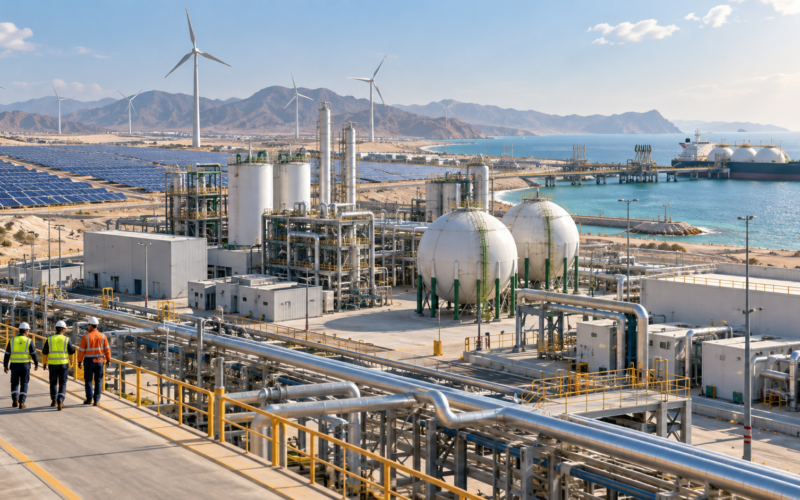
ACME Cleantech Ventures is developing green ammonia and green methanol facilities in India and Oman. The new capital is intended to support development and construction rather than merely early-stage project studies, giving ACME access to institutional funding as projects move toward commercial execution.
ACME has already secured supply relationships involving major international buyers including Norway’s Yara International, Japan’s IHI Corporation and Mitsubishi Gas Chemical, as well as Indian customers. Those agreements are strategically important because long-duration offtake can improve the bankability of capital-intensive green fuel projects by providing lenders and investors with greater visibility over future demand.
Indian reporting also indicates the development pipeline includes multiple green ammonia and methanol projects across India and Oman. The final equity valuation associated with Brookfield’s structured investment is expected to be determined as the financing structure develops, meaning the headline commitment should not be interpreted as evidence that all $600 million has already been deployed.
Why are green ammonia and green methanol attracting investment?
Renewable electricity can decarbonise cars, buildings and many industrial processes directly, but some sectors require fuels or chemical feedstocks with high energy density.
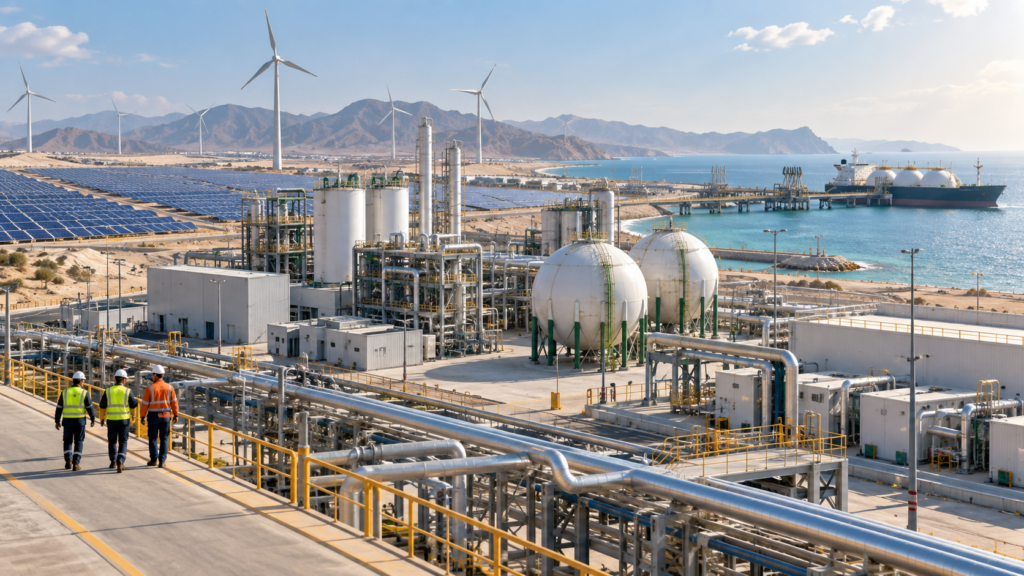
Green hydrogen is produced by using renewable electricity to split water through electrolysis. That hydrogen can then be converted into ammonia, which is easier to transport and already consumed at enormous scale by the fertiliser industry. Green methanol can be used in chemicals and increasingly as a lower-carbon shipping fuel.
These products are attracting investment because they allow renewable power generated in one region to be converted into exportable molecules. India and Oman both possess strong solar and renewable-energy resources, while customers in Europe and Asia are seeking lower-carbon fuel and feedstock options.
The economics remain difficult because producing green hydrogen is generally more expensive than conventional hydrogen derived from natural gas. Project viability therefore depends on electricity costs, electrolyser economics, financing, carbon policies and customers’ willingness to sign long-term contracts at prices capable of supporting investment.
Why is ACME particularly interesting to Brookfield?
ACME has spent years developing large renewable and green-molecule projects rather than entering the sector only after the recent increase in investor interest.
That development capability complements Brookfield’s financial model. Brookfield can supply large pools of institutional capital and experience financing infrastructure, while ACME brings local project development, renewable-energy integration and customer relationships.
The investment also gives Brookfield exposure to a potential new infrastructure asset class. Wind and solar farms are now mature institutional investments, but large green ammonia and methanol facilities are still moving from demonstration-stage activity toward commercial scale.
If the projects achieve long-duration contracts and predictable operating performance, green molecules could eventually attract infrastructure investors in much the same way renewable electricity did during the previous decade.
How does the deal fit India’s green hydrogen strategy?
India wants to become both a major producer and exporter of green hydrogen and its derivatives.
The National Green Hydrogen Mission is intended to build domestic manufacturing capability, reduce fossil-fuel imports and create new export industries around hydrogen, ammonia and related products. India has also introduced standards for green ammonia and green methanol that define emissions requirements for fuels marketed under those categories.
The industrial opportunity extends beyond exports. India consumes significant quantities of conventional ammonia for fertiliser production and imports large amounts of energy. Replacing even part of that demand with domestically produced renewable molecules could reduce exposure to fossil-fuel prices while building a new clean-energy supply chain.
ACME’s projects therefore sit at the intersection of energy policy, industrial development and global decarbonisation.
What does the investment mean for Brookfield shareholders?
Brookfield Asset Management trades publicly, but the ACME investment is relatively modest compared with the scale of Brookfield’s global assets under management. Its importance is therefore more strategic than immediately transformational to group earnings.
Brookfield has increasingly positioned energy-transition investing as a core growth franchise alongside infrastructure, real estate, private equity and credit. The Global Transition Fund strategy has deployed capital into renewable electricity, batteries, carbon reduction and other businesses expected to benefit as governments and corporations pursue lower-emission operations.
Green molecules broaden that opportunity set.
The critical milestones will be construction starts, project financing, final investment decisions and successful conversion of ACME’s offtake arrangements into operating plants. A $600 million capital commitment can accelerate development, but the economic test begins when projects must consistently produce green ammonia or methanol at prices buyers will accept.
Discover more from Business-News-Today.com
Subscribe to get the latest posts sent to your email.