





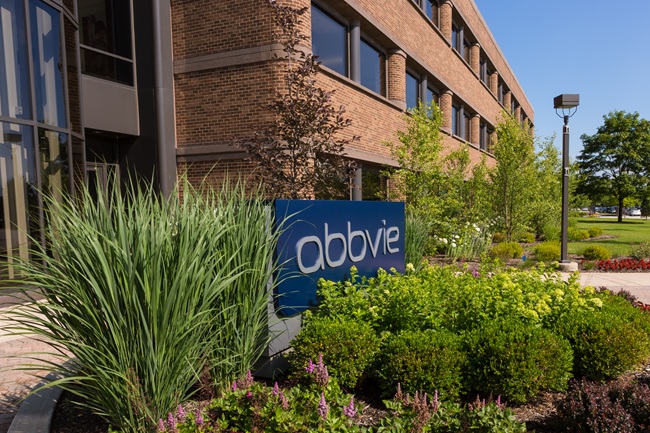
AbbVie Inc. (NYSE: ABBV) reported second-quarter 2026 net revenues of $16.990 billion, an increase of 10.2 percent on a reported basis and 9.5 percent on an operational basis, with adjusted diluted earnings per share of $3.65 rising 22.9 percent year on year. The North Chicago-based biopharmaceutical group lifted full-year 2026 revenue guidance by $300 million to $67.6 billion, but simultaneously trimmed its adjusted diluted EPS guidance range from $13.91 to $14.11 down to $13.87 to $14.07 to absorb the dilutive impact of its pending $10.9 billion cash acquisition of Apogee Therapeutics. The central tension for shareholders is now the pace at which the Skyrizi and Rinvoq immunology franchise can outrun the residual Humira erosion, while management continues to layer bolt-on acquisitions such as Apogee to defend the company’s post-2030 growth profile.
How did Skyrizi and Rinvoq push AbbVie’s Q2 2026 immunology revenue to $8.786 billion?
The immunology portfolio remained the single largest driver of AbbVie’s second-quarter performance, generating global net revenues of $8.786 billion, up 15.1 percent on a reported basis and 14.6 percent on an operational basis. Skyrizi alone delivered $5.505 billion of quarterly sales, an increase of 24.4 percent on a reported basis, while Rinvoq contributed $2.525 billion at growth of 24.5 percent. Together, the two next-generation immunology assets now generate more than $8.0 billion of quarterly revenue and continue to expand into indications spanning inflammatory bowel disease, psoriatic arthritis and atopic dermatitis.
Management reinforced the durability of that trajectory during the quarter with regulatory wins across both molecules. The United States Food and Drug Administration and the European Commission approved Skyrizi for children aged six and older with moderate-to-severe plaque psoriasis, and the FDA extended the label to include pediatric psoriatic arthritis. Rinvoq secured European Commission approvals in non-segmental vitiligo, where AbbVie described it as the first systemic medication cleared in the European Union for that indication, and in severe alopecia areata. The label expansions matter analytically because they extend the commercial runway for both drugs into indications with historically limited systemic options, supporting the persistence of the current growth rate rather than merely relying on continued penetration of existing patient pools.
Why did management raise the 2026 revenue outlook but trim the adjusted EPS guidance range?
The apparent contradiction between a $300 million revenue upgrade and a $0.04 midpoint reduction in the adjusted EPS range reflects a specific accounting effect rather than a change in the underlying operating trajectory. Robert A. Michael, chairman and chief executive officer, said the company is now incorporating a $0.14 dilutive impact from the pending Apogee Therapeutics acquisition, which is anticipated to close in the third quarter of 2026, partially offset by $0.10 of operating overperformance. The net effect is a $0.04 reduction at the midpoint of the range, moving the guide from $13.91-$14.11 to $13.87-$14.07.
For investors, the more important number is the $67.6 billion full-year revenue outlook, which now sits $300 million above the prior guide and implies continued momentum in the second half. AbbVie also disclosed an unfavourable $0.58 per share impact from acquired in-process research and development and milestone expense incurred year-to-date through the second quarter, and the company continues to exclude any similar charges beyond the second quarter from the full-year guide on the basis that such expenses cannot be reliably forecast. That policy limits guidance risk on the upside, but it also means the reported adjusted EPS figure for the full year could fall further if additional acquired IPR&D charges are incurred during the third or fourth quarter.
What does the $10.9 billion Apogee Therapeutics acquisition add to AbbVie’s immunology pipeline?
The pending Apogee acquisition, announced on 22 June 2026, values the Nasdaq-listed clinical-stage biotechnology company at $135.11 per share in cash, representing an equity value of approximately $10.9 billion. AbbVie is financing the transaction with debt and, once Apogee’s cash and marketable securities are subtracted, the net implied value is closer to $10.1 billion. The deal centres on zumilokibart, also known as APG777, a subcutaneous half-life extended monoclonal antibody targeting interleukin-13 currently in development for moderate-to-severe atopic dermatitis and asthma. Apogee’s pipeline also includes APG273, a combination programme pairing zumilokibart with the anti-TSLP antibody APG333 in asthma.
The strategic rationale is straightforward. AbbVie already dominates biologic immunology through Skyrizi and Rinvoq, but neither molecule targets the IL-13 axis, which is the mechanism behind Regeneron and Sanofi’s Dupixent. A half-life extended IL-13 antibody dosed on a quarterly or twice-yearly maintenance schedule would compete directly on convenience against the current fortnightly Dupixent regimen. Management flagged mega-blockbuster peak sales potential across the Apogee pipeline, and the transaction is expected to become accretive to adjusted diluted EPS in 2032, with reported dilution of approximately $0.14 in 2026 and roughly $0.46 in 2027 before the crossover. Closing remains subject to Apogee shareholder approval and regulatory clearances, and key Apogee holders have signed a voting agreement supporting the deal. The critical execution test is not the deal price, but AbbVie’s ability to convert late-stage Phase 3 data into a genuine standard-of-care displacement in atopic dermatitis.
How is the Humira erosion still shaping AbbVie’s operating baseline in the second quarter of 2026?
Humira, once the world’s largest-selling prescription drug, generated $756 million of global net revenues in the second quarter of 2026, a decline of 35.9 percent on a reported basis. Within that total, United States sales fell 47.0 percent to $425 million, while international revenues declined 12.5 percent to $331 million. On a first-half basis, Humira revenue fell 37.2 percent to $1.444 billion.
The decline is now largely priced into the AbbVie investment thesis, but the second-quarter print offers a useful calibration point. Skyrizi and Rinvoq combined added roughly $1.6 billion of year-on-year growth in the second quarter, comfortably absorbing the approximately $420 million reduction in Humira revenues over the same period. The ratio matters because it demonstrates that the biosimilar transition is no longer a top-line drag on the immunology franchise, even before accounting for future contributions from Apogee’s pipeline. What remains unresolved is the second-order margin question. Humira historically carried premium gross margins, and while Skyrizi and Rinvoq are also high-margin biologics, the second-quarter adjusted operating margin ratio of 48.3 percent illustrates that the mix shift is not eroding profitability at the group level.
What is happening inside AbbVie’s neuroscience portfolio as revenue climbed 20.3 percent?
Neuroscience delivered the strongest percentage revenue growth of any AbbVie portfolio during the second quarter, with global net revenues of $3.228 billion, up 20.3 percent on a reported basis and 19.8 percent on an operational basis. Vraylar contributed $1.071 billion of quarterly sales, up 18.9 percent, while Botox Therapeutic added $1.042 billion at growth of 12.2 percent. The combined migraine franchise of Ubrelvy and Qulipta generated $742 million, and Vyalev, AbbVie’s Parkinson’s disease infusion, delivered $256 million with international revenues effectively doubling year on year.
The neuroscience franchise now approaches an annualised run rate of $13 billion, and the European Commission approval of Aquipta for the acute treatment of migraine extends AbbVie’s presence in a category that already includes Ubrelvy in the United States. For investors, the significance of neuroscience is that it provides a genuine second growth pillar behind immunology, reducing single-franchise dependency at a time when the group’s post-2030 growth profile still requires meaningful visibility from Apogee’s pipeline and other bolt-on assets.
Where do oncology and aesthetics leave AbbVie’s diversification story after a mixed Q2 print?
The two smaller portfolios delivered less impressive contributions during the second quarter. Oncology revenues of $1.650 billion fell 1.5 percent on a reported basis and 2.4 percent on an operational basis, weighed down by continued Imbruvica erosion at $532 million, a decline of 29.4 percent. Venclexta grew 11.6 percent to $771 million and Elahere jumped 33.1 percent to $211 million, but neither was sufficient to offset the Imbruvica trajectory. The FDA approval of Decnupaz for blastic plasmacytoid dendritic cell neoplasm, AbbVie’s first antibody-drug conjugate approved in blood cancer, is strategically significant even at a small immediate revenue contribution because it validates the internal ADC platform ahead of larger opportunities disclosed at the American Society of Clinical Oncology annual meeting.
Aesthetics generated $1.282 billion of revenues, an increase of 0.3 percent on a reported basis but a decrease of 0.9 percent on an operational basis. Botox Cosmetic added $728 million and Juvederm contributed $245 million. The category continues to sit under pressure from softer discretionary consumer spending, and the FDA approval of Skinvive by Juvederm for reduction of neck lines adds a new indication rather than a step-change catalyst. Neither portfolio breaks the near-term investment case, but the flat aesthetics print and the oncology decline underline the extent to which the current AbbVie thesis depends on immunology and neuroscience.
How does the current AbbVie share price square with analyst targets after a record close in July?
AbbVie stock closed at an all-time high of $263.30 on 29 July 2026, two trading days before the second-quarter release. The shares subsequently traded in a range of $244.66 to $253.35 through the earnings session before recovering into the $259 to $261 area in early August. The 52-week range now spans roughly $181.75 to $267.47, and the shares have delivered a return of approximately 36 percent over the past twelve months.
Broker responses have generally moved higher rather than lower into and out of the print. Barclays lifted its price target to $300 with an overweight rating, and Canaccord Genuity raised its target to $282 with a buy rating. Business News Today did not identify a widely published current broker consensus that materially differed from those trajectories, although published aggregate targets around $268 imply limited additional upside from the current share price. The valuation debate now turns on whether the market is prepared to underwrite the Skyrizi and Rinvoq trajectory through 2028 and beyond, and whether the Apogee acquisition can be validated with pivotal Phase 3 data before the dilution profile peaks in 2027. A sustained rerating would likely require both stronger immunology momentum than the current guide implies and clean execution on the Apogee integration.
What should investors track as AbbVie moves toward the Apogee close and the second half of 2026?
- Skyrizi and Rinvoq combined quarterly revenue crossed $8.0 billion in the second quarter of 2026, with growth rates of 24.4 percent and 24.5 percent respectively, reinforcing the durability of the post-Humira immunology engine.
- Full-year 2026 revenue guidance was raised by $300 million to $67.6 billion, signalling that operating momentum through the first half is exceeding the prior internal plan.
- Adjusted diluted EPS guidance was trimmed to $13.87-$14.07 to absorb $0.14 of dilution from the pending Apogee acquisition, partially offset by $0.10 of overperformance.
- The $10.9 billion Apogee transaction remains subject to Apogee shareholder approval and regulatory clearance, with a targeted close in the third quarter of 2026 and accretion expected in 2032.
- Zumilokibart’s Phase 3 progression is the single most important pipeline catalyst for validating the Apogee deal price and the assumed peak sales trajectory in atopic dermatitis.
- Humira revenues declined 35.9 percent to $756 million but the decline is now fully offset by Skyrizi and Rinvoq growth, removing the largest overhang of the previous three years.
- Neuroscience revenues of $3.228 billion at 20.3 percent growth confirm a genuine second growth pillar, reducing single-franchise dependency ahead of the next patent cliff.
- Oncology declined 1.5 percent on continued Imbruvica erosion, and aesthetics turned negative on an operational basis, keeping the near-term investment case narrowly anchored to immunology and neuroscience.
- Barclays raised its price target to $300 and Canaccord Genuity to $282, but published aggregate targets closer to $268 imply that further rerating requires additional operating evidence.
- The next measurable proof points are Apogee shareholder and regulatory approvals during the third quarter, the third-quarter revenue print in late October and any acquired IPR&D charges that would reduce reported adjusted EPS below the current range.
Discover more from Business-News-Today.com
Subscribe to get the latest posts sent to your email.


