



Western Australia’s lithium landscape takes another leap forward as Covalent Lithium secures a critical environmental green light for its $1.33 billion refinery, positioning the Mt Holland project for global battery supply chain relevance.
Why is Covalent Lithium’s refinery approval a major milestone for the Mt Holland project?
Covalent Lithium has cleared a significant regulatory hurdle with the Western Australian government granting environmental approval for the construction and operation of its lithium hydroxide refinery in Kwinana. This development solidifies the company’s progress on the AUD 1.8 billion Mt Holland lithium project—one of Australia’s most strategically significant lithium ventures—at a time when global demand for battery-grade lithium is surging.
The environmental approval was issued in the form of a Ministerial Statement under the Environmental Protection Act 1986 (WA), which establishes the operational conditions and compliance framework for the refinery. The approval allows Covalent Lithium to proceed with a refinery capable of producing battery-grade lithium hydroxide, a high-purity chemical essential for electric vehicle (EV) batteries and energy storage systems.
This milestone confirms that Covalent Lithium now holds all the major environmental and regulatory clearances required to move forward with the refinery component of the project. With construction already underway, the approval helps de-risk the project’s timeline and positions it as a future cornerstone of Western Australia’s downstream lithium strategy.
What makes the Mt Holland lithium project so important to Australia’s battery minerals supply chain?
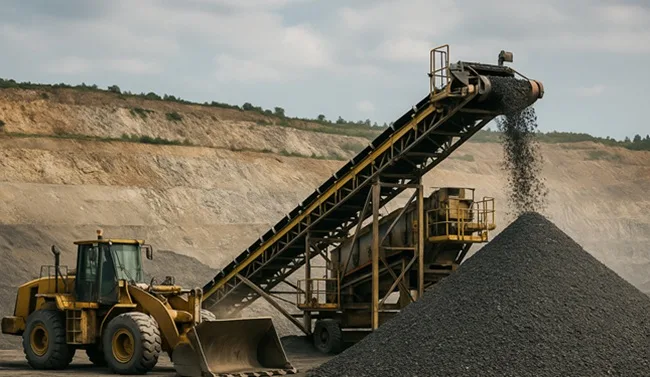
The Mt Holland project is not just another lithium mine—it is a vertically integrated operation designed to take lithium from ore to battery-ready hydroxide entirely within Western Australia. This dual structure includes the open-pit mine at Mt Holland and a refinery at Kwinana, located south of Perth within an established industrial precinct focused on chemical processing and battery materials.
With this integrated model, the project will mine spodumene ore at Mt Holland and transport it to the Kwinana refinery for processing into lithium hydroxide monohydrate. This positions Covalent Lithium to capture more of the value chain, moving beyond raw materials into advanced processing, which is often dominated by China. By developing both ends of the chain domestically, the project supports Australia’s push to become a key player in global battery supply.
The Mt Holland mine is projected to produce approximately 50,000 tonnes per annum of lithium hydroxide, starting in the second half of 2024. This output, when operational, will place it among the largest integrated lithium hydroxide facilities globally.
How are Wesfarmers and SQM shaping the project’s trajectory?
Covalent Lithium is a 50:50 joint venture between Wesfarmers, one of Australia’s largest diversified conglomerates, and Sociedad Química y Minera de Chile (SQM), one of the world’s top lithium producers. The partnership brings together SQM’s global lithium expertise and Wesfarmers’ operational experience in chemicals, energy, and infrastructure.
Wesfarmers entered the lithium sector through its AUD 776 million acquisition of Kidman Resources in 2019, securing a 50% stake in the Mt Holland project. This strategic move allowed Wesfarmers to diversify into the fast-growing battery materials sector while aligning with Australia’s resource value-add ambitions. The acquisition closed a significant chapter in Australia’s lithium history by placing the Mt Holland project under a well-capitalized and strategically focused operator.
In February 2021, both partners formally greenlit the Mt Holland project with a final investment decision (FID), committing over AUD 1.8 billion to its construction. This investment includes the development of both the mine and the refinery, underlining their commitment to Australia’s ambition to become a global leader in lithium refining and battery materials.
What role does the Kwinana refinery play in Western Australia’s broader lithium vision?
Kwinana is rapidly emerging as the center of Western Australia’s downstream lithium sector. The area already hosts lithium processing facilities by Tianqi Lithium Corporation and Albemarle Corporation, which are supplying lithium hydroxide to international customers.
By locating its refinery in Kwinana, Covalent Lithium is tapping into a growing ecosystem of infrastructure, skills, and government support for battery material production. The Western Australian government has explicitly stated its intention to move up the battery value chain, and the environmental approval for Covalent’s refinery marks further momentum in this direction.
The refinery will also generate long-term employment opportunities and contribute to local economic development. At full capacity, the operation is expected to support hundreds of direct and indirect jobs in construction, operations, and maintenance.
What challenges remain for Covalent Lithium ahead of 2024 production?
While the environmental approval and FID represent major progress milestones, several execution risks remain. Key among them is project delivery on time and within budget. Building a refinery of this scale involves complex construction phases, equipment integration, and workforce mobilization. The COVID-19 pandemic has created volatility in global supply chains, which could impact timelines and procurement for essential components.
Moreover, Covalent Lithium must now focus on the commissioning and ramp-up process to ensure it meets its goal of first lithium hydroxide production in the second half of 2024. Achieving battery-grade quality at commercial scale is a high bar and will require close technical collaboration between Wesfarmers and SQM.
Securing offtake agreements will also be a strategic priority. While global demand for lithium hydroxide is forecast to rise sharply through the mid-2020s, securing long-term contracts with automakers and battery manufacturers will be critical to financial viability. Many of the world’s largest EV producers are actively diversifying their supply sources, giving Covalent Lithium a window of opportunity to become a preferred supplier.
How are global lithium market dynamics influencing the Mt Holland project?
Lithium markets are experiencing unprecedented volatility, driven by the explosive growth in electric vehicle adoption and government-led energy transition policies. Lithium hydroxide, in particular, is in high demand due to its suitability for high-nickel cathode chemistries used in long-range electric vehicles.
Benchmark Mineral Intelligence and other market analysts expect a sustained supply-demand imbalance over the coming years, with lithium hydroxide prices trending upward due to constrained refining capacity outside China. This dynamic significantly enhances the strategic value of projects like Mt Holland, which combine secure mining with localized refining.
By producing high-purity lithium hydroxide domestically, Covalent Lithium helps reduce dependence on offshore refining hubs, particularly in Asia. This aligns well with both Australian government policy and emerging global battery supply chain security trends.
What are analysts and investors saying about the project?
At the time of final investment decision, equity analysts were generally bullish on Wesfarmers’ entry into lithium. JPMorgan had previously commented that vertical integration was critical to capturing long-term value in the battery materials sector and noted that Covalent Lithium’s project could yield attractive returns if executed effectively.
Meanwhile, institutional investors had flagged ESG factors and local approvals as key due diligence markers, both of which appear to be progressing well for Covalent Lithium. The Western Australian government’s swift environmental clearance signals a strong policy alignment and further de-risks the venture for financiers and potential offtakers.
What are the key takeaways from Covalent Lithium’s refinery approval?
- Covalent Lithium has received environmental approval for its Kwinana lithium hydroxide refinery, a critical step in the Mt Holland project.
- The project is backed by Wesfarmers and Sociedad Química y Minera de Chile, combining local capital with global lithium expertise.
- First production is targeted for the second half of 2024, with the refinery expected to produce around 50,000 tonnes per annum of battery-grade lithium hydroxide.
- The Kwinana facility enhances Australia’s ability to process critical minerals domestically and participate more actively in global battery supply chains.
- Environmental approval reduces regulatory risk and signals strong alignment with Western Australia’s industrial strategy for battery materials.
- Execution risks remain, particularly around construction, commissioning, and securing long-term offtake contracts.
Discover more from Business-News-Today.com
Subscribe to get the latest posts sent to your email.