



After nearly ten months of halted operations, Savannah Goldfields Limited (ASX:SVG) has officially resumed gold production at its Georgetown Gold Processing Plant in Far North Queensland. The milestone marks a major turning point in the Australian gold exploration company’s strategy to establish a regional processing hub backed by stranded ore deposits, emerging joint ventures, and the promise of sulphide ore monetization. But is this revival enough to shift investor sentiment and generate sustained value?
Why is the Georgetown production restart a strategic inflection point for Savannah Goldfields?
Savannah Goldfields Limited has recommissioned its Georgetown Gold Processing Plant, located approximately 10 kilometers south of the township of Georgetown and 480 kilometers southwest of Cairns. On November 7, 2025, the company poured its first gold doré bar since January 2024. The poured doré weighs approximately 1.5 kilograms, and while its gold content has yet to be officially confirmed, it marks the operational restart of a plant that has long been central to the company’s hub-and-spoke regional strategy.
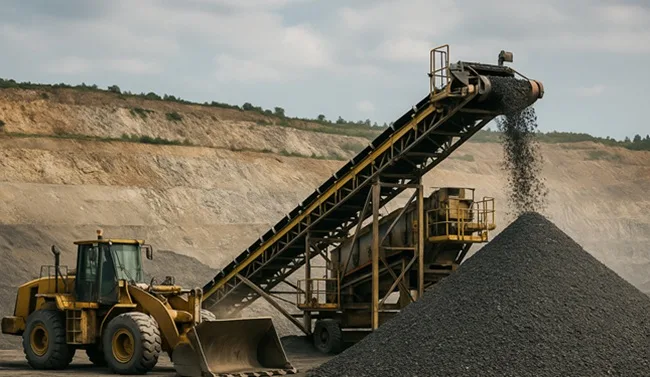
Savannah Goldfields noted that all major components of the plant have been restored and are now functioning, including the crushing, milling, gravity recovery, leaching, and elution circuits. Milling has resumed using lower-grade feedstock, with a gradual ramp-up toward steady state operations expected in the coming weeks. The recommissioning effort included the cycling of existing carbon stocks through the elution and electrowinning circuits to enable the gold room restart. This process was successfully completed, enabling the smelting of doré from recovered metal sludge.
According to Chief Executive Officer Brad Sampson, the milestone reflects not only a technical recovery but also a broader affirmation of Savannah Goldfields’ long-term operating model. The company had previously undertaken an intensive maintenance program throughout September and October to bring the facility back online, including transport of approximately 9,500 tonnes of mill feed from Agate Creek and Charters Towers, and the formation of 3,500 tonnes of crushed mill feed at site.
What is the near-term production plan and how does Big Reef fit into it?
The Georgetown restart is only one half of the current operational push. Savannah Goldfields is preparing to commence open pit mining operations at the Big Reef deposit in November 2025. The plan involves mining approximately 18,000 tonnes of Inferred Mineral Resource that will serve as a major early feed source for the Georgetown plant. The initial phase will involve topsoil removal, blast hole drilling, and grade control, followed by conventional benching using hydraulic excavators and articulated trucks.
The integration of Big Reef ore into the production stream provides near-term volume stability for the mill. More importantly, it positions Savannah Goldfields to demonstrate continuous throughput and potential scalability, which is central to its thesis of operating Georgetown as a regional processing hub that serves both its owned resources and those of third-party miners.
What does the company’s Agate Creek update mean for future operations?
Beyond Big Reef, Savannah Goldfields is eyeing the return of Agate Creek to its production portfolio. The company is in the process of finalizing an application to amend the existing Environmental Authority covering the site. Once approved, this would permit expanded mining activity at Agate Creek, with operations currently scheduled to resume in the second quarter of 2026.
Agate Creek had historically been one of the main sources of mill feed for Georgetown. Its reintroduction into Savannah Goldfields’ production pipeline is expected to add resource depth and contribute to long-term mill utilization. The regulatory pathway remains a critical milestone, and once cleared, Agate Creek would form a second production source to complement Big Reef.
How is the hub-and-spoke model designed to transform Savannah Goldfields?
The broader vision for Georgetown goes beyond the immediate restart. Savannah Goldfields is aggressively positioning the site as a centralized processing hub within a 400-kilometer radius. Given that the Georgetown facility is the only operational gold processing plant in that geographical window, it sits in a uniquely advantageous position to capture stranded ore resources from abandoned pits, unmined sulphide deposits, and small-scale gold operations that lack their own processing infrastructure.
Historical gold mining in the region was limited to shallow oxide ore bodies, leaving a vast quantity of deeper sulphide material untapped. Savannah Goldfields has already begun designing plant modifications to support the processing of sulphide ores in the future, which could open up a large and underutilized mineral resource base. Work on the sulphide stream is expected to ramp up once gold production at Georgetown stabilizes.
In addition to its own tenement portfolio, the company is engaged in ongoing discussions with local miners operating on a small scale, many of whom are interested in toll treating their ore at Georgetown. These potential third-party agreements could support volume stability, create incremental revenue streams, and increase Savannah Goldfields’ visibility as a regional consolidator.
What is the latest investor sentiment based on Savannah Goldfields’ ASX performance?
Savannah Goldfields remains a micro-cap stock on the ASX, but the resumption of production has sparked renewed attention from the investor community. As of November 7, 2025, the company’s share price stood at AUD 0.019, reflecting a modest one-year decline of 1.30 percent. It currently holds a market capitalization of approximately AUD 40.69 million.
The stock trades in the bottom half of its sector rankings, sitting at 458 out of 1,083 in its sector and 1,358 out of 2,304 across the ASX. However, trading volume suggests continuing retail interest, with over 7.2 million shares exchanged in a single trading day. Savannah Goldfields’ 52-week price range of AUD 0.014 to AUD 0.032 indicates volatility, but also room for speculative upside if operational milestones continue to be met.
Analysts and institutional watchers remain cautious, noting that while the restart reduces execution risk, future performance will depend on consistent throughput, expansion approvals at Agate Creek, and progress on sulphide ore processing. Savannah’s toll treatment potential and third-party partnerships may serve as catalysts for future revaluation, especially if gold prices remain firm and regional players seek processing synergies.
Key takeaways from Savannah Goldfields’ Georgetown restart
- Savannah Goldfields Limited has resumed gold production at the Georgetown Gold Processing Plant, pouring its first doré since January 2024.
- The restart follows successful recommissioning of the crushing, milling, elution, and gold room circuits, with 1.5 kilograms of doré poured.
- Mining at the Big Reef deposit will begin in November, supplying up to 18,000 tonnes of Inferred Mineral Resource to the mill.
- A regulatory application to expand Agate Creek mining is underway, with processing of Agate Creek ore expected to resume by Q2 2026.
- Savannah’s hub-and-spoke model envisions Georgetown as a regional processing center for stranded deposits and third-party tolling.
- The company is designing plant upgrades to handle sulphide ore, unlocking previously untouched deeper resources in the region.
- Savannah’s ASX share price remains modest at AUD 0.019, with cautious investor sentiment pending further operational results.
Discover more from Business-News-Today.com
Subscribe to get the latest posts sent to your email.