




What is rabies and how does it spread between animals and humans?
Rabies is a viral disease that fatally targets the nervous system of mammals. It spreads primarily through the saliva of infected animals, almost always through bites. Once inside the body, the virus enters nerve endings and slowly travels toward the brain, where it causes inflammation and leads to severe neurological dysfunction and, ultimately, death.
The virus is zoonotic, meaning it spreads from animals to humans. In countries with limited dog vaccination programs, such as parts of Asia and Africa, rabies cases in humans are most often linked to dog bites. In contrast, the United States has largely controlled dog-mediated rabies through routine vaccination programs, although wild animals like bats, raccoons, and foxes remain important reservoirs. The global disparity in vaccination coverage means rabies continues to threaten both animal and human health, particularly in areas with poor veterinary infrastructure and public health access.
How does the rabies virus move through a dog’s body and affect the brain?
After a dog is bitten by a rabid animal, the rabies virus enters through the skin and migrates via peripheral nerves. It moves centripetally—meaning from the periphery of the body inward—toward the spinal cord and then the brain. This process is slow and depends on the distance from the bite to the central nervous system. Bites on the face or neck tend to result in quicker symptom onset than those on the legs or paws.
The virus exploits the natural transportation system of neurons, using retrograde axonal transport to reach the central nervous system. Once it enters the brain, it causes widespread inflammation known as encephalitis. The virus then spreads outward again to the salivary glands and other tissues, preparing the host to transmit the infection to others via bites.
What are the three stages of rabies in dogs and what do the symptoms look like?
Rabies in dogs progresses through three stages, each reflecting the increasing neurological involvement caused by viral replication in the brain. The three stages are known as the prodromal stage, the furious stage, and the paralytic stage.
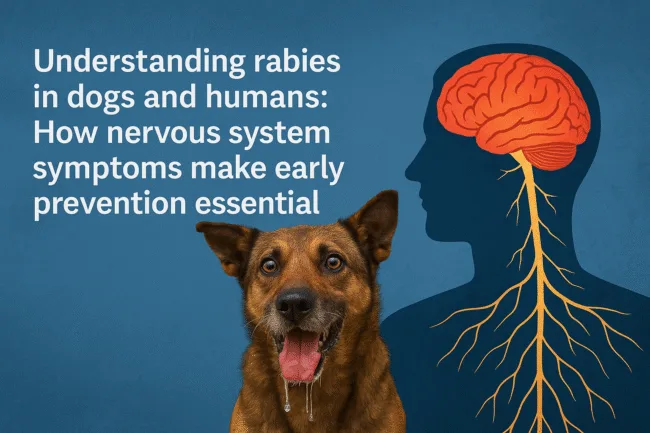
In the prodromal stage, which lasts two to three days, the dog may show behavioral changes that are subtle but important. A once-friendly animal might become withdrawn, avoid social interaction, or seek solitude. Alternatively, a typically timid dog may become unusually irritable or restless. The dog may develop a mild fever and refuse food. It often licks the bite site excessively. Some dogs may become disobedient, ignoring familiar commands. Others may simply appear unwell or more anxious than usual, signaling that the virus has begun to affect brain function.
The second stage, called the furious stage, lasts anywhere from two to seven days. It is during this period that the dog becomes dangerously aggressive and unpredictable. Affected dogs may bark incessantly, show red or bloodshot eyes, and run aimlessly without purpose. Even familiar people, including the owner, may no longer be recognized. These dogs may bite with no provocation, and their behavior becomes erratic. As the disease progresses through this stage, the dog may begin to exhibit signs of weakness in the hind limbs, indicating the onset of neurological deterioration.
The final stage is known as the paralytic or dumb stage. Here, the dog’s nervous system rapidly fails. The muscles of the throat and jaw become paralyzed, leading to an inability to swallow food or water. Drooling becomes pronounced, and vocalizations become hoarse or absent. Eventually, the paralysis spreads to the rest of the body. The dog becomes immobile and succumbs to respiratory arrest. Death is nearly certain within ten days after the onset of clinical symptoms. There is no known cure once signs of rabies appear.
How is rabies diagnosed in dogs and why is testing only possible after death?
Diagnosing rabies in live animals is extremely challenging due to the absence of definitive clinical tests. Most veterinary diagnoses rely on behavioral observation and symptom history. However, definitive confirmation requires postmortem analysis.
After the death of a suspected rabid dog, the brain is removed and sent to a diagnostic lab for histopathological evaluation. The most accurate and widely used method is the direct fluorescent antibody (dFA) test, which uses antibodies tagged with fluorescent markers to detect the rabies virus in brain tissue. The hypothalamus and brainstem are the primary areas sampled because they are typically where the viral load is highest.
Although samples such as saliva, spinal fluid, or blood can be taken from live animals, they do not offer reliable diagnostic accuracy. As a result, public health authorities recommend that any dog suspected of rabies be euthanized if clinical signs are present and exposure risk is confirmed. The carcass must then be disposed of through incineration to prevent environmental contamination or accidental transmission to other animals or humans.
Why is rabies vaccination the only reliable way to protect dogs?
Rabies is almost universally fatal after the onset of symptoms, which makes prevention through vaccination the only effective control strategy. In many regions, rabies vaccination for pets—especially dogs—is mandatory. The initial vaccination is typically administered at three to four months of age. A booster shot follows approximately seven days later. Subsequent boosters are given annually or every three years, depending on the formulation of the vaccine and local regulations.
If a vaccinated dog is exposed to a potentially rabid animal, a post-exposure booster is given immediately, and the dog is monitored under quarantine for 45 days. This protocol is highly effective and prevents the disease from developing. In contrast, if an unvaccinated dog is exposed, health authorities generally recommend euthanasia due to the serious risk of zoonotic transmission. If the owner refuses, the dog must undergo strict isolation for six months and receive a full course of rabies vaccinations.
Regular vaccination not only protects individual animals but also creates a buffer against outbreaks in communities. Herd immunity through consistent pet immunization is essential to protect both animal and human health.
How does rabies infection progress in humans and what early signs should people watch for?
In humans, rabies also follows a neurological route, starting at the site of a bite and traveling through nerves toward the brain. The incubation period for rabies in humans typically ranges from two weeks to six months, although it can be shorter or longer depending on how close the bite was to the head and the viral load.
The early symptoms in humans are often non-specific and can be mistaken for other illnesses. Fever, headache, sore throat, muscle aches, and general fatigue are common. Patients may also feel a tingling or burning sensation at the bite site, even if the wound has healed. Anxiety, confusion, and irritability may set in as the virus begins to impact brain function.
These early signs are followed by progressive and dramatic neurological symptoms once the virus reaches the central nervous system. Without intervention, the disease rapidly worsens and becomes fatal.
What is hydrophobia and why is it a classic symptom of rabies in humans?
Hydrophobia, or fear of water, is a classic and terrifying hallmark of rabies in humans. It arises due to spasms in the throat and esophageal muscles, which make swallowing both painful and physically impossible. Even the thought or sight of water can trigger involuntary gagging, panic, and muscle contractions.
Alongside hydrophobia, patients often develop other neurological complications. These may include hoarseness or complete loss of voice, facial paralysis, intense restlessness, hallucinations, and seizures. In the terminal stage, coma and complete paralysis set in. The inability to breathe due to diaphragm failure leads to respiratory arrest, marking the end stage of the disease.
Once these symptoms appear, the outcome is nearly always fatal, regardless of medical intervention.
What steps should be taken immediately after a possible rabies exposure?
If a person is bitten or scratched by an animal suspected of carrying rabies, the first step is immediate wound care. The affected area should be washed thoroughly with soap and water for at least 15 minutes. This basic step significantly reduces the chance of viral entry by eliminating virus particles on the skin surface.
After washing, medical attention should be sought without delay. Rabies post-exposure prophylaxis (PEP) is highly effective but must be started before symptoms appear. The PEP protocol consists of an injection of rabies immune globulin (RIG) near the wound, followed by a series of rabies vaccines administered over 14 days. These vaccines help the body develop immunity before the virus can reach the brain.
If the animal responsible for the bite is known and can be observed, it should be watched for 10 days. If it remains healthy, the PEP regimen may be adjusted. If the animal cannot be located or shows signs of illness, the full PEP schedule must be completed. No risks should be taken when it comes to suspected rabies exposure.
How can rabies be prevented through community and policy-level action?
Preventing rabies at scale requires a combination of veterinary, public health, and community-driven interventions. The first step is ensuring that all pet dogs and cats are regularly vaccinated with certified anti-rabies vaccines. Urban areas with large stray dog populations must implement both vaccination drives and population control measures.
Public education is another critical tool. People must be informed about how rabies spreads, what symptoms to look for, and what to do in case of an animal bite. Schools, clinics, and media outlets can help raise awareness. High-risk professionals such as veterinarians, wildlife handlers, and lab workers should receive pre-exposure vaccination and periodic antibody checks to ensure continued protection.
Countries that have implemented nationwide dog vaccination campaigns and educational outreach programs have seen dramatic reductions in rabies incidence. The World Health Organization and global health partners advocate for a One Health approach—integrating human, animal, and environmental health—to completely eliminate dog-mediated rabies deaths by 2030.
Why rabies prevention still matters in modern medicine
Rabies may be ancient in origin, but it remains one of the most dangerous viral diseases in the modern world. What makes it unique is the paradox: it is both 100% preventable and nearly 100% fatal once symptoms begin. This stark contrast highlights the urgency of prevention and early intervention.
Vaccinating pets, controlling stray populations, raising public awareness, and ensuring access to post-exposure prophylaxis are not just veterinary concerns—they are pillars of public health. Rabies education remains essential not only for doctors and veterinarians but also for families, schools, and communities.
In a world where zoonotic diseases are increasingly relevant, rabies serves as a clear example of how targeted prevention can eliminate a global killer.
Discover more from Business-News-Today.com
Subscribe to get the latest posts sent to your email.