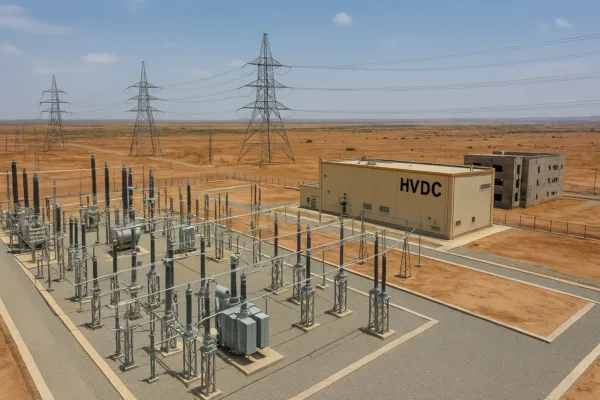


ASP Isotopes Inc. (NASDAQ: ASPI) is deepening its nuclear fuel supply chain strategy after its wholly owned Quantum Leap Energy subsidiary signed a research agreement with the Texas A&M Engineering Experiment Station to advance uranium conversion technology. The agreement focuses on generating technical data to support scalable production of high-purity uranium hexafluoride, a critical feedstock used in the existing uranium enrichment process. The announcement matters because uranium conversion sits between uranium mining and enrichment, making it a strategically important but capacity-constrained link in the nuclear fuel cycle. ASPI recently traded around $4.20, giving ASP Isotopes a market value of about $508.2 million as investors assess whether the company can convert isotope enrichment technology, nuclear fuel ambitions and strategic partnerships into commercially viable infrastructure.
Why could ASP Isotopes’ Texas A&M agreement matter for ASPI stock and nuclear fuel security?
ASP Isotopes’ Texas A&M agreement matters because it places the company closer to one of the most sensitive supply chain problems in nuclear energy. The nuclear fuel cycle depends on several steps, including mining, milling, conversion, enrichment and fuel fabrication. Uranium conversion is the step that turns yellowcake uranium into uranium hexafluoride, which is then used as feedstock for enrichment.
That step has become more strategically important as the United States and allied countries look for more as feedstock for enrichment.
That step has secure nuclear fuel supply chains. Quantum Leap Energy said the U.S. has only one operating commercial conversion facility, which highlights why domestic conversion capacity is a national energy security issue rather than only an industrial process question. A wider domestic conversion base could reduce reliance on foreign suppliers and support future nuclear deployment.
For ASPI investors, the agreement adds another element to the company’s nuclear energy story. ASP Isotopes is already positioned around isotope enrichment for nuclear medicine, semiconductors and nuclear energy. Quantum Leap Energy gives it exposure to uranium conversion, enrichment-related technologies, lithium isotopes and other critical materials tied to fission and fusion systems.
The deal is still early stage. A research agreement is not the same as a commercial plant, customer contract or regulatory approval. Its value depends on whether the work produces data that helps Quantum Leap Energy improve process design, reduce costs, support scale-up and move toward commercial deployment. The market will likely treat the agreement as a technology de-risking step, not a finished business milestone.
How does uranium conversion fit into the nuclear fuel cycle and ASPI’s strategy?
Uranium conversion fits into the nuclear fuel cycle because it creates the material used in enrichment. Yellowcake uranium, usually referred to as U3O8, must be converted into uranium hexafluoride before it can be enriched for most commercial reactor fuel applications. That makes UF6 a critical intermediate product in the nuclear energy supply chain.
ASP Isotopes’ strategy is broader than one isotope or one end market. The company describes itself as an advanced materials business developing isotope enrichment technologies for nuclear medicine, next-generation semiconductors and nuclear energy. Quantum Leap Energy extends that strategy into nuclear fuel cycle segments that could become more valuable as demand grows for small modular reactors, advanced reactors and potentially fusion-related materials.
The Texas A&M Engineering Experiment Station agreement focuses on collecting fundamental physicochemical data on the reactions involved in producing UF6 from yellowcake. That type of data can support process design, modeling, scale-up activities and optimization of production pathways. In other words, the work is meant to help move the conversion concept closer to engineering reality.
The business opportunity depends on whether Quantum Leap Energy can eventually commercialize a process that is cost effective, scalable and compliant with nuclear regulations. The strategic appeal is clear because nuclear fuel supply security is gaining policy and investor attention. The execution path remains complex because conversion, enrichment and nuclear materials handling require regulatory permission, technical reliability and substantial capital.
Why does the U.S. uranium conversion gap create a market opening for Quantum Leap Energy?
The U.S. uranium conversion gap creates a market opening because nuclear energy ambitions depend on fuel availability. Utilities, advanced reactor developers and policymakers can support more nuclear generation, but that growth requires a reliable supply of processed fuel materials. If conversion capacity is limited, enrichment and fuel fabrication cannot fully solve the supply chain problem on their own.
Quantum Leap Energy’s focus on UF6 production directly addresses this link. The company is not only talking about enrichment or advanced nuclear concepts. It is targeting an upstream process that supports enrichment capacity. That makes the Texas A&M agreement strategically relevant even though it is still research-focused.
The timing is also important. Demand for nuclear power is rising because governments and companies are looking for reliable, carbon-free electricity to support grids, industrial demand and power-intensive technologies. The AI data centre buildout has intensified the discussion around always-available clean power. Nuclear energy is increasingly viewed as part of that answer, but fuel supply must scale with reactor demand.
The opening is not guaranteed to become ASPI revenue. Established nuclear fuel companies, government-backed initiatives and international suppliers are all part of the market. Quantum Leap Energy must prove that its technology can offer a practical advantage in efficiency, cost, scalability or supply resilience. The research agreement is one step toward that proof, not proof by itself.
How could Texas A&M Engineering Experiment Station help de-risk uranium conversion technology?
Texas A&M Engineering Experiment Station could help de-risk the technology by providing applied research capabilities, nuclear engineering expertise and data generation support. The agreement pairs Quantum Leap Energy’s fuel cycle ambitions with TEES research capacity, which can help produce technical evidence needed for process development.
This matters because uranium conversion is not a simple laboratory concept. The commercial process must be safe, efficient, scalable and compatible with regulatory requirements. Data on the reactions involved in converting U3O8 into UF6 can help improve process modeling, identify efficiency opportunities and support engineering decisions before larger-scale deployment.
The academic and state research connection also strengthens the credibility of the program. Nuclear supply chain development often requires collaboration among industry, academia and government-linked research institutions. TEES, as the official research agency for Texas A&M Engineering, gives Quantum Leap Energy access to a more structured research environment.
For investors, the value of the agreement will depend on what follows. The market will want to see technical milestones, pilot work, regulatory progress, funding clarity and evidence that the research can support commercial design. A research partnership can reduce uncertainty, but it does not eliminate the need for execution capital and regulatory approvals.
What does ASPI stock performance suggest about investor expectations for nuclear fuel growth?
ASPI’s stock performance suggests investors are assigning value to the company’s role in critical materials, but also discounting execution risk. ASPI recently traded around $4.20, within an intraday range of $3.97 to $4.39, giving the company a market value of about $508.2 million. That valuation reflects interest in isotope enrichment, nuclear medicine, semiconductor materials and nuclear fuel opportunities, while still recognizing that several initiatives remain development stage.
The nuclear fuel angle may attract more attention because the public market has become increasingly focused on uranium, nuclear power, small modular reactors and grid reliability. Companies that can claim exposure to the nuclear fuel cycle may benefit from that broader sentiment. ASP Isotopes now has a clearer uranium conversion research milestone to connect to that theme.
The cautious view is that the company still needs to show commercial conversion from technology claims into revenue-producing operations. Investors should distinguish between strategic positioning and commercial proof. A research agreement can support the story, but it does not confirm plant economics, customer adoption or regulatory clearance.
The stock’s next moves may depend on whether ASPI can provide more tangible progress across its isotope enrichment facilities, Quantum Leap Energy initiatives, Renergen-related strategy and potential nuclear fuel commercialization path. The market will reward progress that reduces execution uncertainty and may penalize announcements that appear too early or too promotional.
Which regulatory and technical risks could shape ASP Isotopes’ nuclear fuel strategy?
Regulatory risk is central to ASP Isotopes’ nuclear fuel strategy because uranium conversion and enrichment-related work involves tightly controlled materials and processes. Quantum Leap Energy has stated that it focuses on uranium conversion and enrichment-related technologies, but ASP Isotopes also notes that the company has not applied its enrichment technologies to uranium-235 enrichment or received regulatory approval to conduct such testing, except for activities contemplated under its services contract with Necsa.
That distinction is important for investors. The company may have technology ambitions across conversion and enrichment, but nuclear fuel activities require permission, oversight and compliance before moving into certain forms of testing or production. The regulatory pathway can be long, expensive and uncertain.
Technical risk is also meaningful. Improving UF6 production efficiency and scalability requires more than basic chemistry. The process must work under industrial conditions, meet purity requirements, manage materials safely and support cost-effective production. Research data can guide development, but commercial scale-up can reveal problems that are not obvious in early work.
Funding risk must also be considered. Nuclear fuel infrastructure can require significant capital, especially if the company moves from research toward pilot facilities, engineering design or production assets. ASPI’s market value gives it public-market visibility, but long-term commercialization may require partnerships, project finance, government support or additional capital.
How does the Texas nuclear ecosystem strengthen the agreement’s strategic relevance?
The Texas nuclear ecosystem strengthens the agreement’s relevance because the state is becoming more active in advanced energy, industrial power demand and nuclear development. Texas has large electricity needs, a major industrial base, strong university research institutions and growing interest in firm power sources that can support grid reliability and industrial expansion.
A research agreement involving Quantum Leap Energy and TEES therefore has more strategic context than a generic university collaboration. Texas A&M Engineering has nuclear engineering capabilities, workforce development links and applied research infrastructure. That makes it a useful partner for a company trying to generate the data needed for nuclear fuel technology commercialization.
The agreement also fits the broader idea that nuclear supply chains will need regional clusters. Fuel cycle innovation, workforce training, regulatory coordination, materials handling and industrial deployment are easier when companies operate within supportive ecosystems. Texas may become one of the states competing to attract advanced nuclear and fuel cycle investment.
For ASP Isotopes, the Texas connection can help support credibility, but it does not remove execution risk. The company still needs to demonstrate technical progress and commercial demand. The state ecosystem may improve the opportunity set, but ASPI must still show that its technology can scale.
What does the agreement signal for the wider uranium and advanced nuclear market?
The agreement signals that the nuclear fuel supply chain is becoming a larger investable theme. For years, investors focused mainly on uranium mining or reactor developers. The current market is paying more attention to the middle of the fuel cycle, including conversion, enrichment, HALEU supply, isotope separation and specialty materials.
That shift reflects a practical reality. Advanced reactors, small modular reactors and next-generation nuclear systems cannot scale without reliable fuel. Even conventional nuclear plants depend on supply chains that can withstand geopolitical pressure and capacity constraints. Conversion capacity is part of that challenge.
The announcement also shows how smaller public companies are positioning around supply chain gaps created by renewed nuclear demand. Some are targeting uranium resources, some are targeting enrichment, and some are targeting specialty isotopes or fuel cycle services. ASP Isotopes is trying to build a differentiated position through enrichment technologies and Quantum Leap Energy’s fuel cycle ambitions.
The market may reward companies that move from concept to demonstrated capability. Investors should watch for partnerships that include customers, utilities, reactor developers, government support or capital commitments. Research agreements are useful, but commercial traction will ultimately determine which companies benefit from the nuclear fuel rebuild.
What should investors watch after ASP Isotopes’ Texas A&M uranium conversion agreement?
Investors should watch for technical milestones from the TEES research program. Useful updates would include data supporting improved conversion efficiency, process modeling, scale-up assumptions, safety findings or clearer engineering pathways. These would help the market judge whether the agreement is producing actionable results.
Regulatory progress will also be important. Nuclear fuel activities require approvals, and ASPI’s own disclosures make clear that certain enrichment-related activities have not yet received regulatory permission. Any progress involving licenses, permits, government engagement or approved testing would be relevant to the investment case.
Commercial partnerships should remain a major watchpoint. Quantum Leap Energy has described relationships with TerraPower, Fermi America and Necsa, but investors will want to see how those relationships translate into contracts, development support, fuel supply agreements or project financing. The strongest proof of market relevance would be customer-backed demand.
The larger question is whether ASP Isotopes can become more than a promising critical materials developer. The Texas A&M agreement strengthens the company’s nuclear fuel supply chain narrative. The next value test is whether research, regulation, engineering and capital come together in a way that moves Quantum Leap Energy toward commercial uranium conversion capability.
Key takeaways on what ASP Isotopes’ Texas A&M agreement means for ASPI stock
- ASP Isotopes’ wholly owned Quantum Leap Energy subsidiary has signed a research agreement with the Texas A&M Engineering Experiment Station to advance uranium conversion technology.
- The agreement focuses on high-purity uranium hexafluoride, or UF6, which is a critical feedstock used in the existing uranium enrichment supply chain.
- The research will examine reactions involved in converting yellowcake uranium, known as U3O8, into UF6, supporting process design, modeling and scale-up work.
- Quantum Leap Energy said the United States has only one operating commercial conversion facility, making domestic uranium conversion capacity a strategic energy security issue.
- The agreement strengthens ASPI’s exposure to the nuclear fuel supply chain at a time when nuclear power is gaining attention as a firm energy source for grids, industry and power-intensive technologies.
- ASP Isotopes is positioning its broader isotope enrichment platform across nuclear medicine, next-generation semiconductors and nuclear energy, giving investors multiple critical materials angles to evaluate.
- ASPI recently traded around $4.20, giving ASP Isotopes a market value of about $508.2 million as investors weigh nuclear fuel upside against commercialization and regulatory risk.
- The research agreement is a de-risking step, but it is not yet a commercial conversion facility, customer contract or regulatory approval.
- The main risks are nuclear regulatory approvals, technology scale-up, capital requirements, competition, project timing and the gap between early-stage research and commercial deployment.
- The next value test is whether ASP Isotopes and Quantum Leap Energy can turn the Texas A&M research work into technical milestones, regulatory progress and a credible path toward domestic uranium conversion capability.
Share this:
Discover more from Business-News-Today.com
Subscribe to get the latest posts sent to your email.