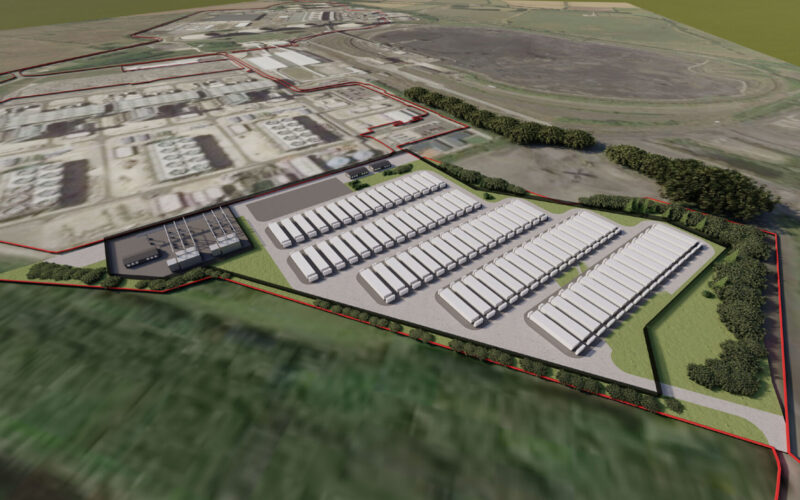
Fidra Energy has reached financial close on its 500MW/1.1GWh West Burton C battery energy storage project in Nottinghamshire after securing £231 million of loan facilities from an international banking consortium. The approximately £250 million development will be built at the former West Burton coal-fired power station and is expected to enter full operation in 2028. Drax Group plc (LSE:DRX) has signed a 10-year tolling agreement covering 250MW/500MWh, giving the listed power company dispatch control over half the project without requiring it to fund construction or assume maintenance and availability risk. West Burton C also holds a 15-year United Kingdom Capacity Market agreement beginning in October 2028, giving the project a combination of contracted and market-linked revenue. Drax shares traded around 772 pence on July 20, approximately 1.7% higher over one week and 1.3% higher over one month, within a 52-week range of roughly 614 pence to 938 pence.
Why does £231 million of debt make West Burton C more credible than most announced battery projects?
Financial close separates West Burton C from the large number of battery projects that have obtained land, planning permission or grid positions but have not yet secured enough capital to begin construction. Fidra Energy now has committed debt alongside equity support from EIG and the National Wealth Fund, giving it a funded pathway into the physical delivery phase.
The lending group consists of ABN AMRO, China Minsheng Banking Corporation’s London branch, Mizuho, MUFG Bank and Siemens Financial Services through Siemens Bank. The presence of several international institutions indicates that large British battery projects are becoming acceptable infrastructure-finance assets rather than depending entirely on specialist funds or developer equity.
The £231 million package includes a term loan and ancillary facilities. It should not automatically be interpreted as a simple project debt-to-cost ratio of more than 90% because ancillary lines may include letters of credit, reserve facilities, working capital and other commitments that are not drawn like conventional construction debt.
Nevertheless, the loan amount is substantial relative to the approximately £250 million total investment. Lenders will have examined construction contracts, battery warranties, grid access, revenue arrangements, degradation assumptions and operating risks before committing capital.
The financing does not eliminate execution risk. It changes the central question from whether West Burton C can raise money to whether Fidra Energy can build and commission the facility within the agreed cost, timetable and technical requirements.
How will the 500MW/1.1GWh West Burton battery participate in Britain’s electricity market?
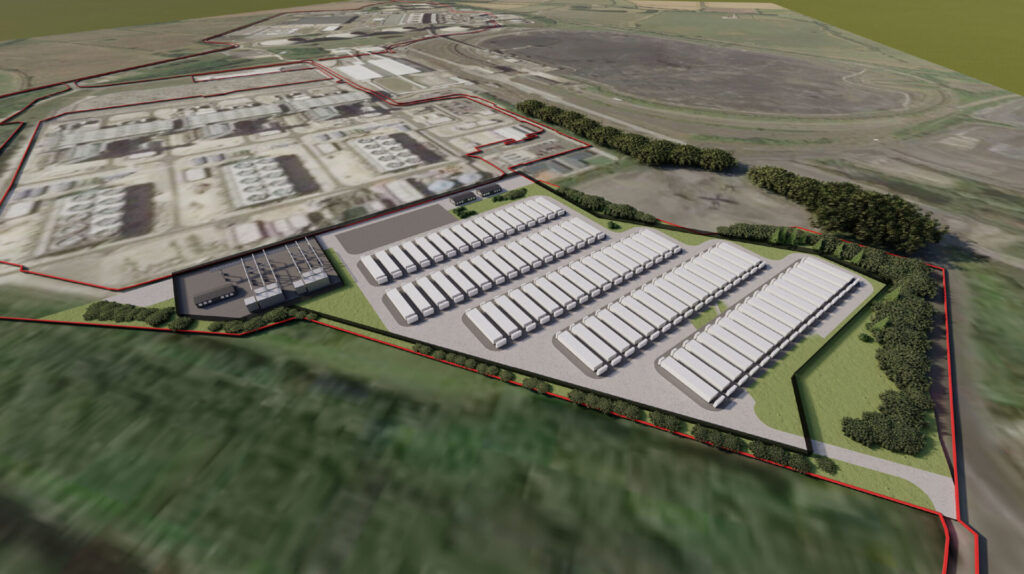
West Burton C will have 500MW of maximum power capacity and approximately 1.1GWh of energy storage. That gives the facility a duration of around 2.2 hours when discharging near its full rated output.
The battery can charge when electricity prices are lower or when renewable production exceeds immediate demand. It can then discharge during periods of tighter supply, higher prices or greater system stress.
This allows the project to participate in wholesale electricity trading while also providing frequency response, balancing services and other products required by the National Energy System Operator. Batteries can change their output rapidly, making them useful when demand, renewable production or conventional generation changes unexpectedly.
The 2.2-hour duration is well suited to short evening peaks and intraday price spreads. It is not designed to cover several days of weak wind or prolonged system shortages.
That distinction matters because battery announcements are sometimes described as if they create an independent source of electricity. West Burton C will store electricity generated elsewhere and return most of it later, after accounting for charging, conversion and system losses.
Its value will depend on how effectively Fidra Energy, Drax Group plc and any other optimisation counterparties identify profitable charging and discharge periods without using the asset so aggressively that degradation erodes long-term economics.
Why is Drax taking operational control of half the project without owning the underlying asset?
Drax Group plc’s agreement covers 250MW and 500MWh of West Burton C capacity for ten years from commercial operation. Fidra Energy will remain responsible for constructing, maintaining and making the contracted capacity available.
Drax Group plc will pay a fixed annual tolling fee indexed to United Kingdom consumer price inflation. In exchange, it will receive full operational control and dispatch rights over the contracted portion and retain the associated trading and optimisation revenue, excluding Capacity Market payments.
The structure is capital-light for Drax Group plc because the company can add battery capability to its FlexGen portfolio without funding the physical project. It avoids construction cost, equipment ownership and maintenance obligations while gaining an asset that can be used in wholesale, balancing and ancillary-service markets.
Fidra Energy gains predictable revenue that can support project financing. Lenders generally prefer contracted cash flow because it reduces dependence on volatile market income during the early years of operation.
The commercial balance is clear. Fidra Energy carries the construction and availability risk. Drax Group plc carries the risk that market revenue earned from dispatching the battery fails to exceed the inflation-linked tolling payments.
Drax previously said the expected returns were significantly above its weighted average cost of capital. That expectation will ultimately depend on price volatility, market competition, battery availability and the skill of its optimisation platform.
How does the Capacity Market contract reduce risk without guaranteeing the project’s economics?
West Burton C secured a 15-year Capacity Market agreement in March 2025, with the contract scheduled to begin in October 2028. Capacity Market payments reward assets for being available when the electricity system experiences periods of scarcity.
The contract creates a long-duration revenue stream that sits alongside tolling income and merchant electricity-market exposure. It therefore reduces dependence on any single source of earnings.
Capacity payments do not guarantee that the project will earn an acceptable return. They represent only one part of the revenue stack and are subject to availability obligations, testing requirements and penalties when contracted capacity is not delivered.
The battery must remain technically capable of responding when called. Equipment outages, grid restrictions or degradation could reduce availability and place contracted payments at risk.
The project’s Capacity Market agreement also begins after the targeted commercial operation period. Fidra Energy must coordinate construction and commissioning carefully so that the facility is ready before the October 2028 delivery year.
The combination of Capacity Market revenue and the Drax tolling agreement gives West Burton C a stronger contractual foundation than a fully merchant battery. The remaining capacity and revenue opportunities may still depend on wholesale spreads and increasingly competitive ancillary-service markets.
Why is the former West Burton coal station an attractive location for battery storage?
West Burton C will be built at a site with a long history of large-scale power generation. Former coal station locations can be attractive for battery projects because they may already have high-voltage grid connections, established energy infrastructure, transport access and land with an accepted industrial use.
West Burton C will connect at 400kV, a voltage appropriate for moving large quantities of electricity through Britain’s transmission system. H&MV Engineering will design and deliver the grid connection and electrical scheme while also erecting and commissioning the Sungrow battery systems.
Existing grid access is particularly valuable because transmission connections have become one of the biggest constraints on British energy development. Many projects face long delays before they can export electricity, even when land, planning and financing are available.
Reusing former generation sites also supports local economic transition. Communities that hosted coal infrastructure can retain an energy-sector role after conventional units close, although battery facilities employ far fewer permanent workers than large thermal power stations.
West Burton C is also adjacent to the location chosen for the United Kingdom’s first prototype fusion energy plant. The two projects are technically separate, but their proximity illustrates how former fossil-fuel sites can become clusters for new forms of power infrastructure.
The brownfield advantage does not remove construction risk. Fidra Energy must still address site conditions, electrical works, equipment foundations, drainage, environmental requirements and coordination with surrounding infrastructure.
What roles will Sungrow and H&MV Engineering play in delivering the project?
Sungrow Power Supply Co., Ltd. will supply the battery energy storage technology. Fidra Energy has previously selected Sungrow’s PowerTitan platform for its wider United Kingdom battery portfolio, including the much larger Thorpe Marsh development.
Battery supplier selection is one of the most important project decisions because cell quality, thermal management, power conversion, control systems, safety architecture and warranty protection influence performance over the full operating life.
The project will require the battery system to complete repeated charging cycles while maintaining contracted power and energy capacity. Natural degradation will reduce usable capacity over time, meaning warranties and future augmentation plans are central to the economics.
H&MV Engineering will act as the principal designer and contractor for the 400kV grid connection and electrical scheme. It will also handle the erection and commissioning of the Sungrow equipment.
This division gives Fidra Energy identifiable counterparties for the battery package and grid infrastructure. It also creates interfaces that must be managed carefully because a battery system cannot operate commercially if the cells, inverters, control software and network connection are not fully integrated.
The contractor structure may reduce coordination risk if responsibilities are defined clearly. It could increase dispute risk if delays occur at the boundary between equipment supply, civil construction and electrical commissioning.
How does West Burton C fit into Fidra Energy’s rapidly expanding United Kingdom battery pipeline?
West Burton C forms part of a Fidra Energy development pipeline exceeding 4GW. The company’s portfolio includes the 1.4GW/3.1GWh Thorpe Marsh project in South Yorkshire, the 1.2GW Bicker Fen development in Lincolnshire and the recently acquired Enderby project in Leicestershire.
Thorpe Marsh is already under construction and has secured approximately £750 million of financing. West Burton C represents the next major funded development within the platform.
Building several large projects can create procurement and operational advantages. Fidra Energy may be able to negotiate better equipment terms, standardise engineering, share technical personnel and develop a larger optimisation and maintenance organisation.
Portfolio scale can also attract institutional capital because investors gain exposure to several projects rather than relying on one site. EIG owns the Fidra Energy platform, while the National Wealth Fund has committed capital to support both Thorpe Marsh and West Burton C.
The risk is that Fidra Energy is expanding several projects simultaneously. Large batteries require equipment, contractors, grid engineers and commissioning specialists who are in demand across Britain and Europe.
A delay at one project may absorb management resources or change capital-allocation priorities elsewhere. Fidra Energy must prove that a multi-gigawatt pipeline can be converted into operating capacity rather than remaining a collection of impressive planning documents.
Why is the National Wealth Fund supporting battery projects alongside private lenders?
The National Wealth Fund is the United Kingdom government’s policy bank and has £27.8 billion available to support clean energy, growth and strategic infrastructure. Its investment in Fidra Energy is intended to attract additional private capital rather than replace commercial lenders.
Battery storage fits that mandate because the technology supports renewable integration, reduces curtailment and provides flexibility to the electricity system. Britain can build more wind and solar generation, but the value of those assets declines when production cannot be shifted or balanced efficiently.
Government-backed capital can help projects move ahead when commercial investors remain cautious about evolving revenue models, technology risks or the scale of early projects. Once assets establish operating and financing records, purely private funding may become easier to secure.
West Burton C demonstrates that crowding-in process. The National Wealth Fund and EIG provide platform and equity support, while a five-bank consortium supplies project debt.
Public participation still needs financial discipline. The National Wealth Fund is expected to generate a return for taxpayers as well as supporting government policy.
The project should therefore be assessed as infrastructure investment rather than a grant-led climate programme. Fidra Energy must deliver contracted availability, market revenue and long-term asset performance capable of supporting both public and private capital.
Could increasing competition reduce revenues across Britain’s battery storage market?
The United Kingdom government’s Clean Power 2030 Action Plan envisages between 22GW and 27GW of short-duration battery storage operating by 2030. This creates a significant construction opportunity but also implies much greater competition between batteries once the capacity becomes operational.
Early British battery projects earned attractive revenue from frequency-response markets when relatively few assets could provide those services. Additional capacity has already reduced prices in some ancillary markets as more batteries compete for a limited volume of demand.
Wholesale arbitrage revenue could also tighten. Batteries generally earn income by charging at lower prices and discharging at higher prices. If many systems follow similar price signals, they can raise prices during charging periods and lower them during discharge periods, reducing the spread available to every operator.
Demand growth, renewable expansion and coal retirements may create new volatility and flexibility requirements that partly offset this pressure. New markets and grid services could also provide additional revenue.
West Burton C’s contracted structure offers some protection. Capacity Market payments and the Drax tolling agreement reduce direct exposure to falling merchant revenue across part of the project.
The risk is not removed but redistributed. Drax Group plc takes optimisation risk on its contracted portion, while Fidra Energy remains exposed through asset availability and any uncontracted capacity.
How should investors interpret Drax shares as the company expands its FlexGen strategy?
Drax shares traded around 772 pence on July 20, leaving the stock approximately 18% below the upper end of its 52-week range but comfortably above its annual low. The shares were roughly 1.7% higher over one week and 1.3% higher over one month.
The West Burton C agreement is unlikely to transform Drax Group plc’s earnings by itself. The company has a wider portfolio spanning biomass generation, hydroelectricity, pumped storage, electricity supply and energy optimisation.
The agreement is strategically relevant because it shows how Drax Group plc can expand flexible capacity without purchasing every physical battery. Tolling arrangements can complement the company’s owned battery developments and its Flexitricity optimisation platform.
The approach may produce attractive returns if Drax Group plc can use market knowledge and rapid dispatch to capture more revenue than it pays through annual tolling fees. It also limits the capital required compared with direct ownership.
The main investor risk is forecasting that revenue. Battery optimisation depends on wholesale volatility, balancing-market rules, competition and the company’s trading performance.
Drax Group plc will receive no automatic profit simply because it controls dispatch. Its earnings will depend on using that control intelligently across thousands of charging and discharge decisions.
What construction and operating risks remain before West Burton C reaches full operation?
Construction is expected to begin later in 2026, with full operations targeted for 2028. The timetable depends on equipment delivery, site works, the 400kV connection, testing and compliance with grid requirements.
Transformer and high-voltage equipment lead times remain an industry constraint. A delay affecting one major electrical component could prevent the completed battery blocks from exporting power.
Battery safety will remain a major focus. Utility-scale systems require thermal monitoring, fire detection, separation, ventilation and emergency-response planning. The use of established technology and contractors reduces some uncertainty but does not remove operational risk.
Cybersecurity is also important because dispatch, monitoring and revenue optimisation depend on digital control systems. A cyber incident could interrupt operations or restrict communication between the battery, optimiser and grid.
Degradation creates a financial risk over the 15-year Capacity Market period and the 10-year Drax agreement. Fidra Energy may need to add cells or replace equipment to maintain contracted performance.
The final risk is schedule alignment. Commercial operation, the tolling agreement and the Capacity Market delivery year must fit together. A late project could delay tolling income and expose Fidra Energy to contractual or Capacity Market consequences.
What are the key takeaways from Fidra Energy’s West Burton C financial close?
- Fidra Energy has reached confirmed financial close on the 500MW/1.1GWh West Burton C battery project rather than announcing preliminary financing discussions.
- The project represents approximately £250 million of United Kingdom infrastructure investment and is scheduled to begin construction during 2026.
- A consortium of ABN AMRO, China Minsheng Banking Corporation, Mizuho, MUFG Bank and Siemens Bank has committed £231 million of loan facilities.
- EIG and the National Wealth Fund are providing capital alongside the international banking consortium.
- Drax Group plc has secured operational and dispatch control over 250MW/500MWh through a 10-year inflation-linked tolling agreement.
- Fidra Energy remains responsible for construction, maintenance and availability, allowing Drax Group plc to add battery capacity without upfront construction capital.
- West Burton C has a 15-year Capacity Market agreement beginning in October 2028, strengthening its contracted revenue foundation.
- Sungrow will supply the battery systems, while H&MV Engineering will deliver the 400kV connection, electrical scheme and equipment commissioning.
- The former West Burton coal station provides a brownfield location with established transmission infrastructure and a history of major power generation.
- The central commercial test is whether contracted revenue, battery optimisation and grid services remain sufficient as Britain moves toward 22GW to 27GW of short-duration storage by 2030.
Share this:
Discover more from Business-News-Today.com
Subscribe to get the latest posts sent to your email.