





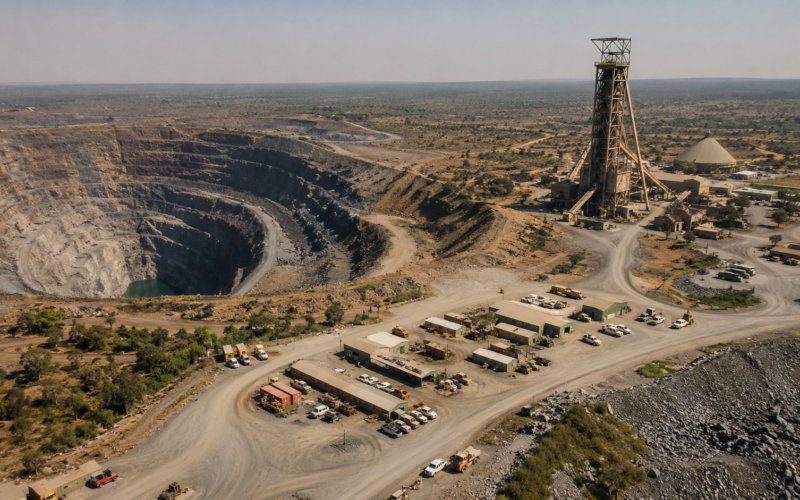
De Beers Group, the world’s largest diamond producer by value, said on Monday it will pause production at its Venetia mine in the Limpopo province of South Africa for two years to reduce costs and rephase capital expenditure on the mine’s underground project. The move affects South Africa’s largest diamond mine by value and volume, which accounts for more than 40 percent of the country’s annual diamond output and employs about 4,400 staff, putting a significant workforce under formal engagement processes with unions, the South African government and community stakeholders. The decision is part of a broader portfolio and organisational overhaul under Chief Executive Al Cook, and comes as the parent company, Anglo American plc (LSE: AAL, JSE: AGL, OTCQX: NGLOY), continues its process to divest its 85 percent stake in De Beers, with the remaining 15 percent held by the Government of Botswana. The central tension for investors is between preserving cash and long-term optionality inside a distressed diamond cycle, and the operational, political and reputational costs of idling a nationally significant asset just as Anglo American attempts to complete one of the mining industry’s most complex divestitures.
What exactly is De Beers pausing at Venetia and how does the decision fit into the group’s Origins strategy?
De Beers said the intended pause at Venetia will run for two years, during which the group plans to reduce cash operating costs at the mine, rephase capital expenditure on the Venetia underground project, and continue critical infrastructure investment intended to support future production growth once market conditions improve. In other words, this is a production pause with retained optionality, not a mine closure. The company said it will engage with stakeholders in line with legal requirements, support impacted employees, and continue to invest in its community and social and labour plan commitments.
The Venetia decision is the latest measure under the group’s Origins strategy, which De Beers introduced in 2024 to concentrate on the parts of its business that create the most value. Under that strategy, De Beers has removed more than US$100 million of annual overhead costs since 2024, sold or closed several non-core assets and restructured capital expenditure. The Venetia action follows an earlier decision to pause the Tuzo Phase 3 expansion project at the Gahcho Kué mine in Canada. De Beers said production levels at its other operations will be maintained and previous production guidance is unchanged, meaning the group intends to remodel supply from the wider portfolio to cover any shortfall in international rough diamond volumes arising from the Venetia pause.
Why is Venetia significant for South Africa’s diamond industry and what are the near-term stakeholder implications?
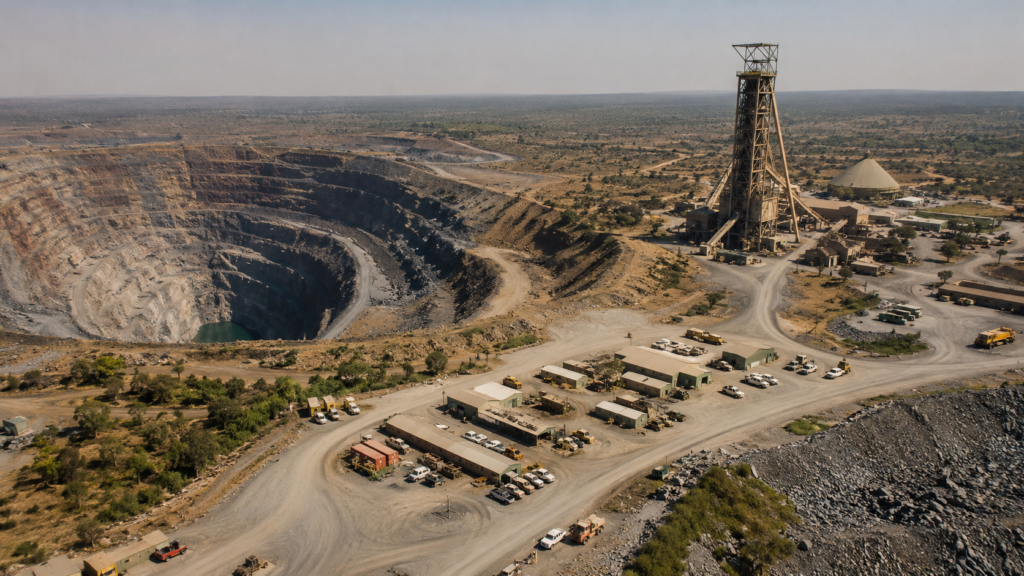
Venetia has been operated by the De Beers group for more than thirty years. Located near South Africa’s borders with Botswana and Zimbabwe, it is the country’s largest diamond producer by both volume and value. The mine has been transitioning from open-pit to underground operations, with the underground project intended to extend Venetia’s life well into the 2040s. In the March 2026 quarter, Venetia’s production increased by 53 percent to 0.7 million carats, largely because of higher volumes of underground ore being processed, so the pause is not being driven by an operational failure at the mine itself.
The workforce and community consequences are substantial. Roughly 4,400 direct employees are affected, before considering the wider contractor base, downstream cutting and polishing activity and municipal economies in the surrounding Limpopo region. Formal engagement with the South African government, organised labour and community structures is likely to shape the sequencing and scope of the pause, and De Beers has already indicated it will honour its social and labour plan commitments. For investors, the practical read is that the announced timeline should be treated as management’s intention rather than a certain path; sequencing, workforce measures and any care and maintenance arrangements will emerge from the consultations rather than from a unilateral decision.
How weak has the rough diamond market become and what is driving the cyclical pressure on De Beers?
De Beers described current rough diamond trading conditions as challenging and expected them to remain so in the near term, citing cyclical and industry-specific factors. Anglo American’s first-quarter production report described conditions as being weighed down by industry, geopolitical and tariff headwinds, and disclosed that the consolidated average realised rough diamond price for the March quarter fell approximately 19 percent to US$101 per carat, driven by a 17 percent decrease in the average rough price index and a sales mix with a higher proportion of lower-value goods.
The pressures are structural as well as cyclical. Demand from China has been softer for an extended period, luxury discretionary spending has been uneven in several major markets, and laboratory-grown stones have continued to take share in the engagement and fashion jewellery segments in the United States and other Western markets. Global rough diamond production is now decreasing, with several producers closing mines during 2026, which is consistent with De Beers’s argument that increasing rarity should eventually support long-term value for natural diamonds. Consumer signals have begun to improve at the higher end of the market. De Beers pointed to a return to growth in global consumer demand for natural diamond jewellery in 2025, increased natural diamond sales at United States independent jewellers in 2025 and into the first quarter of 2026, and traction from its Desert Diamonds marketing campaign, particularly on higher-value stones. Those data points support the strategic logic of prioritising higher-value output while trimming volume, although they do not yet translate into a rough price recovery.
How does the Venetia pause affect Anglo American’s divestment process for De Beers?
The Venetia announcement lands directly in the middle of Anglo American’s dual-track process to exit De Beers, which was publicly initiated in May 2024 as part of the wider restructuring that followed BHP Group’s unsuccessful takeover approach. Anglo American Chief Executive Duncan Wanblad has repeatedly said the group is committed to divesting De Beers and would provide an update through the course of 2026. Reported interested parties over the past year have included the Government of Botswana, which already holds 15 percent of De Beers and a 50-50 stake in the Debswana joint venture, as well as private consortia, including one associated with former De Beers Chief Executive Gareth Penny reportedly backed by Qatari investment vehicles. Anglo American has also prepared a public listing as a backup route, having held preparatory discussions with banks about a potential initial public offering.
The pause at Venetia can be interpreted in two ways for the sale process. On one hand, it reduces near-term cash burn at a large fixed-cost asset, protects Venetia’s long-term reserves from being processed into a weak price environment, and demonstrates management discipline at a moment when the group is being valuation-tested. On the other hand, a two-year suspension at the group’s flagship South African mine introduces political sensitivity, labour engagement obligations and a period of lower reported production, all of which bidders and IPO investors will need to price. Anglo American has already recognised material impairments against De Beers, including a US$2.9 billion writedown in 2024 and a further US$2.3 billion impairment in 2025, and analysts have widely flagged the risk of a further writedown in the current cycle. The Venetia decision does not automatically imply another impairment, but it does mean that the assumptions underpinning any updated carrying value will need to be revisited when Anglo American reports its first-half 2026 results, scheduled for 30 July 2026.
What are the second-order implications for South Africa, Botswana and the wider diamond supply chain?
The Venetia pause is not simply a De Beers issue; it has consequences for the countries and counterparties that depend on the group. Within South Africa, a two-year interruption at Venetia would reduce national diamond production, mining sector export earnings and formal employment in Limpopo. The State Diamond Trader and the country’s downstream cutting and polishing beneficiation activities could see a reduction in domestic feedstock, although the exact scale will depend on how De Beers reallocates supply from other operations.
For Botswana, the strategic implications are subtler but potentially favourable in the medium term. Botswana already accounts for the largest share of De Beers’s group production through Debswana, and the Government of Botswana has been publicly interested in a larger economic stake in De Beers as part of the Anglo American exit. If Venetia’s reduced output tilts the group’s production mix even more toward Botswanan operations for the duration of the pause, it strengthens Botswana’s negotiating position, although Debmarine Namibia and Canadian operations will also carry more weight in any remodelled supply plan.
Across the value chain, midstream cutters and polishers in India and elsewhere have been operating under tight liquidity conditions for an extended period. A production pause at a major supplier can support prices at the margin, but if paired with continued weak end demand it can also compress sightholder confidence rather than restore it. The competitive dynamic with laboratory-grown diamonds also plays into this: constrained natural supply may reinforce the scarcity narrative De Beers has been building around Desert Diamonds and category marketing, but it does not by itself address the demand-side pressure from synthetic stones and softer luxury spending in several key markets.
What are the analytical tests for investors following the announcement?
For Anglo American shareholders and for prospective De Beers bidders, several proof points will determine whether the Venetia pause supports or complicates the investment thesis. The first is whether Anglo American’s first-half 2026 results on 30 July 2026 confirm the strategic rationale in cash and impairment terms, and whether they narrow the range of outcomes for the carrying value of De Beers. The second is the confirmed cost saving from the pause net of care and maintenance, retention and social plan expenditure, and the extent to which capital expenditure on the underground project is deferred rather than cancelled. The third is the pace and structure of engagement with the South African government and organised labour, since a smooth process reduces execution risk while a contested process could extend timelines and increase costs. The fourth is any update on the divestment process itself, including whether Anglo American converges on a strategic buyer, a Botswana-led consortium or an initial public offering.
Beyond De Beers, the announcement is a data point for the wider natural diamond complex. If other major producers respond with similar volume discipline, the industry may finally align supply more closely with prevailing demand, which would help stabilise rough prices. If they do not, De Beers will have absorbed a significant strategic cost without a proportionate market benefit.
Key takeaways from De Beers’s decision to pause Venetia mine production for two years
- De Beers Group will pause production at its Venetia diamond mine in Limpopo, South Africa for two years to reduce cash costs and rephase capital expenditure on the underground project.
- Venetia is South Africa’s largest diamond mine by both volume and value, accounts for more than 40 percent of national production and employs about 4,400 staff.
- The pause is described as a suspension with retained optionality, not a permanent closure, with critical infrastructure investment continuing during the period.
- The decision is part of the group’s Origins strategy, under which De Beers has already removed more than US$100 million of annual overheads since 2024.
- De Beers said it will remodel production from the wider portfolio to cover international supply shortfalls and left previous group production guidance unchanged.
- The move follows an earlier pause of the Tuzo Phase 3 expansion project at the Gahcho Kué mine in Canada.
- De Beers is majority-owned by Anglo American plc, which holds an 85 percent stake, with the Government of Botswana holding the remaining 15 percent.
- Anglo American is running a dual-track divestment of De Beers involving potential strategic buyers and a possible initial public offering, with an update expected during 2026.
- Anglo American has already recognised US$2.9 billion of impairment against De Beers in 2024 and a further US$2.3 billion in 2025, and the Venetia decision will feed into carrying-value assumptions at the 30 July 2026 half-year results.
- Rough diamond prices remained under pressure in early 2026, with the consolidated average realised price falling roughly 19 percent to US$101 per carat in the March quarter.
- Investors should watch stakeholder engagement in South Africa, the confirmed net cash saving from the pause, and any concrete progress on the divestment process as the primary near-term proof points.
Share this:
Discover more from Business-News-Today.com
Subscribe to get the latest posts sent to your email.

