



Ukraine has established a specialised military command to coordinate long-range attacks against targets inside Russia, marking the formal institutionalisation of a drone and missile campaign that has increasingly focused on Moscow’s energy revenues, fuel supplies and logistics networks.
President of Ukraine Volodymyr Zelenskyy announced on July 10, 2026, that he had signed a decree establishing the command within the Armed Forces of Ukraine. Volodymyr Zelenskyy said the organisation would concentrate the available resources assigned to long-range operations on further reducing Russia’s ability to continue the war.
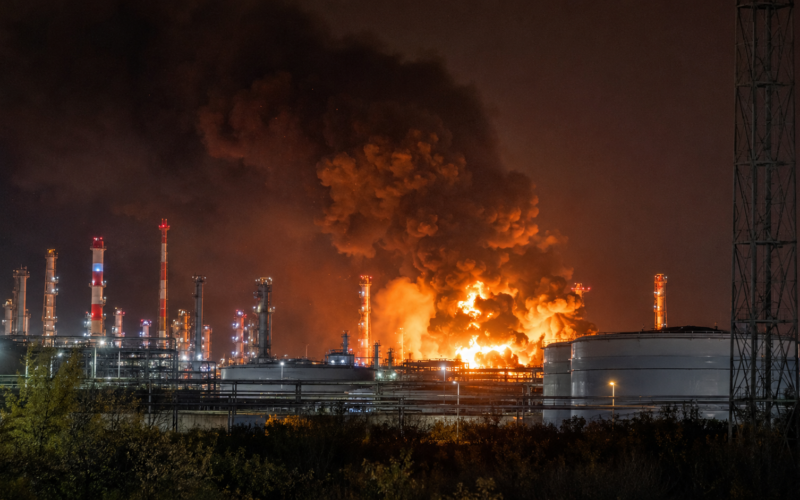
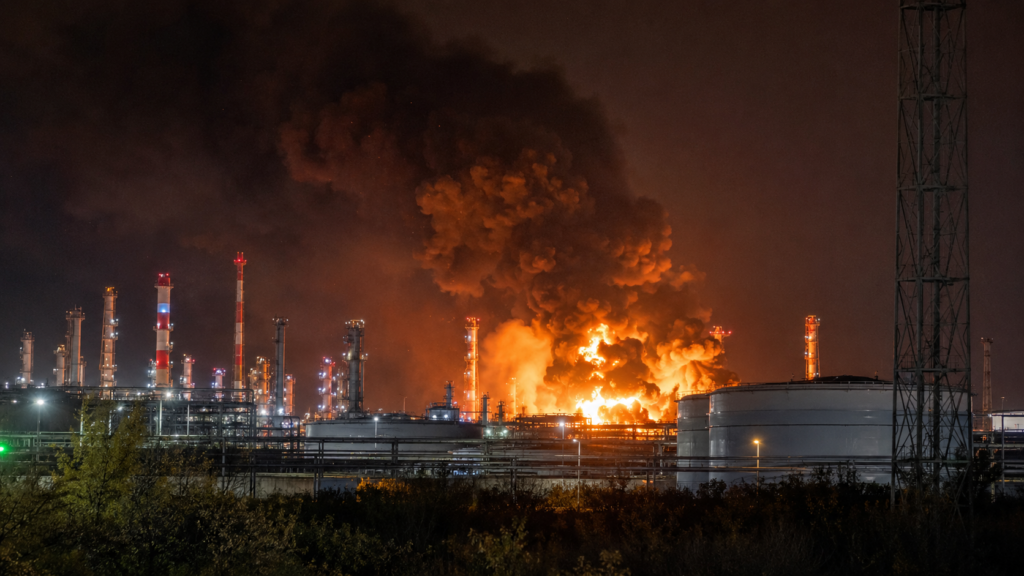
The announcement followed another series of Ukrainian attacks on Russian oil infrastructure, including the Ilsky oil refinery in the Krasnodar region, the Ust-Luga refining and export complex in the Leningrad region, and petroleum facilities in the Rostov region. Ukraine also reported attacks on tankers and other fuel vessels in the Sea of Azov.
The expanding campaign is beginning to affect areas extending beyond the battlefield. Russia has restricted fuel exports, increased imports, drawn on inventories and temporarily halted shipping through a strategic route connecting the Don River, the Sea of Azov and the Black Sea. The disruption has raised concerns about Russian wheat exports, regional shipping and international fuel markets.
Why has Ukraine created a dedicated long-range impact command at this stage of the war?
The new command represents an attempt to bring Ukraine’s different long-range capabilities under a more concentrated military structure. Ukrainian forces have used domestically produced drones, naval drones and other systems to attack refineries, depots, ports, airfields, logistics facilities and industrial sites located far from the front line.
Until now, many of these operations have been associated with different military and security formations. Creating a dedicated command could improve target selection, intelligence coordination, weapon allocation, production planning and assessments of damage after each attack.
Volodymyr Zelenskyy said the commander selected to lead the organisation would be experienced, although the Ukrainian presidency had not publicly identified the officer when the command was announced. The structure, personnel strength, budget and operational relationship with existing drone and intelligence units were also not immediately disclosed.
The timing indicates that Ukraine intends to treat deep strikes as a continuing part of its military doctrine rather than as occasional operations tied to individual battlefield developments. Kyiv increasingly describes attacks on Russian energy and logistics infrastructure as a method of reducing the resources available to finance and sustain the invasion.
The decision also reflects Ukraine’s need to compensate for disadvantages elsewhere. Russian forces retain larger stocks of missiles, aircraft and artillery, while Ukraine continues to seek additional air-defence systems and interceptor missiles from its partners. Long-range attacks offer Ukraine a way to impose costs on Russia without depending entirely on advances along heavily fortified front lines.
Which Russian energy and maritime targets were struck around July 10, 2026?
The Armed Forces of Ukraine reported that the Ilsky oil refinery in Russia’s Krasnodar region was struck on July 10. The facility is an important refinery in southern Russia and has previously been targeted during Ukraine’s campaign against petroleum infrastructure.
Ukraine also reported an attack on the Ust-Luga complex in the Leningrad region. Ust-Luga is one of Russia’s most important Baltic energy and export hubs, handling crude oil, refined products and other commodities. Repeated disruption at the site could complicate both domestic refinery operations and seaborne exports.
Additional explosions and fires were reported at an oil terminal and an oil depot in the Rostov region. Rostov is strategically significant because of its proximity to occupied Ukrainian territory and its role in supporting Russian military supply routes.
Ukraine separately said its forces attacked 13 vessels in the Sea of Azov on July 10, including 10 tankers. Ukrainian military officials claimed that almost 50 fuel vessels had been damaged during a five-day period.
The complete level of damage to the vessels and industrial sites could not immediately be independently established. Russia has frequently reported intercepting Ukrainian drones while providing limited information about damage to strategically sensitive facilities.
The geographical spread of the reported attacks is nevertheless significant. The targets extend from the Baltic region to southern Russia and the Sea of Azov, forcing Russian authorities to defend a broad network of refineries, depots, pipelines, ports and shipping routes.
How are Ukrainian drone attacks affecting Russia’s domestic fuel supply and oil production?
Ukraine’s refinery campaign has developed into an economic and domestic supply problem for Moscow. Several major refineries have temporarily stopped or reduced operations following attacks, including facilities that are important producers of gasoline and other transport fuels.
Russian gasoline production has fallen to a level equivalent to roughly 65% of seasonal domestic consumption. The estimated daily deficit has widened to between 40,000 and 45,000 metric tons during the summer period, when travel and agricultural activity increase demand.
Fuel shortages have contributed to queues at filling stations in several Russian regions. Authorities have introduced measures to manage supplies and maintain order at some locations as motorists respond to concerns by purchasing larger quantities of fuel.
Russia has banned or restricted exports of diesel, gasoline and jet fuel in an effort to retain more production for the domestic market. Moscow has also increased fuel imports, including deliveries from Belarus, while drawing on stored inventories.
The restrictions matter internationally because Russia has historically been a major exporter of diesel and other refined products. Removing Russian supplies from international markets can increase competition among importers and place upward pressure on refining margins and wholesale fuel prices.
The International Energy Agency has also lowered its projections for Russian oil production. The agency expects Russian output to average approximately 8.9 million barrels per day in 2026 and 8.8 million barrels per day in 2027, compared with about 9.2 million barrels per day in 2025.
The International Energy Agency reduced its previous forecasts by 85,000 barrels per day for 2026 and 150,000 barrels per day for 2027, citing continued attacks on refineries, storage facilities and transport infrastructure.
Lower refinery activity does not automatically mean an identical decline in crude exports. When refineries cannot process oil, producers may redirect more crude to export terminals. Russian crude shipments increased in June even as exports of refined petroleum products declined.
Why does the Don-Azov shipping halt create wider risks for Black Sea grain trade?
Russia temporarily stopped shipping through the Don-Azov Channel following the attacks on vessels in the Sea of Azov. The channel connects the Don River with the Sea of Azov and provides access to the Black Sea through the Kerch Strait.
Shipping companies were informed that passage requests through the Kerch Strait would not be accepted from the evening of July 10. No immediate timetable was provided for the restoration of normal traffic.
The closure is important because the Rostov and Krasnodar regions are among Russia’s leading grain-producing areas. A substantial volume of agricultural commodities is transported through ports and waterways connected to the Sea of Azov.
Industry estimates indicate that routes through the Sea of Azov handle as much as one-quarter of Russia’s wheat exports. Russia is one of the world’s largest wheat suppliers, making prolonged disruption potentially significant for importing countries.
European wheat prices rose sharply as traders assessed the possibility of interruptions. The movement reflected market sensitivity rather than confirmation of a lasting supply loss, since the effect will depend on how long the restrictions remain in place and whether cargoes can be redirected.
The incident demonstrates how attacks initially directed at Russia’s fuel and wartime logistics systems can create consequences for unrelated commodity markets. Tanker traffic, grain shipments and commercial navigation often depend on the same ports, channels and maritime security arrangements.
The Black Sea has remained a critical agricultural export corridor throughout the war. Both Ukraine and Russia are major grain producers, and any sustained disruption can affect shipping costs, insurance availability, delivery schedules and food-import expenses in parts of the Middle East, Africa and Asia.
What does the new command reveal about Ukraine’s changing military strategy against Russia?
The creation of a long-range impact command reflects Ukraine’s transition from isolated deep-strike operations toward a systematic campaign against Russia’s war-supporting economy.
Ukraine initially relied heavily on foreign-supplied weapons after Russia launched its full-scale invasion on February 24, 2022. Restrictions imposed by some partners limited how certain Western weapons could be used against targets inside internationally recognised Russian territory.
Kyiv responded by expanding domestic production of long-range drones and other systems that could be deployed without requiring operational approval from foreign governments. Improvements in range, navigation, targeting and mass production have allowed Ukrainian forces to attack facilities located hundreds or even thousands of kilometres from Ukrainian-controlled territory.
The strategy seeks to force Russia to distribute air-defence systems across a much wider area. Systems used to protect refineries, ports and industrial centres inside Russia cannot simultaneously be positioned near the front line or around military installations elsewhere.
Long-range strikes may also increase the economic cost of the war by damaging facilities that generate tax revenue, produce military fuel or support exports. Repair work, interrupted production, emergency imports and additional security requirements all create expenses for the Russian state and private operators.
However, the creation of a command does not confirm that every operation will succeed or that Ukraine possesses unlimited weapons. Russia can adapt by strengthening air defences, dispersing equipment, constructing protective structures and changing transport routes.
Could economic pressure from long-range strikes push Russia toward negotiations?
Volodymyr Zelenskyy has presented the long-range campaign as part of an effort to persuade Russia that continuing the war will become increasingly costly. Ukraine’s position is that pressure on Russian military capacity and revenue must accompany diplomatic efforts.
Russian President Vladimir Putin has not accepted Ukraine’s demand for a peace settlement based on the restoration of Ukrainian sovereignty and security guarantees. Moscow continues to pursue military objectives while insisting that any agreement must reflect territorial and political conditions rejected by Kyiv.
Attacks on refineries and ports could create pressure within Russia if fuel shortages persist, industrial activity is disrupted or export revenues decline. Public concern over filling-station queues may be politically uncomfortable because it brings the economic effects of the war closer to Russian households.
Economic damage does not necessarily produce diplomatic compromise. Russian leaders may portray the attacks as justification for continued mobilisation, retaliation or tighter domestic controls. Damage to Russian infrastructure could therefore increase pressure for negotiations or reinforce support for further military action.
The effect will depend on the scale and durability of the disruption. Temporary refinery stoppages that are rapidly repaired will have a different political impact from sustained reductions in fuel availability, export earnings and industrial production.
The new command should therefore be viewed as a mechanism for increasing Ukraine’s leverage rather than as evidence that a diplomatic breakthrough is imminent.
What operational limits could prevent the command from changing the wider war?
Ukraine’s long-range campaign is expanding, but the country remains exposed to Russian missile and drone attacks. Ukrainian cities, power facilities and civilian infrastructure continue to face repeated bombardment, while supplies of air-defence interceptors remain limited.
Russia possesses a much larger industrial base and can repair damaged facilities, reroute supplies and import equipment. Some refineries have returned to service after earlier attacks, although repeated strikes can extend shutdowns and increase maintenance costs.
Ukraine must also maintain a reliable flow of drones, engines, guidance components, explosives and intelligence. A dedicated command may improve coordination, but it cannot eliminate production bottlenecks or guarantee that weapons will penetrate Russian air defences.
There are additional risks surrounding commercial shipping. Attacks involving tankers and maritime routes can disrupt Russian logistics, but they can also raise insurance costs and create navigation concerns affecting neutral commercial operators.
The campaign’s wider impact will ultimately depend on whether Ukraine can sustain the frequency of attacks, repeatedly hit repaired facilities and prioritise targets that directly support Russia’s military operations.
Creating the command is therefore an important organisational step. Its strategic importance will be determined by the results produced over the coming months, particularly changes in Russian fuel availability, refinery utilisation, export capacity and military logistics.
What are the key takeaways from Ukraine’s new long-range strike command and Russia’s fuel crisis?
- President of Ukraine Volodymyr Zelenskyy signed a decree on July 10, 2026, creating a specialised command within the Armed Forces of Ukraine to coordinate long-range operations intended to reduce Russia’s capacity to continue the war.
- The command formalises a campaign that has increasingly targeted Russian refineries, fuel depots, ports, logistics facilities, vessels and industrial infrastructure located far beyond the immediate Russia-Ukraine front line.
- Ukraine reported strikes on the Ilsky oil refinery, the Ust-Luga refining and export complex, petroleum facilities in the Rostov region and multiple vessels operating in the Sea of Azov.
- Russian gasoline production has fallen to a level equivalent to approximately 65% of seasonal domestic demand, contributing to regional fuel shortages, filling-station queues, export restrictions, emergency imports and greater use of existing inventories.
- The International Energy Agency lowered its Russian oil-production projections for both 2026 and 2027, citing continued Ukrainian attacks on refineries, storage facilities and transport infrastructure.
- Russia temporarily halted traffic through the Don-Azov Channel and stopped accepting passage requests through the Kerch Strait, creating potential risks for a route used to transport a significant share of Russian wheat exports.
- Ukraine’s dedicated command may improve coordination and concentrate resources, but its impact will depend on weapon production, intelligence, target selection, Russian defensive adaptations and Kyiv’s ability to sustain operations over an extended period.
Share this:
Discover more from Business-News-Today.com
Subscribe to get the latest posts sent to your email.