





The United States launched a new round of strikes against Iran on July 7, 2026, after accusing Iranian forces of attacking three commercial vessels transiting the Strait of Hormuz, sharply escalating a fragile ceasefire that had only partially reopened one of the world’s most important energy corridors.
United States Central Command (CENTCOM) said the operation struck more than 80 Iranian targets, including air-defence systems, command and control networks, coastal radar sites, anti-ship missile capabilities and more than 60 Islamic Revolutionary Guard Corps small boats in and near the Strait of Hormuz.
Washington said the strikes were intended to impose heavy costs for attacks on commercial shipping. Iran’s top joint military command condemned the United States action as a blatant act of aggression and warned that Iranian forces would deliver a crushing response.
The strikes came after Qatar accused Iran of responsibility for a drone attack on the Qatari liquefied natural gas carrier Al Rekayyat and after other tankers reported damage near the Strait of Hormuz. The United States also revoked a licence that had allowed Iran to sell oil under the interim ceasefire framework, adding a sanctions shock to the military escalation.
Why did the United States launch new strikes against Iran after the Strait of Hormuz tanker attacks?
The United States framed the July 7 strikes as a response to attacks on three commercial vessels in the Strait of Hormuz. United States Central Command said Iranian action against shipping violated the ceasefire and threatened international commerce moving through a waterway central to oil and liquefied natural gas exports.
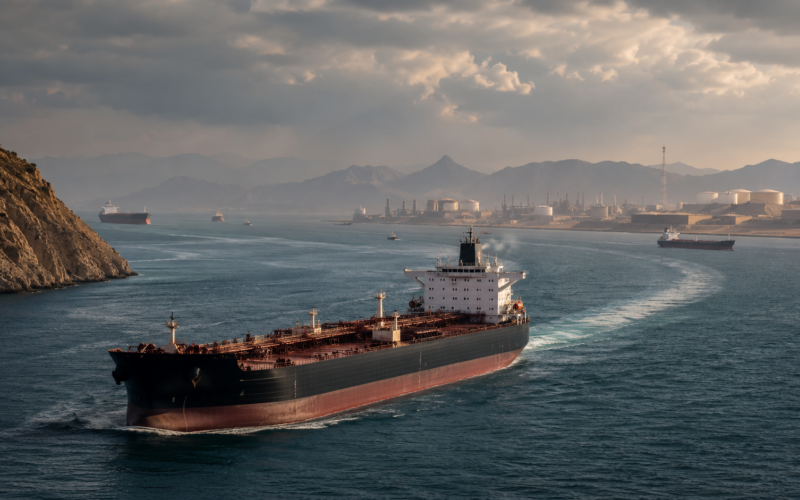
The immediate trigger was the reported damage to commercial tankers in and around the strait. Qatar said the Al Rekayyat, a liquefied natural gas carrier, was struck by a drone and suffered an engine-room fire. A Saudi-flagged crude oil tanker was also reported damaged off Oman, while another tanker reported minor damage after being struck during transit.
The United States has not treated the tanker attacks as isolated maritime incidents. Washington’s response indicates that it views attacks on shipping as part of Iran’s broader attempt to assert control over Strait of Hormuz traffic and pressure the United States during negotiations over a permanent settlement.
United States Central Command said its targets were selected to degrade Iran’s ability to continue attacking international commerce. That language places the operation within the maritime-security dispute rather than a wider attempt to overthrow the Iranian government or conduct a general air campaign across the country.
The timing is crucial. The interim ceasefire had reduced open fighting after earlier United States and Israeli strikes on Iran and Iranian strikes on Israel and Gulf states hosting United States forces. The July 7 action suggests Washington believes Iran has already breached the truce by using force against commercial shipping.
What targets did United States Central Command say were hit in Iran and near the strait?
United States Central Command said the strikes hit more than 80 targets connected with Iran’s ability to threaten shipping and control the Strait of Hormuz. The target list included air-defence systems, command and control networks, coastal radar sites, anti-ship missile capabilities and more than 60 Islamic Revolutionary Guard Corps small boats.
Those categories show the military logic of the operation. Air-defence systems can threaten aircraft conducting surveillance or strikes. Command networks coordinate military responses. Coastal radar can track vessels and identify targets. Anti-ship missile systems can threaten tankers and naval vessels. Small boats operated by the Islamic Revolutionary Guard Corps can swarm commercial or military ships in narrow waters.
The inclusion of more than 60 boats is especially significant because Iran has long relied on fast attack craft and small-boat tactics in the Gulf. Such vessels can be dispersed, hidden, moved quickly and used to harass or threaten larger ships. Destroying or disabling them would be intended to reduce Iran’s ability to interfere with tankers at close range.
Iranian media said six projectiles hit the area of Taheroui pier in Sirik in southern Iran. Sirik is located near the Strait of Hormuz and is strategically relevant because of its proximity to maritime routes and coastal military infrastructure.
United States officials did not immediately provide a full battle damage assessment. That means the operational impact remains uncertain. Destroying equipment is different from permanently reducing Iran’s capability, particularly if Iran can relocate systems, repair radar coverage or use alternative launch sites.
How did Iran respond to the United States strikes and what does the warning mean?
Iran’s top joint military command said Iranian armed forces would deliver a crushing response. Tehran accused Washington of violating the interim agreement and said Iran would not allow United States interference in the management of the Strait of Hormuz.
The language indicates that Iran sees the strait not only as an international shipping route but also as a strategic arena where it claims a direct regulatory and security role. The United States rejects any arrangement that allows Iran to use unilateral force against commercial vessels or impose unsafe controls over navigation.
Iran’s response also suggests that Tehran may treat the United States strikes as more than retaliation for tanker attacks. Iranian officials are likely to argue that Washington has used the shipping incidents as a pretext to weaken Iran’s coastal defences and Revolutionary Guard assets near the waterway.
The phrase “crushing response” creates escalation risk because it leaves Iran politically committed to some form of answer. That response could involve missile or drone attacks, further maritime disruption, strikes on United States-linked facilities, cyber operations or pressure through allied armed groups in the region.
At the same time, Iran must calculate the cost of a larger military exchange. The United States has now demonstrated willingness to conduct direct strikes inside Iran after accusing Tehran of violating the ceasefire. Further Iranian action could invite another wave of attacks and deepen economic pressure.
The immediate danger is miscalculation. If Iran retaliates against a United States military asset or another commercial vessel, Washington may escalate again. If the United States continues striking Iranian sites, Tehran may abandon the ceasefire framework entirely.
Why does the Strait of Hormuz remain the centre of the United States-Iran crisis?
The Strait of Hormuz is the narrow maritime passage connecting the Persian Gulf with the Gulf of Oman and the Arabian Sea. It is vital to exports from Qatar, Kuwait, Bahrain, Iraq, the United Arab Emirates, Saudi Arabia and Iran.
The strategic importance of the waterway gives Iran leverage because Iranian territory sits along the northern side of the strait. Iranian missiles, drones, coastal radar and naval forces can affect ships moving through the route. The United States and its partners argue that the waterway must remain open to international shipping without coercion or unilateral control.
The tanker attacks show why the strait is so vulnerable. Commercial vessels are large, slow and difficult to defend in narrow waters. Even limited damage can trigger insurance increases, rerouting, port delays, crew concerns and market volatility.
Qatar is particularly exposed because its liquefied natural gas exports rely heavily on passage through the strait. The attack on the Al Rekayyat therefore had consequences beyond the single vessel. It raised concerns among gas buyers, insurers and governments dependent on Qatari shipments.
The United States strikes were meant to reduce Iran’s ability to attack shipping, but military action alone cannot create stable navigation rules. A durable settlement would require agreed procedures for transit, inspections, emergency communications and the role of foreign naval forces.
Without such a settlement, the strait remains vulnerable to repeated cycles of attack and retaliation. Each new incident can raise energy prices, weaken confidence in the ceasefire and draw more military assets into the Gulf.
How does Washington’s oil sanctions move raise economic pressure on Iran?
The United States revoked a licence that had allowed Iran to sell oil under the interim ceasefire arrangement. That decision turns the July 7 escalation into both a military and economic confrontation.
Oil revenue is central to Iran’s fiscal position, foreign-exchange access and ability to stabilise domestic markets. Restrictions on oil sales can reduce government income, complicate payment channels and increase pressure on companies, banks and shipping firms dealing with Iranian crude.
Washington’s decision signals that the United States is no longer willing to preserve sanctions relief if Iran is accused of attacking international shipping. The move also sends a warning to buyers and intermediaries that continued dealings with Iranian oil may face renewed enforcement risk.
For Iran, the sanctions move may be viewed as another violation of the interim arrangement. Tehran can argue that Washington is using the ceasefire period to demand concessions while restoring economic penalties. That perception could make Iranian negotiators less willing to enter talks on a permanent settlement.
For global markets, the sanctions decision introduces two sources of uncertainty at once. Supply from Iran may tighten if exports fall, while shipping risk through the Strait of Hormuz may increase if military retaliation continues.
That combination is exactly what energy-importing countries fear. Prices can rise even before physical shortages occur because traders, insurers and refiners adjust to the possibility of disruption.
What does the escalation mean for NATO leaders meeting in Ankara?
The United States strikes occurred while President Donald Trump was attending the North Atlantic Treaty Organization Summit in Ankara. The summit was already strained by disputes involving Ukraine, defence spending, Greenland and the role of European allies in the Iran conflict.
The new strikes will force NATO leaders to assess whether the United States is entering another round of direct conflict with Iran while simultaneously pressing allies to increase support for Ukraine and raise defence expenditure.
European governments face a delicate position. Many support freedom of navigation in the Strait of Hormuz and oppose attacks on commercial shipping. At the same time, several European leaders remain wary of being drawn into a larger United States-Iran war.
France and Britain have been exploring a multinational maritime mission to support shipping security in and around the Strait of Hormuz. The United States strikes may strengthen the case for naval protection, but they may also make regional governments more cautious about joining a mission that Iran views as hostile.
The Ankara summit will therefore test alliance cohesion beyond the European theatre. NATO leaders must show unity on maritime security without appearing to endorse unlimited escalation. They must also decide whether shipping protection can remain separate from direct participation in United States military operations against Iran.
For Donald Trump, the strikes create both leverage and risk. A forceful response may reassure Gulf partners and shipping markets that attacks will carry consequences. But a widening war could distract from NATO’s Ukraine agenda and deepen criticism from allies already uncomfortable with the direction of United States policy.
Could the United States strikes restore deterrence or accelerate a wider regional war?
The United States objective is to restore deterrence by showing that attacks on commercial shipping will result in direct costs for Iran. The operation targeted assets connected with maritime attack capability rather than Iran’s broader political leadership, suggesting a limited military purpose.
Deterrence will succeed only if Iran concludes that further attacks are too costly. That depends on how much damage the strikes caused, how easily Iran can replace the targeted assets and whether Tehran believes the United States is prepared to strike again.
The risk is that Iran reaches the opposite conclusion. Iranian leaders may decide that failing to respond would weaken their credibility, particularly after public warnings of a crushing response. That could lead to missile launches, drone attacks, renewed tanker strikes or pressure on United States forces through regional partners.
The ceasefire was already fragile because it depended on temporary understandings rather than a settled agreement over the Strait of Hormuz, sanctions relief and Iran’s military posture. The July 7 strikes may push both sides closer to the point where they abandon the framework entirely.
There is also a risk of escalation through third parties. Gulf states hosting United States forces, including Qatar, Bahrain and the United Arab Emirates, could become targets if Iran seeks to punish Washington indirectly. Israel may also respond if Iranian retaliation involves Israeli interests or territory.
The strikes therefore create a classic deterrence dilemma. The United States is trying to prevent Iran from attacking shipping. Iran may see the same action as aggression requiring a reply. Whether deterrence holds will depend on the next 24 to 72 hours.
What should governments, shippers and energy markets watch after the July 7 strikes?
The first indicator will be Iran’s military response. A limited rhetorical answer would keep the ceasefire damaged but alive. A strike on United States forces, Gulf infrastructure or commercial vessels would signal a much deeper escalation.
The second issue is the condition of the targeted Iranian assets. If United States strikes substantially damaged small-boat fleets, radar systems and anti-ship capabilities, Iran’s near-term ability to threaten shipping may be reduced. If damage was limited, Tehran may retain significant operational capacity.
The third issue is commercial vessel behaviour. Tanker owners, insurers and charterers will assess whether to continue using the Strait of Hormuz, delay sailings or demand higher premiums. Even short delays can affect energy markets when large volumes of oil and liquefied natural gas are involved.
The fourth issue is Qatar’s position. Doha has accused Iran over the Al Rekayyat attack while also serving as a diplomatic intermediary. Qatar’s ability to keep talking to both Washington and Tehran will be crucial if negotiations are to continue.
The fifth issue is the proposed maritime security mission being developed by France and Britain. The July 7 strikes may accelerate planning, but they also raise the stakes for any naval force entering an increasingly active conflict zone.
The final issue is whether indirect United States-Iran talks resume. If talks collapse, the interim ceasefire may become meaningless. If negotiators return to the table, the strikes may become a coercive bargaining move rather than the start of a new phase of war.
What are the key takeaways from the United States strikes on Iran after the Hormuz tanker attacks?
- The United States launched new strikes against Iran on July 7, 2026, after accusing Iranian forces of attacking three commercial vessels transiting the Strait of Hormuz, a critical maritime route for oil and liquefied natural gas.
- United States Central Command said the operation struck more than 80 targets, including air-defence systems, command and control networks, coastal radar sites, anti-ship missile capabilities and more than 60 Islamic Revolutionary Guard Corps small boats.
- Iran condemned the strikes as a blatant act of aggression and warned of a crushing response, while also insisting that it would not accept United States interference in the management of the Strait of Hormuz.
- The escalation followed Qatar’s accusation that Iran was responsible for a drone strike on the Al Rekayyat liquefied natural gas carrier, as well as separate reports of damage to other tankers near Oman and the Strait of Hormuz.
- Washington also revoked a licence allowing Iran to sell oil under the interim ceasefire framework, increasing economic pressure on Tehran and making it harder to separate the maritime dispute from sanctions diplomacy.
- The strikes occurred during the North Atlantic Treaty Organization Summit in Ankara, forcing allies to confront a renewed United States-Iran confrontation alongside existing disputes over Ukraine, defence spending and alliance cohesion.
- The operation may reduce Iran’s near-term maritime attack capability if the targeted boats, radar and missile systems were seriously damaged, but it could also trigger retaliation that further weakens the ceasefire.
- The next decisive signals will include Iran’s response, commercial shipping behaviour, Qatar’s diplomatic role, the state of the proposed Franco-British maritime mission and whether indirect United States-Iran talks resume.
Share this:
Discover more from Business-News-Today.com
Subscribe to get the latest posts sent to your email.


