

Nextpower Inc. (NASDAQ: NXT) is using its proposed acquisition of Zimmermann PV-Steel Group to push its transformation from a solar tracker manufacturer into a broader energy-technology platform spanning structures, electrical infrastructure, power conversion, storage, software and automation. The German transaction carries total consideration of up to €330 million, comprising approximately €180 million in cash at closing, €105 million in Nextpower shares and up to €45 million in contingent cash consideration. Zimmermann is expected to contribute around €300 million of annual run-rate revenue and €45 million of adjusted earnings before interest, taxes, depreciation and amortisation after completion. The acquisition also gives Nextpower fixed-tilt structures, agricultural solar systems, floating photovoltaic platforms, carports and hundreds of established customer relationships across Europe. More importantly, it provides a test of whether a company assembled through increasingly frequent acquisitions can create genuine integration benefits rather than simply becoming a larger catalogue of solar products.
Why does Zimmermann matter more as a missing platform component than as a €330 million acquisition?
The headline transaction value makes Zimmermann one of the largest acquisitions in Nextpower’s history, but size alone does not explain the strategic importance. Zimmermann addresses two areas where Nextpower remained comparatively underrepresented: fixed-tilt solar systems and continental Europe.
Nextpower built its core position around single-axis trackers that rotate solar modules during the day to increase energy generation. That technology is particularly effective in large utility-scale developments with suitable land, irradiation and project economics. Yet not every solar site benefits from a moving structure.
Fixed-tilt systems remain important where project developers face difficult terrain, smaller sites, snow loads, wind exposure, tighter maintenance budgets or planning restrictions. They are also widely used in European markets where land parcels, project configurations and permitting requirements differ from the large, relatively uniform sites common in parts of the United States, the Middle East and Latin America.
Nextpower estimates that approximately half of Europe’s ground-mounted utility solar market uses fixed-tilt structures. Before Zimmermann, Nextpower could compete strongly for tracker projects but could not address the full market with its own structural portfolio. The acquisition therefore expands the company’s addressable opportunity without requiring it to convince every customer that tracking is the correct answer.
That distinction matters. A technology supplier creates greater customer value when it can recommend the appropriate system for a site rather than forcing every site into the product it happens to manufacture. Zimmermann allows Nextpower to participate whether the customer selects a tracker, fixed structure, agricultural system or floating installation.
The acquisition also adds more than 20 gigawatts of deployed experience across over 2,500 projects. Nextpower is not purchasing an experimental product portfolio that still requires commercial validation. It is acquiring an operating company with established engineering expertise, recognised European customer relationships and a history of delivering systems across different site conditions.
How did Nextracker evolve into Nextpower through a deliberate acquisition-led strategy?
The company now called Nextpower spent most of its history identified with one product category. Nextracker became one of the world’s largest suppliers of solar tracking systems, establishing scale through engineering, software, manufacturing partnerships and relationships with major project developers.
That core business remains financially important. Nextpower surpassed 160 gigawatts of cumulative tracker shipments during fiscal 2026 and ended the year with a backlog exceeding $5.25 billion. Trackers continue to provide the customer relationships, cash flow and market credibility supporting the wider expansion.
However, tracker leadership also exposed the limits of remaining a component supplier. A utility-scale solar plant requires foundations, module frames, wiring, connectors, power conversion equipment, software, controls, inspection systems, storage and long-term services. The tracker is important, but it represents only one part of total project spending and execution risk.
Nextpower began filling those adjacent gaps through acquisitions. The 2024 purchases of Ojjo and Solar Pile International expanded the company into specialised solar foundation systems. Those capabilities allow trackers to be installed across difficult soil and terrain conditions while potentially reducing grading, steel requirements and construction time.
The acquisition of Bentek Corporation added pre-assembled electrical balance-of-system equipment. This moved Nextpower into the infrastructure that collects and transports electricity from solar modules toward inverters and grid interconnection equipment.
Origami Solar added advanced steel module-frame technology. Artificial intelligence and robotics acquisitions brought automated inspection, fire detection, site modelling and robotic cleaning capabilities. Power-conversion assets from Zigor Corporation and Apex Power were targeted to build inverter capabilities for solar, battery storage and data-centre applications.
The planned acquisition of Prevalon Energy takes the strategy further into battery energy storage, intelligent controls and critical power infrastructure. Zimmermann adds the remaining structural formats and European channels.
Viewed individually, these transactions appear to be a series of adjacent acquisitions. Viewed together, they reveal a vertical platform strategy extending from the ground beneath a solar plant to the software and storage systems controlling its output.
Why are fixed-tilt structures and European market access central to the Nextpower strategy?
Europe is not one solar market. It is a collection of national markets with different land-use rules, grid conditions, agricultural policies, permitting regimes and construction practices. A product successful in Spain may require significant adaptation for Germany, Poland, France or the Netherlands.
Zimmermann gives Nextpower a local organisation capable of navigating those differences. The target has approximately 130 employees and facilities in southern Germany that include engineering operations, a photovoltaic test park, a customer centre and logistics infrastructure.
This local capability reduces the risk of Nextpower approaching Europe as an export market managed primarily from the United States. Solar equipment is physical infrastructure. Customers need technical support, site-specific engineering, reliable logistics and confidence that the supplier understands local requirements.
Germany is particularly important because it represented roughly one-fifth of Europe’s ground-mounted photovoltaic installations in 2025. Most of that German market used fixed-tilt systems, leaving Nextpower with a limited route into a major solar economy despite its global tracker position.
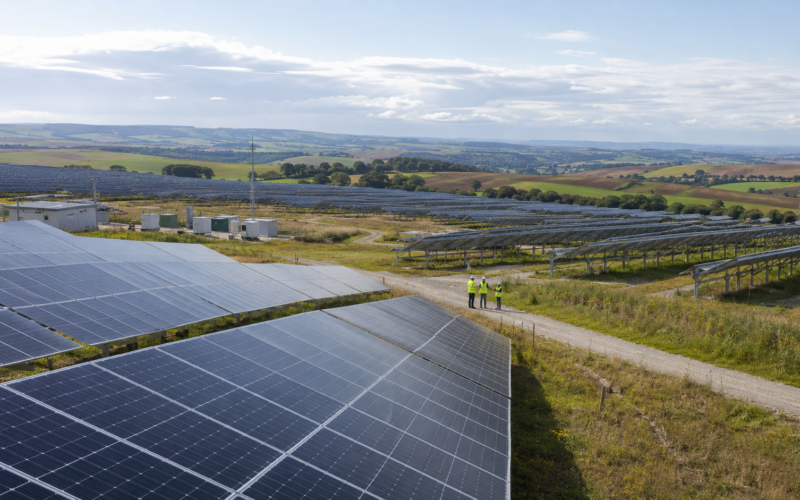
Zimmermann also brings agricultural photovoltaic systems, which allow energy generation and farming to coexist on the same land. Agricultural solar is attracting attention in Europe because it offers a potential compromise between renewable energy development, land scarcity and food production.
Floating photovoltaic systems extend the opportunity to reservoirs, industrial water bodies and other suitable surfaces. Solar carports connect generation with commercial facilities and electric vehicle charging. High-density trackers provide another option for projects where developers want additional energy yield but face tighter land constraints.
The strategic advantage is therefore optionality. Nextpower can approach European developers with a portfolio aligned with several land-use and regulatory scenarios rather than one preferred mechanical architecture.
That may be more valuable than simply gaining additional market share. A supplier involved earlier in project design can influence equipment selection across foundations, structures, wiring, power conversion and storage. The customer relationship begins to shift from individual product procurement toward system architecture.
Could Zimmermann’s customer network become more valuable than its solar structures?
Zimmermann is expected to bring hundreds of customer relationships across developers, engineering contractors and independent power producers. Those channels could become the most valuable element of the acquisition if Nextpower can use them to sell products beyond mounting structures.
The immediate cross-selling opportunity includes trackers, foundations, electrical balance-of-system products, inverters and battery energy storage. A customer purchasing a fixed-tilt structure may also require connectors, wiring assemblies, power conversion equipment and software.
The Prevalon acquisition makes the channel strategy more significant. European battery installations are expected to grow considerably faster than ground-mounted solar capacity through the end of the decade. Zimmermann gives Nextpower an established route to customers already developing renewable power projects that may add storage.
This creates a potentially powerful commercial model. Nextpower can acquire a company for its existing products and earnings, then use the acquired sales network to distribute technologies from the rest of the portfolio. Revenue synergies may therefore matter more than traditional cost reductions.
The approach could reduce customer acquisition costs because Nextpower does not need to build every European relationship independently. It may also shorten qualification cycles for newer products because customers already know and trust Zimmermann.
However, cross-selling is usually the most attractive line in an acquisition presentation and one of the hardest to achieve in practice. Customers do not automatically buy additional products simply because their existing supplier has a new parent company.
Developers frequently source structures, electrical systems, inverters and storage through separate competitive processes. They may prefer different suppliers for each category to obtain better pricing, specialist technology or reduced concentration risk.
Nextpower must therefore prove that its combined platform produces measurable project benefits. These could include faster design, fewer interfaces, lower installation costs, improved reliability or clearer accountability when problems emerge. A broad portfolio without quantified customer value is merely a well-organised warehouse.
Does the Zimmermann valuation indicate disciplined capital allocation or acquisition urgency?
The maximum €330 million consideration represents approximately 1.1 times Zimmermann’s projected annual run-rate revenue and about 7.3 times projected adjusted EBITDA. Those multiples appear relatively restrained for a profitable infrastructure-technology company with an established European position.
The structure also includes a meaningful contingent component. Nextpower will pay approximately €180 million in cash and €105 million in shares at closing, producing upfront consideration of roughly €285 million. The additional €45 million depends on terms established in the purchase agreement.
Based on expected run-rate earnings, the upfront consideration equates to approximately 6.3 times adjusted EBITDA. Contingent consideration reduces some risk by linking part of the eventual price to future outcomes rather than paying the entire maximum amount immediately.
The stock component preserves cash and shares part of the future performance risk with Zimmermann’s owners. The number of Nextpower shares issued will be determined using a 30-trading-day volume-weighted average price before closing, rather than being fixed at the announcement date.
This structure protects Nextpower from committing a predetermined number of shares during a period of considerable stock-price volatility. It also means the eventual dilution will depend on where Nextpower shares trade closer to completion.
Nextpower appears capable of funding the acquisition. The company ended fiscal 2026 with approximately $1.09 billion in cash and generated about $514 million of adjusted free cash flow during the year. Its record revenue reached $3.56 billion, supported by strong bookings and a substantial backlog.
The concern is not the affordability of Zimmermann in isolation. The concern is the cumulative scale of Nextpower’s acquisition commitments.
The company has agreed to pay up to $365 million for Prevalon Energy and approximately $80.5 million for the Zigor and Apex Power assets, while planning around $50 million of additional investment to accelerate the power-conversion business. When Zimmermann is included, Nextpower has committed substantial capital to several transactions within a short period.
This pace suggests strategic confidence, but it also creates urgency. Nextpower is attempting to establish its platform before competitors, customers or market conditions close the opportunity. The risk is that the desire to complete the portfolio moves faster than the organisation’s ability to integrate it.
How do Zimmermann, Prevalon and Nextpower’s earlier acquisitions fit into one platform?
The strongest interpretation of Nextpower’s acquisition programme is that every transaction addresses a specific layer of power-plant infrastructure.
Ojjo and Solar Pile International provide foundations connecting projects to the ground. Zimmermann provides fixed, tracking, agricultural and floating structures. Origami Solar provides module frames. Bentek provides electrical balance-of-system equipment connecting modules and power infrastructure.
The Zigor and Apex Power transaction adds power conversion, allowing direct-current electricity from solar or storage systems to be converted into forms suitable for the grid or customer loads. Prevalon adds battery storage, energy management software and critical-power expertise.
Artificial intelligence and robotics businesses support inspection, cleaning, modelling and plant operations. Existing Nextpower software provides energy-yield management and control capabilities.
The strategic promise is a connected power plant in which structural, electrical and digital systems are designed to work together. Instead of optimising each component separately, Nextpower could use data across the entire project lifecycle to improve construction, performance and maintenance.
A foundation system could be designed alongside the tracker and module frame. Electrical equipment could be pre-engineered for the selected structure. Software could monitor performance while robotic systems inspect and maintain the asset. Battery controls could coordinate generation with grid demand or data-centre loads.
This is more than vertical integration in the traditional manufacturing sense. Nextpower is not necessarily planning to manufacture every component internally. The model combines intellectual property, outsourced production, engineering, software and customer support.
That approach could preserve capital efficiency while increasing the company’s influence over project design. It also creates a more complex responsibility model. If Nextpower supplies several integrated layers, customers may expect Nextpower to resolve problems even when failures originate with manufacturing partners or third-party equipment.
The commercial upside is larger revenue per project and potentially stronger customer retention. The operational downside is that every additional layer creates another point where quality, scheduling or integration can fail.
What integration and margin risks could undermine Nextpower’s expanding acquisition portfolio?
The most immediate risk is management bandwidth. Zimmermann, Prevalon and the power-conversion assets have different technologies, employees, customers and regulatory requirements. Several integration programmes may be running simultaneously during fiscal 2027.
Zimmermann is a German engineering business with local market practices and an established identity. Prevalon operates in battery storage and mission-critical power. Zigor and Apex Power bring inverter technology and planned manufacturing expansion. These are not interchangeable bolt-on businesses that can be absorbed through one standard process.
Nextpower must preserve the specialist capabilities that justified each acquisition while building enough common infrastructure to produce synergies. Excessive centralisation could weaken local decision-making and customer responsiveness. Insufficient integration could leave the company with duplicated systems and limited cross-selling.
Margin dilution is another concern. Zimmermann’s expected adjusted EBITDA margin is approximately 15%, compared with Nextpower’s fiscal fourth-quarter adjusted EBITDA margin of 22.9%. The acquired business could increase absolute earnings while reducing the consolidated margin percentage.
That outcome would not automatically indicate failure. A lower-margin product can create value if it opens customer channels, increases total project revenue or enables sales of higher-margin products. Investors will nevertheless require evidence that the platform produces better economics than the acquired businesses would generate independently.
Working capital could also become more demanding. Steel structures, inverters and battery systems require materials, inventory, logistics and project-specific execution. These activities may consume more cash than Nextpower’s traditional intellectual-property and partner-manufacturing model.
European policy and permitting remain additional risks. Solar demand may be structurally attractive, but individual projects can be delayed by grid constraints, financing costs, land-use disputes and regulatory changes. Acquiring an established local supplier improves market access but does not eliminate project-cycle volatility.
The largest strategic risk is portfolio sprawl. Nextpower may reach a point where the number of products exceeds its capacity to maintain technical leadership in each category. Integrated platforms create value only when the connections between products are more valuable than the complexity of owning them.
What does Nextpower’s volatile stock performance reveal about investor confidence?
Nextpower shares closed at $119.14 on June 30, rising 7.66% during the final trading session of the month. The stock remained inside a 52-week range of $52.61 to $163.13, with the high reached on May 29 after the Prevalon acquisition and raised fiscal outlook generated strong investor enthusiasm.
Despite the June 30 rebound, the shares were down approximately 1.2% over the latest five trading sessions and about 23.8% from the May 29 closing price. That pattern shows that investors support the broader platform strategy but remain uncertain about valuation, execution and the pace of dealmaking.
The Prevalon transaction initially produced a sharp rally because it connected Nextpower with battery storage, artificial intelligence data centres and higher electricity demand. Zimmermann generated a more cautious response because it added another transaction before the market had sufficient evidence on the earlier integrations.
Investor sentiment is therefore neither decisively negative nor unconditionally enthusiastic. The market appears to believe Nextpower has identified a credible strategic opportunity, but it is no longer rewarding every acquisition announcement at face value.
The stock’s 52-week performance still reflects substantial confidence compared with its low. However, the retreat from the record high shows that expectations became stretched when investors briefly priced Nextpower as a central beneficiary of solar, storage and artificial intelligence infrastructure simultaneously.
Future share-price support will increasingly depend on operating metrics. Investors will look for revenue from non-tracker products, bundled orders, stable margins, cash generation and evidence that acquired customer channels are producing incremental sales.
The market has already rewarded the idea of an integrated platform. The next revaluation will require proof that the platform works.
What would successful execution of the Zimmermann acquisition look like over two years?
The clearest sign of success would be an increase in Nextpower’s European bookings across both tracker and fixed-tilt projects. This would demonstrate that Zimmermann expands the market rather than simply shifting existing revenue into Nextpower’s financial statements.
A second indicator would be bundled orders combining Zimmermann structures with Nextpower foundations, electrical products, power conversion or battery storage. Bundled contracts would validate the central claim that customers benefit from a wider integrated supplier.
Margin performance will also matter. Zimmermann begins with an expected adjusted EBITDA margin below Nextpower’s consolidated level. Procurement efficiencies, engineering integration and cross-selling should gradually improve the acquired economics or offset the initial dilution.
Employee and customer retention will provide another early signal. Zimmermann’s engineering knowledge and local relationships are central to the strategic value. Losing key personnel or customers would weaken the acquisition even if the physical assets and product designs remain.
Nextpower should also demonstrate that Zimmermann’s European channels can support Prevalon storage products and future inverter offerings. This would turn the acquisition from a structural-products transaction into a broader market-entry platform.
The ultimate measure will be whether Nextpower generates more value from the connected portfolio than investors would have received if the company remained a focused tracker leader. Greater revenue alone will not answer that question.
Successful integration would produce faster growth, higher revenue per customer and durable cash flow without a disproportionate increase in organisational complexity. Failure would leave Nextpower with more products, more employees and more countries, but no clear improvement in competitive advantage.
The transformation from Nextracker to Nextpower was never going to be achieved by changing the name on the building. Zimmermann makes the new identity more credible. It also makes the execution standard considerably higher.
Key takeaways on what the Zimmermann acquisition means for Nextpower’s platform strategy
- Zimmermann fills two important gaps in Nextpower’s portfolio by adding fixed-tilt structures and a substantial European operating presence.
- The transaction includes €180 million in closing cash, €105 million in Nextpower shares and up to €45 million in contingent cash consideration.
- Zimmermann is expected to add approximately €300 million in annual run-rate revenue and €45 million in adjusted EBITDA.
- The maximum purchase price represents roughly 1.1 times expected revenue and 7.3 times expected adjusted EBITDA.
- Nextpower’s acquisition programme now spans foundations, structures, module frames, electrical infrastructure, robotics, inverters, batteries and software.
- Zimmermann’s customer relationships may create more strategic value than its physical products if Nextpower achieves meaningful cross-selling.
- Fixed-tilt technology gives Nextpower access to approximately half of Europe’s ground-mounted solar market that trackers do not fully address.
- Zimmermann’s expected margin is lower than Nextpower’s recent company-level profitability, creating a near-term margin dilution risk.
- Nextpower’s strong cash generation and balance sheet support the acquisition strategy, but simultaneous integrations raise execution risk.
- Investor confidence will depend on bundled orders, European bookings, customer retention and growth in non-tracker revenue rather than further deal announcements.
Share this:
Discover more from Business-News-Today.com
Subscribe to get the latest posts sent to your email.