Eight students have pleaded not guilty to murder charges arising from the deaths of 16 classmates in a dormitory fire at Utumishi Girls Academy Senior School, transforming one of Kenya’s worst recent school disasters into a closely watched juvenile criminal case.
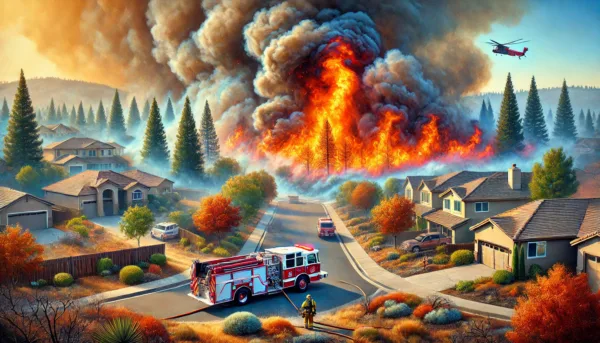
The fire broke out shortly after midnight on May 28, 2026, at the boarding school in Gilgil, Nakuru County. Sixteen students died and 79 others were injured as flames and smoke spread through a dormitory occupied by girls aged between 15 and 18.
The eight defendants appeared before High Court Judge Diana Kavedza in Nairobi on Wednesday, July 1. All entered not-guilty pleas, the Office of the Director of Public Prosecutions said. Their identities have not been published because Kenyan law protects information capable of identifying children accused of criminal offences.
The charges are allegations and do not establish that the students started the fire or intended to kill anyone. Prosecutors must prove the individual involvement of each accused person and establish the mental element required for murder beyond reasonable doubt.
The case also leaves a separate institutional question unresolved. Preliminary government findings identified an overcrowded dormitory, a locked emergency exit and allegations that two teachers had received information about a possible fire plan but failed to prevent it. Those safety failures did not disappear when students were charged.
What happened during the May 28 fire at Utumishi Girls Academy in Gilgil?
The blaze began while students were sleeping inside the school’s dormitory. The building accommodated hundreds of pupils, creating a dangerous concentration of people attempting to escape through smoke, darkness and restricted exit routes.
Sixteen girls were killed, while 79 students suffered injuries. Some of the survivors were hurt while attempting to escape from the upper level of the building, including by jumping through windows after the fire spread.
Initial rescue operations were complicated by uncertainty over the whereabouts of students who had fled the school grounds in panic. Police officers, emergency services and local officials searched surrounding areas while injured pupils were taken to hospitals.
Education Cabinet Secretary Julius Ogamba initially said the cause had not been established. Subsequent police investigations treated the fire as suspected arson and identified students as persons of interest.
Investigators reportedly examined witness statements and surveillance footage from the dormitory. The prosecution has not yet presented that evidence publicly, and the July 1 court appearance established only the formal pleas entered by the accused.
This distinction matters because early accounts produced during a national tragedy can change as forensic evidence is tested. Claims made during an investigation must still withstand cross-examination and judicial scrutiny before they can support convictions.
Why have prosecutors chosen murder charges rather than arson or manslaughter?
Kenya’s Director of Public Prosecutions reviewed the preliminary investigation file submitted by the Directorate of Criminal Investigations and approved 16 murder counts arising from the deaths.
Under Kenya’s Penal Code, murder involves causing another person’s death through an unlawful act or omission with malice aforethought. Manslaughter involves an unlawful killing without the same required mental element.
Prosecutors will therefore need to prove more than an allegation that the accused participated in starting a fire. They must establish the circumstances showing the necessary intention or knowledge and connect each defendant legally to the deaths.
In a case involving several accused people, the prosecution may rely on evidence of planning, joint participation or a common purpose. However, presence in the dormitory, knowledge of another student’s conduct or association with an accused person would not automatically prove murder.
The prosecution must show what each defendant allegedly did, what she knew and how her conduct contributed to the fatal outcome. The defence can challenge identification evidence, witness credibility, digital material and any claim that all defendants shared the same intention.
The decision to pursue murder rather than a lesser offence signals that prosecutors believe the evidence supports deliberate conduct accompanied by awareness of potentially fatal consequences. That assessment remains untested until the prosecution presents its case.
How will Kenya’s child justice protections apply to students facing murder charges?
Kenya’s Children Act protects the privacy of accused children during arrest, investigation and trial. Publishing information that could identify a child offender can result in criminal penalties, which is why the defendants have not been named publicly.
Child defendants are also entitled to legal representation, parental or guardian participation, dignity, protection from mistreatment and proceedings that recognise their age and vulnerability. Deprivation of liberty should be used as a last resort and for the shortest appropriate period.
Murder cases involving children are handled differently from ordinary juvenile matters. Kenya’s specialised Children’s Courts generally do not determine murder charges, leaving the High Court to hear the case while applying the safeguards required under child-protection law.
The court may require age assessments, social reports, psychological evaluations and other information relevant to the accused students’ circumstances. These measures do not decide whether they are guilty but help ensure that they understand the proceedings and can participate effectively.
The privacy requirements protect the defendants without diminishing the identities or suffering of the 16 girls who died. A fair process must recognise both the rights of the accused and the right of the victims’ families to an effective investigation and accountable prosecution.
Because the accused are young, public commentary creates additional risks. Online publication of names, photographs, school records or unverified allegations could violate Kenyan law and prejudice the proceedings.
What evidence could determine whether the eight students are convicted or acquitted?
The prosecution is likely to rely on a combination of surveillance footage, witness testimony, forensic findings and communications connected to the period before the fire.
Video evidence can be important, but it must be authenticated and interpreted carefully. The court will need to establish when the footage was recorded, whether it has been altered and whether the people shown can be identified reliably.
Witnesses may include surviving students, teachers, dormitory staff, investigators and emergency personnel. Their accounts could address suspicious conduct, warnings before the fire, the location where flames began and the conditions that affected escape.
Investigators may also examine mobile-phone communications, internet activity, school disciplinary records and physical evidence recovered from the building. Such material could help establish planning or motive, but it must be obtained and presented lawfully.
The defence may argue that identification was mistaken, that an individual withdrew from any plan, that she did not appreciate the likely consequences or that the fire spread because of building conditions beyond her control.
Motive can help explain an alleged crime but is not a substitute for proof. Researchers and officials have linked some Kenyan school fires to disputes over discipline, examinations, living conditions or school administration, but no motive should be assigned to the Utumishi defendants until evidence is presented in court.
Why do locked exits and overcrowding remain central despite the murder charges?
Preliminary government findings indicated that the dormitory was overcrowded and that an emergency exit was locked when the fire occurred. These conditions could have reduced the time and routes available for students to escape.
Education officials also alleged that two teachers had received information about a possible plan but failed to intervene. The government subsequently dissolved the school’s board and promised disciplinary or legal action against staff members found to have neglected their duties.
These issues represent a different form of potential responsibility from the criminal allegations against the students. One person may be accused of starting a fire while another person or institution may still be responsible for safety failures that increased the number of deaths.
Kenyan school infrastructure guidance requires dormitories to have adequate exits, outward-opening doors and emergency routes that remain usable when students are inside. The purpose of those standards is to ensure that a fire does not become a mass-casualty event, regardless of whether it begins accidentally or deliberately.
A criminal trial may focus primarily on who allegedly caused the fire. The government must separately examine why so many students could not escape safely and whether inspections, staffing and emergency procedures were adequate.
Treating the arrests as a complete explanation would risk allowing institutional failures to disappear behind the prosecution of children.
Why are dormitory fires a recurring crisis across Kenyan boarding schools?
Kenya has experienced repeated fires in boarding schools, including several incidents involving substantial loss of life.
In September 2024, 21 children died after a dormitory fire at Hillside Endarasha Academy in Nyeri County. The cause was not conclusively established.
Kenya’s deadliest modern school fire occurred at Kyanguli Secondary School in March 2001, when 67 boys were killed in an incident attributed to arson.
Many less deadly fires have also disrupted education. Some have been linked to electrical faults or unsafe infrastructure, while others have been attributed to student unrest over discipline, school conditions or administrative decisions.
The recurrence indicates that the problem cannot be explained solely through individual misconduct. Boarding schools combine sleeping students, crowded buildings and limited nighttime supervision, making emergency preparation especially important.
Kenya has established safety standards addressing dormitory spacing, doors, windows, emergency exits and firefighting equipment. Audits and research have repeatedly found gaps between those requirements and actual conditions in schools.
After the Utumishi fire and subsequent unrest, at least 204 senior schools were temporarily closed, according to Julius Ogamba. Most later reopened, including Utumishi Girls Academy, while the criminal investigation continued.
Should Utumishi Girls Academy have reopened while the criminal case continues?
Reopening allows students to resume lessons and may reduce long-term disruption for pupils preparing for examinations. A prolonged closure can punish students who were not involved and intensify the educational and psychological consequences of the tragedy.
However, reopening should depend on verified safety improvements rather than the completion of an investigation alone. Authorities must establish that emergency exits work, occupancy levels comply with standards and staff understand evacuation procedures.
Students returning to the school may require psychological support. Survivors experienced deaths, injuries, emergency evacuations and the arrest of classmates, while teachers must manage grief alongside normal academic responsibilities.
The school’s leadership and oversight arrangements also require scrutiny. Dissolving the board may remove officials associated with earlier failures, but replacement governance must demonstrate that inspection findings have been implemented.
Parents deserve transparent information about repairs, fire alarms, dormitory supervision and evacuation drills. General assurances that a school is safe are insufficient after a disaster involving 16 deaths.
The criminal prosecution and the school’s operational recovery should therefore proceed on separate tracks. A trial determines personal criminal liability, while education authorities remain responsible for ensuring that the institution no longer exposes pupils to preventable risks.
What will the Utumishi case mean for Kenya’s wider education system?
The case could become one of Kenya’s most important tests of how the justice system handles serious allegations against children while confronting institutional failures within boarding schools.
A credible prosecution must avoid presenting all student unrest as criminal conspiracy. It must prove the allegations against each defendant individually and protect their rights throughout proceedings.
At the same time, authorities must not allow the students’ ages to erase the deaths of 16 classmates. The victims’ families are entitled to a thorough investigation, accurate information and a trial capable of establishing what happened.
The government also faces pressure to enforce standards already contained in policy documents. New regulations will have limited value when existing requirements concerning exits, occupancy and emergency preparation are ignored.
Independent school inspections, public compliance reporting and consequences for administrators who leave students in unsafe buildings would provide stronger prevention than temporary closures after each tragedy.
The central question is broader than whether eight students are convicted. Kenya must determine why a fire inside a supervised educational institution could kill 16 children and injure 79 others despite years of warnings from previous school disasters.
What happens next in the prosecution of the eight Utumishi students?
The court will set directions for pre-trial proceedings, including disclosure of prosecution evidence, legal representation and the handling of child-protection requirements.
The defence will receive an opportunity to challenge the charge sheets and examine whether the prosecution has sufficient evidence connecting each accused person to the alleged offences.
Questions involving custody or release will be determined under the legal safeguards applying to child defendants and the seriousness of the charges. The court may also consider assessments relating to age, mental capacity and participation in proceedings.
The prosecution has not publicly disclosed its full account of how the fire was planned or allegedly started. Until that material is presented, claims about the precise actions or motives of individual defendants remain unproven.
The trial may take considerable time because it involves eight accused people, 16 deaths, numerous survivors and potentially extensive forensic and electronic evidence.
Public discussion should therefore distinguish three established facts from the allegations still awaiting proof. A fire occurred on May 28, 16 students died and eight students pleaded not guilty on July 1. Who bears criminal responsibility remains for the court to decide.
What are the key takeaways from the Utumishi Girls Academy murder case?
- Eight students pleaded not guilty before High Court Judge Diana Kavedza on July 1, 2026, to murder charges arising from the deaths of 16 classmates at Utumishi Girls Academy.
- The dormitory fire occurred shortly after midnight on May 28 in Gilgil, Nakuru County, killing 16 students and injuring 79 others while hundreds of girls were accommodated inside the building.
- The prosecution’s allegations have not been proven, and Kenyan authorities have not publicly released the complete evidence identifying what each defendant allegedly did before or during the fire.
- Prosecutors must establish the individual participation of every accused student and prove the intention or knowledge required for murder rather than relying solely on association, presence or broader claims of student unrest.
- Kenyan child justice law protects the defendants’ identities and requires privacy, legal representation, dignity and other safeguards even though the seriousness of the murder charges places the case before the High Court.
- Preliminary government findings identified overcrowding and a locked emergency exit, while two teachers were accused of knowing about an alleged plan and failing to intervene before the fire occurred.
- Charging students does not resolve the school’s institutional responsibility because safety failures may have restricted escape routes and increased the number of deaths after the flames began spreading.
- The case will test whether Kenya can deliver justice for the victims while protecting accused children, enforcing boarding-school safety standards and preventing another deadly dormitory fire.
Share this:
Discover more from Business-News-Today.com
Subscribe to get the latest posts sent to your email.