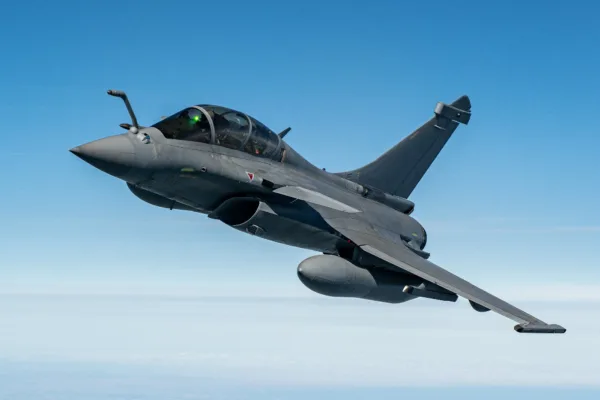


Honeywell International Inc. completed the final leg of its three-way conglomerate breakup at the market open on Monday, June 29, 2026, distributing one share of Honeywell Aerospace Inc. for every two Honeywell common shares held on the June 15 record date and immediately rebranding the parent as Honeywell Technologies Inc. (NASDAQ: HON). Honeywell Aerospace Inc. begins regular-way trading on the Nasdaq Stock Market under the ticker HONA after when-issued trading as HONAV surged 9.4 percent following confirmation that the new entity would join the S&P 500 and S&P 100 immediately, replacing Conagra Brands Inc. and the former Honeywell International respectively. Honeywell Technologies simultaneously executed a 1-for-2 reverse stock split effective 12:02 a.m. New York time, cutting issued and outstanding shares from approximately 634 million to roughly 317 million and reducing authorized common shares from 2 billion to 1 billion, while retaining the HON ticker and its place in the Dow Jones Industrial Average and S&P 500. Honeywell shares closed Friday at $231.49 inside a 52-week range of $186.76 to $248.18, with Goldman Sachs analyst Joe Ritchie lifting the firm’s price target on Honeywell to $276 from $258 ahead of the separation. The transaction completes a portfolio transformation that has already produced Solstice Advanced Materials as an earlier spin and now leaves three independent, publicly traded companies where one industrial conglomerate stood at the start of 2025.
Why did Honeywell finally dismantle the conglomerate structure and what does the breakup say about the industrial multi-industry model in 2026?
The Honeywell breakup is the most consequential acknowledgement to date that the multi-industry industrial conglomerate model has run out of strategic justification in the current capital markets environment. Honeywell had been one of the few remaining conglomerates that successfully resisted activist pressure for years, leaning on operating system platforms and disciplined capital allocation to argue that the sum of its parts produced more value as one entity than as separate businesses. The arrival of Elliott Investment Management as a shareholder, combined with persistent valuation gaps between conglomerate trading multiples and pure-play comparables, made that argument increasingly difficult to sustain. By the end of 2025, management led by Vimal Kapur had concluded that focused public companies with distinct capital structures, investor bases and strategic narratives would unlock more value than continued combination under a single corporate umbrella.
The strategic logic for each surviving entity is internally consistent. Honeywell Aerospace Inc. is a pure-play tier-one aerospace and defense supplier with installed positions across commercial, business, military and space aircraft platforms, and it benefits from being compared directly to RTX Corporation, GE Aerospace, TransDigm Group and Heico Corporation rather than diluted by industrial automation peers. Honeywell Technologies Inc. is now a focused industrial automation, productivity solutions and energy and sustainability software business that can be analysed against Rockwell Automation, Emerson Electric, Schneider Electric and Siemens. Solstice Advanced Materials, spun off earlier in the breakup sequence, occupies its own specialty materials niche. Each of those three categories carries a defensible peer set and a distinct growth and margin profile, which was impossible to capture in a single Honeywell story.
The second-order signal is that other multi-industry holding structures should expect renewed pressure. 3M Company, Illinois Tool Works, Dover Corporation and Parker Hannifin have all chosen to remain integrated despite varying degrees of activist attention. The success of the Honeywell separation, if HONA trades at sustained pure-play premium multiples and HON continues to compound at higher growth rates, will harden the activist playbook and complicate the defence of conglomerate balance sheets across the industrial sector. Boards that previously argued for portfolio breadth on the basis of capital allocation flexibility now face an empirical counter-argument from one of the most reputed operators in the category.
How will the immediate S&P 500 and S&P 100 index inclusion of Honeywell Aerospace shape opening trading dynamics in HONA?
The S&P Dow Jones Indices decision to add Honeywell Aerospace to the S&P 500 effective June 29, replacing Conagra Brands Inc., and to the S&P 100 effective June 30 open, replacing the former Honeywell International, materially compresses what would otherwise have been a multi-week index-eligibility window for the new entity. Passive flows into S&P 500-tracking funds, including the SPDR S&P 500 ETF Trust, the iShares Core S&P 500 ETF and the Vanguard S&P 500 ETF, must reflect the new constituent immediately, which creates a substantial mechanical buyer cohort at the open. The 9.4 percent after-hours surge in HONAV when-issued shares on the inclusion announcement is a direct reflection of how aggressively event-driven and index-arbitrage strategies positioned ahead of the rebalance.
Conagra Brands Inc. faces the inverse dynamic. Demotion to the S&P SmallCap 600, where the consumer staples name replaces Grid Dynamics Holdings Inc., forces large-cap S&P 500 index funds to sell their Conagra positions. Small-cap demand is smaller in dollar terms than large-cap supply, which is the canonical mechanical setup for relative-value pressure on the demoted stock. Conagra shareholders who hold for fundamental reasons will face a non-trivial price impact through the rebalance window even though the underlying business has not changed.
The strategic read for HONA investors is more nuanced than the immediate flow story suggests. Forced index buying delivers a high-quality opening but compresses subsequent organic demand because every meaningful index-tracking fund will already hold the position. Once the mechanical rebalance is complete, HONA’s share price will be driven by aerospace cycle fundamentals, contract execution on the global commercial and defense order book, and aftermarket services margin discipline. Investors expecting sustained outperformance purely from index sponsorship should temper that expectation against the historical record of post-rebalance fade in similar spinoff cases.
What does Honeywell Aerospace look like as a standalone tier-one supplier and how does it stack up against RTX, GE Aerospace, TransDigm and Heico?
Honeywell Aerospace Inc. enters public markets as one of the largest publicly traded aerospace suppliers in the world, with more than $17 billion in annual revenue for 2025 and content positions across virtually every commercial and defense aircraft platform in service. The business spans integrated avionics, propulsion engines, auxiliary power units, environmental control systems, satellite communications hardware, including laser communication products for low Earth orbit constellations, and a substantial aftermarket services and connected services footprint. That breadth places HONA squarely in the tier-one supplier category alongside RTX’s Collins Aerospace, GE Aerospace and the Safran group, and ahead of pure aftermarket and high-margin specialty plays like TransDigm and Heico in terms of original equipment exposure.
The competitive comparison is not a clean comparable trade. RTX and GE Aerospace are heavily weighted toward propulsion, with RTX’s Pratt & Whitney franchise and GE Aerospace’s CFM joint venture with Safran defining each company’s earnings profile. Honeywell Aerospace has propulsion content but is more balanced across avionics, integrated systems and aftermarket, which gives it a different cyclicality profile and a different sensitivity to airline capital expenditure cycles. TransDigm Group and Heico Corporation operate at the other end of the spectrum, with higher-margin proprietary aftermarket components and acquisition-led growth. HONA is therefore likely to be valued on a blend of the two reference points, with the precise multiple converging only after several quarters of standalone reporting clarify the margin and free cash flow profile.
The execution risk is meaningful. A newly independent company carrying $17 billion in revenue must build out a standalone treasury function, capital markets relationships, supplier negotiation capability and information technology infrastructure that previously rode on Honeywell parent systems. Stranded costs typically run higher than initial guidance in spin transactions, although Goldman Sachs has flagged that Honeywell’s preparatory work has produced lower-than-expected stranded cost projections so far. The first two full quarters of standalone operation will be the real test of whether management can deliver promised margin expansion against a sector backdrop where supply chain bottlenecks for aerospace structural components and engine spares continue to constrain industry-wide output.
How does Honeywell Technologies position itself as a pure-play automation company and what changes for the HON investor case?
Honeywell Technologies Inc. emerges as a more focused industrial automation, productivity solutions, building automation and energy and sustainability software business with approximately $20 billion in 2025 continuing operations net sales. Quarterly continuing operations net sales were $4.823 billion in Q1 2026 against discontinued operations contributions of $4.320 billion from the aerospace and Solstice businesses, which gives a sense of the relative scale of what remains. The strategic narrative is the industrial world’s transition from automation to autonomy, which positions Honeywell Technologies as a software-enabled automation platform competing primarily with Rockwell Automation, Emerson Electric, Schneider Electric, Siemens and ABB.
The 1-for-2 reverse stock split is the most consequential mechanical change for HON shareholders. Reducing share count from roughly 634 million to roughly 317 million does not change the economic ownership of the company, but it lifts the nominal share price into a range that aligns with the new business profile and the lower revenue base relative to the pre-spin Honeywell. A higher nominal price also preserves Honeywell Technologies’ weight in the Dow Jones Industrial Average, a benchmark that uses price weighting and would have penalised a sharply lower post-spin nominal share price. The split therefore serves both a presentational and a structural function within passive index sponsorship.
The longer-term investor question is whether Honeywell Technologies’ growth profile, stripped of aerospace cyclicality and specialty materials volatility, justifies a software-style multiple or settles into a more traditional industrial automation multiple. Management’s stated push toward autonomy, building automation as a recurring revenue franchise, and software-enabled performance contracts suggests the former. Sceptics will point to a long history of industrial conglomerate divisions that struggled to convert software ambitions into durable recurring revenue mix shifts after separation. The next two earnings prints under the new corporate structure will be the cleanest test of which trajectory applies.
Why is the index treatment asymmetric between the Dow Jones Industrial Average, the S&P 500 and the S&P 100, and what does that signal about how curators view the two new companies?
The contrast in index treatment between the Dow Jones Industrial Average and the S&P benchmarks is one of the more revealing technical features of the Honeywell separation. Honeywell Aerospace immediately enters the S&P 500 and S&P 100 as a large-cap representative, signalling that S&P Dow Jones Indices views the new aerospace pure-play as more representative of the mega-capitalisation space than Conagra Brands at the S&P 500 level and the former Honeywell International at the S&P 100 level. That is a substantial editorial vote of confidence in the standalone trading profile of HONA.
The Dow Jones Industrial Average treatment runs the opposite way. Honeywell Technologies retains its seat in the 30-stock blue-chip index, while Honeywell Aerospace does not join the Dow. The mechanical explanation is straightforward, the Dow uses price weighting and is selective in admitting new members, and adding both a parent and a spinoff to the same 30-stock benchmark would have been highly unusual. The strategic message is also clear, the Dow Jones Industrial Average remains a curated index that prizes long-tenured franchises with diversified earnings, and the post-split Honeywell Technologies fits that template more naturally than a single-sector aerospace and defense supplier.
The combined effect is a useful asymmetry for traders. HONA gets immediate S&P 500 and S&P 100 sponsorship without Dow inclusion, while Honeywell Technologies retains Dow membership and continued S&P 500 weight at a lower share count. Passive flow dynamics for the two stocks will therefore decouple in the months ahead, with HONA experiencing typical post-inclusion fade and Honeywell Technologies trading on the strength of its automation narrative against industrial peers. That decoupling is exactly what the breakup was structurally designed to enable.
What capital structure, valuation and execution risks remain on the post-separation Honeywell story?
The most immediate capital structure question is debt allocation. The separation agreements distribute the parent’s debt load between Honeywell Aerospace and Honeywell Technologies according to commercial and tax-efficiency considerations, and the precise post-spin leverage profile of each company will materially influence credit ratings, dividend capacity and acquisition flexibility. Aerospace and defense companies typically support higher leverage given the predictable long-cycle revenue base, while industrial automation peers vary widely depending on software mix. Investors will be watching the first standalone credit committee reports from Moody’s Investors Service, S&P Global Ratings and Fitch Ratings to confirm where each entity sits on the rating scale.
Stranded cost risk extends beyond pure dollar guidance. Information technology systems, treasury operations, group insurance programmes and centralised research and development functions all need to be replicated at lower scale by each successor entity. Companies that emerge from spinoffs often discover hidden cost duplication two to four quarters after separation, when underlying contracts roll into new terms negotiated by smaller standalone buyers. Goldman Sachs has signalled that initial indications on stranded costs are favourable, but the real measurement window will not open until the second half of 2026 trading results are published.
Sector execution risk is meaningful on both sides. Honeywell Aerospace must navigate a global aviation supply chain that continues to recover from pandemic-era disruption, with Boeing and Airbus production rate increases gated by structural component and engine availability. Defense spending tailwinds from elevated geopolitical risk should support the defense side of the business, but program-specific timing risk on F-35, FCAS and GCAP platforms will produce quarter-to-quarter volatility. Honeywell Technologies must demonstrate that industrial automation orders continue at pace despite a softening macro backdrop in Europe and uncertain demand from energy and materials customers facing oil price volatility.
A subtler risk is investor base migration. The pre-spin Honeywell shareholder roster was dominated by diversified industrial fund managers comfortable with the multi-industry profile. The post-spin HONA shareholder base will skew aerospace and defense specialists, while the post-spin HON shareholder base will skew industrial automation, building technology and software-enabled industrial specialists. The transition between these investor groups can produce temporary mismatches in price discovery, which will likely play out through the third quarter of 2026 before stable holdings settle.
Key takeaways on what the Honeywell separation means for HON, HONA, the aerospace sector and the industrial conglomerate model
- Honeywell International completes its three-way breakup with the June 29 spinoff of Honeywell Aerospace Inc., distributing one HONA share for every two HON shares and finalising the portfolio reshape that began with the Solstice Advanced Materials spin.
- Honeywell Aerospace Inc. (NASDAQ: HONA) joins the S&P 500 immediately on June 29 and the S&P 100 on June 30, replacing Conagra Brands Inc. and the former Honeywell International respectively, with forced passive flows providing strong opening sponsorship.
- Honeywell Technologies Inc. (NASDAQ: HON) executes a 1-for-2 reverse stock split, cutting shares outstanding from approximately 634 million to 317 million and preserving its place in the Dow Jones Industrial Average and S&P 500.
- HONA enters as a tier-one aerospace and defense pure-play with more than $17 billion in 2025 revenue, immediately benchmarked against RTX’s Collins Aerospace, GE Aerospace, TransDigm Group and Heico Corporation.
- Honeywell Technologies positions itself as a focused industrial automation, building automation and energy and sustainability software platform, competing with Rockwell Automation, Emerson Electric, Schneider Electric and Siemens.
- Conagra Brands Inc. faces forced selling pressure as it drops from the S&P 500 to the S&P SmallCap 600, replacing Grid Dynamics Holdings Inc. in the smaller benchmark.
- Goldman Sachs analyst Joe Ritchie raised Honeywell’s target price to $276 from $258 ahead of the separation, citing lower-than-expected stranded costs and multiple upcoming investor events.
- The breakup represents the most prominent recent validation of the activist thesis that diversified industrial conglomerates trade at structural discounts to focused pure-play comparables.
- Execution risks include stranded cost emergence over the next two to four quarters, supply chain bottlenecks on the aerospace side and industrial automation order softness on the technology side.
- Investor base migration between diversified industrial funds and specialised aerospace or automation funds will likely produce price discovery volatility in HONA and HON through the third quarter of 2026.
Discover more from Business-News-Today.com
Subscribe to get the latest posts sent to your email.