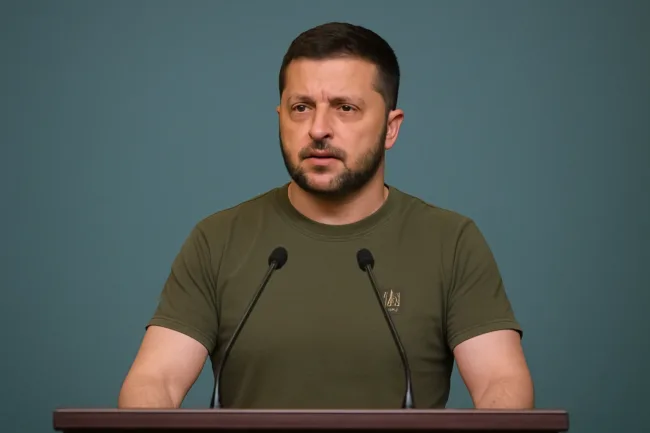
Serbian President Aleksandar Vučić said on June 27, 2026, that he would resign within several weeks and that Serbia would hold early presidential and parliamentary elections, bringing the country’s prolonged political crisis towards a decisive national vote. Aleksandar Vučić made the announcement during a pro-government rally in Belgrade, telling supporters that he expected to remain president for only “a couple of weeks.” His second and constitutionally final presidential term had been scheduled to continue until mid-2027.
Aleksandar Vučić did not announce the date of his resignation, identify an election timetable or confirm when parliament would be dissolved. He said he would continue helping the ruling Serbian Progressive Party campaign for victory, indicating that his departure from the presidency would not necessarily mean his withdrawal from Serbian politics.
The announcement follows approximately 18 months of student-led anti-corruption protests triggered by the November 1, 2024 collapse of a concrete canopy at Novi Sad railway station, which killed 16 people. Protesters, opposition organisations and rights groups describe the disaster as evidence of corruption, inadequate oversight and political control over public institutions. Aleksandar Vučić and his allies deny those accusations and say officials responsible for the collapse have faced legal action.
The resignation could create a complex constitutional transition. National Assembly Speaker Ana Brnabić would become acting president after Aleksandar Vučić formally leaves office, and a presidential election would have to be completed within three months. Parliamentary elections require a separate dissolution procedure, making the order in which the government, parliament and president act particularly important.
What exactly did Aleksandar Vučić announce at the June 27 rally in Belgrade?
Aleksandar Vučić told supporters that he would remain Serbian president for only several more weeks before resigning. He also announced that presidential and parliamentary elections would be brought forward from 2027, although his statement did not include a formal resignation document, an election date or a presidential decree dissolving the National Assembly.
The distinction between a political announcement and a completed constitutional act is important. Under Serbia’s Constitution, the president’s term ends on the day a resignation is submitted to the National Assembly speaker and publicly announced. Until Aleksandar Vučić formally completes that process, he remains president with the constitutional authority attached to the office.
Aleksandar Vučić presented the coming elections as an opportunity for his political movement to defeat its opponents at the ballot box. He said he would help the Serbian Progressive Party win, suggesting that he could remain the dominant campaign figure even though he cannot seek a third presidential term. Serbia’s Constitution prohibits anyone from being elected president more than twice.
The announcement therefore does not automatically mark the end of the political system built around Aleksandar Vučić. He stepped down as formal leader of the Serbian Progressive Party in 2023 but continued to exercise considerable political influence, while the party remained Serbia’s governing force under its current president, Miloš Vučević.
Why have student-led protests placed Serbia’s president under sustained pressure?
The protest movement began after the canopy at Novi Sad railway station collapsed on November 1, 2024. Sixteen people ultimately died, and the disaster became a national symbol of alleged corruption and weak accountability surrounding major construction and infrastructure projects.
Students organised blockades, marches and demonstrations across Serbia, gradually expanding their demands from disclosure of documents and prosecution of those responsible to early elections and broader institutional reform. Protesters have accused the government of manipulating elections, controlling much of the media, tolerating violence against political opponents and maintaining links with organised crime. Aleksandar Vučić and government officials deny those allegations.
The movement survived changes in government and repeated attempts to reduce political tension. Prime Minister Miloš Vučević resigned in January 2025, and Serbia later installed Đuro Macut as prime minister in April 2025. The demonstrations nevertheless continued because activists argued that changing individual officials did not address the deeper concentration of political power.
Tensions intensified during a major Belgrade demonstration on May 23, 2026. Police fired tear gas and stun grenades after clashes near government buildings, while protesters set fire to rubbish bins. Police estimated attendance at approximately 34,300, while an independent crowd-monitoring organisation put the number near 100,000.
Thousands demonstrated again in Novi Sad on June 20 to commemorate those killed in the railway disaster and demand elections. Protesters carried messages declaring that students were winning, while university representatives argued that no meaningful political dialogue could occur without free and fair elections.
What happens constitutionally when the Serbian president formally resigns?
Aleksandar Vučić must submit his resignation to National Assembly Speaker Ana Brnabić and inform the public. His presidential mandate would end on the date of that resignation, rather than after parliament votes to accept it.
Ana Brnabić would then replace him as acting president. Serbia’s Constitution limits the speaker’s interim presidential role to three months and requires a presidential election to be held within that period. Ana Brnabić was elected speaker in March 2024 and remained in office in June 2026.
The Constitution also states that the government’s term ends when the president resigns. Prime Minister Đuro Macut and his ministers would therefore continue only in a limited caretaker capacity until a new government was elected, handling the legally permitted current and urgent responsibilities of government.
That provision makes the sequence of events critical. A government whose term has already ended cannot propose dissolving the National Assembly. Consequently, if Aleksandar Vučić wants presidential and parliamentary elections held together, the government would probably need to submit a reasoned proposal to dissolve parliament before he formally resigns. This sequencing is an inference from Serbia’s constitutional provisions, because the government has not yet announced how it will organise the transition.
How can Serbia call an early parliamentary election alongside the presidential vote?
Serbia’s Constitution allows the president to dissolve the 250-member National Assembly after receiving an explained proposal from the government. When parliament is dissolved, the president must simultaneously call elections that are completed within 60 days.
Aleksandar Vučić had not dissolved parliament when he made his June 27 announcement. Reuters reported that he did not specify when he would resign or when the parliamentary dissolution required for an early general election would occur.
Prime Minister Đuro Macut’s government would therefore need to participate in the process while it still possesses full constitutional authority. Once parliament is dissolved, it may perform only current or urgent duties until a newly elected assembly is constituted.
Holding both elections on the same day could increase turnout and allow the Serbian Progressive Party to centre its campaign on Aleksandar Vučić’s public profile. It would also give the student-led movement and opposition parties a single opportunity to challenge both the presidency and the governing parliamentary coalition.
The government has not yet confirmed whether the votes will be simultaneous. Until decrees are issued, Serbia has a promise of early elections rather than an official electoral calendar.
Does Aleksandar Vučić’s resignation mean his political career is ending?
Aleksandar Vučić has not said that he will leave public life. His declaration that he will help the Serbian Progressive Party win the approaching elections strongly suggests that he intends to remain politically active throughout the campaign.
Although he cannot run for a third presidential term, Serbia’s Constitution does not prevent a former president from later serving in another political position. Aleksandar Vučić previously served as prime minister between 2014 and 2017 before becoming president, and he recently left open the possibility of returning to government after completing his presidential mandate.
The presidency is constitutionally designed to represent national unity and has more limited executive powers than the government. In practice, however, observers and rights organisations have described Aleksandar Vučić as Serbia’s dominant political decision-maker, with influence extending across the government, parliament, ruling party and state institutions.
A future role as prime minister or senior party figure could therefore allow Aleksandar Vučić to retain substantial influence even after leaving the presidency. Whether that occurs will depend on the election results, the Serbian Progressive Party’s candidate strategy and the ability of opposition and student-backed groups to form a unified challenge.
Can Serbia’s students transform a protest movement into a successful election campaign?
Student activists have demonstrated an ability to organise large rallies, university blockades and nationwide marches without relying entirely on Serbia’s established opposition parties. Their movement has kept the Novi Sad disaster and allegations of corruption at the centre of political debate for more than a year.
An election presents a different challenge. Protest organisers would need candidates, electoral lists, local representatives, funding, voter-monitoring systems and agreement over whether to cooperate with existing opposition groups. A broad movement united against the government may contain participants with substantially different views on economic policy, Kosovo, the European Union and relations with Russia.
Aleksandar Vučić and the Serbian Progressive Party retain important advantages, including an established national organisation, control of government, strong local networks and extensive exposure through major media outlets. Critics argue that these advantages prevent equal electoral competition, while the government maintains that opposition parties are free to contest elections.
The opposition will also need to decide whether to present one presidential candidate or several. A fragmented field could benefit the government-backed nominee, particularly if challengers compete for similar anti-government voters.
Election integrity is therefore likely to become as important as the campaign itself. Protest leaders have repeatedly argued that elections must include balanced media access, accurate voter registers, protection from intimidation and meaningful independent observation.
Why will the European Union closely watch Serbia’s early elections?
Serbia is a candidate for European Union membership, but its accession process requires progress on judicial independence, electoral conditions, media freedom, corruption and relations with Kosovo. European institutions have also pressed Serbia to align its foreign policy more closely with the bloc.
Aleksandar Vučić has attempted to balance Serbia’s European ambitions with close relations with Russia and China. Belgrade has maintained ties with Moscow while declining to fully align with European Union sanctions imposed over Russia’s invasion of Ukraine.
A competitive and credible election could help Serbia demonstrate commitment to democratic standards. An election marked by media imbalance, pressure on candidates or disputed results could deepen tensions with Brussels and produce another cycle of street protests.
The vote could also affect Serbia’s negotiations with Kosovo. The European Union considers improvement of relations between Belgrade and Pristina an essential part of Serbia’s membership path, but Kosovo remains one of the country’s most politically sensitive issues.
What could happen during the weeks before Aleksandar Vučić leaves office?
The government must first decide whether to formally propose dissolving the National Assembly. Aleksandar Vučić would then need to issue the dissolution and election decree before submitting his presidential resignation if the authorities intend to coordinate the two elections under the current constitutional framework.
Political parties and student organisations will begin deciding on candidates, coalitions and election-monitoring plans even before dates are announced. The Serbian Progressive Party must also identify a presidential nominee because Aleksandar Vučić is constitutionally barred from seeking another term.
Further demonstrations remain possible. Protesters may interpret the resignation announcement as a victory, but they are unlikely to end mobilisation until an official election calendar and acceptable electoral conditions are established.
The greatest immediate uncertainty is whether Aleksandar Vučić’s announcement represents a managed transition intended to preserve his political movement or a genuine opening for a transfer of power. That question will be decided not by the resignation alone, but by the election rules, campaign environment and final vote.
What are the key takeaways from Aleksandar Vučić’s planned resignation?
- Serbian President Aleksandar Vučić announced on June 27, 2026, that he expects to resign within several weeks and that Serbia will hold early presidential and parliamentary elections before their scheduled 2027 dates.
- Aleksandar Vučić has not yet submitted a formal resignation, dissolved parliament or announced election dates, meaning Serbia currently has a political commitment to early voting rather than a completed constitutional timetable.
- National Assembly Speaker Ana Brnabić would become acting president after the resignation and could perform that role for no longer than three months, within which Serbia must complete a presidential election.
- Parliamentary elections require a separate process under which Prime Minister Đuro Macut’s government submits a reasoned dissolution proposal and the president calls voting that must be completed within 60 days.
- The sequencing is crucial because Serbia’s Constitution says the government’s term ends when the president resigns, after which a caretaker government may not propose dissolving the National Assembly.
- The political crisis developed from student-led protests following the November 2024 Novi Sad railway station canopy collapse, which killed 16 people and became a symbol of alleged corruption and failed public accountability.
- Aleksandar Vučić cannot seek a third presidential term, but he has promised to help the Serbian Progressive Party win and has not ruled out continuing his political career through another government or party role.
- Serbia’s elections will be closely watched by the European Union because concerns about electoral fairness, media freedom, corruption, judicial independence, Kosovo and relations with Russia remain central to the country’s membership bid.
Share this:
Discover more from Business-News-Today.com
Subscribe to get the latest posts sent to your email.